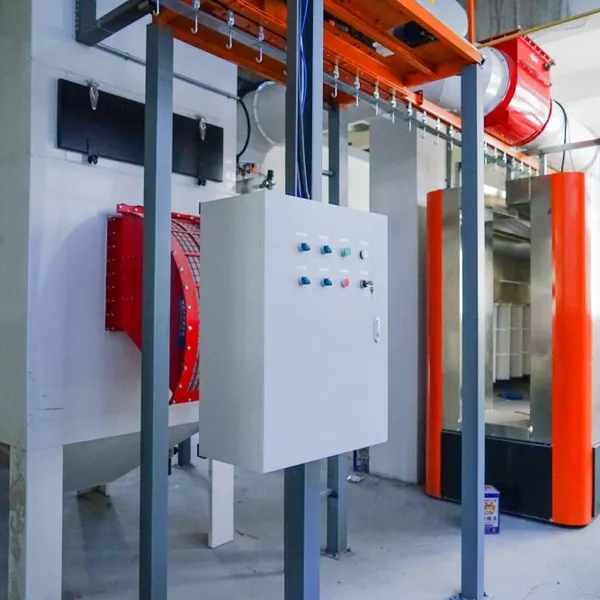

 Business License

Automated Paint Line: Engineering Consistency Into Liquid Finishing
When the quality team at a Turkish appliance manufacturer measured film thickness across their manually sprayed panels in early 2024, the results told a familiar story. Variation exceeded 25 micrometers from edge to center. Rework consumed 15% of weekly paint volume. Two experienced spray operators had left within six months, taking tribal knowledge with them.
The plant manager faced a choice: hire more labor or automate.
An automated paint line doesn't simply replace operators with machines. It replaces variation with repeatable process control. For manufacturers struggling with inconsistent film thickness, rising labor costs, or throughput ceilings, paint line automation is often the fastest path to stable Class A finishes and predictable operating costs.
In this guide, you'll learn what an automated paint line includes and how each subsystem affects finish quality. We'll cover spray booth types, automatic applicators, drying tunnels, controls, and the ROI factors that determine whether paint line automation makes sense for your operation.
Want a layout designed around your workpieces? Request a Free Line Design Drawing and our engineering team will prepare a preliminary automated paint line layout based on your dimensions, output targets, and finish requirements.
What Is an Automated Paint Line?
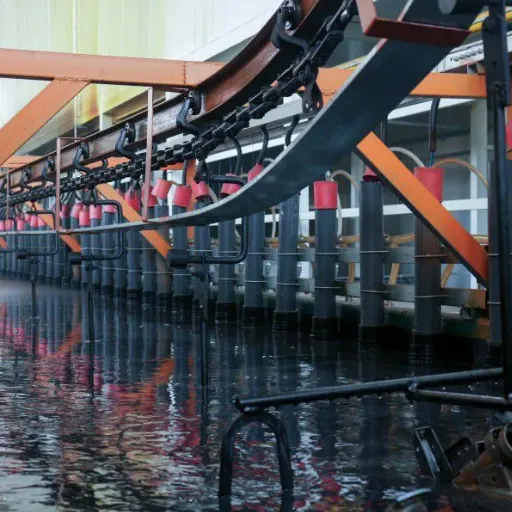
An automated paint line is an integrated production system that applies liquid coatings to metal, plastic, or composite workpieces with minimal manual intervention. It combines surface pretreatment, automatic spray application, controlled drying or curing, and synchronized conveying under a central control system.
Organizations such as the American Coatings Association track industry trends in liquid finishing automation, including advances in waterborne coatings and VOC reduction strategies that influence modern spray painting line design.
Unlike manual painting, where operators hold spray guns and judge coverage by eye, an automatic painting line uses programmed applicators, fixed trajectories, and regulated paint flow. The result is consistent film thickness, uniform color, and repeatable gloss from the first workpiece to the thousandth.
A complete spray painting line typically includes these stages:
| Stage | Function | Common Equipment |
|---|---|---|
| Surface pretreatment | Cleans and prepares the substrate | Spray washer, dip tanks, blow-off station |
| Paint application | Applies coating with controlled thickness | Reciprocator, robot, or Ω-disk system |
| Flash-off | Allows solvents to evaporate | Controlled airflow zone |
| Drying or curing | Sets or cross-links the film | Tunnel drying oven, infrared unit |
| Cooling and unloading | Brings parts to handling temperature | Cooling zone, unload station |
| Conveying and controls | Synchronizes movement and recipes | Overhead conveyor, PLC, HMI |
Each stage is sized around the workpiece dimensions, required film thickness, daily output, and available factory space. A system designed for small automotive brackets differs significantly from one built for large appliance panels.
Core Components of an Automated Paint Line
Understanding the function of each subsystem helps buyers evaluate quotations and avoid underspecifying critical equipment.
Spray Booth: Where Quality Is Defined
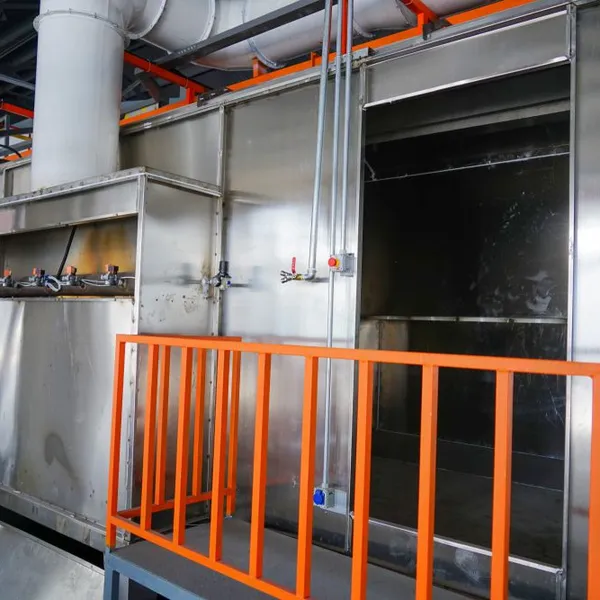
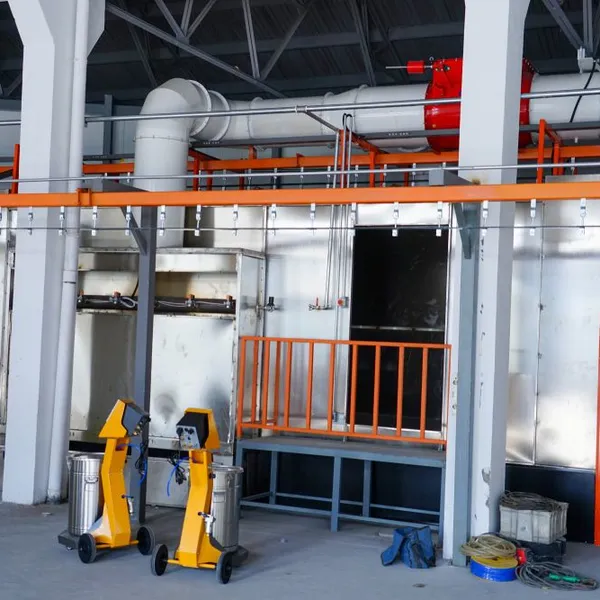
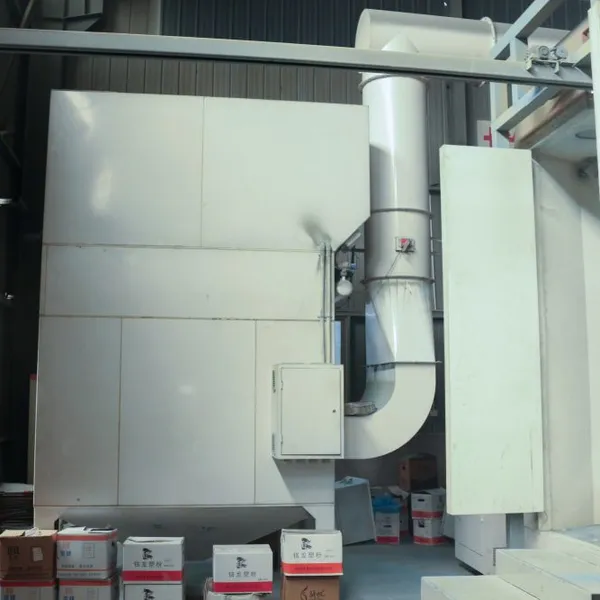
The spray booth is the heart of any automated paint line. It provides a controlled environment for application and captures overspray. It also protects both the workpiece and the factory from contamination. Booth selection depends on paint chemistry, workpiece geometry, and environmental regulations.
Three common booth types dominate industrial liquid finishing:
Water curtain spray booth: A continuous water wall captures overspray particles. Water is recirculated, filtered, and treated before discharge. This type works well for high-volume wet paint applications where overspray is significant.
Dry spray booth: Filter media capture overspray without water. These booths are simpler to maintain for low-volume or specialty coatings, but filter replacement becomes a recurring cost.
Water whirl (vortex) spray booth: A rotating water vortex captures paint particles efficiently. These booths offer compact footprints and good capture efficiency for medium-volume operations.
When a Chinese hardware manufacturer switched from open-bay manual spraying to a water curtain spray booth integrated into a Deqing Leixin liquid painting line, their rework rate dropped from 14% to 4% within one quarter. Dust contamination and operator-induced orange peel were nearly eliminated.
Automatic Applicators: Reciprocators, Robots, and Ω-Disk Systems
Applicator technology determines coverage consistency and transfer efficiency. The right choice depends on workpiece complexity, production volume, and required finish quality.
Automatic reciprocators move spray guns in programmed vertical or horizontal strokes. They are cost-effective for flat or moderately complex panels. Servo-driven reciprocators from Deqing Leixin provide spraying heights up to 2,500 mm with programmable stroke patterns and gun triggering intervals.
Robotic paint lines use multi-axis industrial robots for complex geometries, interior cavities, or mixed-model production. Robots offer maximum flexibility but require higher capital investment and programming expertise.
Ω-disk painting equipment uses a rotating bell atomizer to create a fine, controlled spray pattern with high transfer efficiency. This technology is ideal for small to medium workpieces where material savings and film uniformity justify the equipment cost.
Drying Tunnel and Curing Oven
After application, wet paint must be dried or cured before handling. Drying tunnels provide controlled temperature profiles that evaporate solvents and set the film without defects like runs or sags.
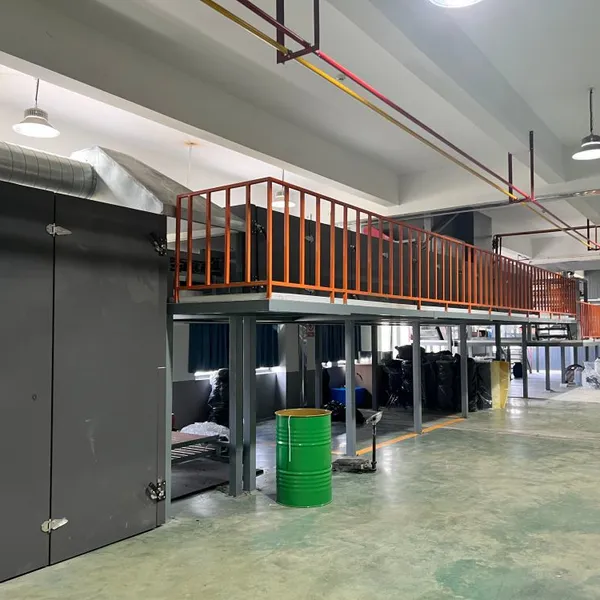
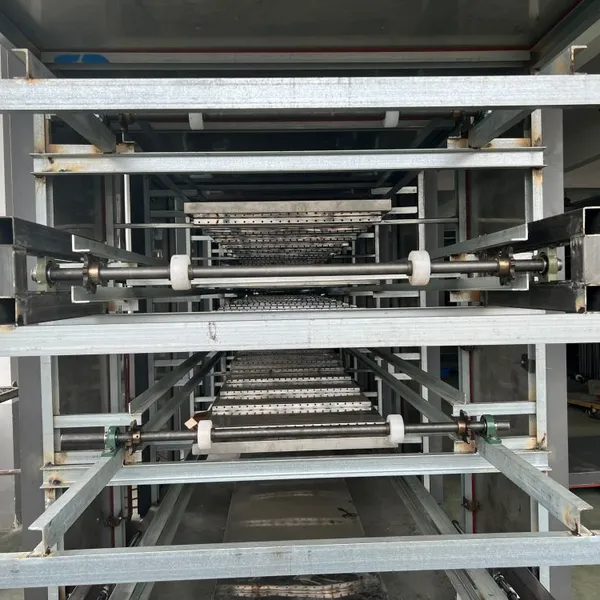
Tunnel-type drying ovens are common in high-volume automated paint lines. They are divided into zones that gradually raise part temperature, reducing thermal shock and solvent popping. Deqing Leixin curing ovens and drying tunnels are available with electric, gas, oil, and steam heating to match local energy costs.
Infrared curing systems can be added for spot heating or rapid cure acceleration. These systems use radiant energy rather than hot air, making them useful for heat-sensitive substrates or areas where floor space is limited.
Paint Supply and Mixing System
Consistent color and viscosity require controlled paint supply. A modern automated painting system includes:
Pressure-regulated supply tanks that maintain constant paint delivery to applicators.
Circulation loops that keep paint moving to prevent settling and skin formation.
Viscosity control through solvent addition or temperature regulation.
Color-change manifolds that reduce flushing time between shades.
For high-mix operations, rapid color change capability is critical. A well-designed paint kitchen can reduce changeover time from 30 minutes to under 5 minutes, directly improving line utilization.
Conveying System and Controls
Workpieces move through the automated paint line on an integrated conveying system. Overhead suspension chains, power-and-free conveyors, and skid-based floor conveyors each suit different workpiece sizes and factory layouts.
The PLC touch-screen control system is the nerve center of paint line automation. It stores recipes, synchronizes conveyor speed with applicator motion, and monitors oven temperature. It also logs production data. Operators can switch between product models by selecting the appropriate recipe, reducing setup time and human error.
Manual vs Automated Paint Line: Side-by-Side Comparison
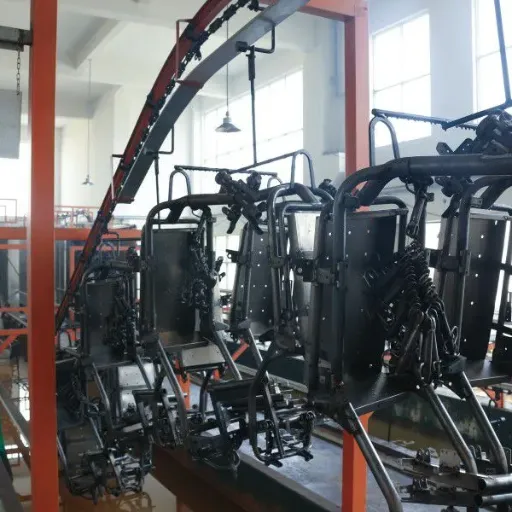
Before committing to paint line automation, compare what changes at each stage of the finishing process.
| Factor | Manual Paint Line | Automated Paint Line |
|---|---|---|
| Film thickness consistency | ±10-25 micrometers typical | ±3-5 micrometers typical |
| Transfer efficiency | 30-40% typical | 60-70% typical |
| Labor requirement | 3-5 spray operators per shift | 1 operator monitoring controls |
| Color change time | 15-30 minutes | Under 5 minutes with manifolds |
| Rework rate | 10-15% common | 3-6% achievable |
| Best for | Low volume, custom work | High volume, consistent products |
| Environmental control | Limited booth capture | Engineered overspray capture |
This comparison explains why many manufacturers start their automation journey with a single automated spray painting line for their highest-volume product, then expand to additional lines once ROI is proven.
Inline Automatic Painting Line
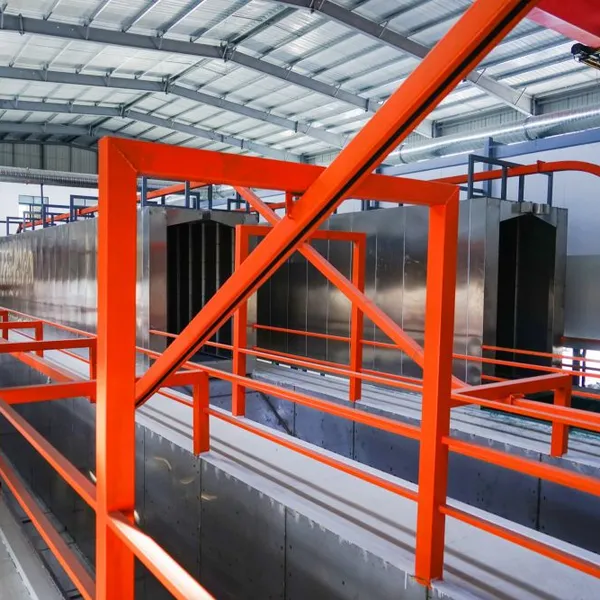
An inline automatic painting line moves workpieces continuously through pretreatment, spray booths, flash-off, and drying. It is the most efficient configuration for high-volume, consistent products such as appliance panels, automotive parts, or metal furniture components. Deqing Leixin home appliance coating solutions often use this configuration for refrigerator, washing machine, and air conditioner panels.
Batch Spray Painting Line
A batch spray painting line loads multiple workpieces into a booth, sprays them automatically, and then transfers them to a batch oven. This approach suits lower volumes, larger parts, or operations with frequent color changes.
Robotic Paint Line for Complex Geometries
A robotic paint line uses articulated robots to coat complex parts such as wheels, bumpers, or electric cabinets. Robots can reach interior corners, maintain precise standoff distance, and adapt to part-to-part variation using vision systems.
When a Polish automotive supplier installed a robotic paint line for plastic bumper covers, their transfer efficiency improved from 35% to 62%. Material consumption dropped by 27%, and the number of touch-up operators fell from four to one.
Ω-Disk Painting Line for Small Parts
An Ω-disk painting line is ideal for small hardware, tools, or fittings. The rotating disk creates a fine mist that coats parts uniformly as they pass on a conveyor. These lines offer compact footprints and high transfer efficiency.
When to Invest in Paint Line Automation
Automation is not always the right answer. The business case depends on volume, labor availability, quality requirements, and current rework costs.
High and Stable Volume
Automated paint lines achieve their best return when daily output is predictable and large enough to keep the line running. If production swings from 50 parts one week to 5,000 the next, a flexible batch system may be more appropriate than a fully inline automated system.
Labor Cost or Availability Pressure
Spray operators require training, experience, and consistent working conditions. In regions where skilled painters are scarce or expensive, automation reduces dependency on manual labor and stabilizes quality during shift changes.
Tight Film Thickness Tolerances
Applications such as automotive exterior panels, appliance fronts, or elevator doors require uniform film thickness and gloss. An automated painting system delivers tighter tolerances than manual spraying, often holding variation within ±5 micrometers. ASTM International publishes standardized test methods for film thickness, gloss, and adhesion that many manufacturers use to qualify automated paint line output.
Environmental Compliance
Modern spray booths capture overspray more effectively than open manual spraying. This reduces VOC emissions, improves workplace air quality, and helps manufacturers meet environmental regulations without relying solely on personal protective equipment.
ROI and Cost Factors for an Automated Paint Line
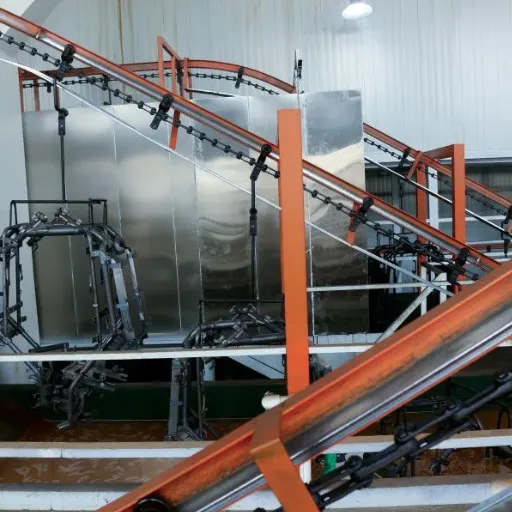
The capital cost of an automated paint line can range from $80,000 for a compact batch system to over $1,000,000 for a high-volume inline robotic line. The total cost of ownership depends on several factors.
Material Savings
Automation improves transfer efficiency. Moving from manual spraying at 30-40% transfer efficiency to an automatic reciprocator or Ω-disk system at 60-70% can cut paint consumption by 30-50% for the same coverage.
Labor Reduction
A fully automated line may require one operator to monitor the control system where manual painting required three to five spray operators. Labor savings depend on local wages and shift structure.
Rework and Scrap Reduction
Consistent application reduces runs, sags, thin spots, and color mismatch. For a facility producing 10,000 parts per month, reducing rework from 12% to 4% can save thousands of dollars in material, labor, and lost capacity.
Energy and Maintenance
Drying ovens and circulation pumps are the main energy consumers. Insulated tunnel ovens, heat recovery, and variable-frequency drives on fans reduce operating cost. Scheduled maintenance on applicators, filters, and conveyor chains prevents unplanned downtime.
Designing an Automated Paint Line Around Your Workpiece
Successful paint line automation starts with the workpiece, not the equipment catalog. Engineers need accurate inputs before specifying components.
Workpiece Dimensions and Weight
Maximum length, width, height, and weight determine booth size, conveyor capacity, and oven chamber dimensions. Heavy castings require stronger conveyors and longer heating cycles than lightweight sheet metal panels.
Required Film Thickness and Finish Quality
The target film thickness, gloss level, and color tolerance dictate applicator type, gun count, and drying profile. High-gloss finishes show defects more readily and demand cleaner booth environments and finer atomization.
Daily Output and Line Speed
Required parts per hour determines conveyor speed, booth length, and oven dwell time. A line running 60 parts per hour requires different drying capacity than one running 10 parts per hour.
Paint Chemistry and Substrate Material
Waterborne, solventborne, and UV-curable coatings behave differently during application and drying. Substrate material affects surface pretreatment chemistry, flash-off time, and maximum curing temperature.
Deqing Leixin engineers each automated painting system around these inputs. Our standard process includes free layout drawings, thermal calculations, and applicator simulations to verify coverage before manufacturing begins.
Maintenance and Quality Control
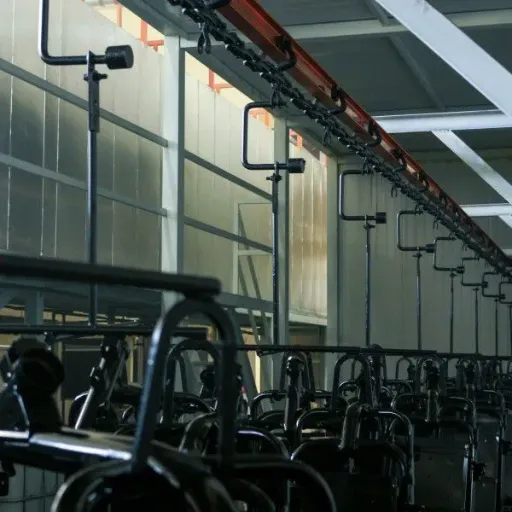
An automated paint line requires disciplined maintenance to sustain the quality and efficiency gains it delivers.
Daily and Weekly Maintenance
Inspect spray nozzles and bells for wear or buildup.
Check booth water levels, filter condition, and exhaust airflow.
Verify conveyor chain lubrication and alignment.
Clean color-change manifolds and solvent lines.
Monthly and Quarterly Maintenance
Calibrate applicator stroke patterns and gun triggering.
Verify oven temperature uniformity with thermocouple surveys.
Inspect pump seals, pressure regulators, and circulation filters.
Review PLC recipes and alarm logs for drift trends.
Quality Checks
Regular film thickness measurement, gloss testing, and cross-hatch adhesion tests confirm that the automated paint line is performing within specification. Data from these checks can be linked back to recipe parameters, making root-cause analysis faster.
Frequently Asked Questions About Automated Paint Lines
What Is the Difference Between a Spray Painting Line and a Powder Coating Line?
A spray painting line applies liquid coatings using wet paint atomized through spray guns, bells, or disks. A powder coating line applies dry thermoset powder using electrostatic charge. The two processes require different spray booths, recovery systems, and curing methods.
How Much Does an Automated Paint Line Cost?
A compact batch automated painting system may start around $80,000. A high-volume inline robotic paint line can exceed $1,000,000. Final cost depends on workpiece size, required output, applicator type, and environmental controls.
When Should I Choose a Robotic Paint Line Over a Reciprocator?
Choose a robotic paint line when workpieces have complex geometries, interior cavities, or mixed-model production. Choose reciprocators for flat panels or consistent parts where programmed stroke patterns provide adequate coverage at lower cost.
Can an Automated Paint Line Handle Frequent Color Changes?
Yes, if the paint supply system is designed for it. Color-change manifolds, circulation loops, and quick-flush piping can reduce changeover time from 30 minutes to under 5 minutes.
What Maintenance Does an Automated Paint Line Require?
Daily tasks include nozzle inspection, booth water level checks, and conveyor lubrication. Monthly or quarterly tasks include applicator calibration, oven temperature uniformity surveys, and PLC recipe reviews.
Conclusion
An automated paint line transforms liquid finishing from a labor-dependent craft into a repeatable manufacturing process. The benefits are measurable: lower rework, consistent film thickness, reduced material waste, and less dependence on scarce spray operators. The investment is justified when volume is stable, quality requirements are tight, and labor costs are rising.
Key takeaways:
Match the spray booth type to your paint chemistry and overspray volume.
Choose applicators based on workpiece complexity and required finish quality.
Size the drying tunnel for the heaviest workpiece and required line speed.
Design the paint kitchen for fast color change if you run multiple shades.
Use PLC recipe control to reduce setup time and human error.
Schedule preventive maintenance to protect transfer efficiency and finish quality.
Whether you need an inline automatic painting line for appliance panels, a robotic paint line for automotive parts, or an Ω-disk system for small hardware, the right automated paint line protects both finish quality and operating margin. Define your workpiece, output target, and finish specification first, then select the configuration that matches.
Get a Turnkey Project Quotation for your automated paint line. Submit your workpiece dimensions, paint specifications, and daily output target, and our engineering team will respond with a custom layout and quotation.
Recently Posted
-
Conveyor Speed Calculation for Coating Lines: A Complete Guide
June 26, 2026Last March, a hardware manufacturer in Ningbo raised the chain speed on its powder coating line by 15% to clear a backlog. Three d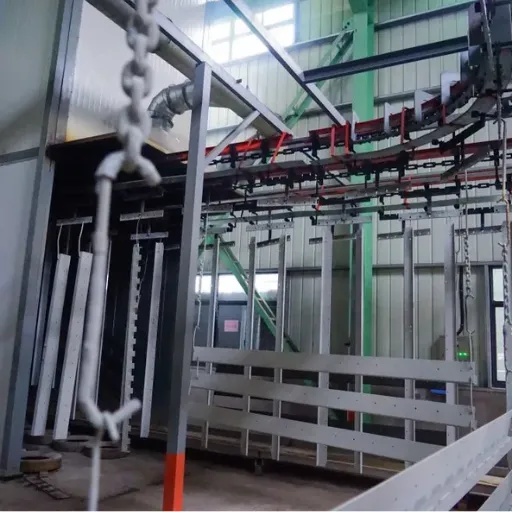 Read More
 -
Conveyor Line Design: A Complete Engineering Guide for Coating Lines
June 26, 2026Last autumn, a hardware manufacturer in Vietnam commissioned a new powder coating line. The pretreatment tunnel, cyclone-recovery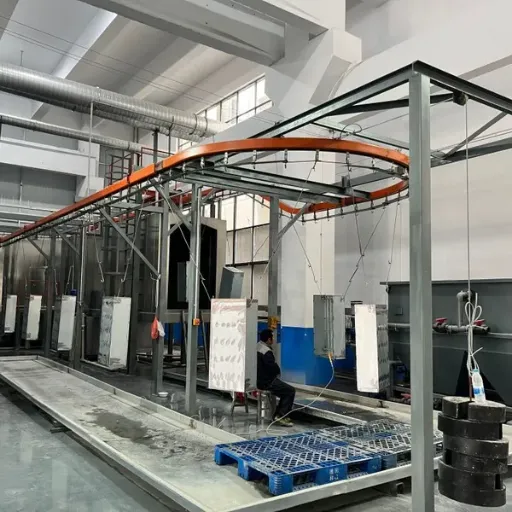 Read More
 -
Overhead Conveyor System: Engineering Guide for Coating Lines
June 26, 2026Last autumn, a hardware manufacturer in Ningbo faced a familiar problem. Their new powder coating line had to fit inside a buildin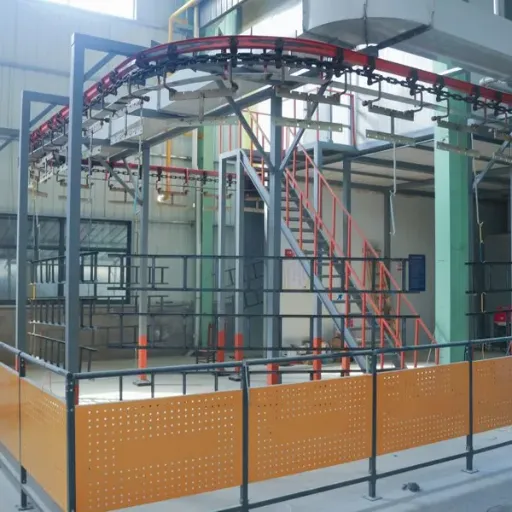 Read More
 -
Industrial Paint Booth: A Complete Engineering Guide for Manufacturers
June 26, 2026When Mike Chen expanded his metal furniture factory in Zhejiang Province last spring, he assumed the new spray area would solve hi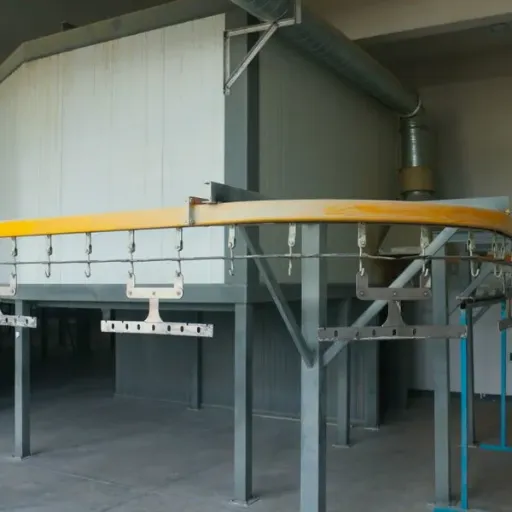 Read More

Contact Us
Recommended Products
-
 Industrial Custom Spray Coating Line for Hardware Anti‑Corrosion TreatmentNegotiableMOQ: 1 Set
 -
Industrial Electrophoresis Line for Metal Water Pump Workpieces ProcessingNegotiableMOQ: 1 Set
-
Custom E‑Coating Production Line for Water Pump Parts Surface FinishingNegotiableMOQ: 1 Set
-
China OEM Custom E-Coating Machine and Cathodic Electrophoresis Production LineNegotiableMOQ: 1 Set
-
Industrial Electrophoretic Coating Line With Custom Design for Metal WorkpiecesNegotiableMOQ: 1 Set
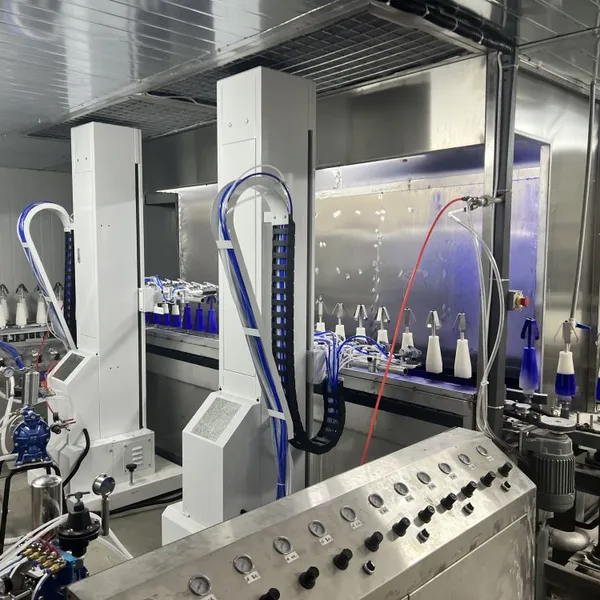
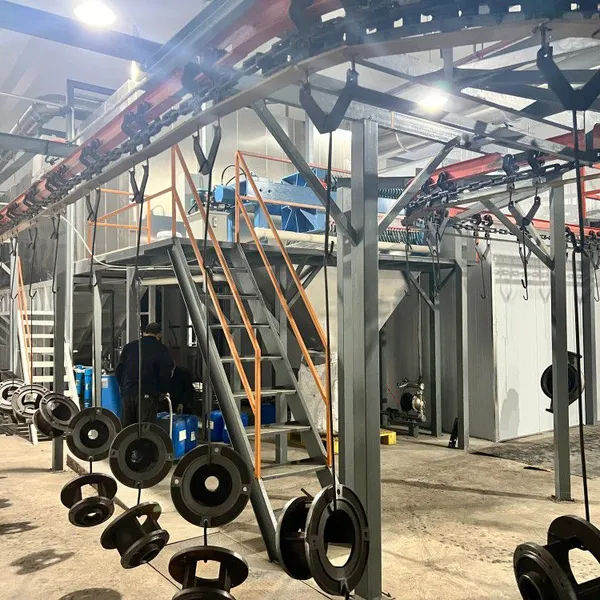
-
Intelligent Automated Electrophoretic Coating Line for Powder Coating Production EquipmentNegotiableMOQ: 1 Set
-
Full Automatic Custom Electrophoretic Coating Line for Industrial Metal ComponentsNegotiableMOQ: 1 Set
-
Heavy‑Duty Continuous Powder Coating Line for Big Cabinet Anti‑Corrosion FinishingNegotiableMOQ: 1 Set
-
Energy‑Saving Powder Coating Line for Large Industrial Cabinet Surface ProtectionNegotiableMOQ: 1 Set
-
Environmental Friendly Powder Coating Line With High Recovery for Large CabinetsNegotiableMOQ: 1 Set
-
Large Manual Industrial Curing Oven for Metal Powder Coating MachineryNegotiableMOQ: 1 Set
-
Industrial Plastic Drying Oven With PLC Control and 304 Stainless Steel HopperNegotiableMOQ: 1 Set
-
High Efficiency Plastic Raw Material Dryer for Plastic ProcessingNegotiableMOQ: 1 Set
-
Compact E-Coating System for Small Metal Components in Automotive & Medical Device ProductionNegotiableMOQ: 1 Piece
-
Gantry Transport Type Electrophoretic Coating Line for Industrial WorkpiecesNegotiableMOQ: 1 Set
-
Custom Gantry Electrophoretic Coating Line for Automotive Component FinishingNegotiableMOQ: 1 Set
-
Large Workpiece Stainless Steel Manual Powder Spray Booth With Ventilation SystemNegotiableMOQ: 1 Set
-
Large Capacity Stainless Steel Manual Powder Spray Booth With Powder Recovery SystemNegotiableMOQ: 1 Set
-
Automatic Large Workpiece Powder Spray Booth for Metal FabricationNegotiableMOQ: 1 Set
-
Powder Spraying Room With Stainless Steel Frame and PLC ControlNegotiableMOQ: 1 Set