
 Business License

Spray Painting Line: A Complete Engineering Guide for Manufacturers
Maria Chen, the production director at a mid-sized appliance panel manufacturer, watched her rework rate climb to 14% over one quarter. The culprit was not the paint, the operators, or the curing time. It was the spray painting line itself, an aging batch booth with inconsistent airflow, poor overspray control, and no integration with the pretreatment stage upstream. Once her team mapped the full process and replaced the isolated booth with an integrated automatic spray painting line, rework dropped below 4% within three months.
If you are responsible for coating quality, throughput, or capital equipment procurement, you have probably faced a similar question: how do you design or upgrade a spray painting line that matches your workpieces, production volume, and quality standards without overspending on features you will never use?
In this guide, you will learn what defines a modern spray painting production line, which components matter most, how to choose between booth technologies, and how to lay out the system for continuous, repeatable results. By the end, you will have a clear framework for evaluating automatic spray painting line options and a practical checklist for your next project.
Engineering Note: A spray painting line is only as reliable as its weakest upstream stage. Always verify that pretreatment, drying, spray application, and curing are sized as one integrated system, not as standalone purchases.
What Is a Spray Painting Line?
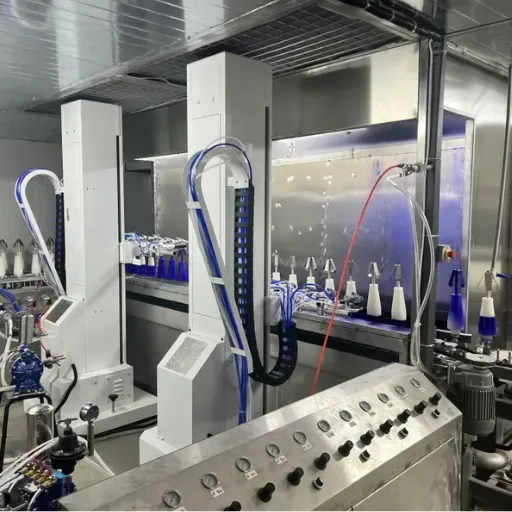
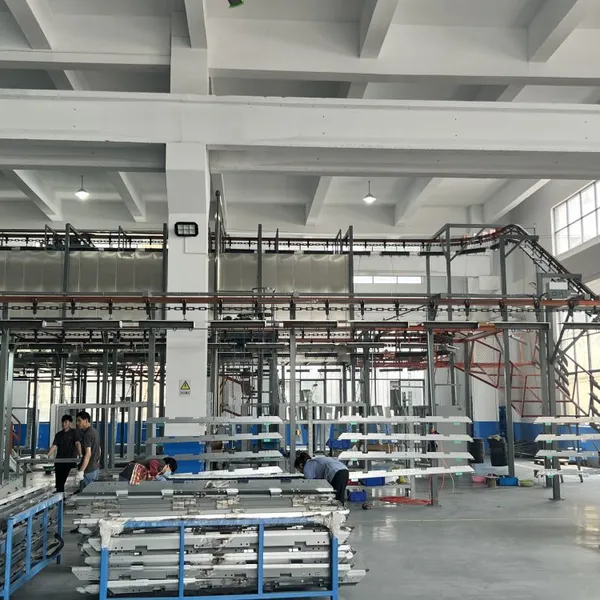
A spray painting line is an integrated production system that applies liquid paint to metal, plastic, or composite workpieces through automated or manual spray application, then dries or cures the coating in a controlled environment. Unlike a standalone spray booth, a complete line connects every stage, pretreatment, drying, spray application, flash-off, and curing, through a conveying system that maintains consistent cycle times.
The term covers a wide range of configurations. A small job shop might run a manual spray painting line with one water curtain booth and a batch oven. A high-volume automotive supplier might run a fully automatic spray painting production line with multiple spray zones, reciprocators, and a tunnel-type drying tunnel. Both are spray painting lines; the difference is throughput, automation level, and integration depth.
For manufacturers evaluating capital equipment, the important distinction is this: a true spray painting line is engineered around your workpiece dimensions, daily output, paint chemistry, and factory layout. It is not a generic booth bolted to a conveyor.
Want to see how a line can be configured for your specific workpieces? Request a free line design drawing and our engineers will review your requirements.
Key Components of a Spray Painting Line
Every spray painting line includes the same functional stages, even if the equipment scale varies. Understanding each component helps you specify the right system and avoid costly mismatches.
Pretreatment Stage
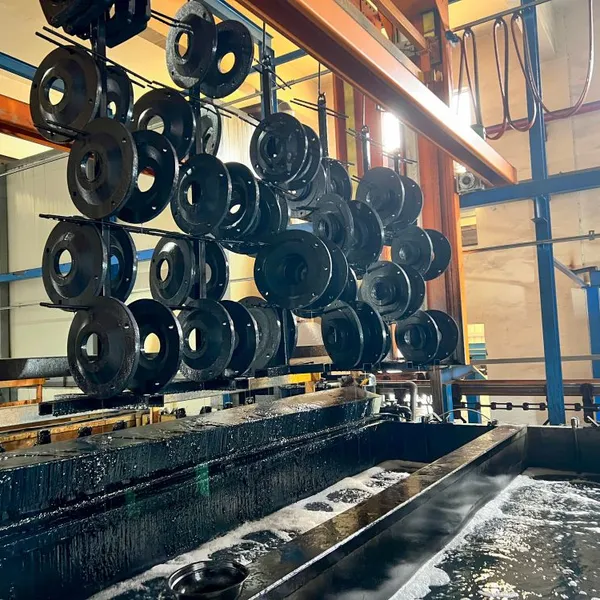
Pretreatment removes oil, rust, mill scale, and other contaminants from the workpiece surface before paint application. Depending on the substrate and quality standard, this may include degreasing, rinsing, phosphating, chromate conversion, or passivation. For manufacturers moving from powder coating to liquid painting, it is worth noting that liquid paint systems are often less forgiving of surface contamination than powder, so pretreatment quality directly affects adhesion and corrosion resistance.
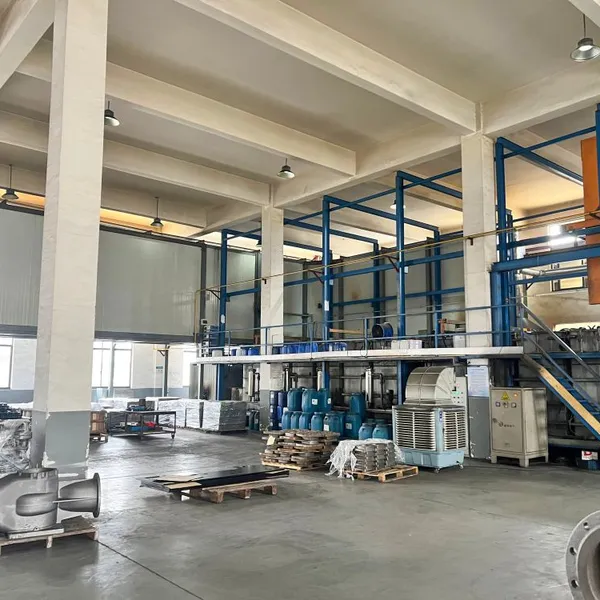
Deqing Leixin builds surface pretreatment systems with 304 stainless steel tanks, centrifugal pumps, and automatic water blowing systems to prepare substrates consistently before they enter the spray zone.
Drying Stage
After pretreatment, workpieces must be dry before paint application. Residual moisture causes blistering, poor adhesion, and inconsistent film build. The drying stage may use ambient air knives, heated blow-off stations, or a short drying tunnel depending on line speed and workpiece geometry.
Spray Application Stage
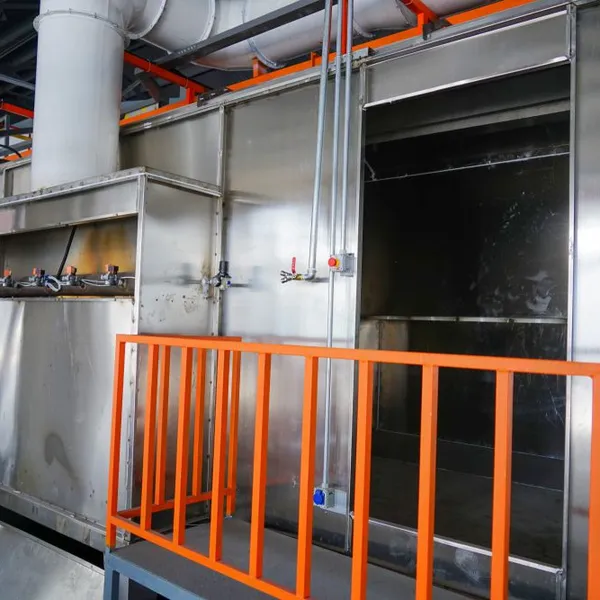
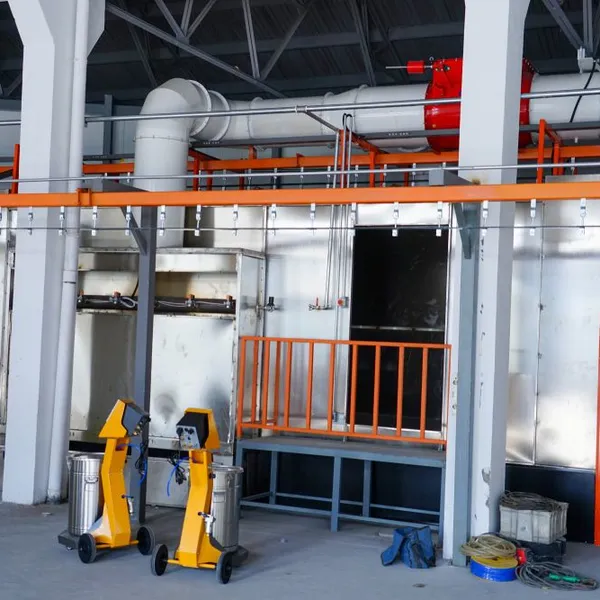
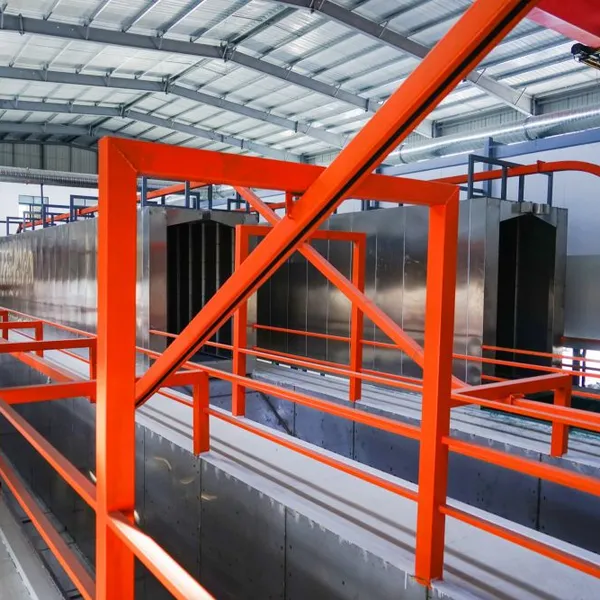
This is the heart of the spray painting line. The spray booth provides a controlled environment where paint is atomized and deposited onto the workpiece. Key elements include:
Booth enclosure: Captures overspray and maintains airflow
Spray guns or applicators: Manual, automatic, or robotic
Reciprocators or robots: Position guns for complex geometries
Paint supply system: Pressure pots, pumps, and circulation loops
Overspray capture: Water curtain, water whirl, or dry filtration
Flash-Off Zone
After spraying, liquid coatings need a short flash-off period to allow solvents or water to evaporate before forced curing. The flash-off zone length depends on paint chemistry, film thickness, and line speed.
Curing or Drying Stage
The final stage cures the coating through thermal energy. Tunnel-type ovens are common in high-volume lines, while batch ovens suit lower volumes or larger workpieces that cannot move continuously. Deqing Leixin offers multi-energy curing ovens with electric, gas, oil, or steam heating and precision temperature control within ±3°C.
Conveying System
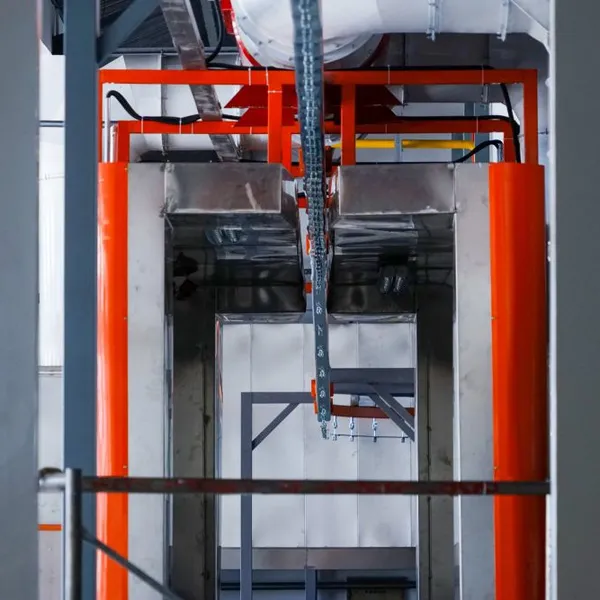
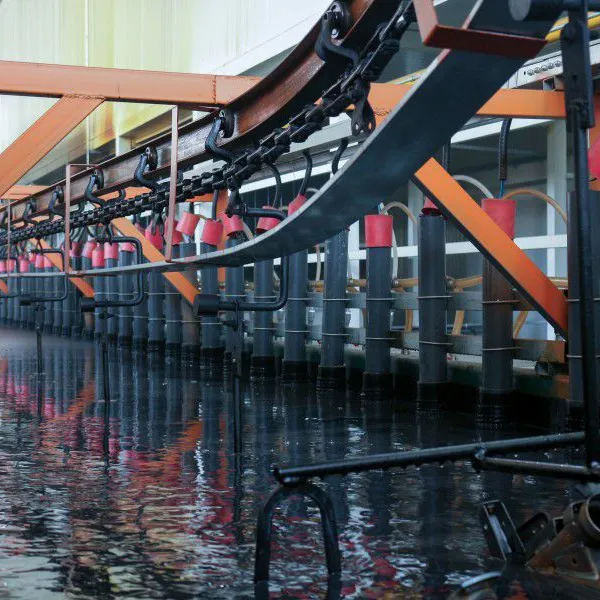
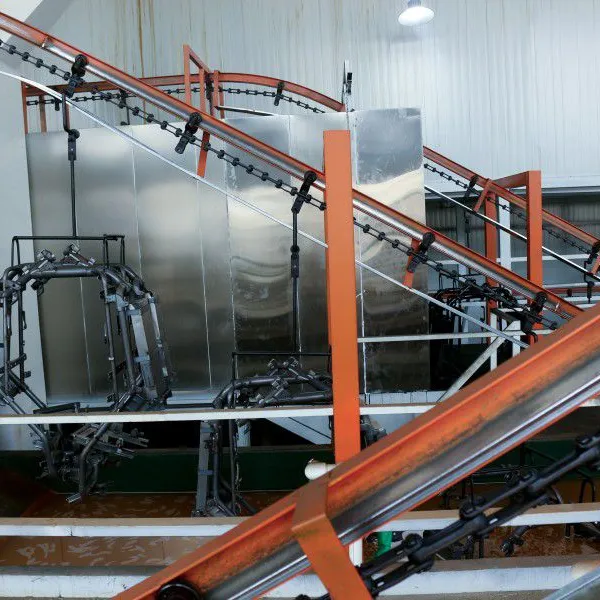
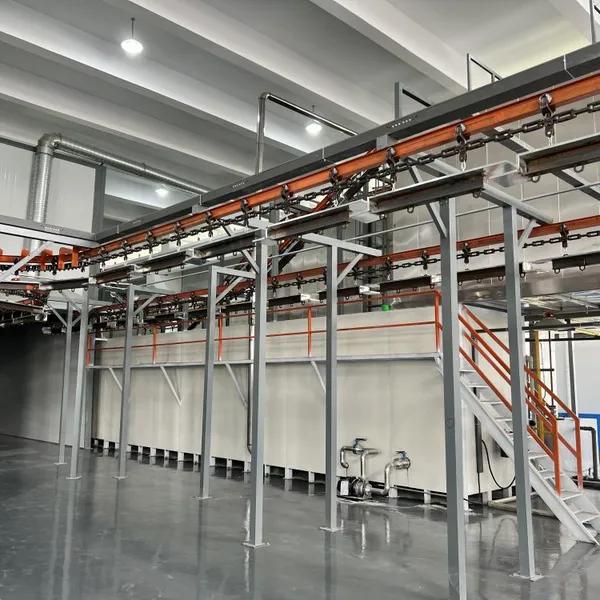
The conveying system ties the stages together. Overhead conveyor chains, power-and-free systems, or ground conveyors move workpieces at a constant speed synchronized to spray timing and oven dwell time. Conveyor speed is one of the most important variables in line capacity calculations.
Types of Spray Painting Lines
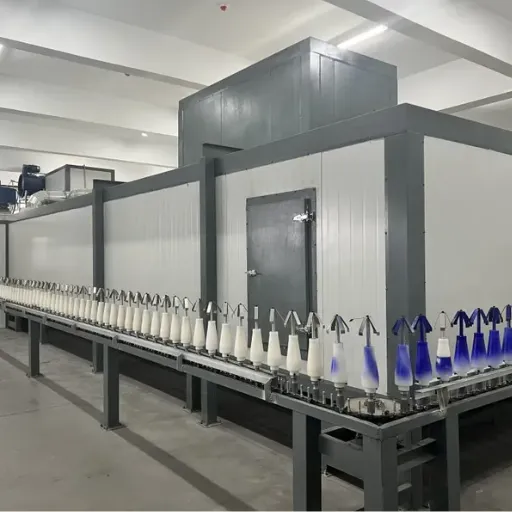
Manufacturers typically choose from three automation levels. The right choice depends on volume, part complexity, labor costs, and quality requirements.
Manual Spray Painting Lines
Operators hold spray guns and control application manually. These lines are flexible and have lower capital cost, but throughput is limited and film thickness consistency depends heavily on operator skill. Manual lines work well for low volumes, frequent color changes, or highly complex custom parts.
Semi-Automatic Spray Painting Lines
Workpieces move automatically on a conveyor while operators spray from fixed positions. This hybrid approach improves throughput over fully manual systems while retaining flexibility for complex geometries or custom masking. Semi-automatic lines are common in furniture and hardware finishing.
Automatic Spray Painting Lines
An automatic spray painting line uses reciprocators, fixed automatic guns, or robotic applicators to apply paint without manual intervention. These systems deliver the most consistent film thickness, reduce material waste, and lower labor dependency. They are ideal for high-volume production of parts with repeatable geometry, such as appliance panels, automotive components, or elevator parts.
Case Example: A manufacturer of electric control cabinets switched from two manual booths to one automatic spray painting line with servo reciprocators and a water curtain booth. The change reduced paint consumption by 22% and cut the number of operators per shift from six to two, while film thickness variation dropped from ±15 µm to ±5 µm.
Not sure which automation level fits your volume and budget? Contact our engineers to review your production targets and part mix.
Spray Booth Technologies: Which One Matches Your Process?
The spray booth is where quality, efficiency, and environmental compliance intersect. Choosing the wrong booth type can lead to excessive paint waste, poor finish quality, or regulatory problems.
Water Curtain Spray Booth
In a water curtain spray booth, a falling sheet of water captures overspray particles as they leave the spray zone. The water acts as a filter, trapping paint solids that can then be separated through flotation or coagulation systems. Water curtain booths are widely used for liquid painting lines because they handle high overspray volumes and can manage multiple paint chemistries.
Best for: High-volume liquid painting, large workpieces, operations with frequent color changes
Advantages: Excellent overspray capture, handles solventborne and waterborne paints, reduces fire risk
Considerations: Requires water treatment, sludge removal, and regular maintenance
Water Whirl (Vortex) Spray Booth
A water whirl booth uses a swirling water pattern to capture overspray more efficiently than a simple curtain. The vortex action improves particle capture and can reduce water consumption compared to older curtain designs.
Best for: Medium to high-volume wet paint operations seeking efficient overspray control
Advantages: Compact footprint, efficient capture, lower water use than traditional curtain booths
Considerations: Still requires water management and periodic cleaning
Dry-Type Spray Booth
Dry booths use filter media to capture overspray instead of water. They are simpler to maintain in some respects and produce dry waste that is easier to dispose of, but filters must be changed regularly to maintain airflow and capture efficiency.
Best for: Low- to medium-volume operations, paint systems where water contact is undesirable, facilities with limited water treatment capacity
Advantages: No water treatment required, dry waste disposal, lower humidity in the booth
Considerations: Filter replacement costs, reduced capture efficiency for high overspray volumes
Ω-Disk (Omega Disk) Painting Equipment
The Ω-disk system uses a rotating bell atomizer to apply liquid coatings with high transfer efficiency. It is especially effective on complex geometries where conventional spray guns struggle to maintain uniform film build.
Best for: Complex parts, high-transfer-efficiency liquid coating, automotive and hardware applications
Advantages: High transfer efficiency, uniform film thickness on complex shapes, reduced material waste
Considerations: Higher capital cost, requires precise setup and maintenance
For a deeper comparison of booth selection, read our guide on water curtain vs dry spray booth technologies.
Designing a Spray Painting Line for Your Workpieces
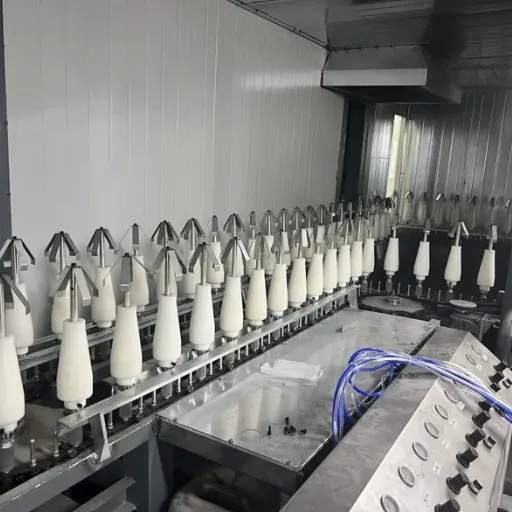
A well-designed spray painting line starts with data about your parts and process, not with equipment catalogs. Before specifying any component, gather the following information:
Workpiece dimensions: Maximum length, width, height, and weight
Daily output target: Pieces per hour or per shift
Paint chemistry: Solventborne, waterborne, UV-curable, or specialty coating
Required film thickness: Typically specified in micrometers (µm)
Quality standards: Gloss, adhesion, color consistency, salt-spray resistance
Factory layout: Available floor space, ceiling height, column locations, utility access
Heating preference: Electric, gas, oil, or steam based on local energy costs
Environmental regulations: Emission limits, wastewater requirements, fire codes
Once these factors are defined, the line can be sized. Conveyor speed, oven length, booth size, and gun count all flow from the basic production equation: cycle time equals available production time divided by required output.
Design Example: A furniture manufacturer needed to finish 240 metal chair frames per 8-hour shift. Each frame measured 600 mm × 600 mm × 900 mm and weighed 4 kg. The required cycle time was 2 minutes per piece. Deqing Leixin engineers designed a semi-automatic spray painting line with a 3-meter water curtain booth, two manual spray stations, and a 12-meter gas-fired drying tunnel. The layout fit within the existing 18-meter × 8-meter production bay without disrupting adjacent welding operations.
Our coating line design guide walks through this sizing process in more detail.
Energy, Ventilation, and Environmental Compliance
Spray painting lines consume significant energy and generate emissions. Planning for these factors early prevents expensive retrofits later.
Ventilation Requirements
Booth airflow must maintain a safe working environment and consistent application conditions. Typical booth face velocities range from 0.25 to 0.5 m/s depending on the paint type and local code. Inadequate airflow causes poor transfer efficiency, operator exposure, and fire hazards.
Energy Selection
The curing or drying stage usually represents the largest energy consumer. Gas-fired systems often have lower operating costs where natural gas is inexpensive. Electric systems offer cleaner operation and simpler installation. Oil and steam systems suit facilities with existing infrastructure. The right choice depends on local utility rates, emissions limits, and required heating ramp rates.
Emission and Wastewater Control
Solventborne paints release volatile organic compounds (VOCs) that require abatement through thermal oxidizers, carbon adsorption, or bio-filters. Water curtain booths generate paint sludge that must be treated before discharge. Waterborne paints reduce VOC emissions but may require more precise humidity and temperature control.
Regulatory requirements vary by region. In the United States, the Environmental Protection Agency regulates coating operations under National Emission Standards for Hazardous Air Pollutants (NESHAP). Always confirm local rules before finalizing equipment specifications.
Common Applications by Industry
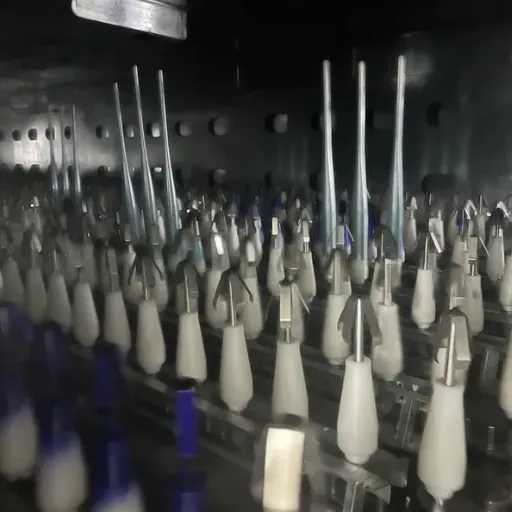
Spray painting lines serve manufacturers across many sectors. The configuration changes based on part size, quality requirements, and production volume.
Automotive Parts
Brackets, trim pieces, wheels, and chassis components require consistent film thickness and corrosion resistance. Automatic spray painting lines with reciprocators and controlled curing are common in this sector.
Explore our coating line for automotive parts solutions.
Home Appliances
Refrigerator panels, washing machine cabinets, and air conditioner housings need uniform color and gloss over large sheet metal surfaces. High-volume appliance manufacturers often use fully automatic lines with multiple spray zones and large curing ovens.
See how our appliance coating solutions handle large-format panels.
Hardware and Tools
Locks, hinges, tools, and fasteners run in smaller batches with frequent color changes. Semi-automatic or manual spray painting lines with quick-change color systems offer the flexibility these manufacturers need.
Elevators and Electric Cabinets
Large panels and enclosures require wide spray coverage and tight tolerances. Lines for these applications emphasize uniform edge coverage and integration with fabrication workflows.
Learn more about our elevator and electric cabinet coating systems.
Furniture and Metal Fabrication
Metal furniture, frames, and mixed-material pieces benefit from versatile spray painting equipment that can handle varied geometries and finishes. UV curing may be an option for compatible coating chemistries.
View our furniture powder coating and painting solutions.
ROI and Operational Considerations
A spray painting line is a capital investment, but its true cost includes operating expenses over its service life. When evaluating options, consider:
Material utilization: Automatic systems with proper gun positioning reduce overspray and paint consumption
Labor requirements: Manual lines need more operators per shift
Rework and scrap: Consistent application reduces defect rates and warranty claims
Energy consumption: Oven efficiency, booth airflow, and conveyor design all affect utility costs
Maintenance access: Equipment that is difficult to clean or service increases downtime
Future scalability: Can the line be extended or upgraded as volumes grow?
ROI Example: A hardware manufacturer operating two manual spray booths spent approximately $48,000 per year on extra paint and rework labor. After installing an automatic spray painting line with servo reciprocators and a water whirl booth, annual paint savings and rework reduction recovered roughly 60% of the equipment investment within the first 24 months.
Most manufacturers see payback periods between 18 and 36 months, depending on volume, labor costs, and material waste reduction.
Conclusion: Build Your Spray Painting Line as an Integrated System
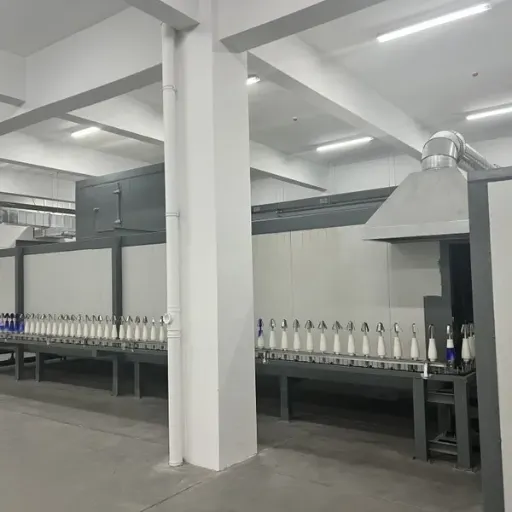
A spray painting line is more than a booth and a conveyor. It is a coordinated system where pretreatment, drying, application, flash-off, curing, and conveying must work together to deliver consistent quality at the required throughput.
Key takeaways:
Match the automation level to your volume, part complexity, and labor strategy
Choose booth technology based on paint chemistry, overspray volume, and environmental requirements
Size the line from your workpiece data and daily output target, not from equipment defaults
Integrate pretreatment and curing as part of the same design decision
Plan for energy costs, emissions control, and maintenance access from day one
If you are planning a new spray painting line or upgrading an existing one, the next step is to align your workpiece specifications with a practical layout and equipment configuration. Submit your workpiece details and our engineering team will prepare a turnkey project quotation with free design drawings, installation planning, and operator training included.
Deqing Leixin designs, manufactures, installs, and commissions complete coating production lines for manufacturers worldwide. Whether you need a manual line for custom parts or a fully automatic spray painting production line for high-volume output, we engineer the system around your specific requirements.
Recently Posted
-
Conveyor Speed Calculation for Coating Lines: A Complete Guide
June 26, 2026Last March, a hardware manufacturer in Ningbo raised the chain speed on its powder coating line by 15% to clear a backlog. Three d Read More
 -
Conveyor Line Design: A Complete Engineering Guide for Coating Lines
June 26, 2026Last autumn, a hardware manufacturer in Vietnam commissioned a new powder coating line. The pretreatment tunnel, cyclone-recovery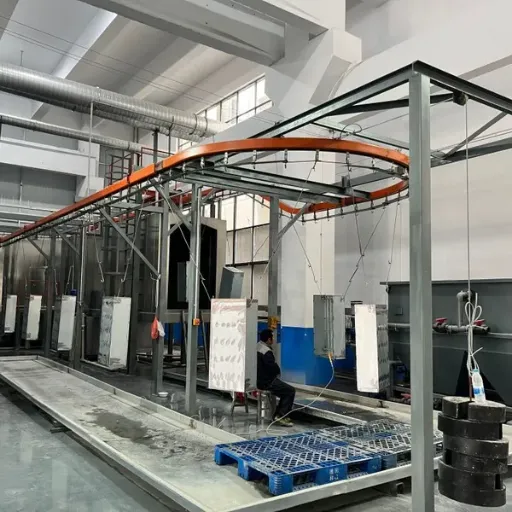 Read More
 -
Overhead Conveyor System: Engineering Guide for Coating Lines
June 26, 2026Last autumn, a hardware manufacturer in Ningbo faced a familiar problem. Their new powder coating line had to fit inside a buildin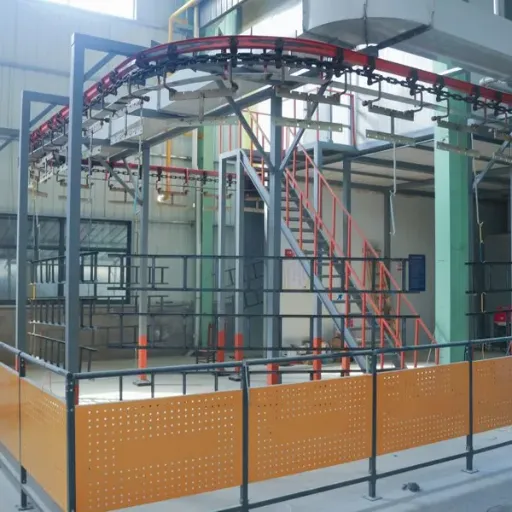 Read More
 -
Industrial Paint Booth: A Complete Engineering Guide for Manufacturers
June 26, 2026When Mike Chen expanded his metal furniture factory in Zhejiang Province last spring, he assumed the new spray area would solve hi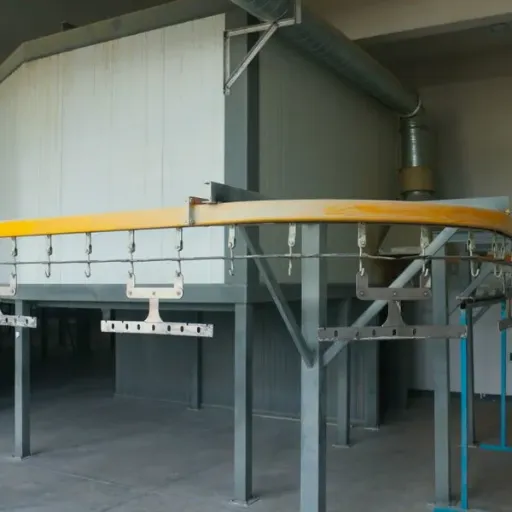 Read More

Contact Us
Recommended Products
-
 Industrial Custom Spray Coating Line for Hardware Anti‑Corrosion TreatmentNegotiableMOQ: 1 Set
 -
Industrial Electrophoresis Line for Metal Water Pump Workpieces ProcessingNegotiableMOQ: 1 Set
-
Custom E‑Coating Production Line for Water Pump Parts Surface FinishingNegotiableMOQ: 1 Set
-
China OEM Custom E-Coating Machine and Cathodic Electrophoresis Production LineNegotiableMOQ: 1 Set
-
Industrial Electrophoretic Coating Line With Custom Design for Metal WorkpiecesNegotiableMOQ: 1 Set
-
Intelligent Automated Electrophoretic Coating Line for Powder Coating Production EquipmentNegotiableMOQ: 1 Set
-
Full Automatic Custom Electrophoretic Coating Line for Industrial Metal ComponentsNegotiableMOQ: 1 Set
-
Heavy‑Duty Continuous Powder Coating Line for Big Cabinet Anti‑Corrosion FinishingNegotiableMOQ: 1 Set
-
Energy‑Saving Powder Coating Line for Large Industrial Cabinet Surface ProtectionNegotiableMOQ: 1 Set
-
Environmental Friendly Powder Coating Line With High Recovery for Large CabinetsNegotiableMOQ: 1 Set
-
Large Manual Industrial Curing Oven for Metal Powder Coating MachineryNegotiableMOQ: 1 Set
-
Industrial Plastic Drying Oven With PLC Control and 304 Stainless Steel HopperNegotiableMOQ: 1 Set
-
High Efficiency Plastic Raw Material Dryer for Plastic ProcessingNegotiableMOQ: 1 Set
-
Compact E-Coating System for Small Metal Components in Automotive & Medical Device ProductionNegotiableMOQ: 1 Piece
-
Gantry Transport Type Electrophoretic Coating Line for Industrial WorkpiecesNegotiableMOQ: 1 Set
-
Custom Gantry Electrophoretic Coating Line for Automotive Component FinishingNegotiableMOQ: 1 Set
-
Large Workpiece Stainless Steel Manual Powder Spray Booth With Ventilation SystemNegotiableMOQ: 1 Set
-
Large Capacity Stainless Steel Manual Powder Spray Booth With Powder Recovery SystemNegotiableMOQ: 1 Set
-
Automatic Large Workpiece Powder Spray Booth for Metal FabricationNegotiableMOQ: 1 Set
-
Powder Spraying Room With Stainless Steel Frame and PLC ControlNegotiableMOQ: 1 Set