
 Business License

Conveyor Speed Calculation for Coating Lines: A Complete Guide
Last March, a hardware manufacturer in Ningbo raised the chain speed on its powder coating line by 15% to clear a backlog. Three days later, quality control rejected an entire batch. The coating looked fine in the booth, but the parts had spent too little time inside the curing oven.
The real problem was not the spray guns or the powder recipe. The problem was a conveyor speed calculation that no one had double-checked.
If you have ever stood in front of a coating line and wondered whether the chain is moving too fast or too slow, you're not alone. Many plant managers invest heavily in pretreatment systems, spray booths, and curing ovens, then treat the conveyor as a simple transport device. In reality, the conveyor sets the rhythm for every other process on the line. Get the speed wrong, and even the best equipment cannot produce a consistent finish.
This guide will walk you through the core conveyor speed calculation methods used in powder coating, liquid painting, and electrophoretic coating lines. You'll learn how to calculate chain speed, convert that speed into production capacity, size curing oven dwell time, and avoid the mistakes that cause rework and downtime. Whether you're specifying a new line or tuning an existing one, these formulas will help you match conveyor speed to your quality and throughput targets.
If you are planning a new coating line, you can also request a free coating line design drawing and we'll model conveyor speed, spacing, and capacity around your actual workpieces.
Why Conveyor Speed Calculation Is Critical for Coating Quality
Conveyor speed calculation is the bridge between production scheduling and process physics. Every stage of a coating line, from degreasing to final cure, needs a specific amount of time with the workpiece.
The conveyor is the clock that delivers that time. When the chain moves too quickly, parts leave the pretreatment stage before chemistry completes, they pass through the spray booth before film thickness builds, or they exit the curing oven before the coating fully cross-links.
When the chain moves too slowly, throughput drops, energy costs rise, and bottlenecks form upstream.
The relationship between speed and quality is not a vague rule of thumb. A 10% increase in chain speed reduces dwell time in a fixed-length oven by exactly 10%. If your powder cure window is 10 minutes at 180°C, and your oven only provides 9 minutes because the conveyor has been sped up, you'll likely see poor adhesion, lower gloss, or reduced corrosion resistance. Those defects show up days later in salt spray testing or in the field, long after the parts have shipped.
Chen, the plant engineer at the Ningbo hardware facility, learned this the hard way. His line was rated for 180 parts per hour, but a new customer order pushed the target to 210 parts per hour. He increased the drive motor frequency and hit the new rate.
What he did not recalculate was the curing oven dwell time. The oven length had not changed. The result was a 12% drop in cure time and a spike in cross-hatch adhesion failures. After reverting to the original speed and adding a second shift, the reject rate returned to normal within a week.
A reliable conveyor speed calculation protects coating quality by making sure every process stage gets the time it needs.
The Basic Conveyor Speed Formula Every Engineer Should Know
The most common overhead conveyor in coating lines is a chain-and-sprocket system. The chain speed depends on two variables: the chain pitch and the sprocket rotational speed. The basic formula in metric units is:
Conveyor speed (m/min) = chain pitch (mm) × sprocket speed (rpm) ÷ 1,000
In imperial units, the formula becomes:
Conveyor speed (ft/min) = chain pitch (in) × sprocket speed (rpm) ÷ 12
Chain pitch is the center-to-center distance between consecutive rollers or links. A common overhead conveyor chain might have a pitch of 150 mm or 200 mm. Sprocket speed is the rotational speed of the drive sprocket, usually controlled by a motor and variable frequency drive.
Let’s work through a typical example. Suppose your coating line uses a 150 mm pitch chain and the drive sprocket turns at 20 rpm:
150 mm × 20 rpm ÷ 1,000 = 3.0 m/min
If you switch to a 200 mm pitch chain at the same 20 rpm, the speed rises to:
200 mm × 20 rpm ÷ 1,000 = 4.0 m/min
This simple relationship is why a conveyor speed calculation must always start with the exact chain pitch and measured sprocket rpm. Catalog values are not enough. Belt slip, gear reducer ratios, and frequency drive settings all affect the actual speed at the chain.
| Chain Pitch (mm) | Sprocket Speed (rpm) | Calculated Line Speed (m/min) |
|---|---|---|
| 150 | 20 | 3.0 |
| 200 | 20 | 4.0 |
| 150 | 25 | 3.75 |
| 200 | 16 | 3.2 |
Power-and-free overhead conveyors add one more layer of complexity. The main drive chain may run at one speed, while individual carriers can accumulate at load/unload stations or in buffer zones. For these systems, the relevant conveyor speed calculation for process timing uses the carrier spacing and the chain speed when carriers are in motion. The formula still applies, but the spacing between loaded carriers becomes the controlling factor for throughput.
Once you know the chain speed, you can size every other timed stage on the line. Want a layout drawing that already includes this math? Request a free coating line design drawing and our engineers will match chain pitch, sprocket ratio, and speed to your output target.
Linking Conveyor Speed to Production Capacity and Workpiece Spacing
Conveyor speed and production capacity are directly tied, but only if you account for workpiece spacing. A faster chain doesn't automatically mean more parts per hour. The distance between hangers or carriers limits how closely parts can follow one another. The practical capacity formula is:
Parts per hour = (line speed ÷ center-to-center workpiece spacing) × 60
Using the previous example of 3.0 m/min and a center-to-center spacing of 1.2 m:
(3.0 m/min ÷ 1.2 m) × 60 = 150 parts per hour
If you reduce spacing to 1.0 m while keeping the same speed, capacity rises to 180 parts per hour. If you increase spacing to 1.5 m, capacity drops to 120 parts per hour. This is why conveyor speed calculation and hanger spacing must be done together during line design.
Spacing is not just a math decision. It depends on workpiece length, the need for rotation or multiple gun angles, the width of the spray pattern, and safety clearance so parts don't collide on curves or elevation changes. Large elevator panels need more spacing than small hinges. Parts with complex geometries may need to be oriented so every face sees the spray, which can force wider spacing.
Lina, a production supervisor at an appliance panel plant in Hefei, faced exactly this problem. Her line was running at 3.5 m/min with 1.0 m spacing, giving 210 panels per hour.
The problem was that panels were brushing against each other on the 90-degree turn before the curing oven, causing edge defects. She ran a new conveyor speed calculation that reduced chain speed to 3.0 m/min and increased spacing to 1.2 m. Theoretical capacity fell to 150 panels per hour, but actual good output rose by nearly 15% because scrap from contact damage disappeared.
This example shows why throughput targets must be balanced against physical spacing and quality requirements. A spreadsheet number means nothing if the parts cannot physically pass through the line without damage.
Calculating Curing Oven Dwell Time From Conveyor Speed
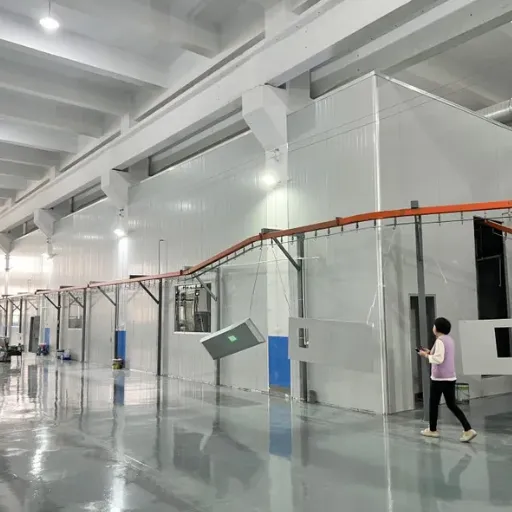
One of the most important uses of conveyor speed calculation is sizing curing oven dwell time. The formula is straightforward:
Dwell time (min) = oven effective length (m) ÷ line speed (m/min)
The effective length is the distance a workpiece actually spends inside the heated zone, not the overall building length of the oven. For a tunnel-type curing oven with an effective heated length of 30 m and a line speed of 2.5 m/min:
30 m ÷ 2.5 m/min = 12 minutes
If the powder supplier specifies a 10-minute cure at 180°C, this gives a small safety margin. If line speed increases to 3.0 m/min, dwell time falls to 10 minutes exactly, leaving no margin for temperature variation or chain speed fluctuation.
For liquid painting lines, the same principle applies across multiple zones. A typical wet paint line may include a flash-off zone, a drying tunnel, and a cooling zone.
Each zone has its own required dwell time. The total tunnel length divided by line speed must satisfy the longest required process time, usually the bake schedule. If the paint specification calls for 20 minutes at 160°C, and your drying tunnel is 40 m long, the maximum allowable line speed is:
40 m ÷ 20 min = 2.0 m/min
Temperature uniformity also matters. Deqing Leixin curing ovens are engineered with 304 stainless steel liners and precision temperature control within ±3°C, but even the best oven can't compensate for a dwell time that is too short. Conveyor speed calculation and oven design must be matched as one system.
Application-Specific Adjustments for Powder Coating, Liquid Painting, and E-Coat
Different coating technologies place different demands on conveyor speed. A single line speed cannot be copied from one process to another without checking these process-specific requirements.
Powder coating. In an automatic powder coating line, the workpiece must pass through the powder cloud long enough for electrostatic deposition to build the target film thickness. The reciprocator stroke frequency and gun triggering intervals must be synchronized with the chain speed. If the conveyor moves too fast, the powder cloud may not have enough time to wrap complex geometries, leading to thin spots or the Faraday cage effect inside corners. If it moves too slowly, powder build-up can become excessive, causing orange peel or runs on vertical surfaces.
Liquid painting. Wet paint lines need time for solvent or water to flash off before entering the main drying tunnel. Waterborne coatings especially need controlled flash-off to prevent bubbling or poor leveling. Multi-coat systems may require separate spray booths and flash zones, so the conveyor speed calculation must account for the cumulative distance from primer to topcoat to final bake.
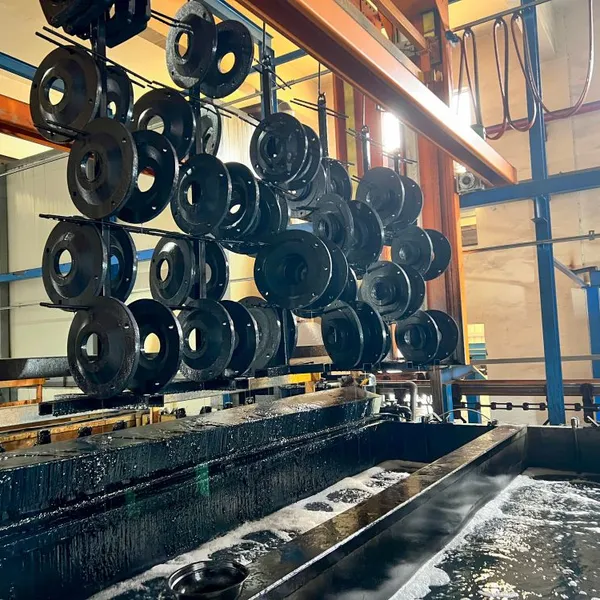
Electrophoretic coating. In an ED coating line, the workpiece is immersed in a tank for a controlled time. The conveyor speed calculation here is governed by tank length and required immersion time, typically 2 to 3 minutes for automotive-style e-coat. After the tank, the part passes through ultrafiltration rinse stages and a cure oven. Speed changes in the post-rinse section must not allow the coating to dry before rinsing is complete.
Pretreatment. Spray or dip pretreatment stages also depend on dwell time. A five-stage washer with spray zones needs roughly 60 to 90 seconds per stage for effective cleaning, phosphating, and passivation. The total pretreatment tunnel length divided by line speed must equal or exceed the required process time. Deqing Leixin surface pretreatment systems are sized to match the line speed and workpiece contamination type, whether the parts carry oil, rust, or mill scale.
A furniture manufacturer in Dongguan once converted a manual powder line to an automatic one. The new overhead conveyor system used a power-and-free design, but the engineering team used the old chain speed without recalculating carrier pitch.
The carriers were spaced too closely for the larger sofa frames, and parts jammed at the oven entry. After recalculating spacing based on the longest workpiece plus a 200 mm clearance, the line ran cleanly at 120 frames per hour. The takeaway is that conveyor speed calculation must include the largest workpiece you intend to run.
Common Conveyor Speed Calculation Mistakes (and How to Avoid Them)
Even experienced engineers make errors when they rush the conveyor speed calculation. Here are the most common mistakes and how to prevent them.
Ignoring chain pitch when changing sprockets. A larger sprocket increases chain speed even if the motor rpm stays the same. Always recalculate using the actual pitch and measured sprocket speed, not the nameplate motor speed.
Confusing chain speed with carrier speed in power-and-free systems. The drive chain may move at 3.0 m/min, but carriers can stop at stations while the chain continues. Process timing depends on the speed of the loaded carrier when it is in motion, not the chain speed during accumulation.
Neglecting chain stretch and wear. Over time, overhead conveyor chains elongate. A worn chain effectively increases pitch, which slightly raises line speed for the same sprocket rpm. Routine tensioning and chain replacement are part of accurate speed control.
Mismatching zones. The spray booth may be sized for 3.0 m/min, but the curing oven may only support 2.5 m/min. The slowest process stage sets the maximum line speed. Designing each zone independently leads to bottlenecks.
Using catalog rpm without measuring actual speed. Motor nameplates list nominal rpm. Gear reducers, belt drives, and VFD settings change the actual sprocket speed. Use a handheld tachometer or mark the chain and time a known distance to verify real speed.
Failing to validate with production parts. A calculated speed looks good on paper, but only a production trial can reveal issues like part-to-part contact, poor coverage, or inadequate cure. Always run qualification parts at the target speed before releasing the line for full production.
The best defense against these mistakes is to treat conveyor speed calculation as a system-level exercise, not a standalone number. Every stage, from loading to unloading, must be checked against the same chain speed.
Integrating Conveyor Speed Into Your Turnkey Coating Line Design
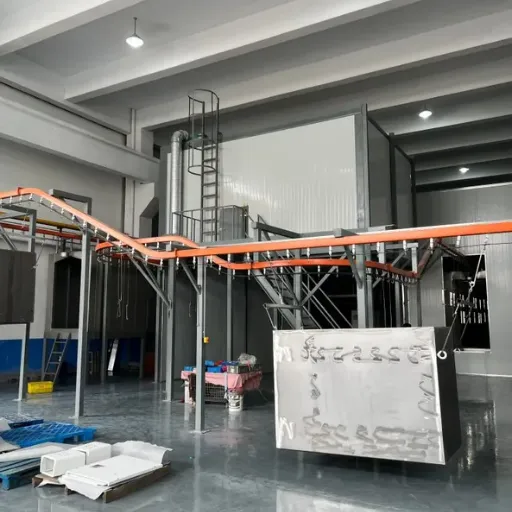
At Deqing Leixin Coating Equipment Co., Ltd., conveyor speed calculation is built into every turnkey coating system we design. Our process starts with your workpiece dimensions, weight, maximum daily output, preferred heating source, and available factory space. From there, we select the chain pitch, sprocket configuration, and drive system that deliver the required line speed while leaving margin for process variation.
Our overhead conveyor systems are integrated with PLC-based control and touch-screen HMI, so operators can adjust speed within preset process windows. Variable frequency drives allow fine tuning without mechanical changes. For power-and-free lines, we program accumulation logic to prevent jams while maintaining consistent process timing.
We also coordinate conveyor speed with upstream and downstream equipment. Pretreatment spray density, reciprocator stroke patterns, powder recovery airflow, and oven thermal capacity are all sized for the same target line speed. This system-level approach is what turns individual machines into a production line.
Because we manufacture complete lines under ISO 9001:2015 quality management, every conveyor speed calculation is documented in the design drawings and verified during factory acceptance testing and on-site commissioning. Operators and maintenance staff receive training on how to monitor chain speed, recognize drift, and make safe adjustments.
If you are evaluating a new coating line or trying to solve a throughput problem on an existing one, contact our engineering team for a free layout drawing and quotation. We'll model your conveyor speed calculation, oven dwell time, and capacity so you can move forward with confidence.
Conclusion
Conveyor speed calculation is one of the most practical skills in coating line engineering. A small error in chain speed can undo the investment you have made in pretreatment, spray application, and curing equipment. A correct calculation keeps quality high, throughput predictable, and energy costs under control.
Here are the key takeaways:
Use the formula chain pitch × sprocket rpm ÷ 1,000 to find metric line speed.
Calculate production capacity using line speed ÷ workpiece spacing × 60.
Size curing oven dwell time with oven length ÷ line speed.
Match conveyor speed to the slowest required process stage on the line.
Validate calculated speeds with actual production trials and regular maintenance.
Start your next project with accurate numbers. Submit your workpiece specifications and production targets to Deqing Leixin, and we'll prepare a turnkey coating line design that includes a verified conveyor speed calculation, optimized layout, and full equipment specification.
Recently Posted
-
Conveyor Line Design: A Complete Engineering Guide for Coating Lines
June 26, 2026Last autumn, a hardware manufacturer in Vietnam commissioned a new powder coating line. The pretreatment tunnel, cyclone-recovery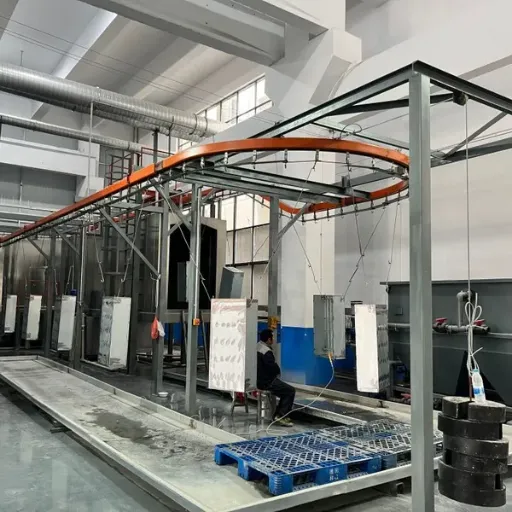 Read More
 -
Overhead Conveyor System: Engineering Guide for Coating Lines
June 26, 2026Last autumn, a hardware manufacturer in Ningbo faced a familiar problem. Their new powder coating line had to fit inside a buildin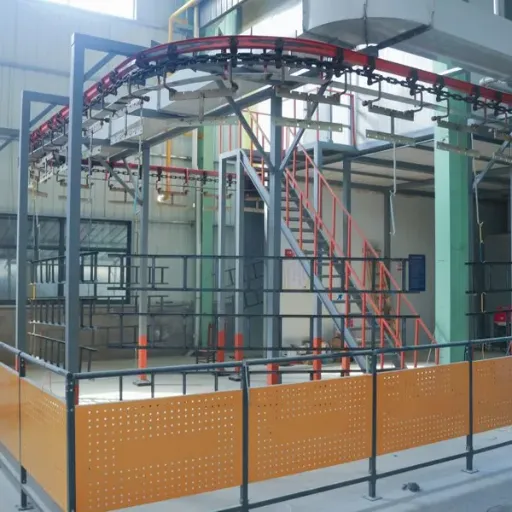 Read More
 -
Industrial Paint Booth: A Complete Engineering Guide for Manufacturers
June 26, 2026When Mike Chen expanded his metal furniture factory in Zhejiang Province last spring, he assumed the new spray area would solve hi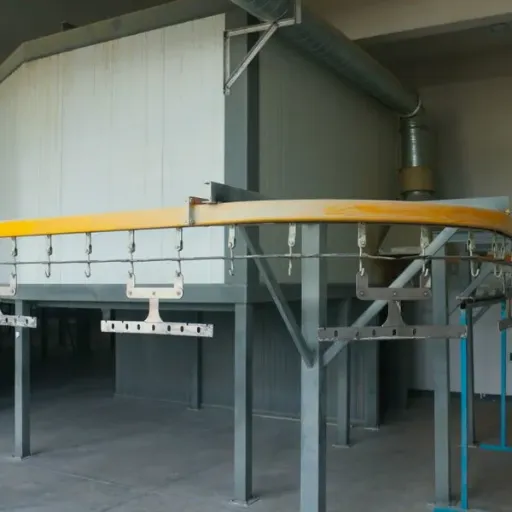 Read More
 -
Paint Curing Process: An Engineer's Guide to Industrial Oven Curing
June 25, 2026The most expensive mistake in a coating line isn't always a misaligned spray gun or the wrong powder. It's a curing oven t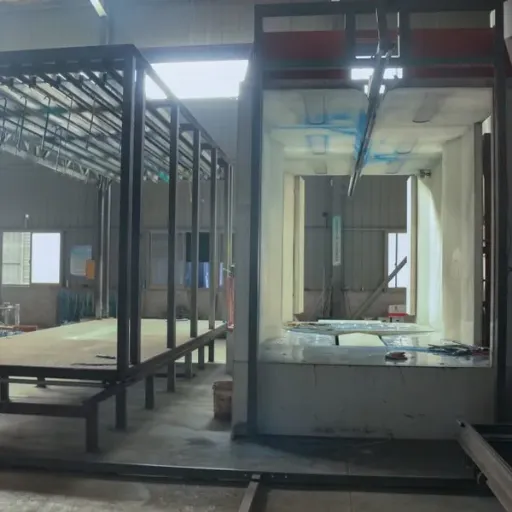 Read More

Contact Us
Recommended Products
-
 Industrial Custom Spray Coating Line for Hardware Anti‑Corrosion TreatmentNegotiableMOQ: 1 Set
 -
Industrial Electrophoresis Line for Metal Water Pump Workpieces ProcessingNegotiableMOQ: 1 Set
-
Custom E‑Coating Production Line for Water Pump Parts Surface FinishingNegotiableMOQ: 1 Set
-
China OEM Custom E-Coating Machine and Cathodic Electrophoresis Production LineNegotiableMOQ: 1 Set
-
Industrial Electrophoretic Coating Line With Custom Design for Metal WorkpiecesNegotiableMOQ: 1 Set
-
Intelligent Automated Electrophoretic Coating Line for Powder Coating Production EquipmentNegotiableMOQ: 1 Set
-
Full Automatic Custom Electrophoretic Coating Line for Industrial Metal ComponentsNegotiableMOQ: 1 Set
-
Heavy‑Duty Continuous Powder Coating Line for Big Cabinet Anti‑Corrosion FinishingNegotiableMOQ: 1 Set
-
Energy‑Saving Powder Coating Line for Large Industrial Cabinet Surface ProtectionNegotiableMOQ: 1 Set
-
Environmental Friendly Powder Coating Line With High Recovery for Large CabinetsNegotiableMOQ: 1 Set
-
Large Manual Industrial Curing Oven for Metal Powder Coating MachineryNegotiableMOQ: 1 Set
-
Industrial Plastic Drying Oven With PLC Control and 304 Stainless Steel HopperNegotiableMOQ: 1 Set
-
High Efficiency Plastic Raw Material Dryer for Plastic ProcessingNegotiableMOQ: 1 Set
-
Compact E-Coating System for Small Metal Components in Automotive & Medical Device ProductionNegotiableMOQ: 1 Piece
-
Gantry Transport Type Electrophoretic Coating Line for Industrial WorkpiecesNegotiableMOQ: 1 Set
-
Custom Gantry Electrophoretic Coating Line for Automotive Component FinishingNegotiableMOQ: 1 Set
-
Large Workpiece Stainless Steel Manual Powder Spray Booth With Ventilation SystemNegotiableMOQ: 1 Set
-
Large Capacity Stainless Steel Manual Powder Spray Booth With Powder Recovery SystemNegotiableMOQ: 1 Set
-
Automatic Large Workpiece Powder Spray Booth for Metal FabricationNegotiableMOQ: 1 Set
-
Powder Spraying Room With Stainless Steel Frame and PLC ControlNegotiableMOQ: 1 Set