
 Business License

Overhead Conveyor System: Engineering Guide for Coating Lines
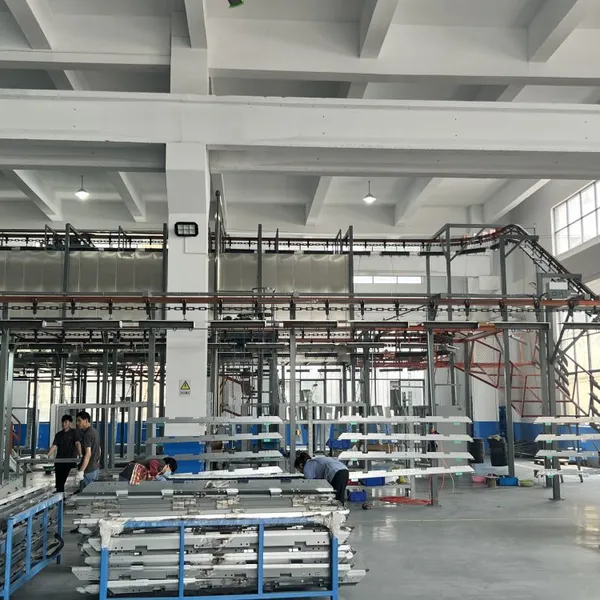
Last autumn, a hardware manufacturer in Ningbo faced a familiar problem. Their new powder coating line had to fit inside a building originally designed for assembly, not surface finishing. Floor space was tight, existing production cells could not move, and the pretreatment tanks alone consumed most of the available footprint. The project looked impossible until the engineering team routed the workpiece transport above the equipment instead of around it.
That decision, an overhead conveyor system, turned a cramped factory into a coherent coating production line.
You already know that coating lines need pretreatment, spray application, and curing. What is less obvious is how much the transport path affects layout efficiency, coating quality, and daily throughput. In this guide, you will learn how an overhead conveyor system works, which designs suit different production environments, and how to specify one that matches your workpiece dimensions, output targets, and factory constraints. Whether you are planning a new overhead conveyor for powder coating line installation or rethinking material handling in an existing paint shop, the engineering principles below will help you make an informed decision.
Want to see how an overhead layout fits your factory? Request a free line design drawing →
What Is an Overhead Conveyor System?
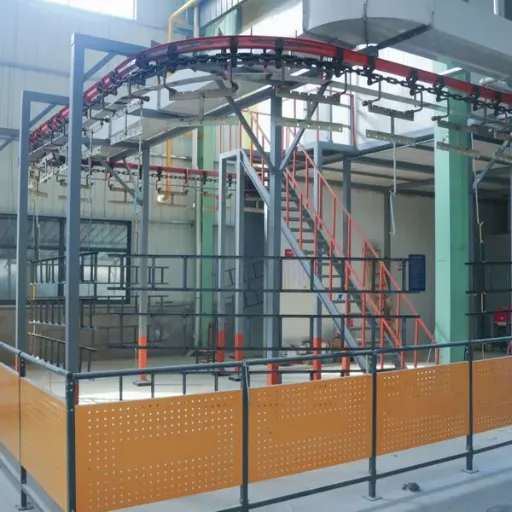
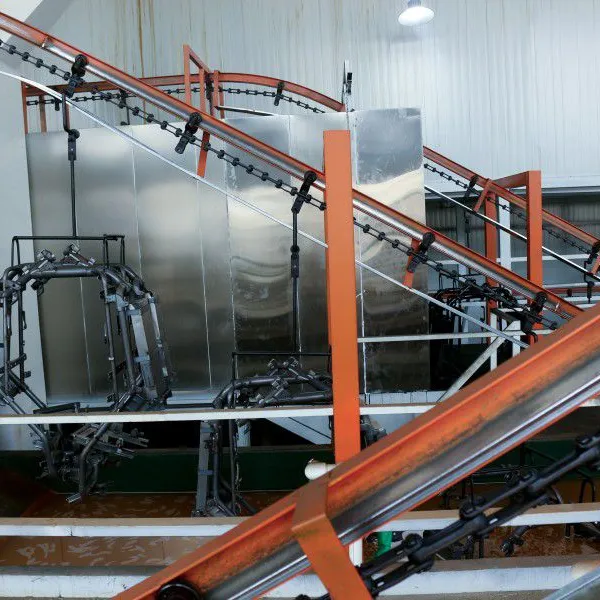
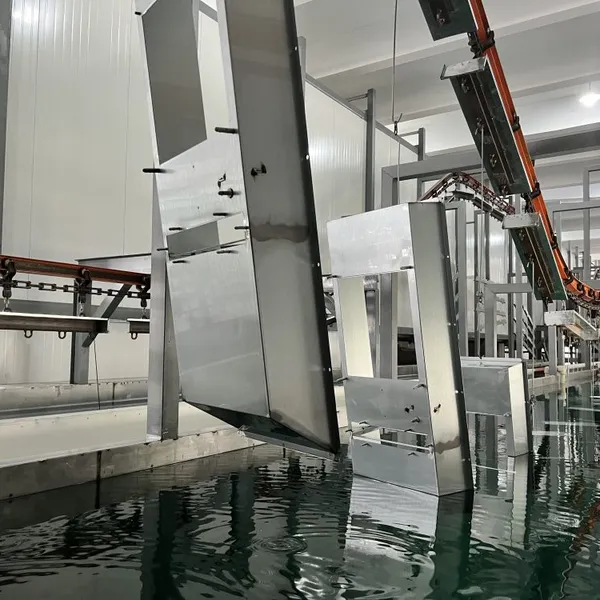
An overhead conveyor system is a material handling solution that suspends workpieces from a track-mounted chain or trolley arrangement, transporting them through sequential production stages at a controlled speed. In coating operations, the system carries parts from loading, through pretreatment and washing, into the spray booth or dip tank, through the curing oven or drying tunnel, and finally to cooling and unloading.
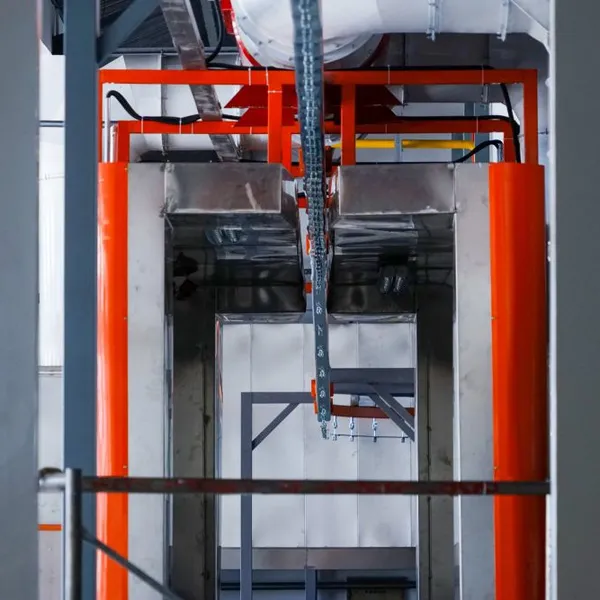
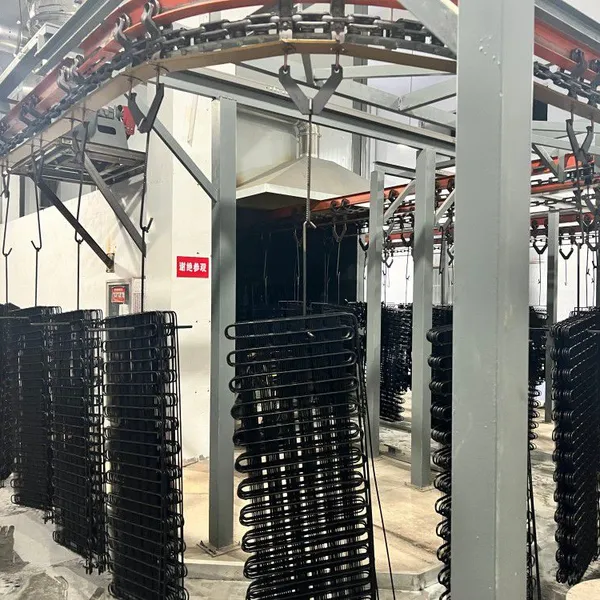
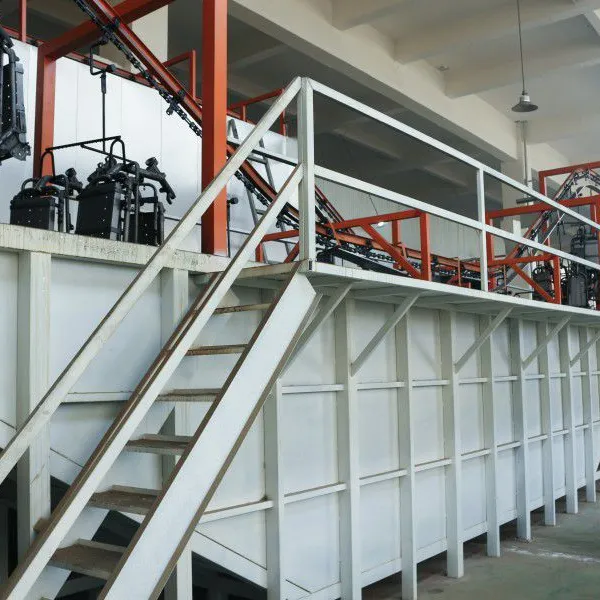
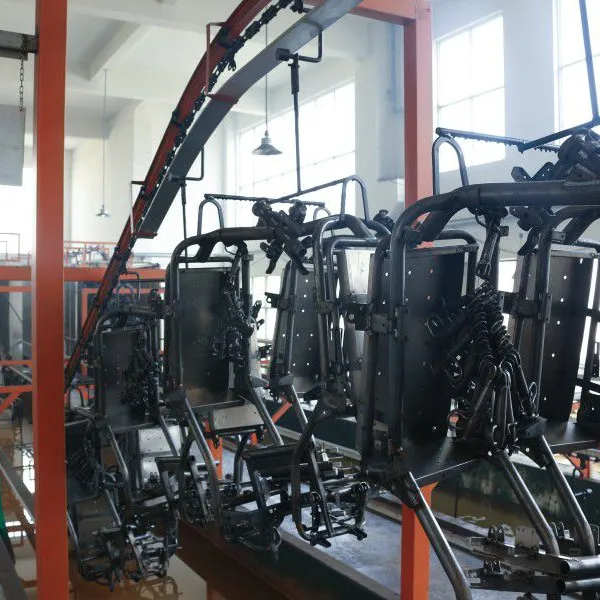
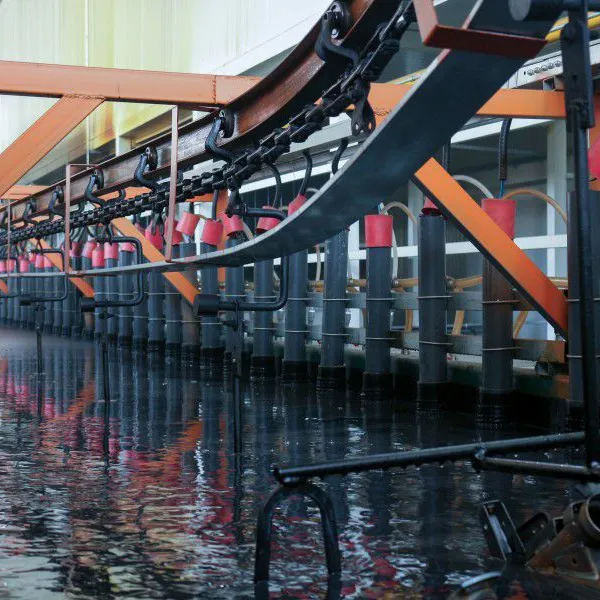
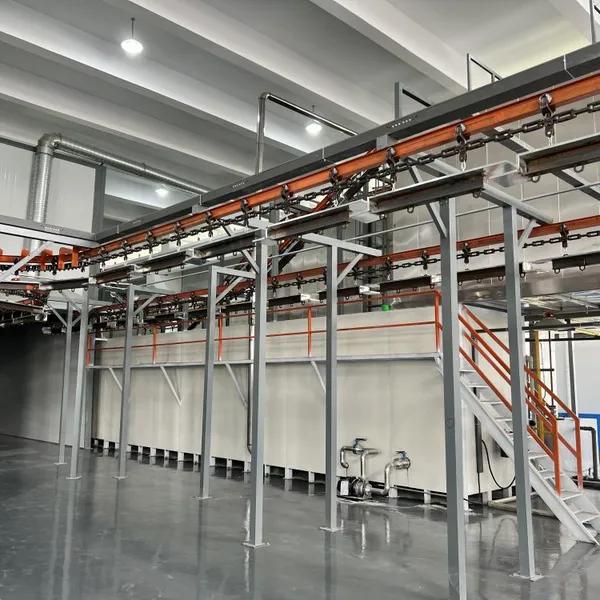
Unlike floor-mounted conveyors, an overhead design uses vertical space rather than production floor area. Workpieces hang from hooks, racks, or specialized fixtures attached to trolleys that roll along an elevated rail. A drive unit pulls the chain at a constant or variable speed, setting the dwell time for each process stage.
The Powder Coating Institute notes that conveyor selection is one of the most influential decisions in line design because it affects part access, process timing, and building utilization. A well-engineered aerial conveying system keeps parts stable, exposes surfaces for uniform coating, and frees floor space for operators and supporting equipment.
Types of Overhead Conveyor Systems
Not every overhead conveyor is built the same way. The right configuration depends on workpiece weight, process complexity, required flexibility, and budget.
I-Beam Overhead Conveyors
The I-beam design uses a solid steel beam as the running surface for trolleys with flanged wheels. It is one of the most robust configurations available and is common in heavy-duty applications such as automotive parts, large appliance housings, and steel fabrications.
I-beam systems handle high loads and tolerate harsh environments. The open design is easy to inspect and maintain, but it also exposes the track and chain to overspray and chemical carryover. Regular cleaning and lubrication are essential to prevent contamination of coated surfaces.
Enclosed Track Overhead Conveyors
Enclosed track systems use a box-shaped rail that protects the chain and trolley wheels inside the track profile. This design reduces contamination risk because lubricant, debris, and moisture are less likely to drip onto parts below. It is a popular choice for high-gloss finishes, food-contact applications, and clean manufacturing environments.
The enclosed profile also improves safety by guarding moving components. However, enclosed track systems generally have lower load capacity than comparable I-beam designs. They work best for light to medium workpieces such as hardware, tools, and small appliance components.
Power-and-Free Overhead Conveyors
A power-and-free conveyor is a more advanced form of overhead conveyor system that separates the drive chain from the part carriers. This allows individual loads to stop, buffer, or divert without halting the entire line. Power-and-free technology is ideal when workpiece mix, variable process times, or buffering requirements dominate the production profile.
For example, an automotive supplier running both small brackets and large housings on the same line can pause one carrier for extra pretreatment while others proceed to spray. The added flexibility comes with higher mechanical complexity and cost, but it often pays back through higher equipment utilization and reduced downtime.
How an Overhead Conveyor System Works in a Coating Line
A typical coating line depends on synchronized movement through multiple stages. The overhead conveyor system provides that synchronization by controlling the time each workpiece spends in each zone.
Loading and Fixture Attachment
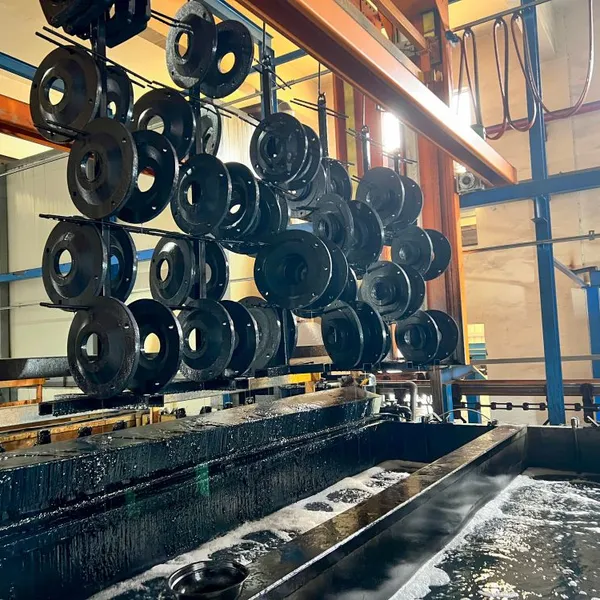
Operators or robots attach workpieces to hooks, racks, or fixtures at the loading station. Fixture design matters: poorly balanced parts swing during acceleration, causing uneven coating or contact between parts. The center of gravity should sit directly below the trolley hook, and parts should be spaced to allow spray access from all required angles.
Pretreatment Transport
In spray or dip pretreatment stages, the conveyor moves parts through degreasing, rinsing, phosphating, and passivation zones. Drain time between tanks is critical. If parts carry excessive rinse water into the drying or coating stage, adhesion and finish quality can suffer. An overhead layout lets parts drain naturally as they travel between stages.
Spray Application and Coating
In the spray booth, line speed determines how long the reciprocator or operator has to coat each part. Too fast, and coverage becomes thin or incomplete. Too slow, and powder or paint builds up, causing runs, orange peel, or excessive film thickness. The Chemical Coaters Association International emphasizes that consistent conveyor speed is fundamental to transfer efficiency and finish uniformity.
Curing and Cooling
After coating, parts enter the curing oven or drying tunnel. The conveyor must maintain speed through elevated temperatures, often between 160°C and 220°C for powder coating cure windows. Track expansion, chain lubrication, and trolley material selection must all account for thermal cycling. After cure, parts travel through a cooling zone before unloading.
Key Design Parameters for Overhead Conveyor Systems
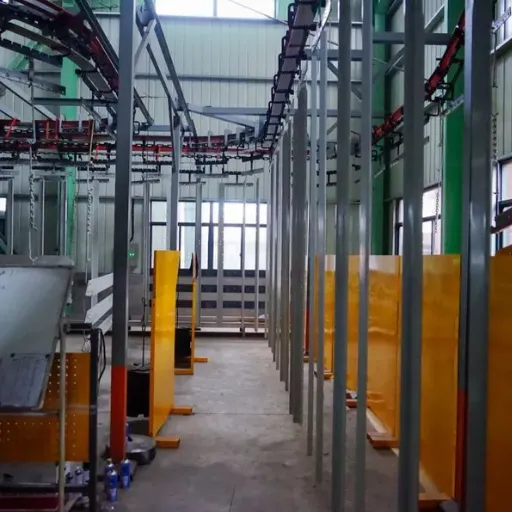
Specifying an overhead conveyor system requires more than choosing a rail size. Engineers must balance load, speed, space, and process requirements.
Workpiece Envelope and Weight
Document the maximum length, width, height, and weight of each workpiece, including the fixture. Then add a safety margin for future product variations. The trolley spacing, chain pitch, track support spacing, and drive motor sizing all derive from these numbers.
For top-heavy or irregular parts, dual-point suspension or stabilizer bars may be necessary to prevent rotation during travel. Deqing Leixin typically designs carriers around the heaviest anticipated load plus a 20% margin.
Line Speed and Cycle Time
Line speed is calculated from required throughput and process dwell times. In powder coating, common conveyor speeds range from 1.0 to 3.0 meters per minute, depending on part size and cure requirements. The oven length and cure window usually define the limiting speed. Pretreatment and spray stages are then sized to match.
Track Routing and Building Constraints
Ceiling height, column spacing, door openings, and existing utilities all influence the path. Overhead conveyors can rise, fall, and turn, but every vertical change and horizontal curve adds mechanical complexity. Large-radius curves reduce wear and noise. A detailed 3D layout drawing prevents interference during installation.
Environmental Exposure
Pretreatment chemicals, powder overspray, and oven heat all attack conveyor components. Stainless steel track, heat-resistant lubricants, and sealed trolley bearings extend service life in aggressive environments. Enclosed track designs are particularly useful where contamination control is critical.
Industry Applications for Overhead Conveyor Systems
Overhead conveying is used across nearly every industry that applies protective or decorative coatings to metal parts.
Automotive parts: Wheels, brackets, control arms, and trim pieces move through e-coat, powder, or liquid systems with controlled orientation.
Home appliances: Washing machine panels, refrigerator shells, and air conditioner housings benefit from the floor space freed by elevated transport.
Hardware and tools: Hinges, locks, hand tools, and fasteners are small enough for enclosed track systems with high-density loading.
Elevator and electric cabinets: Large panels hang vertically, exposing both faces for spray application without occupying floor space.
Steel furniture and aluminum extrusions: Table frames, chair bases, window profiles, and door frames travel efficiently on overhead chains with custom fixtures.
When a steel furniture factory in Guangdong switched from manual carts to an overhead chain conveyor, daily throughput increased by 35%. Parts no longer waited in queues between stages, and operators gained floor space for quality inspection stations. The elevated layout also reduced handling damage because parts were suspended rather than stacked.
Maintenance Best Practices for Overhead Conveyor Systems
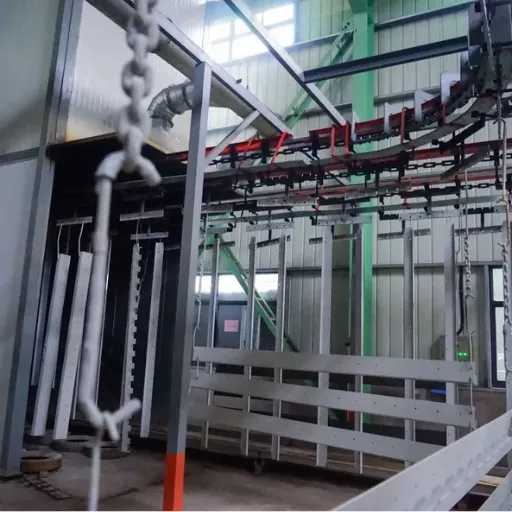
Even a rugged overhead conveyor will degrade without preventive care. Planned maintenance protects uptime and finish quality.
Lubrication Management
Chain lubrication is the most critical routine task. Use lubricants rated for the operating environment: high-temperature formulations for oven sections, corrosion-resistant products for pretreatment zones. Automatic lubrication systems provide consistent application and reduce manual labor. Excess lubricant should be avoided because it can attract overspray and drip onto parts.
Tension and Wear Inspection
Chain stretch is normal. A take-up unit compensates for elongation, but it has limited travel. Inspect it regularly and replace chain sections before the take-up reaches its limit. Also check trolley wheels, bearings, and drive sprockets for wear during scheduled shutdowns.
Track Alignment
Misalignment causes uneven loading, noise, and premature wear. Check horizontal curves, vertical bends, and rail joints for correct geometry. Even small deviations can amplify over long track lengths. Keep the track clean of powder buildup and chemical residue.
Load Distribution
Avoid clustering heavy workpieces in one section of the chain. Spread loads evenly to prevent localized stress and chain sag. Respect the rated capacity per trolley and never exceed the design load for curves or elevation changes.
Selecting the Right Overhead Conveyor System
Choosing an overhead conveyor system is a strategic decision that affects layout, throughput, and operating cost for years. Use the following framework during supplier evaluation.
Match the conveyor type to the workpiece: I-beam for heavy loads, enclosed track for cleanliness, power-and-free for flexibility.
Size for maximum load plus growth: Include a margin for future products and seasonal peaks.
Calculate speed from the oven backward: Cure requirements usually set the pace for the entire line.
Plan for building constraints: Verify ceiling height, column locations, and utility routing before finalizing the layout.
Evaluate supplier integration capability: A supplier that designs the conveyor as part of a complete powder coating production line will deliver better alignment than one that treats conveying as an add-on.
When Lin, a production manager at an appliance components plant in Jiangsu, evaluated conveyor options for a new line, she initially focused only on price. After visiting a reference installation, she realized that the supplier offering the lowest quote had not accounted for thermal expansion in the oven section. The competitor's turnkey proposal included a curing oven and surface pretreatment system engineered together with the conveyor. She chose the integrated solution. Commissioning took two weeks instead of the six weeks her predecessor had experienced with a multi-vendor project.
Integration With Turnkey Coating Lines
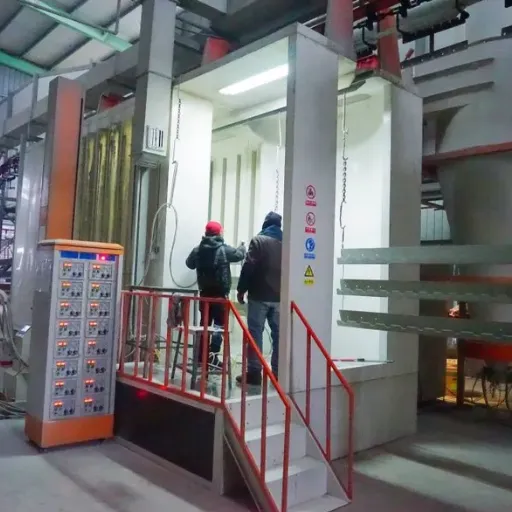
An overhead conveyor system never operates in isolation. It must interface cleanly with the pretreatment tanks, spray booth openings, curing oven entry and exit vestibules, and control system. When these elements come from different suppliers, interface problems are common.
A turnkey approach eliminates much of that risk. Deqing Leixin designs, manufactures, installs, and commissions complete coating production lines, including the conveying system, pretreatment equipment, spray application systems, and curing ovens. This single-source responsibility ensures that track routing, carrier dimensions, and process timing are coordinated from the start.
The benefit is especially valuable for international projects. One project timeline replaces multiple vendor schedules, and the same engineering team addresses questions during installation and commissioning. Free design drawings help buyers visualize how the aerial conveying system interacts with every other stage before any equipment is manufactured.
Ready to specify an overhead conveyor system for your coating line? Contact our engineers with your workpiece specifications →
Common Mistakes to Avoid
Even experienced buyers can make costly errors when specifying an overhead conveyor. Watch for these pitfalls.
Undersizing the system: A conveyor sized only for current products will limit growth. Build in margin for part size, weight, and throughput.
Ignoring contamination paths: Chain lubricant, rust particles, and pretreatment drag-out can drip onto freshly coated surfaces. Enclosed tracks, drip pans, and proper lubrication practices reduce this risk.
Neglecting maintenance access: Overhead components need safe access for inspection and lubrication. Plan platforms, ladders, or walkways where needed.
Skipping the 3D layout: Two-dimensional drawings often miss interferences with columns, ducts, and existing equipment. A 3D model prevents surprises during installation.
Forgetting spare parts: Stock critical wear items such as trolley wheels, chain links, and drive sprockets. A missing $30 component should not shut down a $50,000-per-day line.
Conclusion: Elevate Your Coating Line With the Right Overhead Conveyor System
An overhead conveyor system is more than a way to move parts. It is a layout strategy that frees floor space, exposes surfaces for uniform coating, and synchronizes every stage of the finishing process. The right system matches your workpiece envelope, throughput target, building constraints, and quality requirements while leaving room for growth.
Keep these five points in mind as you evaluate options:
Choose the conveyor type based on load, cleanliness requirements, and flexibility needs.
Size the chain, trolleys, and track for maximum anticipated load plus a safety margin.
Calculate line speed from the curing requirement backward to maintain process timing.
Plan lubrication, inspection access, and spare parts from the beginning.
Consider a turnkey supplier to ensure the conveyor integrates cleanly with pretreatment, spray, and cure stages.
The Ningbo hardware manufacturer that routed its line overhead never looked back. The layout worked because the conveyor was designed around the building, the workpieces, and the process, not the other way around. That is the difference between a transport system and a true production line.
Start Your Coating Line Project → Submit your workpiece dimensions, daily output target, and factory layout, and our engineers will respond with a preliminary overhead conveyor system design and quotation within 3 hours.
Recently Posted
-
Conveyor Speed Calculation for Coating Lines: A Complete Guide
June 26, 2026Last March, a hardware manufacturer in Ningbo raised the chain speed on its powder coating line by 15% to clear a backlog. Three d Read More
 -
Conveyor Line Design: A Complete Engineering Guide for Coating Lines
June 26, 2026Last autumn, a hardware manufacturer in Vietnam commissioned a new powder coating line. The pretreatment tunnel, cyclone-recovery Read More
 -
Industrial Paint Booth: A Complete Engineering Guide for Manufacturers
June 26, 2026When Mike Chen expanded his metal furniture factory in Zhejiang Province last spring, he assumed the new spray area would solve hi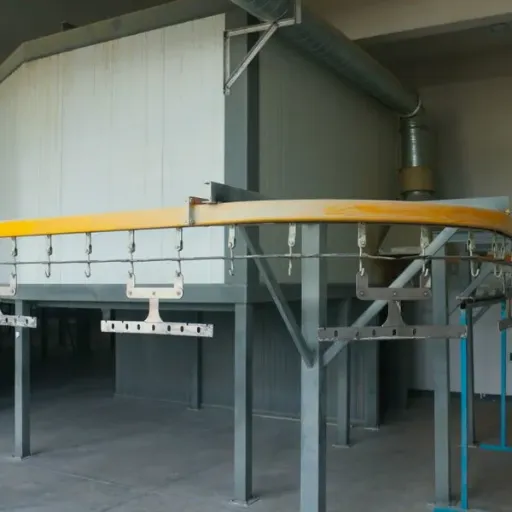 Read More
 -
Paint Curing Process: An Engineer's Guide to Industrial Oven Curing
June 25, 2026The most expensive mistake in a coating line isn't always a misaligned spray gun or the wrong powder. It's a curing oven t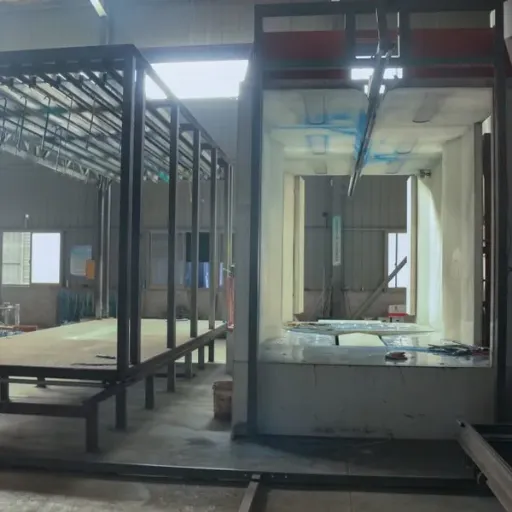 Read More

Contact Us
Recommended Products
-
 Industrial Custom Spray Coating Line for Hardware Anti‑Corrosion TreatmentNegotiableMOQ: 1 Set
 -
Industrial Electrophoresis Line for Metal Water Pump Workpieces ProcessingNegotiableMOQ: 1 Set
-
Custom E‑Coating Production Line for Water Pump Parts Surface FinishingNegotiableMOQ: 1 Set
-
China OEM Custom E-Coating Machine and Cathodic Electrophoresis Production LineNegotiableMOQ: 1 Set
-
Industrial Electrophoretic Coating Line With Custom Design for Metal WorkpiecesNegotiableMOQ: 1 Set
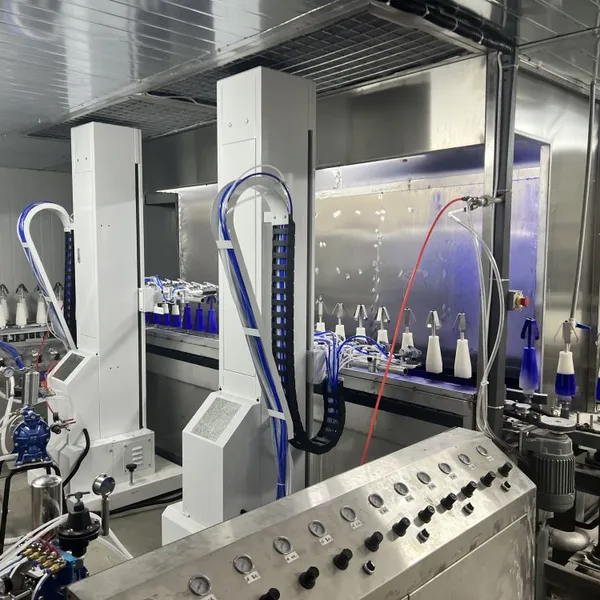
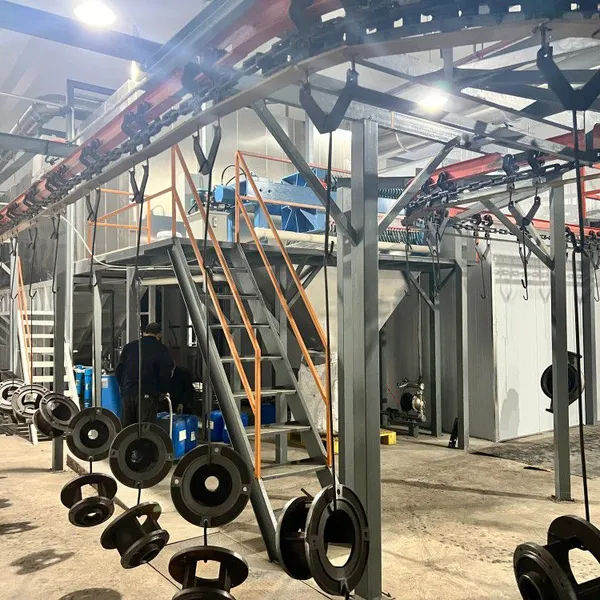
-
Intelligent Automated Electrophoretic Coating Line for Powder Coating Production EquipmentNegotiableMOQ: 1 Set
-
Full Automatic Custom Electrophoretic Coating Line for Industrial Metal ComponentsNegotiableMOQ: 1 Set
-
Heavy‑Duty Continuous Powder Coating Line for Big Cabinet Anti‑Corrosion FinishingNegotiableMOQ: 1 Set
-
Energy‑Saving Powder Coating Line for Large Industrial Cabinet Surface ProtectionNegotiableMOQ: 1 Set
-
Environmental Friendly Powder Coating Line With High Recovery for Large CabinetsNegotiableMOQ: 1 Set
-
Large Manual Industrial Curing Oven for Metal Powder Coating MachineryNegotiableMOQ: 1 Set
-
Industrial Plastic Drying Oven With PLC Control and 304 Stainless Steel HopperNegotiableMOQ: 1 Set
-
High Efficiency Plastic Raw Material Dryer for Plastic ProcessingNegotiableMOQ: 1 Set
-
Compact E-Coating System for Small Metal Components in Automotive & Medical Device ProductionNegotiableMOQ: 1 Piece
-
Gantry Transport Type Electrophoretic Coating Line for Industrial WorkpiecesNegotiableMOQ: 1 Set
-
Custom Gantry Electrophoretic Coating Line for Automotive Component FinishingNegotiableMOQ: 1 Set
-
Large Workpiece Stainless Steel Manual Powder Spray Booth With Ventilation SystemNegotiableMOQ: 1 Set
-
Large Capacity Stainless Steel Manual Powder Spray Booth With Powder Recovery SystemNegotiableMOQ: 1 Set
-
Automatic Large Workpiece Powder Spray Booth for Metal FabricationNegotiableMOQ: 1 Set
-
Powder Spraying Room With Stainless Steel Frame and PLC ControlNegotiableMOQ: 1 Set