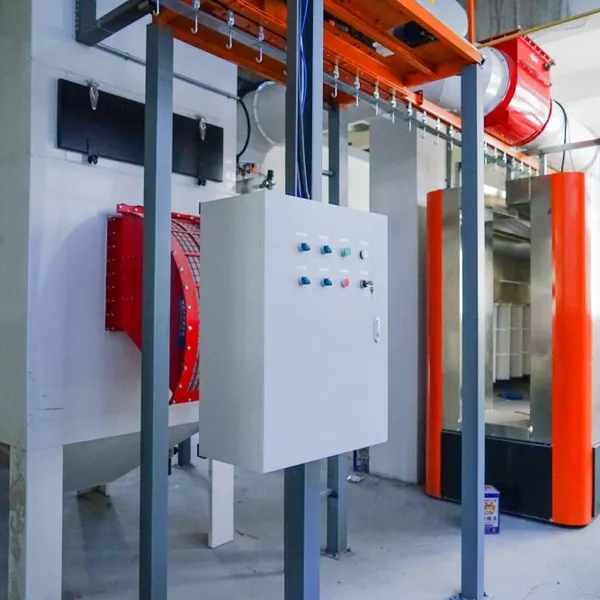

 Business License

Industrial Paint Booth: A Complete Engineering Guide for Manufacturers
When Mike Chen expanded his metal furniture factory in Zhejiang Province last spring, he assumed the new spray area would solve his quality problems. Instead, dust contamination, inconsistent airflow, and overspray drift turned his fresh-painted panels into rework. His old open-spray corner simply could not handle 400 workpieces per day. That is when he realized the real issue: he needed a properly engineered industrial paint booth, not just a bigger room with a fan.
If you are planning a new finishing area or upgrading an existing one, you already know that coating quality, operator safety, and regulatory compliance all start at the booth. The right enclosure controls airflow, captures overspray, and creates the stable environment your spray guns need to deposit a uniform film. The wrong one generates defects, wastes material, and exposes your team to solvents and particulates.
In this guide, you will learn how an industrial paint booth works, which configuration fits common production scenarios, and how to size and integrate the booth into a complete painting production line. You will also see how airflow, filtration, and maintenance decisions affect total cost of ownership. By the end, you will have a clear specification framework to discuss with your equipment supplier.
Want to see how a booth fits your specific workpieces and factory layout? Request a free line design drawing from our engineering team and receive layout recommendations within 3 business days.
What Is an Industrial Paint Booth and Why Does Design Matter?
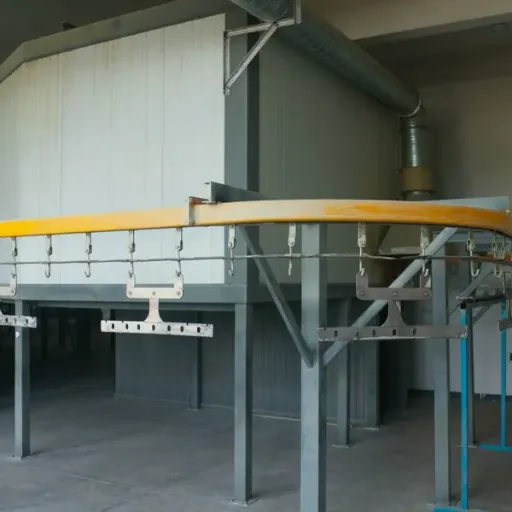
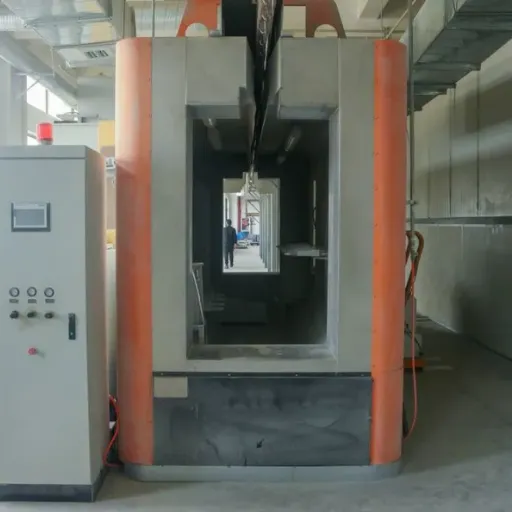
An industrial paint booth is an enclosed, ventilated workspace designed to contain, control, and exhaust the spray application of liquid paint, powder, or specialty coatings. Unlike a simple spray corner, a booth manages three critical variables at once: airflow velocity, filtration efficiency, and airborne contaminant containment. When these variables are balanced, the result is consistent film thickness, fewer defects, and a safer working environment.
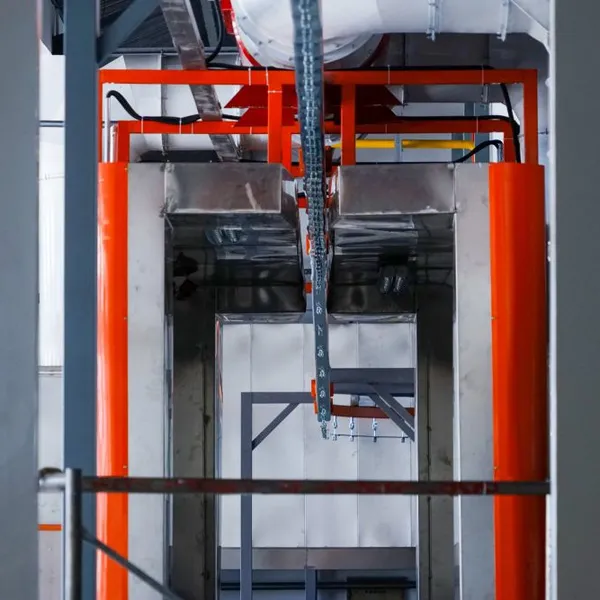
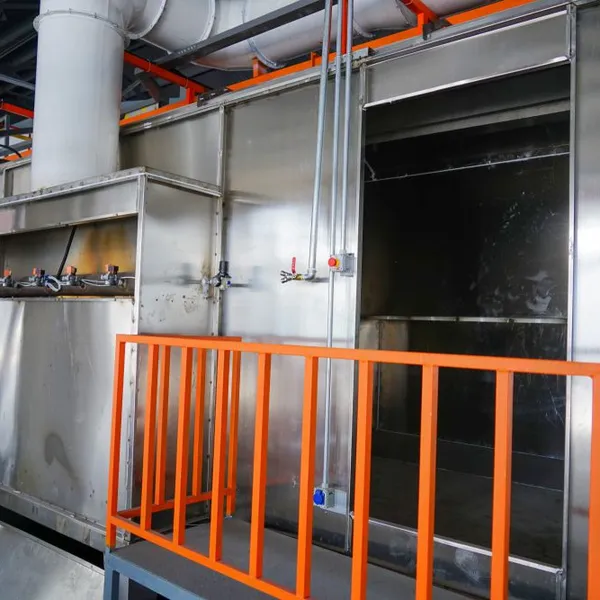
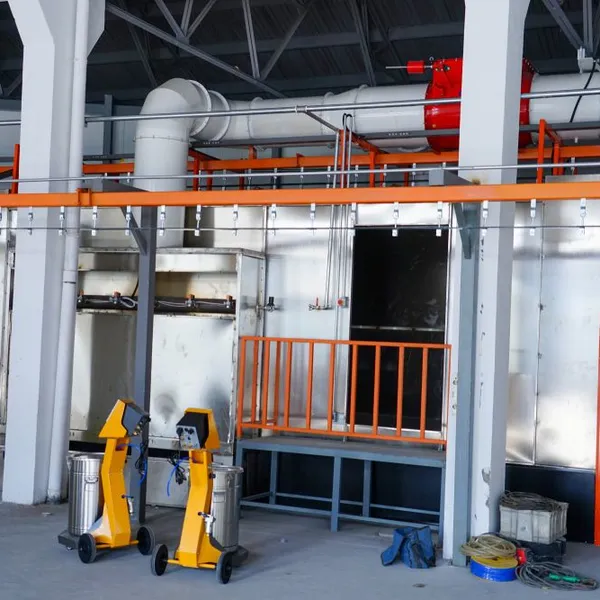
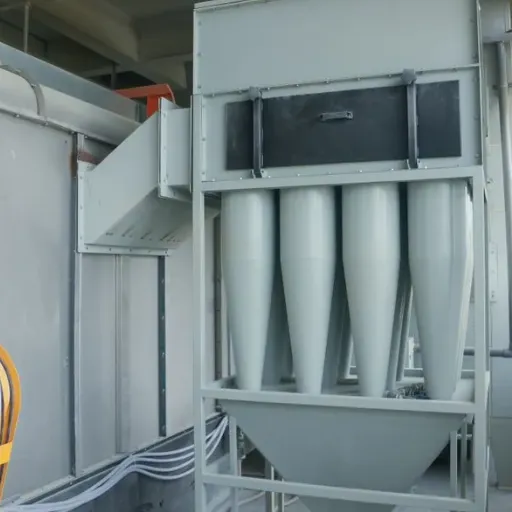
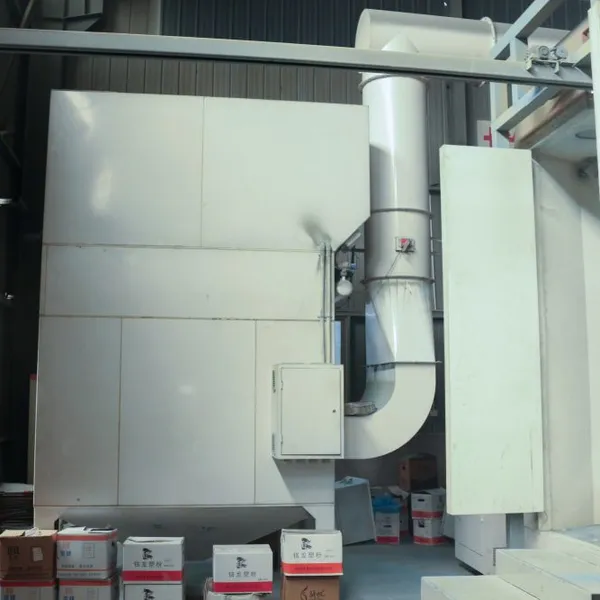
The basic anatomy of a spray booth system includes the booth shell, intake and exhaust plenums, filtration media, lighting, a conveyor or part-entry opening, and a capture system for overspray. For liquid painting, capture systems usually rely on water curtains, dry filters, or a combination of both. For powder coating, the booth works with a recovery cyclone and cartridge filters to reclaim overspray material.
Design matters because the booth sets the boundary conditions for everything downstream. For example, if airflow is too turbulent, paint droplets deviate before reaching the workpiece. If the capture system is undersized, overspray migrates into the curing oven and contaminates cured finishes. Finally, if lighting is poor, operators cannot see orange peel, runs, or thin spots during application.
Engineering Note: A well-designed industrial paint booth maintains airflow between 0.3 and 0.5 m/s across the workpiece envelope. Velocities below 0.25 m/s allow overspray to linger; velocities above 0.5 m/s can disturb the spray pattern and increase paint consumption.
Therefore, at Deqing Leixin, we treat the booth as one module within a turnkey coating system. The shell dimensions, opening sizes, and exhaust capacity must match the pretreatment stage, the curing oven, and the conveying system. As a result, a booth designed in isolation often becomes the bottleneck of the entire line.
Five Industrial Paint Booth Configurations and Their Applications
Choosing the right booth type starts with your coating chemistry, workpiece geometry, and production volume. Here are the five configurations manufacturers encounter most often.
| Booth Type | Best For | Capture Method | Key Maintenance |
|---|---|---|---|
| Water curtain spray booth | High-volume liquid painting | Water film traps overspray | Water chemistry, sludge removal |
| Dry type spray booth | Low-volume, color-change work | Layered filter media | Filter replacement, pressure drop |
| Water whirl (vortex) booth | Automatic reciprocator lines | Swirling water chamber | Sludge, pump, and nozzle care |
| Ω-disk (rotary bell) booth | Precision liquid coatings | Filter or water capture | Bell alignment, robotic paths |
| Powder coating spray booth | Electrostatic powder lines | Cyclone and cartridge recovery | Powder sieving, cartridge cleaning |
This table gives you a quick reference. The sections below explain each option in detail.
Water Curtain Spray Booth
A water curtain spray booth uses a continuous sheet of water along the rear wall to trap overspray particles. Air drawn through the booth carries paint mist into the water film, where it is captured and drained to a separation tank. This design is common for liquid painting operations with moderate to high throughput.
The main advantage is efficient capture of wet paint overspray, especially for high-volume spray operations using solvent-based or waterborne coatings. Water curtain booths also help suppress flammable vapor concentrations because the constant water movement cools and scrubs the airstream. Maintenance focuses on keeping the water chemistry balanced and removing sludge from the collection tank.
For manufacturers producing automotive parts, hardware, or appliance panels with liquid paint, a water curtain spray booth often delivers the best balance of capture efficiency and operational cost.
Dry Type Spray Booth
A dry type spray booth relies on layered filter media, typically cardboard baffles, fiberglass pads, or pleated cartridges, to capture overspray. Air passes through the filters before being exhausted to atmosphere or recirculated. This configuration is popular for lower-volume operations, touch-up work, and coatings where water contact is undesirable.
Dry booths are simpler to install and operate than water-wash systems. They require no water treatment chemistry, no sludge removal, and no sump pumps. However, filter replacement becomes a recurring cost, and the booth must be sized so filter loading does not restrict airflow before scheduled maintenance.
If your operation runs small batches, frequent color changes, or specialty coatings, a dry type spray booth may be the more flexible choice.
Water Whirl (Vortex) Spray Booth
A water whirl booth, sometimes called a vortex booth, forces exhaust air into a swirling water chamber. Centrifugal action throws paint particles against the water surface, where they are trapped. This design achieves high capture efficiency in a compact footprint and is well suited to robotic or automatic reciprocator applications.
Vortex booths handle high transfer-efficiency spraying and are often paired with automatic painting lines for furniture, elevator panels, or electric cabinets. The compact design also helps when factory floor space is limited.
Ω-Disk (Rotary Bell) Booth
An Ω-disk painting system uses a rotating bell atomizer to create a fine, controlled spray pattern. The booth surrounding the disk is engineered for high transfer efficiency and uniform film thickness on complex geometries. This is not a general-purpose booth; it is a precision application cell for liquid coatings where appearance and edge coverage are critical.
Manufacturers of automotive trim, premium hardware, or appliance bezels often use Ω-disk systems when conventional air-atomized guns cannot meet appearance standards. The booth must be designed around the bell's spray envelope, airflow pattern, and robotic mounting requirements.
Powder Coating Spray Booth
A powder coating spray booth is specifically designed to handle dry powder overspray. Instead of water or disposable filters, the booth uses a cyclone recovery system and cartridge filters to reclaim overspray powder. Reclaimed material can be sieved and reused, which dramatically reduces material waste.
Deqing Leixin powder spray booths feature polypropylene (PP) chamber construction, large cyclone double-stage recovery, and extraction capacities up to 24,000 m³/h. These booths are paired with electrostatic powder coating lines for automotive parts, home appliances, furniture, and hardware. Cyclone recovery can reclaim up to 95% of overspray powder, cutting material costs and environmental impact.
How to Size and Specify an Industrial Paint Booth
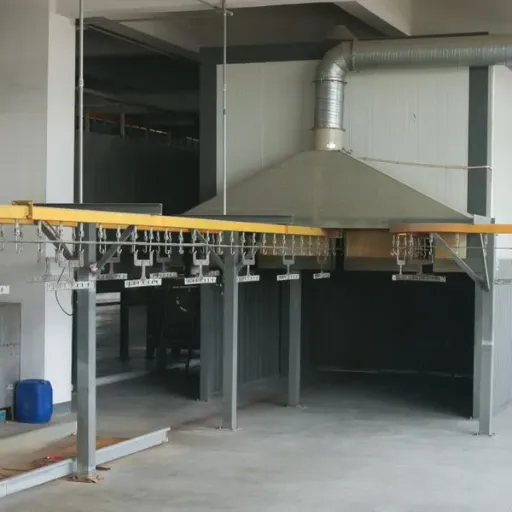
Sizing and paint booth design are not guesswork. The dimensions, airflow, and exhaust capacity must be calculated from the workpiece envelope, production rate, and spray gun specifications.
Workpiece Envelope and Conveyor Opening
Start with the largest workpiece you plan to coat. Add at least 300 mm of clearance on all sides so operators or automatic guns can reach every surface. The booth height must also account for hanger or fixture dimensions if you use an overhead conveyor system.
For example, if your largest panel is 2,000 mm long × 1,200 mm high × 400 mm deep, a booth opening of approximately 2,600 mm × 1,800 mm provides reasonable access without creating excessive dead air zones. Conveyor opening width directly affects air leakage, so it should be fitted with adjustable strip curtains or air seals.
Airflow and Exhaust Capacity
Airflow is calculated from the booth cross-sectional area and the target face velocity. For a booth with a working cross-section of 20 m² and a target velocity of 0.4 m/s, the required volumetric flow is:
20 m² × 0.4 m/s × 3,600 s/h = 28,800 m³/h
This figure determines your exhaust fan size, ductwork diameter, and filter area. It also influences whether you can use a direct-fired heating system for make-up air or whether you need a separate air handling unit.
Heating and Make-Up Air
Every cubic meter of air exhausted must be replaced with conditioned make-up air. In cold climates, heating that air can become a major operating cost. Booths integrated with a curing oven can sometimes recover waste heat for make-up air preheating, reducing energy consumption.
Lighting and Visibility
Operator booths need uniform lighting at the work surface, typically 1,000–1,500 lux, with color-corrected lamps so painters can judge finish quality accurately. Automatic booths also need inspection lighting and access windows for monitoring.
When Chen's team at the automotive parts plant specified their new industrial paint booth, they provided only their part dimensions and daily volume. Our engineers returned with a booth layout, airflow calculation, and filter specification. The new booth reduced their rework rate from 8% to under 2% within the first quarter.
Airflow, Filtration, and Environmental Compliance
Beyond coating quality, an industrial paint booth must protect workers and meet local environmental regulations. Within any spray booth system, airflow engineering and filtration selection are the two levers that control both outcomes.
Crossdraft, Downdraft, and Side-Draft Airflow
Crossdraft booths pull air horizontally from one end to the other. They are simpler and less expensive but can carry overspray across the workpiece before capture. Downdraft booths pull air vertically from ceiling to floor, sweeping overspray away from the freshly coated surface. They deliver the best finish quality but require pit excavation or raised platforms and higher energy consumption.
Side-draft booths combine elements of both, pulling air from the ceiling plenum toward side walls. They offer a compromise between finish quality and installation cost. The right choice depends on your coating appearance standards, floor conditions, and budget.
Filtration Hierarchy
A typical spray booth system uses multiple filtration stages. Specifically, the hierarchy includes:
Intake filters clean the incoming air to prevent dust defects.
Ceiling diffusion media distributes air evenly across the booth cross-section.
Overspray capture filters trap paint particles before the exhaust fan.
Final exhaust filters protect downstream ductwork and emission control equipment.
Filter selection depends on paint type. Wet paint operations may use paint arrestor pads or water scrubbing, while powder operations use cartridge filters with pulse-jet cleaning.
Regulatory Considerations
In the United States, OSHA 29 CFR 1910.107 establishes requirements for spray finishing using flammable and combustible materials. The standard addresses booth construction, electrical classification, ventilation rates, and storage of finishing materials. The EPA's National Emission Standards for Hazardous Air Pollutants (NESHAP) also regulate emissions from paint, coating, and adhesive operations in many industries.
Internationally, requirements vary by country, but the underlying principles remain the same: contain overspray, ventilate adequately, filter exhaust air, and isolate ignition sources. Always verify the local code with a qualified safety engineer before finalizing your booth design.
Engineering Note: Maintain documentation of filter change schedules, airflow measurements, and stack emission tests. Regulators and insurance auditors frequently request these records after installation.
Integrating the Booth Into a Complete Painting Production Line
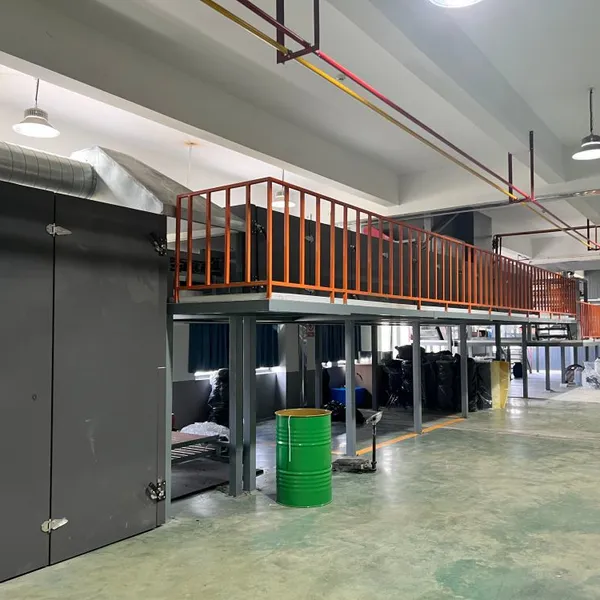
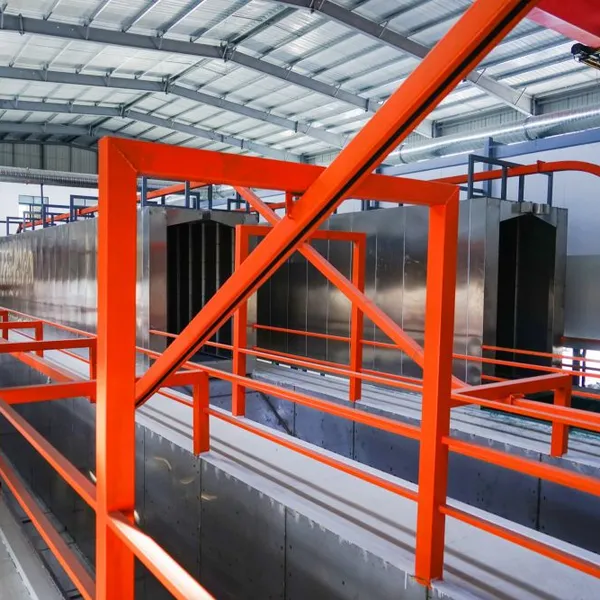
An industrial paint booth performs best when it is engineered as part of an integrated painting production line. Standalone booths can create mismatches in conveyor speed, workpiece spacing, and environmental control that reduce overall throughput.
Upstream: Pretreatment and Drying
Before parts enter the booth, they must be clean and dry. A surface pretreatment system removes oil, rust, and mill scale through degreasing, rinsing, phosphating, or passivation stages. Residual moisture must be blown off before coating, or it will cause bubbles, poor adhesion, and pinholes.
Downstream: Curing and Cooling
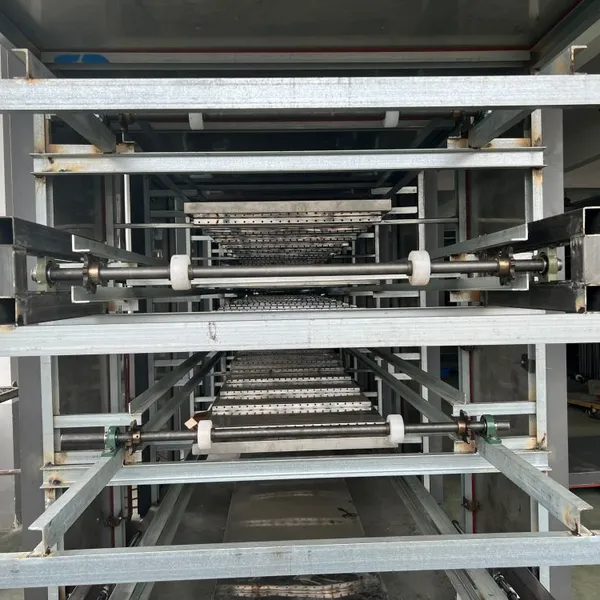
After spray application, parts move into a curing oven or drying tunnel. The booth exhaust should not blow overspray toward the oven entrance, and the conveyor transition must maintain temperature isolation. Deqing Leixin tunnel-type curing ovens provide ±3°C temperature uniformity with thermal capacities from 300,000 to 1,000,000 kcal, matched to the booth's production rate.
Conveying and Line Balance
The conveyor speed through the booth must be synchronized with pretreatment dwell time, spray application time, and curing duration. A common mistake is sizing the booth for peak output while undersizing the oven, which creates a queue of wet parts waiting to cure.
If you are laying out a new line, our powder coating line design guide provides a step-by-step approach to balancing these stages.
At a home appliance manufacturer in Turkey, the project team initially wanted to keep their old booth and add a new curing oven. After a line-balance analysis, they discovered the booth's airflow and opening size would limit the oven's effective throughput. Replacing the booth and integrating it with the new oven increased daily output by 35% without expanding the factory footprint.
Maintenance Routines That Protect Your Investment
Even a well-designed industrial paint booth will degrade without disciplined maintenance. In fact, filters clog, water chemistry drifts, fans lose efficiency, and lighting degrades across every industrial spray booth over time. A proactive maintenance plan protects coating quality, extends equipment life, and keeps compliance records clean.
Daily Checks
Inspect filters for saturation and replace when pressure drop exceeds the manufacturer's limit.
Check water curtain flow and sump level in water-wash booths.
Verify booth lighting and clear any overspray buildup on fixtures or windows.
Confirm that conveyor seals and strip curtains are intact.
Weekly and Monthly Tasks
Clean sludge from water curtain sumps and adjust water chemistry.
Measure face velocity at multiple points across the booth opening.
Inspect exhaust fan belts, bearings, and motor amps.
Review and rotate final exhaust filters before breakthrough occurs.
Annual Shutdown Tasks
Deep-clean booth walls, floors, and plenums.
Calibrate airflow instruments and lighting lux meters.
Inspect ductwork and seals for leaks.
Update filter inventory and document any design changes.
At Acme Hardware's plant in Brazil, a disciplined filter-change schedule cut their rework rate by nearly half. The maintenance manager tracked pressure drop weekly and standardized on the same filter media across all three booths. The result was predictable airflow, consistent paint transfer, and fewer unplanned production stops.
Ready to specify an industrial paint booth for your line? Speak with our coating engineers about your workpiece dimensions, daily output, and preferred coating chemistry.
Conclusion
An industrial paint booth is far more than an enclosed spray area. It is the environmental control module that determines finish quality, material efficiency, operator safety, and regulatory compliance. Whether you choose a water curtain spray booth, a dry type spray booth, or a powder recovery booth, the decision must be driven by your coating chemistry, workpiece envelope, production volume, and integration requirements.
Key takeaways from this industrial paint booth guide:
Size the industrial paint booth around your largest workpiece plus operator or automatic-gun clearance.
Target face velocities of 0.3–0.5 m/s for most liquid painting operations.
Select airflow pattern, crossdraft, downdraft, or side-draft, based on finish standards and floor constraints.
Integrate the booth with pretreatment, curing, and conveying systems to avoid bottlenecks.
Implement a filter and airflow maintenance routine from day one.
If you are evaluating a new finishing line or upgrading an existing spray area, start with a clear specification. Deqing Leixin designs and manufactures industrial paint booths as part of complete turnkey coating systems, from initial layout drawings through installation and commissioning.
Get a Turnkey Project Quotation for Your Industrial Paint Booth →
Submit your workpiece specifications, daily output target, and preferred heating source. Our engineering team will respond within 3 hours with a preliminary design and quotation.
Recently Posted
-
Conveyor Speed Calculation for Coating Lines: A Complete Guide
June 26, 2026Last March, a hardware manufacturer in Ningbo raised the chain speed on its powder coating line by 15% to clear a backlog. Three d Read More
 -
Conveyor Line Design: A Complete Engineering Guide for Coating Lines
June 26, 2026Last autumn, a hardware manufacturer in Vietnam commissioned a new powder coating line. The pretreatment tunnel, cyclone-recovery Read More
 -
Overhead Conveyor System: Engineering Guide for Coating Lines
June 26, 2026Last autumn, a hardware manufacturer in Ningbo faced a familiar problem. Their new powder coating line had to fit inside a buildin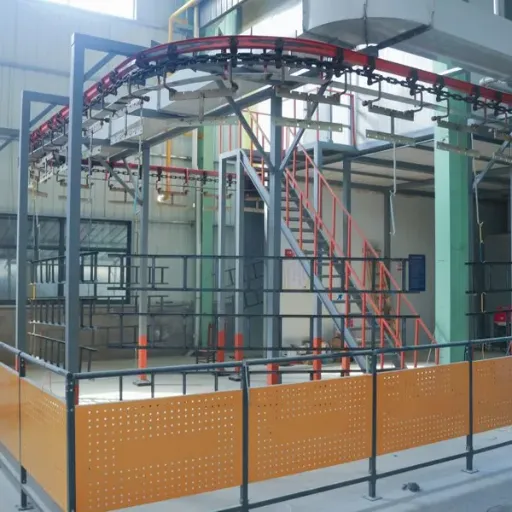 Read More
 -
Paint Curing Process: An Engineer's Guide to Industrial Oven Curing
June 25, 2026The most expensive mistake in a coating line isn't always a misaligned spray gun or the wrong powder. It's a curing oven t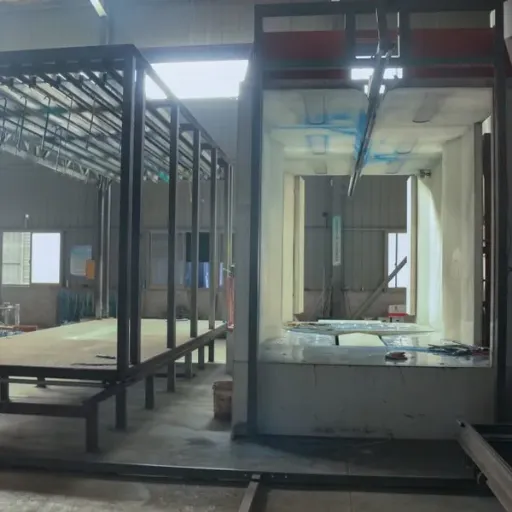 Read More

Contact Us
Recommended Products
-
 Industrial Custom Spray Coating Line for Hardware Anti‑Corrosion TreatmentNegotiableMOQ: 1 Set
 -
Industrial Electrophoresis Line for Metal Water Pump Workpieces ProcessingNegotiableMOQ: 1 Set
-
Custom E‑Coating Production Line for Water Pump Parts Surface FinishingNegotiableMOQ: 1 Set
-
China OEM Custom E-Coating Machine and Cathodic Electrophoresis Production LineNegotiableMOQ: 1 Set
-
Industrial Electrophoretic Coating Line With Custom Design for Metal WorkpiecesNegotiableMOQ: 1 Set
-
Intelligent Automated Electrophoretic Coating Line for Powder Coating Production EquipmentNegotiableMOQ: 1 Set
-
Full Automatic Custom Electrophoretic Coating Line for Industrial Metal ComponentsNegotiableMOQ: 1 Set
-
Heavy‑Duty Continuous Powder Coating Line for Big Cabinet Anti‑Corrosion FinishingNegotiableMOQ: 1 Set
-
Energy‑Saving Powder Coating Line for Large Industrial Cabinet Surface ProtectionNegotiableMOQ: 1 Set
-
Environmental Friendly Powder Coating Line With High Recovery for Large CabinetsNegotiableMOQ: 1 Set
-
Large Manual Industrial Curing Oven for Metal Powder Coating MachineryNegotiableMOQ: 1 Set
-
Industrial Plastic Drying Oven With PLC Control and 304 Stainless Steel HopperNegotiableMOQ: 1 Set
-
High Efficiency Plastic Raw Material Dryer for Plastic ProcessingNegotiableMOQ: 1 Set
-
Compact E-Coating System for Small Metal Components in Automotive & Medical Device ProductionNegotiableMOQ: 1 Piece
-
Gantry Transport Type Electrophoretic Coating Line for Industrial WorkpiecesNegotiableMOQ: 1 Set
-
Custom Gantry Electrophoretic Coating Line for Automotive Component FinishingNegotiableMOQ: 1 Set
-
Large Workpiece Stainless Steel Manual Powder Spray Booth With Ventilation SystemNegotiableMOQ: 1 Set
-
Large Capacity Stainless Steel Manual Powder Spray Booth With Powder Recovery SystemNegotiableMOQ: 1 Set
-
Automatic Large Workpiece Powder Spray Booth for Metal FabricationNegotiableMOQ: 1 Set
-
Powder Spraying Room With Stainless Steel Frame and PLC ControlNegotiableMOQ: 1 Set