
 Business License

Curing Oven Design: Engineering Guide for Coating Lines
What if the bottleneck in your coating line is not the spray booth or pretreatment stage, but the oven everyone assumed was big enough? Across powder coating operations, the curing stage is often sized by rule of thumb rather than engineering calculation. The result is undercured parts, energy waste, and lines that cannot hit their daily output targets.
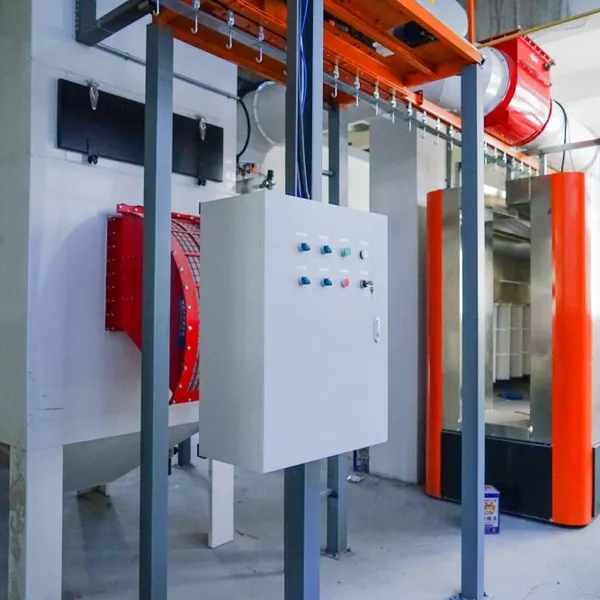
Curing oven design is the process of specifying the chamber geometry, heating system, airflow pattern, insulation, and conveyor integration needed to bring coated workpieces to their required peak metal temperature for the correct dwell time. The Powder Coating Institute emphasizes that cure quality depends on reaching and holding the correct peak metal temperature, not just heating the surrounding air. A well-designed oven does more than heat air. It delivers uniform, repeatable thermal energy to every workpiece that passes through.
In this guide, you will learn the fundamentals of curing oven design for powder coating. We will compare batch, tunnel, and bridge-type ovens. We will cover heating system selection, thermal capacity sizing, airflow engineering, and conveyor integration. You will also see how to avoid the most common design mistakes that increase operating cost and reduce finish quality.
Want to see how a properly sized curing oven fits your production line? Request a Free Line Design Drawing and our engineers will prepare a thermal layout based on your workpiece and output targets.
What Is Curing Oven Design?
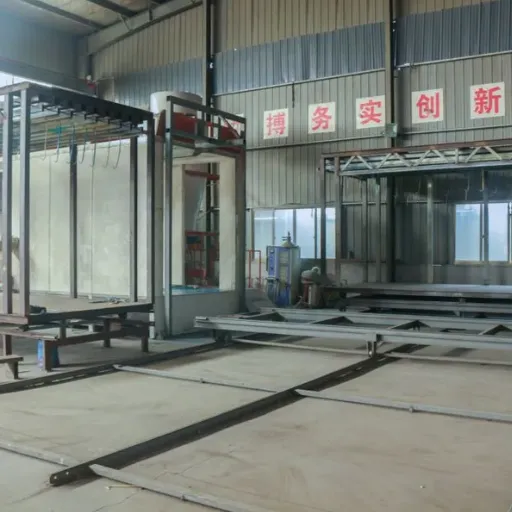
Curing oven design is the engineering discipline of creating a thermal system that cures coated workpieces according to specification. It combines heat transfer calculations, material selection, mechanical design, and process control into an integrated production asset.
A complete curing oven design, or powder coating oven design when applied to powder systems, specifies:
Chamber dimensions: Length, width, and height based on workpiece size and throughput.
Thermal capacity: Total heat output required to raise workpieces to peak metal temperature.
Heating source: Gas, electric, oil, steam, infrared, or hybrid configuration.
Airflow pattern: Forced convection design to maintain temperature uniformity.
Insulation: Wall and roof construction to minimize heat loss and stabilize the chamber.
Conveyor integration: Inlet and outlet geometry synchronized with line speed.
Control system: Temperature zones, thermocouples, PLC, and HMI interface.
The goal is not simply to reach a setpoint temperature. The goal is to ensure every workpiece, in every position, achieves the correct peak metal temperature for the required time.
Types of Curing Ovens
The first decision in curing oven design is the oven configuration. The choice between batch, tunnel, and bridge-type ovens depends on production volume, part geometry, and factory layout.
Batch Ovens
Batch ovens heat a stationary load of workpieces to temperature, hold them for the required dwell time, and then cool them before unloading. They are common in low-volume, high-mix operations, job shops, and prototype lines.
The design is simpler than a tunnel oven because there is no continuous conveyor passing through the chamber. However, batch ovens require more floor space per unit of throughput and involve material handling between loading and unloading. Heat recovery is also less efficient because the door opens frequently.
Tunnel Ovens
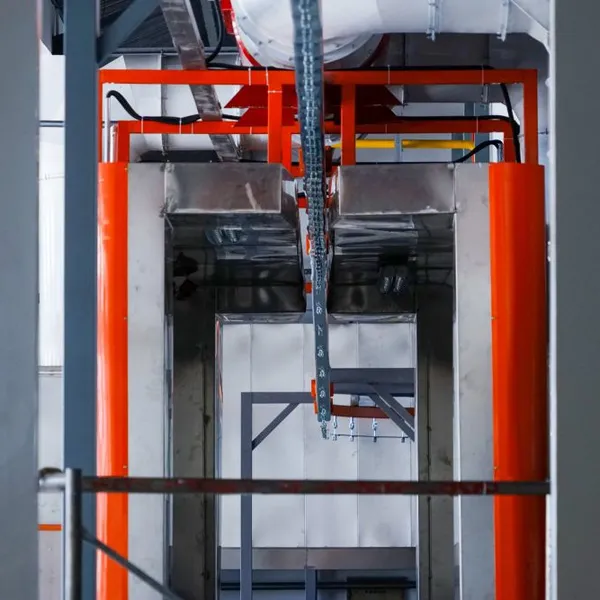
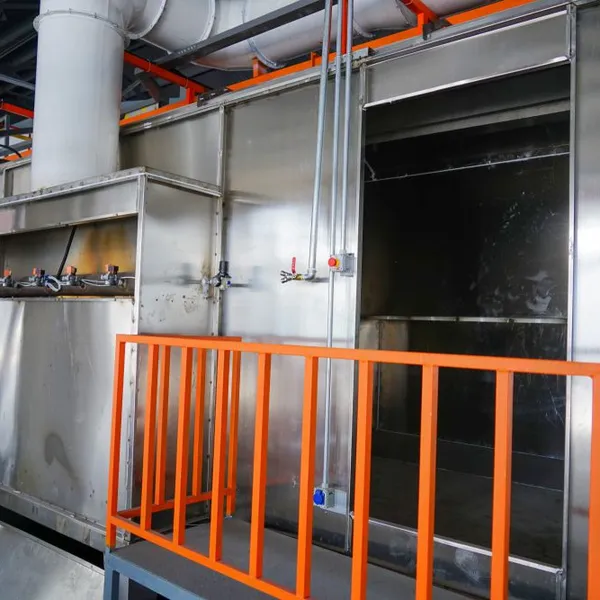
Tunnel ovens move workpieces continuously through heated zones on a conveyor. They are the standard choice for high-volume production lines where part geometry is relatively consistent. Tunnel oven design must account for conveyor speed, part spacing, zone temperatures, and air seals at the inlet and outlet.
Proper tunnel oven design starts with the required dwell time and line speed.
Deqing Leixin tunnel-type curing ovens are engineered with thermal capacities from 300,000 to 1,000,000 kcal and 304 stainless steel liners. The design isolates the curing zone to prevent contamination from upstream pretreatment or spray operations.
Bridge-Type Ovens
A bridge-type oven is a tunnel oven with an elevated section that creates a thermal barrier between the curing chamber and the rest of the line. The elevated bridge reduces heat loss through the openings and helps maintain temperature uniformity. This design is common when floor space is limited or when the oven must span other production equipment.
This comparison summarizes the main differences between curing oven configurations.
| Configuration | Best For | Advantages | Limitations |
|---|---|---|---|
| Batch oven | Low volume, high mix, prototypes | Simple design, flexible loading | Lower throughput, more handling, higher heat loss per part |
| Tunnel oven | High volume, consistent geometry | Continuous production, consistent dwell time, efficient energy use | Requires line integration, less flexible for large part changes |
| Bridge-type oven | Limited floor space, contamination control | Thermal barrier, reduced heat loss, spans equipment | Higher capital cost, more complex conveyor routing |
Key Curing Oven Design Parameters
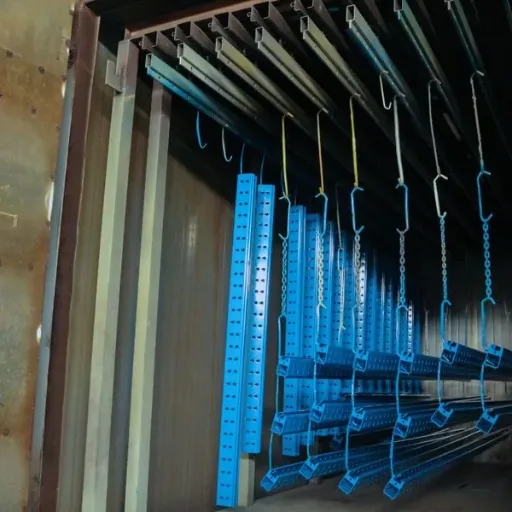
Every curing oven design starts with a clear understanding of the workpiece, the powder chemistry, and the production target. These parameters drive the rest of the design.
Workpiece Dimensions and Weight
The maximum workpiece dimensions determine the minimum chamber width, height, and loading clearance. Weight and material thickness determine thermal mass, which drives heat-soak time and thermal capacity. A 10 kg automotive casting requires a very different oven design than a 0.5 kg aluminum panel.
Peak Metal Temperature and Dwell Time
The powder supplier's technical data sheet defines the cure window. Common thermosetting powders cure between 180°C and 200°C for 10 to 20 minutes at the workpiece surface. The oven must be designed to achieve this peak metal temperature, not just the air temperature setpoint.
You can read more about cure windows and temperature control in our powder coating oven temperature guide.
Daily Output Target
Daily output determines conveyor speed, oven length, and part spacing. A line that must process 1,000 parts per day needs a different oven length and thermal capacity than one processing 200 parts per day. The oven design must include margin for seasonal peaks and future growth.
Available Energy Source
Local energy availability and cost structure influence heating system selection. Gas is common where natural gas infrastructure exists. Electric is preferred where precision or emissions control is critical. Oil and steam are options in facilities with existing thermal plants.
Heating System Selection: Gas vs Electric Curing Oven
The heating system is the heart of curing oven design. The right choice in a gas vs electric curing oven comparison balances capital cost, operating cost, precision, and environmental requirements.
Gas-Fired Heating
Gas-fired burners are the most common choice for large tunnel ovens. They deliver high thermal output, rapid heat-up, and low per-kilocalorie energy cost in most markets. Modern gas burners with forced convection can achieve ±3°C temperature uniformity across the chamber.
The design must include proper combustion air supply, exhaust ducting, and flame safety controls. Gas ovens also require compliance with local combustion safety standards.
Electric Heating
Electric resistance heating offers the highest precision and cleanest operation. Electric ovens are easier to install where gas is unavailable and produce no combustion byproducts. They are ideal for smaller batch ovens or regions with low electricity costs.
The trade-off is higher operating cost per unit of heat in most markets. Electric heating also requires significant electrical infrastructure for high-capacity ovens.
Oil and Steam Heating
Oil-fired burners and steam heat exchangers are options when these energy sources are already available on site. They are less common in new installations but can be cost-effective in facilities with existing thermal plants. The design must include heat exchangers, fuel handling, or steam distribution systems.
Infrared and Hybrid Systems
Infrared heating uses radiant energy rather than hot air. It can reduce cure time by 30% to 50% for suitable powders and geometries. Many high-throughput designs combine IR preheat zones with convection finishing zones to accelerate heating without overheating temperature-sensitive substrates.
This comparison summarizes the main heating system trade-offs.
| Heating Source | Best For | Advantages | Limitations |
|---|---|---|---|
| Gas | Large tunnel ovens, high thermal mass | Low per-kcal cost, rapid heat-up, high output | Combustion safety, exhaust requirements, infrastructure |
| Electric | Batch ovens, precision applications | Clean, precise control, easy installation | Higher operating cost, electrical infrastructure |
| Oil/Steam | Facilities with existing thermal plants | Uses existing infrastructure | Less common, heat exchanger complexity |
| Infrared/Hybrid | Thin parts, fast cure requirements | Rapid heating, energy savings for suitable parts | Limited geometry compatibility, higher capital cost |
For a deeper comparison of energy options, see our guide on gas vs electric curing oven selection.
Thermal Capacity and Oven Size Calculation
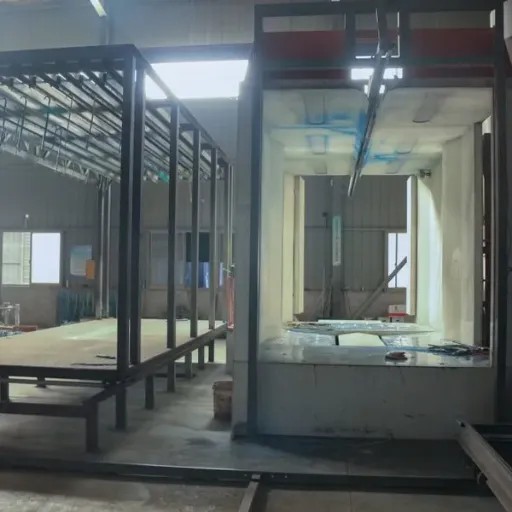
Correct thermal sizing and oven size calculation are critical steps in curing oven design. An undersized oven cannot reach target temperature under load. An oversized oven wastes capital and energy.
Heat Load Components
The total heat load includes:
Sensible heat for workpieces: Energy required to raise metal temperature from ambient to peak metal temperature.
Conveyor heat loss: Energy absorbed by the conveyor chain, fixtures, and hangers.
Wall and opening losses: Heat lost through insulation, doors, and inlet/outlet openings.
Exhaust and makeup air: Energy required to heat replacement air brought into the chamber.
Safety margin: Typically 15% to 25% above calculated load to handle peaks and future growth.
Basic Oven Length Formula
For tunnel ovens, the required working length can be estimated from:
Oven length = Conveyor speed × Required dwell time
Where conveyor speed is determined by part spacing and daily output target. The oven must be long enough to provide the required dwell time at the chosen line speed.
When Arjun Patel planned a new appliance coating line in India in 2023, his initial oven length was based on a competitor's layout. After Deqing Leixin engineers calculated the actual heat load for 1.2 mm steel panels at 800 parts per day, it became clear the proposed oven was 4 meters too short. Extending the tunnel added 18% to the oven cost but doubled the achievable throughput. The corrected design paid back in under 14 months through higher daily output.
Need help with oven size calculation for your production target? Request a Free Line Design Drawing and our engineers will size the thermal system around your workpiece and output requirements.
Airflow Engineering and Temperature Uniformity in Curing Oven Design
Temperature uniformity is what separates a reliable curing oven from a source of defects. Poor airflow creates hot and cold zones that produce color shift, gloss variation, and under-cure.
Forced Convection Design
Most powder coating ovens use forced convection to distribute heat. Burners or heating elements warm air, which is then circulated by fans through ductwork and nozzles. The airflow pattern must reach all workpiece surfaces, including recessed areas and edges.
The design should specify:
Fan capacity: Sufficient air changes per hour to maintain uniformity.
Duct configuration: Supply and return ducts positioned to eliminate dead zones.
Nozzle placement: Directional airflow where needed for complex geometries.
Recirculation ratio: The percentage of air recirculated versus exhausted.
Temperature Mapping
A well-designed oven should achieve ±5°C chamber uniformity or better. During commissioning, engineers map temperature at multiple points across the chamber using thermocouple grids. ASTM International publishes temperature uniformity survey methods that engineers use to validate industrial oven performance. Adjustments to burner alignment, fan speed, and baffles follow until uniformity meets specification.
When a Turkish radiator manufacturer started seeing gloss variation across large panel sections, the root cause was not the powder or application. Temperature mapping revealed a 12°C difference between the center and sides of the tunnel. Adding return ducts along the sidewalls and adjusting fan speed brought uniformity within ±4°C. The defect disappeared.
Conveyor Integration and Material Handling
The curing oven cannot be designed in isolation. It must integrate with the conveying system that carries workpieces through pretreatment, coating, and curing.
Overhead Conveyor Integration
Overhead chain conveyors are common in powder coating lines. The oven design must provide adequate clearance for the largest workpiece and hanger assembly. The inlet and outlet openings must be sized to allow passage while minimizing heat loss.
Ground Conveyor and Skid Systems
For heavier parts, ground-mounted conveyors or skid systems may be used. The oven floor must accommodate the conveyor track, and the design must account for the additional thermal mass of skids and fixtures.
Part Spacing and Line Speed
Part spacing affects heating uniformity. Parts packed too closely create shadows and block airflow. The design must specify minimum spacing based on part size and airflow velocity. Line speed is derived from required dwell time and oven length.
Deqing Leixin designs integrated overhead and ground conveying systems that synchronize oven dwell time with pretreatment and spray stages for stable throughput.
Insulation and Heat Loss Control
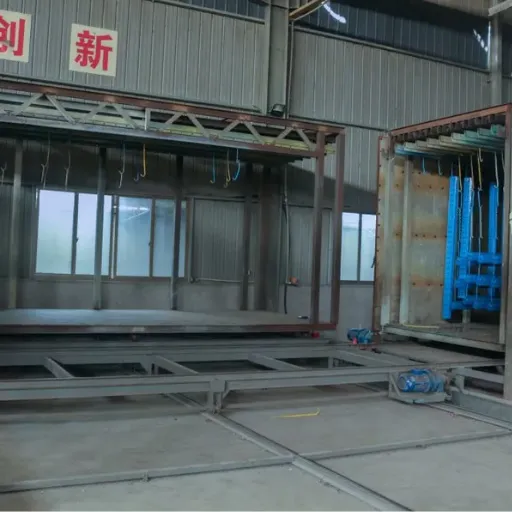
Insulation is often underestimated in curing oven design, but it directly affects energy consumption and temperature stability.
Insulation Materials
Mineral wool and ceramic fiber are standard insulation materials for curing ovens. Wall thickness typically ranges from 100 mm to 200 mm depending on operating temperature and energy efficiency targets. The exterior skin is usually galvanized or painted steel, while the interior liner is 304 stainless steel for corrosion resistance.
Heat Sealing
Openings for conveyor entry and exit are major sources of heat loss. Air seals, curtains, or thermal breaks at these openings reduce energy consumption and improve temperature stability. Bridge-type oven designs use elevation changes to create natural thermal barriers.
Exhaust and Makeup Air
A controlled exhaust removes volatile compounds and combustion byproducts while maintaining negative or neutral pressure. Makeup air must be preheated or introduced in a way that does not create cold zones in the chamber.
Control System and Instrumentation
Modern curing oven design includes sophisticated control systems to maintain temperature, monitor performance, and log data for quality assurance.
Temperature Zones
Large tunnel ovens are divided into multiple temperature zones. Each zone has independent temperature control, allowing staged heating profiles. For example, a preheat zone may run at 160°C while the cure zone runs at 190°C.
PLC and HMI
A Programmable Logic Controller (PLC) manages zone temperatures, conveyor speed, burner firing, and safety interlocks. The Human-Machine Interface (HMI) provides operators with recipe management, alarm handling, and trend displays.
Thermocouple Placement
Thermocouples should be positioned to measure air temperature representative of the workpiece environment. They should be shielded from direct burner radiation and located at multiple points across the chamber for zone control.
Safety and Compliance in Curing Oven Design
Curing ovens operate at high temperatures with combustion equipment or high-voltage electrical systems. Safety must be integrated into the design from the start.
Combustion Safety
Gas and oil-fired ovens require flame supervision, high-temperature limits, combustion air proving, and fuel shutoff valves. The design must comply with NFPA 86 and local codes for ovens and furnaces.
Electrical Safety
Electric ovens require proper grounding, overcurrent protection, and high-limit controls. Heater elements must be accessible for maintenance without creating shock hazards.
Fire Protection
Powder coating ovens should include provisions for fire detection and suppression. The design should minimize powder accumulation in ductwork and provide cleanout access for routine maintenance.
Personnel Protection
Exterior surfaces should remain at safe touch temperatures. Warning labels, emergency stops, and lockout-tagout provisions must be included in the design.
Common Curing Oven Design Mistakes to Avoid
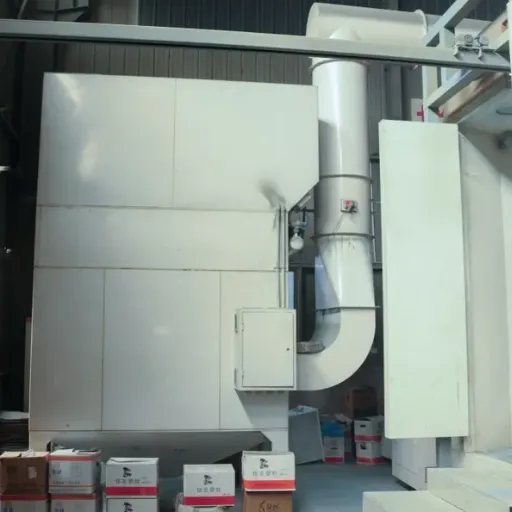
Even experienced engineers can make design decisions that compromise oven performance. Here are the most common mistakes and how to avoid them.
Undersizing Thermal Capacity
An oven sized only for the lightest workpiece will fail when heavier parts enter production. Always design for the maximum thermal load in the product mix, plus a safety margin.
Ignoring Heat Loss
Designs that focus only on workpiece heat load often overlook conveyor losses, wall losses, and opening losses. These can account for 30% to 50% of total heat load in continuous ovens.
Poor Airflow Design
Inadequate fan capacity or poorly positioned ducts create temperature gradients. Always validate airflow with computational analysis or commissioning temperature mapping.
Inadequate Part Spacing
Overloading the oven with parts packed too closely blocks airflow and creates shadowed areas. Design part spacing based on airflow velocity and part geometry.
Wrong Energy Source for the Application
Choosing gas because it is cheaper upfront may be a mistake if the application requires the precision of electric heating. Conversely, specifying electric for a very large oven may create unreasonable operating costs.
When a Brazilian furniture manufacturer installed a gas oven designed for small appliance panels, the burner cycling created temperature swings of ±15°C on large cabinet frames. Switching to a dual-zone design with larger thermal mass and improved recirculation stabilized the profile. The redesign eliminated the color variation that had been rejected by their largest retail customer.
When to Involve a Turnkey Oven Design Partner
Designing a curing oven in-house is possible for simple batch applications, but complex production lines benefit from a turnkey approach. A design partner can perform thermal calculations, airflow modeling, and integration with upstream and downstream equipment.
The right time to involve a partner is during the factory layout phase. Changes to oven size, energy source, or conveyor routing become expensive once construction begins. Early collaboration ensures the oven is sized correctly the first time. For broader layout considerations, see our guide to powder coating line design.
Deqing Leixin provides turnkey powder coating production line engineering, including curing oven design, pretreatment integration, and conveying systems. Our engineers calculate heat load, specify thermal capacity, and validate temperature uniformity during commissioning.
Conclusion
Curing oven design is a critical engineering discipline that determines the throughput, energy efficiency, and finish quality of a coating line. The right design matches the oven configuration, heating system, thermal capacity, and airflow to the workpiece and powder specification.
Here are the key takeaways:
Batch, tunnel, and bridge-type ovens each serve different production volumes and layouts.
Thermal capacity must include workpiece load, conveyor losses, wall losses, and a safety margin.
Heating system selection depends on energy cost, precision requirements, and environmental constraints.
Forced convection design and temperature mapping are essential for uniformity.
Conveyor integration, part spacing, and line speed must be designed together.
Insulation and heat sealing directly affect operating cost and stability.
Safety and compliance must be integrated from the initial design phase.
Involving a turnkey partner early prevents costly changes during installation.
A well-designed curing oven for powder coating turns powder into a durable, attractive finish while controlling energy cost and production risk. Whether you are designing a new line or upgrading an existing oven, engineering the thermal system with care pays dividends in quality and reliability.
Get a Turnkey Project Quotation for your curing oven design or complete coating production line. Submit your workpiece dimensions, output targets, and powder specifications, and our engineering team will respond with a custom thermal design and quotation.
Recently Posted
-
Conveyor Speed Calculation for Coating Lines: A Complete Guide
June 26, 2026Last March, a hardware manufacturer in Ningbo raised the chain speed on its powder coating line by 15% to clear a backlog. Three d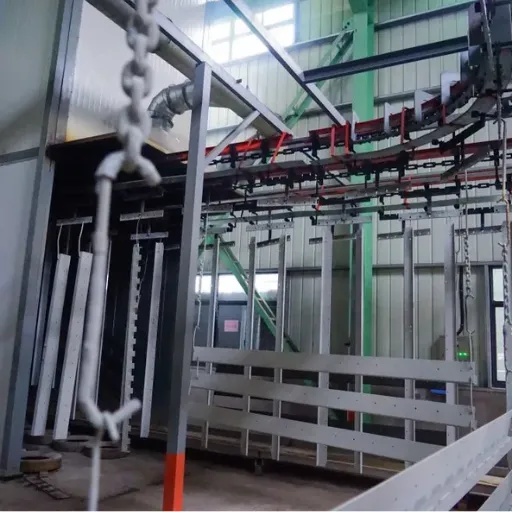 Read More
 -
Conveyor Line Design: A Complete Engineering Guide for Coating Lines
June 26, 2026Last autumn, a hardware manufacturer in Vietnam commissioned a new powder coating line. The pretreatment tunnel, cyclone-recovery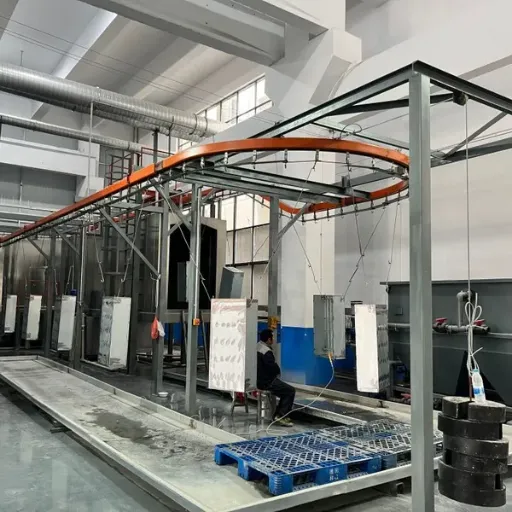 Read More
 -
Overhead Conveyor System: Engineering Guide for Coating Lines
June 26, 2026Last autumn, a hardware manufacturer in Ningbo faced a familiar problem. Their new powder coating line had to fit inside a buildin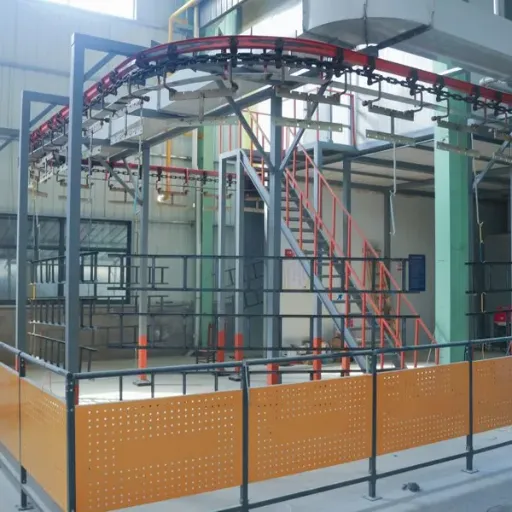 Read More
 -
Industrial Paint Booth: A Complete Engineering Guide for Manufacturers
June 26, 2026When Mike Chen expanded his metal furniture factory in Zhejiang Province last spring, he assumed the new spray area would solve hi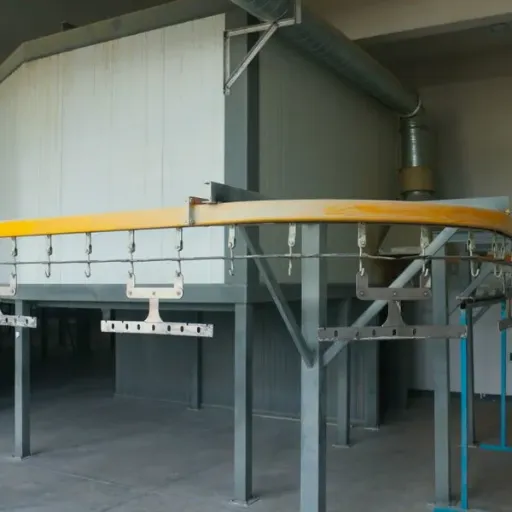 Read More

Contact Us
Recommended Products
-
 Industrial Custom Spray Coating Line for Hardware Anti‑Corrosion TreatmentNegotiableMOQ: 1 Set
 -
Industrial Electrophoresis Line for Metal Water Pump Workpieces ProcessingNegotiableMOQ: 1 Set
-
Custom E‑Coating Production Line for Water Pump Parts Surface FinishingNegotiableMOQ: 1 Set
-
China OEM Custom E-Coating Machine and Cathodic Electrophoresis Production LineNegotiableMOQ: 1 Set
-
Industrial Electrophoretic Coating Line With Custom Design for Metal WorkpiecesNegotiableMOQ: 1 Set
-
Intelligent Automated Electrophoretic Coating Line for Powder Coating Production EquipmentNegotiableMOQ: 1 Set
-
Full Automatic Custom Electrophoretic Coating Line for Industrial Metal ComponentsNegotiableMOQ: 1 Set
-
Heavy‑Duty Continuous Powder Coating Line for Big Cabinet Anti‑Corrosion FinishingNegotiableMOQ: 1 Set
-
Energy‑Saving Powder Coating Line for Large Industrial Cabinet Surface ProtectionNegotiableMOQ: 1 Set
-
Environmental Friendly Powder Coating Line With High Recovery for Large CabinetsNegotiableMOQ: 1 Set
-
Large Manual Industrial Curing Oven for Metal Powder Coating MachineryNegotiableMOQ: 1 Set
-
Industrial Plastic Drying Oven With PLC Control and 304 Stainless Steel HopperNegotiableMOQ: 1 Set
-
High Efficiency Plastic Raw Material Dryer for Plastic ProcessingNegotiableMOQ: 1 Set
-
Compact E-Coating System for Small Metal Components in Automotive & Medical Device ProductionNegotiableMOQ: 1 Piece
-
Gantry Transport Type Electrophoretic Coating Line for Industrial WorkpiecesNegotiableMOQ: 1 Set
-
Custom Gantry Electrophoretic Coating Line for Automotive Component FinishingNegotiableMOQ: 1 Set
-
Large Workpiece Stainless Steel Manual Powder Spray Booth With Ventilation SystemNegotiableMOQ: 1 Set
-
Large Capacity Stainless Steel Manual Powder Spray Booth With Powder Recovery SystemNegotiableMOQ: 1 Set
-
Automatic Large Workpiece Powder Spray Booth for Metal FabricationNegotiableMOQ: 1 Set
-
Powder Spraying Room With Stainless Steel Frame and PLC ControlNegotiableMOQ: 1 Set