
 Business License

Metal Surface Treatment: A Complete Guide for Coating Lines
What if the coating failures you blame on paint or powder actually start on the metal long before the spray booth opens? Across automotive, appliance, and industrial finishing plants, the majority of adhesion and corrosion problems trace back to one overlooked step. That step is metal surface treatment.
Metal surface treatment is the sequence of mechanical, chemical, or electrochemical processes used to clean, activate, and prepare a metal substrate before coating. It removes oils, oxides, rust, and shop soils. It also creates a microstructure that helps the coating bond and resist corrosion. Without proper surface treatment before coating, even the best powder, paint, or e-coat will fail prematurely.
In this guide, you will learn the most common metal surface treatment methods. We will compare mechanical cleaning, chemical pretreatment, and conversion coatings. We will walk through the standard process sequence, show how to choose the right method for your parts, and explain how equipment design affects quality.
Want to see which surface treatment method fits your coating line? Request a Free Line Design Drawing and our engineers will match your substrate and specification to the right process.
What Is Metal Surface Treatment?
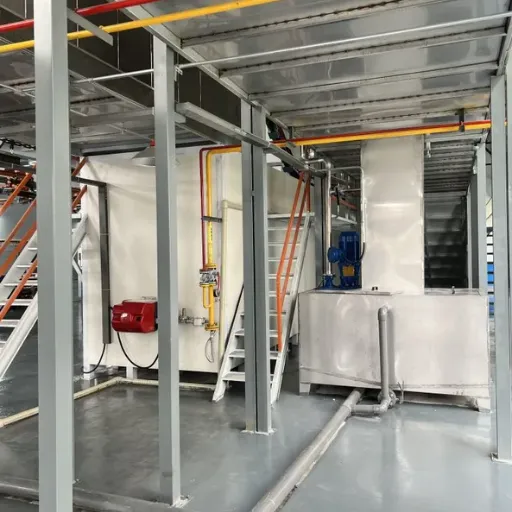
Metal surface treatment is the preparation of a metal substrate before applying a coating, adhesive, or finish. It includes cleaning, roughening, chemical conversion, and protective conditioning. The goal is to create a surface that is free of surface contamination and chemically compatible with the coating that follows.
In coating lines, metal surface treatment usually refers to the pretreatment stages that happen after fabrication and before the spray booth or e-coat tank. It can be as simple as a single degreasing step or as complex as a multi-stage sequence involving alkaline cleaning, rinsing, phosphating, passivation, and drying.
The right metal surface finishing process depends on the substrate, the type of contamination, the coating system, and the corrosion or appearance specification. A line that processes oily steel stampings needs different treatment than one that processes aluminum extrusions with a natural oxide layer.
Why Metal Surface Treatment Matters
Coatings do not bond well to dirty, oxidized, or chemically inactive metal. Oils and drawing compounds create a weak boundary layer. Mill scale and rust block adhesion. Smooth, passive metal surfaces do not provide enough mechanical or chemical anchoring for the coating film.
When Kenji Tanaka took over production at a Japanese appliance panel supplier in 2021, first-pass reject rates were running near 12%. The powder looked fine after cure, but panels were blistering within weeks in humidity testing. The powder supplier, the oven, and the spray booth all checked out.
The root cause was the degreasing stage. The alkaline cleaner had been diluted to save chemical cost, and oil was not being fully removed from stamped edges. After restoring the cleaner concentration and adding a second rinse stage, rejects dropped below 2%.
The coating had not changed. The metal surface treatment had.
Proper surface treatment improves coating adhesion, extends corrosion resistance, and protects edges and welds where the coating is naturally thinner. It also reduces rework, warranty claims, and field failures. The Powder Coating Institute identifies proper pretreatment as the single most critical factor in coating durability.
Common Metal Surface Treatment Methods
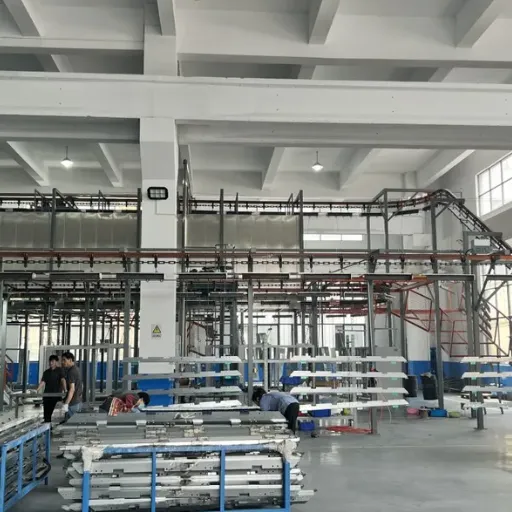
There is no single best metal surface treatment method. Each approach has strengths, weaknesses, and ideal applications. The main categories are mechanical cleaning, chemical cleaning, conversion coatings, and electrochemical treatments.
Mechanical Metal Surface Treatment Methods
Mechanical methods physically remove rust, mill scale, oxides, and old coatings from the metal surface. They also create surface roughness, which improves mechanical anchoring for the new coating.
Shot blasting uses abrasive media propelled at high velocity to clean and profile steel. It is common for structural steel, castings, and welded assemblies. The roughness profile, often measured as anchor pattern or Ra value, must match the coating specification.
Too smooth reduces adhesion. Too much surface roughness can cause peaks to protrude through thin coatings.
Grinding and sanding are used for localized preparation, weld cleanup, and repair. They are labor-intensive but useful for small areas or tight geometries.
Wire brushing and abrasive blasting with non-metallic media are used when less aggressive cleaning is needed. These methods are common for aluminum, stainless steel, and parts that cannot tolerate heavy metal removal.
Mechanical treatment alone is rarely enough for high-performance coating. It cleans the surface but does not provide the chemical conversion layer that improves corrosion resistance and bonding.
Chemical Metal Surface Pretreatment and Cleaning
Chemical cleaning removes organic soils, oils, greases, and inorganic contaminants without mechanical abrasion. It is the foundation of most modern metal surface pretreatment lines.
Alkaline degreasing is the most common first stage. Heated alkaline cleaners break down oils and drawing compounds. They operate between 50°C and 70°C and are applied by spray or immersion.
Dwell time, concentration, and temperature must be balanced. Too weak or too short leaves oil behind. Too aggressive can etch sensitive substrates.
Acid pickling removes rust, mill scale, and oxide layers. It is often used for steel that has visible corrosion or heat scale. Pickling must be followed by thorough rinsing because residual acid can cause blistering under the coating.
Solvent cleaning and vapor degreasing are used for parts with heavy oil or for substrates that cannot tolerate water-based chemistry. Environmental regulations have limited the use of some solvents, so water-based and biodegradable alternatives are increasingly common.
Conversion Coatings for Metal Surface Finishing
Conversion coatings chemically transform the outer layer of the metal into a coating that promotes adhesion and corrosion resistance. They also provide surface activation that helps the topcoat bond chemically to the substrate. They are the heart of many high-performance metal surface treatment lines.
Phosphating forms a crystalline phosphate layer on steel, zinc-coated steel, and aluminum. Zinc phosphating is widely used in automotive and outdoor applications. Iron phosphating is a lower-cost option for indoor parts. You can read more about the chemistry in our guide to the phosphating process.
Zirconium conversion coating is a chrome-free alternative that operates at ambient temperature with minimal sludge. It is popular for appliances, aluminum extrusions, and general industrial parts. The coating is nanometer-thin but provides good adhesion and corrosion resistance.
Chromate conversion coatings were once common on aluminum and zinc-coated steel, but hexavalent chromium is now restricted in most regions. Trivalent chromium, zirconium, titanium, and silane-based chemistries have largely replaced hexavalent chrome.
Electrochemical Metal Surface Treatment Methods
Electrochemical methods use an electric current to modify the surface. Anodizing builds a thick, hard aluminum oxide layer on aluminum parts. It is widely used for architectural aluminum, electronics housings, and decorative finishes.
Electropolishing removes a thin layer of metal to create a smooth, bright surface on stainless steel. It is used in medical, food, and pharmaceutical equipment where cleanliness and appearance matter.
Passivation removes free iron from stainless steel surfaces and restores the chromium oxide layer. In coating lines, the term is also used for final seal rinses after phosphating or zirconium treatment.
Metal Surface Treatment Before Coating: The Standard Sequence
Most industrial coating lines use a multi-stage metal surface treatment sequence. This surface treatment before coating prepares the substrate step by step. Skipping a stage usually reduces final quality.
Stage 1: Degreasing
The first stage removes oils, drawing compounds, fingerprints, and shop soils. Alkaline spray or immersion cleaners are standard. Dwell time ranges from 30 seconds in spray tunnels to several minutes in dip tanks. Parts must be fully wetted and drained.
Stage 2: Water Rinse
A clean water rinse removes residual cleaner and lifted soils. A two-stage cascading rinse is common in high-quality operations. The first rinse captures drag-out; the final rinse leaves the surface clean for the next chemical stage.
Stage 3: Chemical Treatment
This is the core stage where the surface is converted or conditioned. It may be phosphating, zirconium treatment, pickling, or another conversion coating. The chemistry, temperature, dwell time, and concentration are controlled to meet the coating specification.
Stage 4: Final Rinse
A deionized or conditioned rinse removes residual chemistry and soluble salts. High conductivity in the final rinse is a warning sign of poor rinsing. It can lead to blistering, poor adhesion, and coating defects.
Stage 5: Drying
The final stage removes moisture before coating application. Drying tunnels typically operate between 80°C and 150°C depending on the process. A properly sized curing oven for production line ensures moisture is removed without over-drying conversion coatings. Under-drying leaves moisture that causes bubbles or poor powder flow.
A well-designed surface pretreatment system integrates these stages with automatic dosing, conductivity monitoring, and conveyor timing. For a broader overview of each stage, see our surface pretreatment guide.
Comparing Metal Surface Treatment Methods
Choosing between metal surface treatment methods requires balancing performance, cost, environmental impact, and equipment footprint.
| Method | Best For | Advantages | Limitations |
|---|---|---|---|
| Shot blasting | Steel, castings, heavy rust | Removes scale, creates anchor profile | Dust, noise, no chemical conversion |
| Alkaline degreasing | Oily parts, general cleaning | Removes organic soils effectively | Does not remove rust or oxides |
| Acid pickling | Rusty or heat-scaled steel | Removes oxides and mill scale | Requires handling controls and rinsing |
| Iron phosphating | Indoor parts, mild environments | Lower cost, simpler operation | Lower corrosion resistance |
| Zinc phosphating | Automotive, outdoor, heavy corrosion | Excellent adhesion and salt-spray life | Higher cost, sludge, heated tanks |
| Zirconium conversion | Aluminum, appliances, chrome-free lines | Ambient operation, no heavy metals, low sludge | Not ideal for extreme corrosion specs |
| Anodizing | Aluminum architectural/decorative | Hard, durable oxide layer | Limited to aluminum, higher cost |
This comparison table gives a starting point for selecting a metal surface finishing process. The final choice should be validated by coating adhesion tests, salt-spray testing, and production trials.
How to Choose the Right Metal Surface Treatment
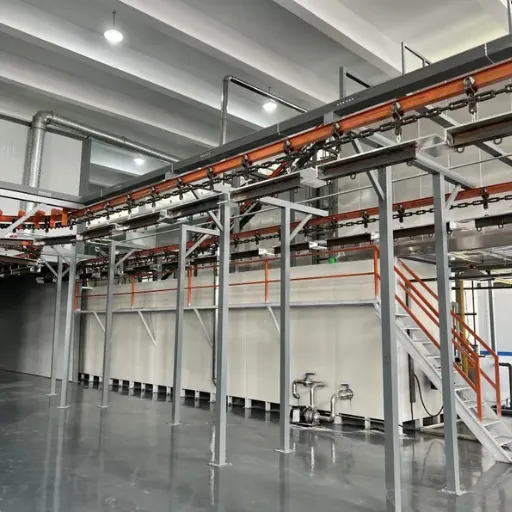
The right metal surface treatment depends on several factors. Getting the specification wrong leads to adhesion failures, corrosion issues, or unnecessary operating cost.
Substrate Material
Steel, zinc-coated steel, aluminum, and stainless steel each respond differently to chemical treatment. Aluminum requires oxide removal and often fluoride activation. Zinc-coated steel needs careful control to avoid white rust. Stainless steel may need passivation rather than phosphating.
Type and Amount of Contamination
Heavy stamping oils, welding scale, rust, and shop soils each require different cleaning approaches. A part with light oil may need only degreasing. A part with weld scale may need mechanical cleaning plus pickling.
Coating System
Powder coating, liquid paint, and e-coat each place different demands on the pretreated surface. E-coat requires a fine, uniform phosphate layer because the film is thin and follows the microstructure. Powder coating is more forgiving but still needs a clean, active surface. If you are deciding between the two technologies, our e-coat vs powder coating comparison explains how each choice affects pretreatment requirements.
Performance Specification
Salt-spray hours, adhesion tests, and appearance standards determine the required treatment level. A garden furniture part may need only iron phosphate. An automotive chassis bracket may need zinc phosphate plus e-coat. ASTM International publishes standard test methods such as ASTM B117 for salt spray and ASTM D3359 for tape adhesion that engineers use to validate metal surface treatment quality.
Environmental and Cost Constraints
Regulations on chromium, phosphate discharge, and energy use affect process choice. Zirconium and other chrome-free treatments reduce regulatory burden but may not match the corrosion performance of zinc phosphate in every application. The Chemical Coaters Association International tracks regulatory changes and publishes guidance on compliant metal surface pretreatment chemistries.
When Maria Lopez evaluated metal surface treatment options for a Mexican automotive supplier in 2023, she faced exactly this trade-off. The customer wanted 1,000 hours of salt-spray life on a chassis bracket. Zinc phosphating plus cathodic e-coat was the only combination that met the spec reliably. A lower-cost iron phosphate system would have saved money upfront but failed validation testing.
Applications and Industries
Metal surface treatment is used wherever coated metal parts must last in real-world conditions.
Automotive Parts
Automotive manufacturers use zinc phosphating, shot blasting, and e-coat primers on chassis components, brackets, seat frames, and underbody hardware. The pretreatment must survive salt spray, stone impact, and thermal cycling. Deqing Leixin engineers coating lines for automotive parts with pretreatment stages matched to OEM corrosion specifications.
Appliances and HVAC
Appliance panels, washing machine drums, air-conditioner housings, and heat exchangers need clean, uniform surfaces for bright finishes and humidity resistance. Iron phosphating, zirconium treatment, and alkaline cleaning are common. Deqing Leixin has delivered appliance coating line solutions worldwide, integrating cleaning, pretreatment, and powder or liquid coating systems.
Architectural Aluminum
Window frames, facade elements, and extrusions use anodizing or chrome-free conversion coatings before liquid or powder coating. The surface treatment must provide long-term adhesion and weathering resistance.
General Industrial Hardware
Shelving, fasteners, enclosures, and metal furniture use a mix of mechanical cleaning, degreasing, and phosphating depending on the end-use environment. The right powder coating production line includes pretreatment stages matched to the part geometry and daily volume.
Equipment Considerations for Metal Surface Treatment Lines
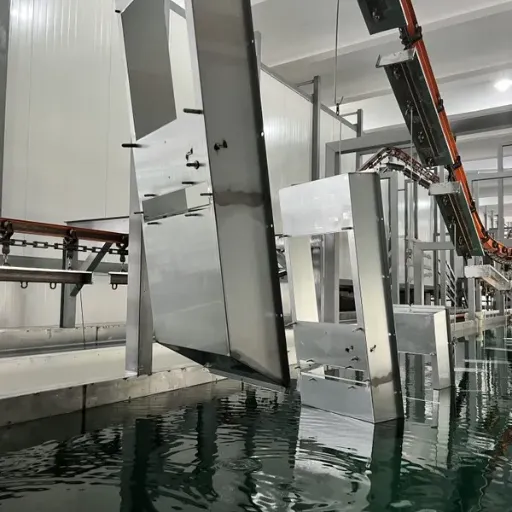
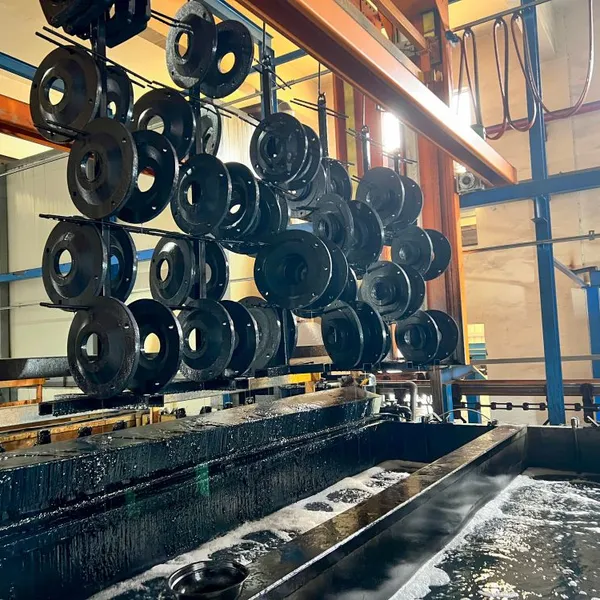
A production metal surface treatment line is an integrated metal surface pretreatment system. Tanks, chemistry, rinsing, drying, and material handling must work together.
The core components include:
Pretreatment tanks: 304 stainless steel or polypropylene construction depending on chemistry.
Heating system: For alkaline cleaners, phosphating baths, and drying tunnels.
Circulation and filtration: Keeps chemistry uniform and removes sludge and particulates.
Dosing system: Automatically maintains chemical concentration, pH, and conductivity.
Rinse tanks: Counter-flow design with conductivity monitoring.
DI water system: Provides high-quality rinse water for final rinses.
Drying tunnel: Removes moisture without over-drying conversion coatings.
Conveying system: Overhead or ground-mounted transport synchronized with dwell times.
Control system: PLC and HMI for recipe management, process control, and data logging.
Spray systems are compact and fast, making them ideal for sheet metal and high-volume parts. Dip systems provide complete coverage for complex geometries, tubular parts, and internal surfaces. Many production lines use a hybrid approach: spray cleaning and rinsing followed by dip chemical treatment.
For lines that apply e-coat or liquid paint after pretreatment, the drying tunnel and conveyor design must align with the downstream process. You can explore our electrophoretic coating line options to see how pretreatment integrates with e-coat application.
Common Metal Surface Treatment Defects and How to Prevent Them
Even the best metal surface treatment process can drift out of control. Recognizing defects early prevents them from becoming coating failures.
Poor Adhesion or Peeling
Peeling usually points to oil, oxide, or insufficient conversion coating. Check degreasing concentration and temperature first. Then verify chemical treatment time, concentration, and bath balance. A cross-hatch test can quickly confirm whether the problem is adhesion or coating thickness.
Blistering
Blisters often trace back to poor rinsing or residual acid. Check final rinse conductivity and verify that parts are fully dried before coating. Tap water or expired deionizer resin are common culprits.
White Rust on Zinc-Coated Steel
White rust indicates inadequate passivation or contamination in the final rinse. It is common when zinc-coated parts are not properly sealed after phosphating or zirconium treatment.
Spotty or Bare Areas
Bare spots indicate incomplete cleaning, poor wetting, or exhausted chemistry. Inspect parts for oil pockets in recessed areas, and verify that spray nozzles are not clogged.
When the team at a Turkish metal furniture factory started seeing spotty powder coverage on welded frames, they assumed the powder gun was misaligned. A surface treatment audit found that weld spatter was blocking spray nozzles in the pretreatment tunnel. After adding a pre-blast station and cleaning the nozzle headers, coverage became uniform. The fix was in surface preparation, not application.
When to Invest in a Better Metal Surface Treatment Line
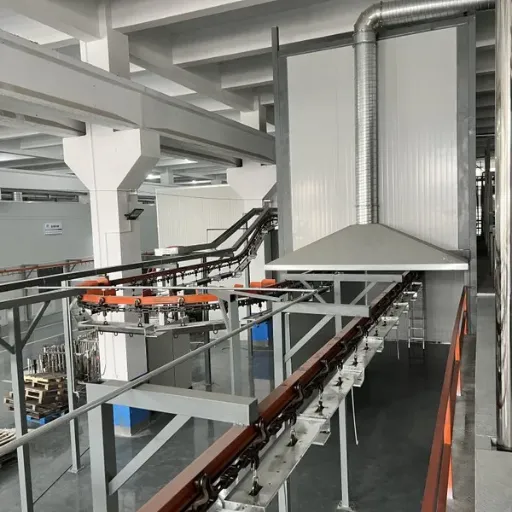
Upgrading metal surface pretreatment makes sense when:
Coating failures are increasing or first-pass yield is dropping.
New products or substrates require different preparation.
Environmental regulations restrict current chemistry.
Energy or chemical costs are rising.
Customer specifications demand higher corrosion resistance.
Production volume has outgrown manual or batch processes.
A well-planned metal surface pretreatment upgrade often pays for itself through reduced rework, lower chemical consumption, and fewer warranty claims. The key is to match the process to the substrate and specification rather than copying a generic layout.
Conclusion
Metal surface treatment is the foundation of durable industrial coating. The right method removes contamination, activates the substrate, and creates a bonding layer that helps powder, paint, or e-coat perform as designed. Without it, coatings fail early. With it, parts last longer and cost less to rework.
Here are the key takeaways:
Metal surface treatment cleans, activates, and prepares metal before coating.
Common methods include mechanical cleaning, chemical cleaning, conversion coatings, and electrochemical treatments.
A standard sequence includes degreasing, rinsing, chemical treatment, final rinse, and drying.
Method selection depends on substrate, contamination, coating system, performance spec, and environmental constraints.
Zirconium and phosphating are common conversion coatings; each has specific strengths and limitations.
Equipment design, rinse quality, and process control are critical to consistent results.
Upgrading surface treatment often pays back through reduced defects and longer coating life.
If you are planning a new coating line or upgrading an existing pretreatment stage, metal surface treatment deserves careful engineering attention. The right configuration improves adhesion, extends corrosion resistance, and protects your reputation with customers.
Get a Turnkey Project Quotation for your metal surface treatment line or complete pretreatment system. Submit your workpiece dimensions, output targets, and coating requirements, and our engineering team will respond with a custom design and quotation.
Recently Posted
-
Conveyor Speed Calculation for Coating Lines: A Complete Guide
June 26, 2026Last March, a hardware manufacturer in Ningbo raised the chain speed on its powder coating line by 15% to clear a backlog. Three d Read More
 -
Conveyor Line Design: A Complete Engineering Guide for Coating Lines
June 26, 2026Last autumn, a hardware manufacturer in Vietnam commissioned a new powder coating line. The pretreatment tunnel, cyclone-recovery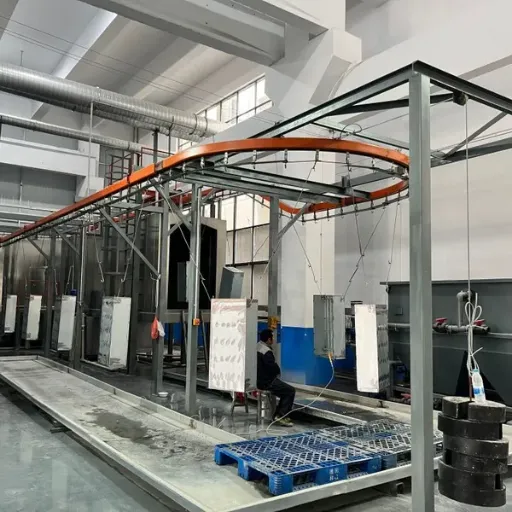 Read More
 -
Overhead Conveyor System: Engineering Guide for Coating Lines
June 26, 2026Last autumn, a hardware manufacturer in Ningbo faced a familiar problem. Their new powder coating line had to fit inside a buildin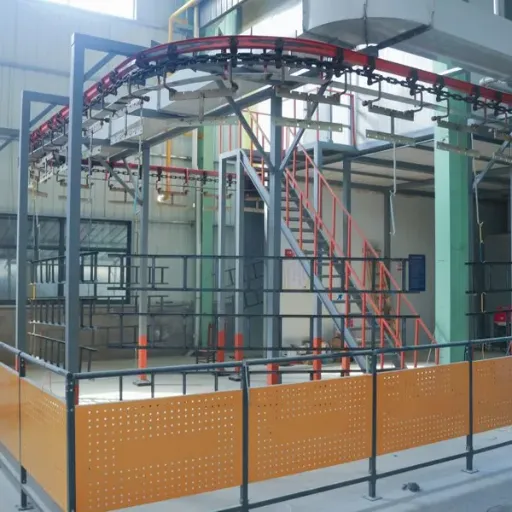 Read More
 -
Industrial Paint Booth: A Complete Engineering Guide for Manufacturers
June 26, 2026When Mike Chen expanded his metal furniture factory in Zhejiang Province last spring, he assumed the new spray area would solve hi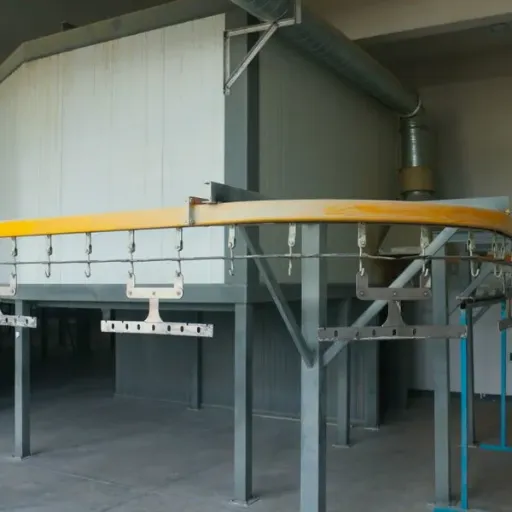 Read More

Contact Us
Recommended Products
-
 Industrial Custom Spray Coating Line for Hardware Anti‑Corrosion TreatmentNegotiableMOQ: 1 Set
 -
Industrial Electrophoresis Line for Metal Water Pump Workpieces ProcessingNegotiableMOQ: 1 Set
-
Custom E‑Coating Production Line for Water Pump Parts Surface FinishingNegotiableMOQ: 1 Set
-
China OEM Custom E-Coating Machine and Cathodic Electrophoresis Production LineNegotiableMOQ: 1 Set
-
Industrial Electrophoretic Coating Line With Custom Design for Metal WorkpiecesNegotiableMOQ: 1 Set
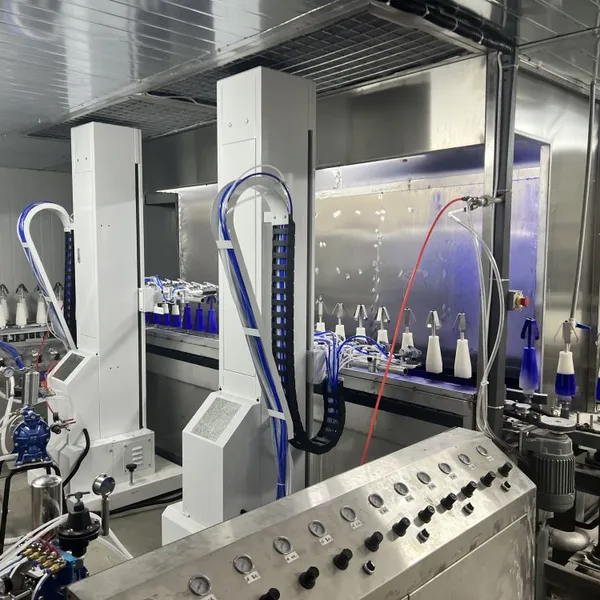
-
Intelligent Automated Electrophoretic Coating Line for Powder Coating Production EquipmentNegotiableMOQ: 1 Set
-
Full Automatic Custom Electrophoretic Coating Line for Industrial Metal ComponentsNegotiableMOQ: 1 Set
-
Heavy‑Duty Continuous Powder Coating Line for Big Cabinet Anti‑Corrosion FinishingNegotiableMOQ: 1 Set
-
Energy‑Saving Powder Coating Line for Large Industrial Cabinet Surface ProtectionNegotiableMOQ: 1 Set
-
Environmental Friendly Powder Coating Line With High Recovery for Large CabinetsNegotiableMOQ: 1 Set
-
Large Manual Industrial Curing Oven for Metal Powder Coating MachineryNegotiableMOQ: 1 Set
-
Industrial Plastic Drying Oven With PLC Control and 304 Stainless Steel HopperNegotiableMOQ: 1 Set
-
High Efficiency Plastic Raw Material Dryer for Plastic ProcessingNegotiableMOQ: 1 Set
-
Compact E-Coating System for Small Metal Components in Automotive & Medical Device ProductionNegotiableMOQ: 1 Piece
-
Gantry Transport Type Electrophoretic Coating Line for Industrial WorkpiecesNegotiableMOQ: 1 Set
-
Custom Gantry Electrophoretic Coating Line for Automotive Component FinishingNegotiableMOQ: 1 Set
-
Large Workpiece Stainless Steel Manual Powder Spray Booth With Ventilation SystemNegotiableMOQ: 1 Set
-
Large Capacity Stainless Steel Manual Powder Spray Booth With Powder Recovery SystemNegotiableMOQ: 1 Set
-
Automatic Large Workpiece Powder Spray Booth for Metal FabricationNegotiableMOQ: 1 Set
-
Powder Spraying Room With Stainless Steel Frame and PLC ControlNegotiableMOQ: 1 Set