
 Business License

Phosphating Process: A Complete Engineering Guide for Coating Lines
What if the rust creeping under your powder coat started long before the spray booth ever opened? In most coating failures, the real culprit is the invisible chemical layer that was supposed to bond the metal to the finish. That layer is the phosphate coating, and the way it is formed determines whether your parts pass salt spray or come back under warranty.
The phosphating process, also called the phosphate coating process, is one of the most important stages in industrial surface pretreatment. It converts a raw metal surface into a crystalline foundation that locks paint, powder, or e-coat to the substrate. The Powder Coating Institute identifies proper pretreatment as the single most critical factor in coating durability.
Done correctly, it improves adhesion, extends corrosion resistance, and protects edges where coatings are thinnest. Done poorly, it becomes the weakest link in an otherwise well-designed coating line.
In this guide, you will learn exactly how the phosphating process works. We will cover zinc phosphating and iron phosphating, the stages of a complete phosphating line, the process parameters that control crystal growth, and the equipment required to run production at scale. Whether you are specifying a new pretreatment system or troubleshooting flaking and white rust, this article gives you the engineering fundamentals you need.
Want to see how a phosphating line fits your coating process? Request a Free Line Design Drawing and our engineers will prepare a layout based on your substrate, output, and corrosion requirements.
What Is the Phosphating Process?
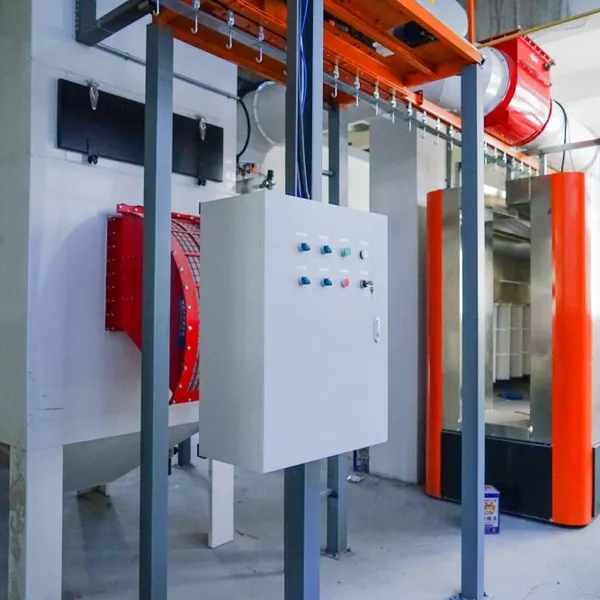
The phosphating process is a chemical conversion treatment that forms a crystalline phosphate layer on a metal surface. The workpiece is cleaned and then exposed to a phosphoric acid solution containing dissolved metal phosphates. A controlled reaction at the surface produces a thin, insoluble coating of phosphate crystals, so the phosphate coating process actually grows the finish out of the substrate rather than laying it on top.
This phosphate layer is not a paint. It does not sit on top of the metal like a coating. It grows out of the metal itself, creating microscopic anchors and a chemically active surface. Paint or powder applied over this layer bonds more strongly, and moisture has a harder time reaching the bare substrate when the topcoat is damaged.
The process is used primarily on steel, zinc-coated steel, and aluminum. It is a standard step in automotive, appliance, hardware, and general industrial finishing. Most surface pretreatment systems include phosphating as the central chemical stage between cleaning and final rinsing. You can read more about the full sequence in our surface pretreatment guide.
Why Phosphating Matters for Coating Performance
Phosphating exists because bare metal does not hold coatings as well as metal that has been chemically prepared. Mill scale, oxides, and organic films block adhesion. Even freshly cleaned metal can be too smooth for mechanical bonding. Phosphating solves both problems by etching the surface slightly and growing a porous crystal structure.
When Elena Garcia took over quality at a Spanish stamping plant in 2023, her powder-coated brackets were failing adhesion tests on galvanized steel. The powder supplier verified the resin. The oven held temperature.
The problem was the phosphate stage, which had been switched from zinc to iron phosphate years earlier to save chemical cost. Iron phosphate could not build enough crystal mass on the zinc-coated surface. After restoring a zinc phosphating process with a tailored activation step, adhesion failures dropped from 8% to under 1% within two production weeks.
The performance benefits are measurable. Phosphate coatings improve paint adhesion by increasing surface area and providing chemical bonding sites. They improve corrosion resistance by creating a barrier layer and by preventing undercutting when the topcoat is breached. They also improve edge coverage because the crystal growth helps retain coating at sharp edges where film thickness is naturally lowest.
Types of Phosphate Coatings
Not all phosphating processes produce the same result. The chemistry is chosen based on substrate, performance requirement, and the coating that will be applied on top.
Zinc Phosphating
Zinc phosphating forms a heavy, crystalline coating of zinc phosphate on steel and zinc-coated steel. The crystals are typically larger and more robust than iron phosphate coatings. Zinc phosphate is the preferred choice for automotive parts, outdoor hardware, agricultural equipment, and any application requiring long salt-spray life.
The coating weight for zinc phosphating usually ranges from 1.5 to 4.5 g/m² depending on the specification. Heavier coatings provide better corrosion resistance but may require more careful control to avoid powdery residue. Zinc phosphating baths operate at 40°C to 70°C and require monitoring of total acid, free acid, accelerator, and metal ion content.
Iron Phosphating
Iron phosphating produces a thinner, amorphous coating that is lower in cost and simpler to operate. It is suitable for indoor applications, mild environments, and parts where adhesion is more important than extended corrosion protection. Appliance panels, indoor furniture, and general hardware often use iron phosphate.
Coating weights for iron phosphate are typically 0.2 to 1.0 g/m². The baths operate at room temperature or slightly heated, making them less energy-intensive than zinc systems. The trade-off is lower salt-spray performance and less protection on sharp edges or cut surfaces.
Manganese Phosphating
Manganese phosphating is used mainly for wear resistance and lubricant retention rather than as a paint base. It is common in gears, bearings, and engine components where break-in lubrication matters. While it can be painted over, its primary industrial role is not decorative coating preparation.
Calcium-Modified and Other Specialty Phosphates
Some zinc phosphate baths are modified with calcium or nickel to produce smaller, more uniform crystals. These formulations are often specified for automotive electrodeposition primers where the e-coat film is thin and must follow the phosphate microstructure closely. The choice depends on the topcoat chemistry and the OEM specification.
The choice between zinc and iron phosphating usually comes down to corrosion requirements and budget. This comparison summarizes the main differences.
| Feature | Zinc Phosphating | Iron Phosphating |
|---|---|---|
| Coating weight | 1.5 to 4.5 g/m² | 0.2 to 1.0 g/m² |
| Crystal structure | Heavy, crystalline | Thin, amorphous |
| Salt-spray performance | 500 to 1,000+ hours | 100 to 250 hours |
| Operating temperature | 40°C to 70°C | Ambient to 50°C |
| Typical applications | Automotive, outdoor, agricultural | Indoor furniture, appliances, hardware |
| Process control | Tighter, more tanks | Simpler, fewer tanks |
| Relative cost | Higher | Lower |
Stages of a Complete Phosphating Process
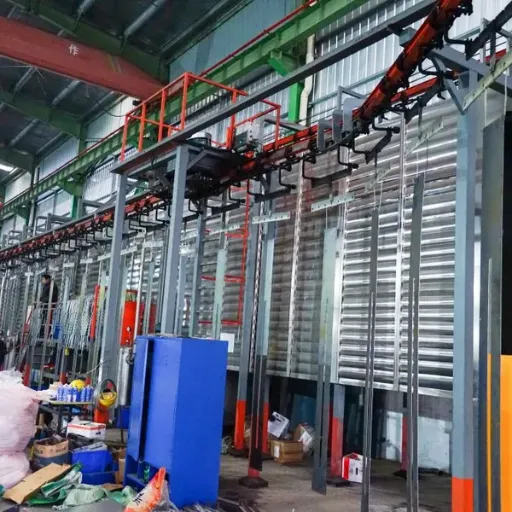
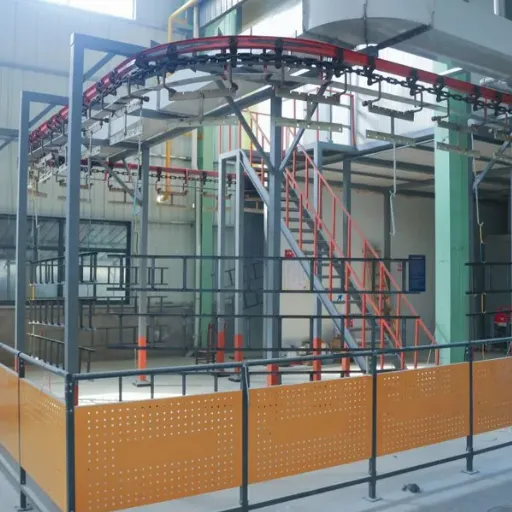
A production phosphating line does not run the process in isolation. It is part of a multi-stage surface pretreatment sequence. Each stage prepares the surface for the next, and skipping or shortening any stage compromises the final result.
Stage 1: Degreasing
Oils, drawing compounds, and shop soils must be removed before phosphating. If oil remains, the phosphating reaction will be spotty or absent in contaminated areas. Alkaline cleaners are the standard choice, operating between 50°C and 70°C with dwell times from 60 seconds in spray systems to several minutes in dip tanks.
Stage 2: Water Rinse
After degreasing, a water rinse removes residual alkaline chemistry and lifted soils. A two-stage cascading rinse is common in high-quality operations. The first rinse captures most of the drag-out; the final rinse uses cleaner water to leave the surface ready for activation or phosphating.
Stage 3: Activation
An activation rinse, sometimes called a titanium activator or grain refiner, prepares the steel surface for uniform phosphate crystal nucleation. Without activation, zinc phosphate crystals can grow large and uneven, producing a coarse coating with poor adhesion. Activation is especially important for automotive-grade zinc phosphating.
Stage 4: Phosphating
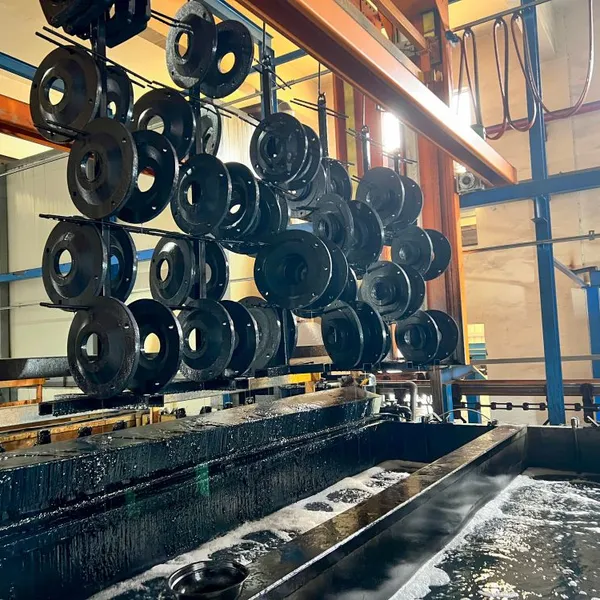
This is the core chemical stage. The workpiece enters the phosphating bath, which contains phosphoric acid, primary metal phosphates, accelerators, and stabilizers. The acid etches the metal slightly, releasing metal ions that react with phosphate to form the insoluble crystal layer.
For zinc phosphating, the bath is heated and vigorously agitated. For iron phosphating, the bath may operate at ambient temperature. Dwell time, temperature, and chemical concentration determine coating weight and crystal structure. Parts must be fully wetted and drained properly to avoid solution pooling or dry spots.
Stage 5: Rinse After Phosphating
A rinse after phosphating removes soluble salts and unreacted acid. This step is critical because residual acid can cause blistering under the topcoat. Some lines use a warm water rinse; others use a dilute chromic or non-chrome passivation rinse to seal the phosphate crystals.
Stage 6: Passivation
Passivation is a final chemical seal that stabilizes the phosphate coating and improves corrosion resistance. Traditional passivation used hexavalent chromium, but environmental regulations have driven adoption of trivalent chromium, zirconium, titanium, and silane-based sealers. The Chemical Coaters Association International provides guidance on compliant chemistries and process control.
Stage 7: Drying
The final stage removes moisture from the workpiece and recessed areas before coating application. Drying tunnels typically operate at 100°C to 150°C. Deqing Leixin supplies curing ovens and drying tunnels with precise temperature control for pretreatment and topcoat operations.
Over-drying can dehydrate the phosphate layer and reduce its activity. Under-drying leaves moisture that causes bubbles or poor powder flow during cure.
Phosphating Process Parameters
Consistent phosphate quality depends on controlling several interrelated variables. A well-run phosphating line monitors these parameters continuously and adjusts dosing automatically.
Temperature
Bath temperature controls reaction kinetics. Zinc phosphating usually runs between 40°C and 70°C. Iron phosphating can run at room temperature or up to 50°C. Higher temperatures accelerate crystal growth but can also produce coarse coatings or excessive sludge if not balanced with other parameters.
Dwell Time
Dwell time determines how much phosphate coating forms. Typical immersion times range from 2 to 5 minutes for zinc phosphating and 30 to 90 seconds for spray applications. Too little time produces a thin, discontinuous coating. Too much time can produce powdery, easily rubbed-off phosphate.
Total Acid and Free Acid
In zinc phosphating, total acid measures the overall phosphate concentration. Free acid measures the uncombined phosphoric acid available for etching. The ratio between free acid and total acid, often called the acid ratio, affects coating quality.
A balanced ratio promotes uniform crystal growth. An imbalanced ratio causes rough, thin, or spotty coatings.
Accelerator Content
Accelerators such as nitrate, nitrite, or chlorate speed up the phosphating reaction and help convert sludge-forming iron into ferric phosphate. Accelerator concentration must be controlled. Too little causes slow coating formation and poor corrosion performance. Too much can produce coarse crystals or increased sludge.
pH and Conductivity
Iron phosphating and rinsing stages rely heavily on pH control. Rinse water conductivity indicates how much chemical residue remains on the part. High conductivity in the final rinse signals inadequate rinsing or contaminated water, which can lead to blistering and poor adhesion.
Spray Phosphating vs Dip Phosphating
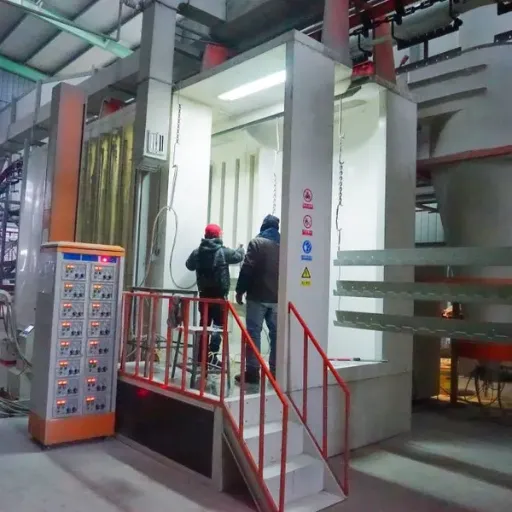
The choice between spray and dip phosphating depends on part geometry, throughput, and performance requirements.
Spray Phosphating
In spray systems, workpieces pass through a tunnel while nozzles pump phosphate solution from multiple angles. Spray phosphating is fast, requires smaller chemical volumes, and fits well in continuous production lines. It works best for sheet metal panels and flat-to-moderately-complex parts.
The limitation is coverage. Spray nozzles can miss interior cavities, blind holes, and tightly packed workpieces. For these geometries, dip phosphating is usually the better choice.
Dip Phosphating
Dip systems immerse workpieces completely in the phosphate bath. This ensures every surface, including internal passages and recesses, receives the treatment. Dip phosphating is preferred for complex automotive brackets, tubular parts, and any application requiring maximum corrosion protection.
The trade-offs are floor space, chemical volume, and cycle time. Dip tanks require more capital and longer dwell times than spray tunnels. Many production lines use a hybrid approach: spray degreasing and rinsing followed by dip phosphating.
Common Phosphating Defects and How to Prevent Them
Even a well-designed phosphating process can drift out of specification. Recognizing defects early prevents them from becoming systemic coating failures. ASTM International publishes standard test methods for coating adhesion, salt-spray resistance, and phosphate coating weight that engineers use to validate pretreatment quality.
Spotty or Bare Areas
Bare spots usually indicate incomplete cleaning, oil contamination, or inadequate activation. Check degreasing temperature and concentration. Verify that the activation rinse is within specification. Inspect upstream handling for fingerprints or shop soils.
Coarse or Powdery Phosphate
Coarse crystals often result from high bath temperature, low accelerator, or poor activation. The coating may look gray and dusty rather than smooth and iridescent. Adjust temperature and accelerator levels, and verify the activator is fresh and properly dosed.
White Rust or Blistering
White rust on zinc-coated steel indicates inadequate passivation or contamination in the final rinse. Blistering under the topcoat often traces back to high conductivity in rinse water or incomplete drying. Check DI water quality, passivator concentration, and drying tunnel temperature uniformity.
When the team at a Brazilian cabinet manufacturer started seeing blisters along welded seams, they suspected the powder. A phosphating audit found that the rinse stage was operating with tap water after the deionizer resin bed had expired.
Once the resin was replaced and rinse conductivity dropped, the blisters stopped. The fix was a maintenance item, not a process redesign.
Phosphating Line Equipment
A production phosphating process requires more than a single tank. The equipment must work as an integrated system to maintain chemistry, temperature, and material flow.
The core components include:
Pretreatment tanks: 304 stainless steel construction to resist alkaline and acidic chemistries.
Heating system: Steam coils, gas burners, or electric heaters to maintain bath temperature.
Circulation pumps: Keep chemistry uniform and prevent stratification.
Filtration system: Removes sludge and particulates that would otherwise deposit on parts.
Dosing system: Automatically adds acid, accelerator, and other chemicals to maintain bath balance.
Rinse tanks: Counter-flow design with conductivity monitoring for water quality control.
Drying tunnel: Heated airflow to remove moisture without over-drying the phosphate layer.
Conveying system: Overhead or ground-mounted transport synchronized with dwell times.
Control system: PLC and HMI for recipe management, monitoring, and data logging.
Deqing Leixin designs turnkey phosphating and pretreatment lines with 304 stainless steel tanks, centrifugal pumps, automatic dosing, and multi-stage rinsing. Each system is configured around the workpiece material, daily output target, and required coating specification.
Phosphating Applications and Industries
Phosphating is used wherever metal parts need a durable, corrosion-resistant coating foundation.
Automotive Parts
Automotive manufacturers use zinc phosphating as a base for e-coat, powder, or liquid paint on chassis components, brackets, seat frames, and underbody hardware. The combination of zinc phosphate and cathodic e-coat routinely exceeds 1,000 hours in neutral salt-spray testing. Deqing Leixin engineers coating lines for automotive parts with pretreatment, coating, and curing stages matched to OEM corrosion specifications.
Appliances and Hardware
Appliance panels, shelving, hinges, and fasteners receive iron or zinc phosphate before entering a powder coating line. The phosphate layer improves adhesion and provides humidity resistance for indoor and sheltered outdoor use.
Agricultural and Construction Equipment
Parts exposed to dirt, moisture, and impact benefit from heavy zinc phosphate coatings. The phosphate layer works with the topcoat to prevent rust from starting at scratches or edges.
E-Coat and Liquid Paint Lines
Phosphating is equally important for electrophoretic coating lines and liquid painting systems. E-coat films are thin and follow the phosphate microstructure closely, so a fine, uniform zinc phosphate layer is essential for automotive primer quality.
Phosphating vs Passivation: What Is the Difference?
The terms phosphating and passivation are sometimes confused because both modify the metal surface chemically. They serve different purposes.
Phosphating creates a thick, crystalline conversion coating that acts as a primer for paint or powder. It is an active pretreatment stage that adds mass and structure to the surface.
Passivation is usually a lighter treatment that removes free iron from stainless steel or seals a phosphate layer after it has formed. In coating lines, passivation often follows phosphating as a final rinse step to improve corrosion resistance and seal the crystals.
For most painted steel parts, the sequence is clean, phosphate, passivate, dry. The phosphating provides adhesion and corrosion protection; the passivation seals and stabilizes the result.
Conclusion
The phosphating process, or phosphate coating process, is a cornerstone of industrial surface pretreatment. It transforms raw metal into a surface that holds coatings better and resists corrosion longer. From zinc phosphating for automotive durability to iron phosphating for indoor hardware, the chemistry is chosen to match the substrate and the performance specification.
Here are the key takeaways:
Phosphating forms a crystalline conversion coating that improves paint adhesion and corrosion resistance.
Zinc phosphating provides heavier, more durable coatings for demanding applications.
Iron phosphating offers a lower-cost option for indoor and mild environments.
A complete phosphating process includes degreasing, rinsing, activation, phosphating, post-rinse, passivation, and drying.
Process parameters including temperature, dwell time, acid ratio, and accelerator must be controlled for consistent results.
Spray and dip phosphating each have advantages depending on part geometry and throughput.
Integrated turnkey equipment design is critical to achieving stable chemistry and repeatable quality.
If you are planning a new coating line or upgrading an existing surface pretreatment stage, the phosphating process deserves careful attention. The right chemistry and equipment configuration will improve first-pass yield, reduce rework, and extend the service life of your finished parts.
Remember that phosphating and passivation serve different purposes in the finishing line: phosphating builds the crystalline adhesion layer, while passivation seals and stabilizes it.
Get a Turnkey Project Quotation for your phosphating line or complete pretreatment system. Submit your workpiece dimensions, output targets, and corrosion requirements, and our engineering team will respond with a custom design and quotation.
Recently Posted
-
Conveyor Speed Calculation for Coating Lines: A Complete Guide
June 26, 2026Last March, a hardware manufacturer in Ningbo raised the chain speed on its powder coating line by 15% to clear a backlog. Three d Read More
 -
Conveyor Line Design: A Complete Engineering Guide for Coating Lines
June 26, 2026Last autumn, a hardware manufacturer in Vietnam commissioned a new powder coating line. The pretreatment tunnel, cyclone-recovery Read More
 -
Overhead Conveyor System: Engineering Guide for Coating Lines
June 26, 2026Last autumn, a hardware manufacturer in Ningbo faced a familiar problem. Their new powder coating line had to fit inside a buildin Read More
 -
Industrial Paint Booth: A Complete Engineering Guide for Manufacturers
June 26, 2026When Mike Chen expanded his metal furniture factory in Zhejiang Province last spring, he assumed the new spray area would solve hi Read More

Contact Us
Recommended Products
-
 Industrial Custom Spray Coating Line for Hardware Anti‑Corrosion TreatmentNegotiableMOQ: 1 Set
 -
Industrial Electrophoresis Line for Metal Water Pump Workpieces ProcessingNegotiableMOQ: 1 Set
-
Custom E‑Coating Production Line for Water Pump Parts Surface FinishingNegotiableMOQ: 1 Set
-
China OEM Custom E-Coating Machine and Cathodic Electrophoresis Production LineNegotiableMOQ: 1 Set
-
Industrial Electrophoretic Coating Line With Custom Design for Metal WorkpiecesNegotiableMOQ: 1 Set
-
Intelligent Automated Electrophoretic Coating Line for Powder Coating Production EquipmentNegotiableMOQ: 1 Set
-
Full Automatic Custom Electrophoretic Coating Line for Industrial Metal ComponentsNegotiableMOQ: 1 Set
-
Heavy‑Duty Continuous Powder Coating Line for Big Cabinet Anti‑Corrosion FinishingNegotiableMOQ: 1 Set
-
Energy‑Saving Powder Coating Line for Large Industrial Cabinet Surface ProtectionNegotiableMOQ: 1 Set
-
Environmental Friendly Powder Coating Line With High Recovery for Large CabinetsNegotiableMOQ: 1 Set
-
Large Manual Industrial Curing Oven for Metal Powder Coating MachineryNegotiableMOQ: 1 Set
-
Industrial Plastic Drying Oven With PLC Control and 304 Stainless Steel HopperNegotiableMOQ: 1 Set
-
High Efficiency Plastic Raw Material Dryer for Plastic ProcessingNegotiableMOQ: 1 Set
-
Compact E-Coating System for Small Metal Components in Automotive & Medical Device ProductionNegotiableMOQ: 1 Piece
-
Gantry Transport Type Electrophoretic Coating Line for Industrial WorkpiecesNegotiableMOQ: 1 Set
-
Custom Gantry Electrophoretic Coating Line for Automotive Component FinishingNegotiableMOQ: 1 Set
-
Large Workpiece Stainless Steel Manual Powder Spray Booth With Ventilation SystemNegotiableMOQ: 1 Set
-
Large Capacity Stainless Steel Manual Powder Spray Booth With Powder Recovery SystemNegotiableMOQ: 1 Set
-
Automatic Large Workpiece Powder Spray Booth for Metal FabricationNegotiableMOQ: 1 Set
-
Powder Spraying Room With Stainless Steel Frame and PLC ControlNegotiableMOQ: 1 Set