
 Business License

What Is Powder Coating? A Complete Engineering Guide for Manufacturers
When Sarah Chen reviewed her quality reports in March 2024, one number stood out. Rework on her company's outdoor furniture frames had jumped to 14% after a wet paint line failed salt-spray testing. The liquid coating looked fine on the shop floor. Six months in coastal humidity, rust crept through at weld seams and sharp edges.
Her team was re-spraying, re-baking, and re-shipping, and the warranty claims were piling up. Sarah's problem was not her operators. It was a finish technology that could not deliver the durability her market demanded.
If you have asked yourself, "what is powder coating, and is it the right finish for my products," you are not alone. Manufacturing engineers, plant managers, and procurement teams evaluate coating technologies every day against requirements for durability, appearance, cost, and environmental compliance. Powder coating has become the dominant dry finishing process for metal products precisely because it addresses all four of those requirements in a single, engineered workflow.
This guide explains what powder coating is, how the powder coating process works, and why it outperforms liquid paint in many industrial applications. You will learn the difference between thermoset and thermoplastic powders, the equipment required for a production line, and the industries where powder coating delivers the strongest return on investment. By the end, you will have a clear framework for deciding whether powder coating belongs in your finishing operation.
Want to explore how powder coating fits your production goals? Request a Free Line Design Drawing and our engineering team will prepare a layout based on your workpiece specifications.
What Is Powder Coating?
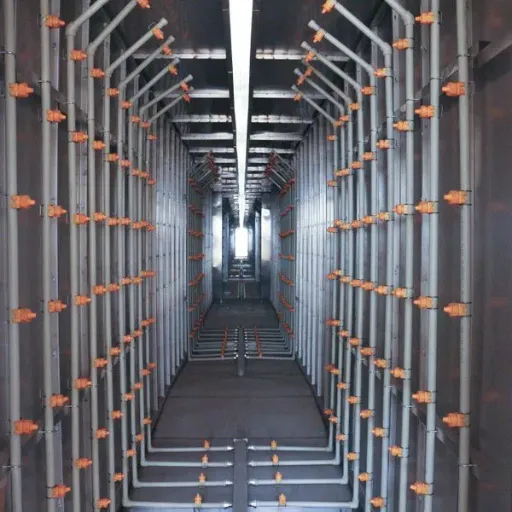
Powder coating is a dry finishing process in which finely ground particles of pigment and resin are electrostatically charged and sprayed onto a grounded metal workpiece. The charged powder adheres to the surface until it is heated in a curing oven, where it melts, flows, and chemically cross-links into a continuous, durable film.
Unlike liquid paint, powder coating does not require a solvent to keep the resin in suspension. The powder is applied dry and contains no volatile organic compounds (VOCs) at the point of application. This fundamental difference gives powder coating its environmental advantage and eliminates the drying time, flash-off zones, and solvent handling that wet paint systems demand.
The powders used in industrial finishing are typically thermosetting polymers. Common chemistries include epoxy, polyester, polyurethane, and hybrid formulations. Each chemistry is selected based on the end-use environment, gloss level, color, and mechanical properties.
Epoxy powders offer excellent chemical resistance but poor UV stability. They are common for indoor or buried applications. Polyester powders dominate outdoor furniture, architectural products, and automotive trim because they resist fading and chalking under sunlight.
Engineering Note: Powder coating is not limited to metal. Specialized powders and pre-treatments can be applied to aluminum, steel, galvanized substrates, and even some engineered materials. The substrate must be able to withstand the curing temperature, typically 160°C to 200°C.
How Does the Powder Coating Process Work?
A complete powder coating process consists of four integrated stages. Each stage affects the next, and weaknesses upstream almost always appear as defects downstream.
Stage 1: Surface Pretreatment
Surface preparation is the foundation of coating adhesion. Oil, rust, mill scale, fingerprints, and fabrication residues must be removed before powder is applied. A typical pretreatment stage includes degreasing, water rinsing, phosphating or passivation, and a final deionized water rinse.
The type of pretreatment depends on the substrate and the performance requirement. Steel parts for outdoor use often receive zinc phosphate conversion coatings for corrosion resistance. Aluminum extrusions may be cleaned and passivated with chrome-free chemistry to prevent oxidation. Indoor hardware can often use the more economical iron phosphate process.
Learn more about configuring a surface pretreatment system matched to your substrate and contamination type.
Stage 2: Electrostatic Application
In the spray booth, a powder coating gun applies an electrostatic charge to the powder particles as they exit the nozzle. Corona charging uses a high-voltage electrode, typically 60 to 100 kV, to ionize air molecules and charge the powder. Tribo-charging uses friction between the powder and the gun barrel to generate charge and works well with specific powder formulations.
The grounded workpiece attracts the charged powder particles, creating a uniform coating layer even on complex geometries. The electrostatic wrap-around effect helps powder reach the back edges and recessed areas that would be difficult to coat with a conventional spray gun. This is the defining characteristic of electrostatic powder coating.
Stage 3: Powder Recovery
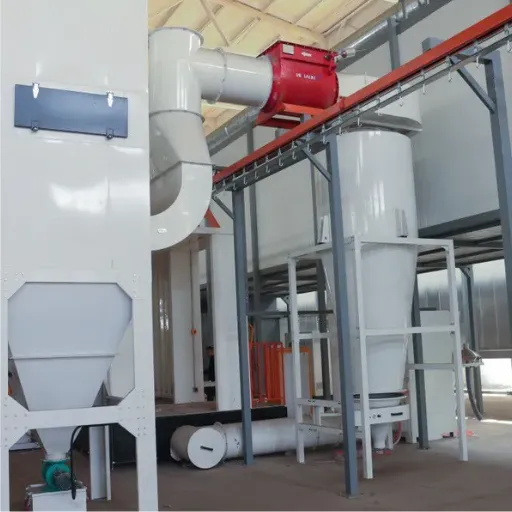
Overspray is inevitable, but in a well-designed booth it is also recyclable. Cyclone recovery systems separate airborne powder from the extraction air stream. Large cyclone double-stage recovery units can reclaim up to 95% of overspray powder, returning it to the feed hopper for reuse.
This recovery rate has a direct impact on material cost. For a line consuming 200 kg of powder per day, a 95% recovery system reduces virgin powder demand to roughly 10 kg per day. Cartridge filtration downstream captures fines that escape the cyclone, keeping exhaust air clean and the booth environment stable.
Stage 4: Curing
After application, the workpiece enters a curing oven where heat triggers the cross-linking reaction. Curing temperatures typically range from 160°C to 200°C, with dwell times between 10 and 20 minutes depending on powder chemistry, workpiece mass, and film thickness.
Tunnel-type curing ovens are standard for continuous production lines. Bridge-type ovens isolate the curing zone to prevent contamination. Temperature uniformity within ±3°C across the conveyor width is critical. Hot spots cause over-bake and discoloration, while cold spots leave the film under-cured and mechanically weak.
Explore curing oven options including gas, electric, and steam heating configurations for your powder coating line.
Thermoset vs. Thermoplastic Powder Coatings
Not all powders behave the same way in the oven. The two main categories are thermosetting powders and thermoplastic powders, and the choice between them depends on the application requirements.
Thermosetting Powders
Thermosetting powders are the standard for industrial metal finishing. During curing, the resin chemically cross-links into a solid polymer network that cannot be remelted. Once cured, the coating will not soften if reheated.
This irreversible cure gives thermosetting powders their excellent hardness, chemical resistance, and mechanical durability. Common thermosetting chemistries include polyester, epoxy, polyurethane, and acrylic. They are used on appliances, automotive parts, architectural aluminum, furniture, and general industrial products.
Thermoplastic Powders
Thermoplastic powders melt and flow when heated but do not chemically cross-link. They can be remelted and reshaped, which makes them useful for applications requiring impact resistance or thick-film protection.
Common thermoplastic powders include nylon, polyester, polyvinyl chloride (PVC), and polyethylene. They are often used for protective coatings on dishwasher racks, freezer shelves, pipe fittings, and automotive underbody components. Thermoplastic coatings tend to be thicker and more flexible than thermoset films, but they generally have lower temperature resistance.
Powder Coating vs Paint: A Technical Comparison
Manufacturers often compare powder coating with liquid paint when selecting a finishing process. The right choice depends on substrate, volume, appearance requirements, and regulatory environment.
| Factor | Powder Coating | Liquid Paint |
|---|---|---|
| Environmental impact | No solvent; minimal VOC emissions | Contains solvents; requires emission control |
| Material utilization | Up to 95% reclaimable overspray | 30% to 50% transfer efficiency typical |
| Film thickness | 50 to 120 micrometers typical | 25 to 50 micrometers typical |
| Durability | Excellent chip, scratch, and corrosion resistance | Good; depends heavily on primer and application |
| Cure time | 10 to 20 minutes at 160°C to 200°C | Longer flash-off and drying periods |
| Color change | Requires thorough booth cleaning | Faster color changes with right equipment |
| Edge coverage | Superior due to electrostatic wrap | Thinning at edges and corners common |
| Regulatory compliance | Simpler in regions with strict VOC rules | Requires permits, ventilation, and solvent handling |
The environmental advantage of powder coating is significant. Because the process uses no liquid solvents, spray booths do not emit the VOCs and hazardous air pollutants associated with wet paint. This simplifies permitting, reduces ventilation requirements, and creates a safer working environment for operators.
Mike Torres, a production supervisor at an automotive stamping plant in Detroit, saw this difference firsthand. His facility had operated a solvent-based paint line for 15 years. It spent heavily on emission controls and respirator programs.
In 2023, his team converted to electrostatic powder coating. VOC emissions dropped by over 90%. Material utilization improved from 45% to 92%. The plant also eliminated a major permitting headache. The switch paid for itself in 28 months through material savings and reduced compliance costs.
Powder Coating Advantages: Key Benefits for Industrial Applications
Powder coating has displaced liquid paint in many manufacturing sectors because it delivers measurable advantages across quality, cost, and sustainability metrics.
Superior Durability and Corrosion Resistance
Cured powder films are tough. They resist chipping, scratching, fading, and corrosion better than most liquid coatings of comparable thickness. The thick, uniform film builds protection at edges and corners where liquid paint tends to thin. For products exposed to outdoor weather, salt spray, or mechanical handling, powder coating provides longer service life and fewer warranty claims.
Environmental Compliance
Powder coating contains no solvents and emits negligible VOCs during application. Unused powder can be reclaimed and reused, minimizing waste. These characteristics make powder coating attractive for manufacturers operating under strict environmental regulations or sustainability targets.
Material Efficiency
High transfer efficiency and reclaim systems mean that most of the powder purchased ends up on the workpiece or back in the hopper. This contrasts sharply with liquid paint, where a large percentage of sprayed material becomes hazardous waste. For high-volume operations, the material savings alone can justify the capital investment in powder coating equipment.
Consistent Finish Quality
Electrostatic application produces uniform film thickness across flat surfaces, recesses, and complex geometries. When combined with automatic reciprocators and PLC-based process control, powder coating delivers consistent color, gloss, and protection from the first workpiece to the ten-thousandth.
Powder Coating Applications: Industries and Use Cases
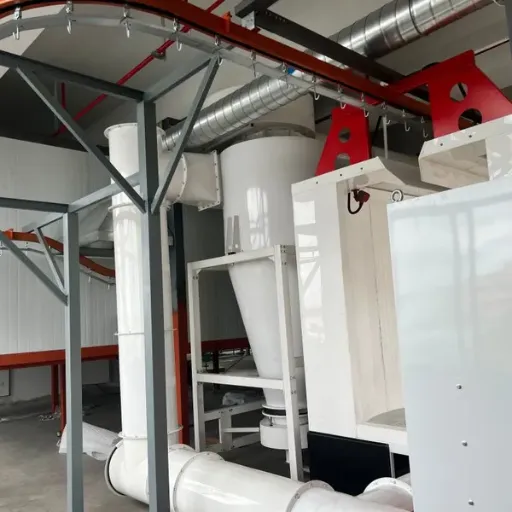
Powder coating is used wherever metal products need a durable, attractive, and protective finish. The process scales from small job shops to high-volume production lines serving global manufacturers.
Automotive Parts
Automotive manufacturers use powder coating for wheels, chassis components, brackets, trim pieces, and engine parts. The finish must withstand salt spray, road debris, and thermal cycling. Class A surface requirements demand tight film thickness control and uniform appearance.
Home Appliances
Washing machine panels, refrigerator shells, air conditioner housings, and dishwasher racks are common powder-coated products. Appliance finishes must resist household chemicals, abrasion, and humidity while maintaining consistent color across large panels.
Furniture and Outdoor Equipment
Metal furniture, patio equipment, shelving, and playground structures rely on powder coating for weather resistance and color retention. Outdoor furniture in coastal or industrial environments benefits especially from the corrosion protection powder coatings provide.
Hardware and Industrial Components
Tools, locks, hinges, fasteners, electrical enclosures, and machinery guards are often powder-coated. The finish protects functional parts from handling damage and environmental exposure while providing an attractive appearance.
Aluminum Extrusions and Architectural Products
Window frames, door frames, curtain wall components, and architectural trim use polyester powder coatings formulated for exterior durability. These coatings must pass rigorous weathering tests and maintain color stability for decades.
What Equipment Does a Powder Coating Line Require?
A production-scale powder coating process requires integrated equipment designed to work together. Buying isolated components and connecting them on the factory floor is a common source of quality and throughput problems.
The core equipment set includes:
Pretreatment system: Multi-stage washer or immersion tanks for cleaning and surface conversion.
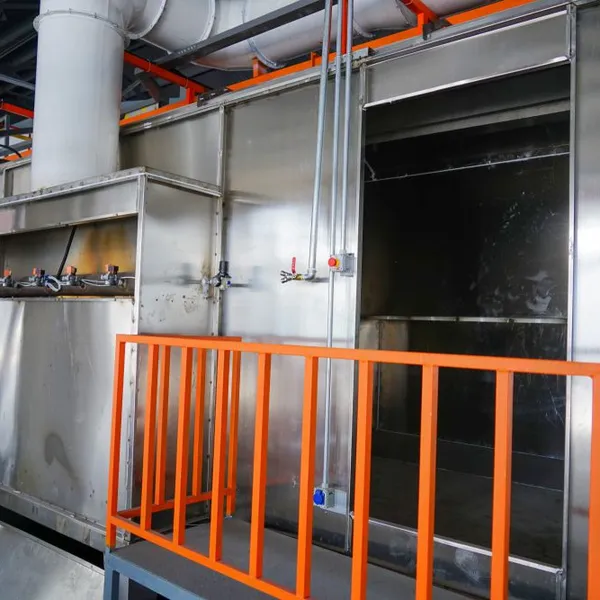
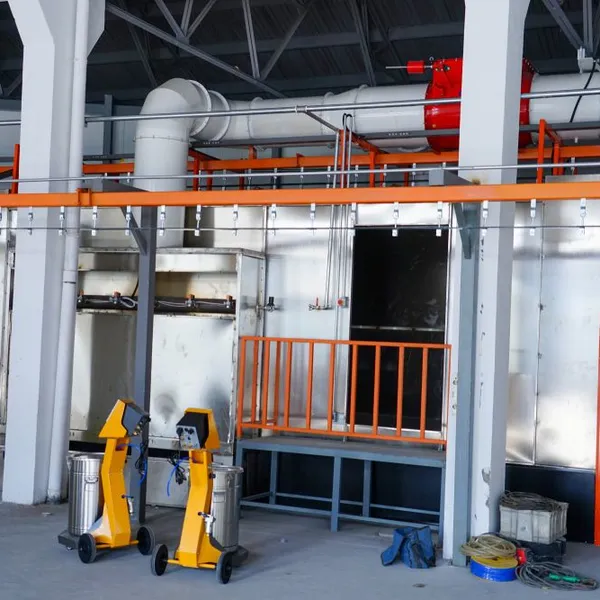
Powder spray booth: Enclosed application zone with controlled airflow and powder recovery.
Electrostatic spray guns or reciprocators: Manual guns for job shops; automatic reciprocators for high-volume lines.
Powder recovery system: Cyclone and cartridge filtration for reclaiming overspray.
Curing oven: Tunnel-type or batch oven with uniform temperature control.
Conveying system: Overhead or ground-mounted transport synchronized with process timing.
Control system: PLC and HMI for recipe management, monitoring, and data logging.
Explore our complete electrostatic powder coating line engineered for automotive, appliance, hardware, and furniture applications.
Deqing Leixin designs turnkey powder coating systems that integrate every stage from pretreatment through curing. Our lines include 304 stainless steel pretreatment tanks, large cyclone double-stage recovery spray booths with 24,000 m³/h extraction capacity, servo reciprocators with spraying heights up to 2,500 mm, and tunnel-type curing ovens with thermal energy systems from 300,000 to 1,000,000 kcal. Each system is engineered around the customer's workpiece dimensions, daily output targets, heating preference, and factory layout.
When the furniture manufacturer Sarah Chen worked with finally converted to a turnkey powder coating line, the change was measurable. Rework dropped from 14% to under 4%. Salt-spray performance exceeded the 1,000-hour requirement. Field warranty claims fell by 70% in the first year. The line did not just solve a quality problem. It changed how the company competed in the market.
Ready to evaluate a powder coating system for your factory? Request a Free Line Design Drawing and our engineers will prepare a preliminary layout based on your workpiece specifications and production targets.
Conclusion
So, what is powder coating? It is a dry finishing process that applies electrostatically charged polymer powder to metal workpieces and cures it into a durable, protective film. The process delivers superior durability, environmental compliance, material efficiency, and finish consistency compared to many liquid paint systems.
Here are the key takeaways:
Powder coating uses dry, solvent-free powder that is electrostatically applied and thermally cured.
A complete powder coating process includes surface pretreatment, electrostatic application, powder recovery, and curing.
Thermosetting powders dominate industrial metal finishing because they cross-link into a hard, heat-resistant film.
Powder coating outperforms liquid paint in durability, edge coverage, material utilization, and environmental compliance.
The process serves automotive, appliance, furniture, hardware, and architectural markets worldwide.
Integrated, turnkey equipment design is critical to achieving consistent quality and throughput.
If you are evaluating finishing options for your production line, powder coating deserves serious consideration. The technology has matured into a reliable, high-performance process that supports both quality and sustainability goals.
Get a Turnkey Project Quotation for your powder coating line. Submit your workpiece dimensions, output targets, and heating preference, and our engineering team will respond with a custom design and quotation.
Recently Posted
-
Conveyor Speed Calculation for Coating Lines: A Complete Guide
June 26, 2026Last March, a hardware manufacturer in Ningbo raised the chain speed on its powder coating line by 15% to clear a backlog. Three d Read More
 -
Conveyor Line Design: A Complete Engineering Guide for Coating Lines
June 26, 2026Last autumn, a hardware manufacturer in Vietnam commissioned a new powder coating line. The pretreatment tunnel, cyclone-recovery Read More
 -
Overhead Conveyor System: Engineering Guide for Coating Lines
June 26, 2026Last autumn, a hardware manufacturer in Ningbo faced a familiar problem. Their new powder coating line had to fit inside a buildin Read More
 -
Industrial Paint Booth: A Complete Engineering Guide for Manufacturers
June 26, 2026When Mike Chen expanded his metal furniture factory in Zhejiang Province last spring, he assumed the new spray area would solve hi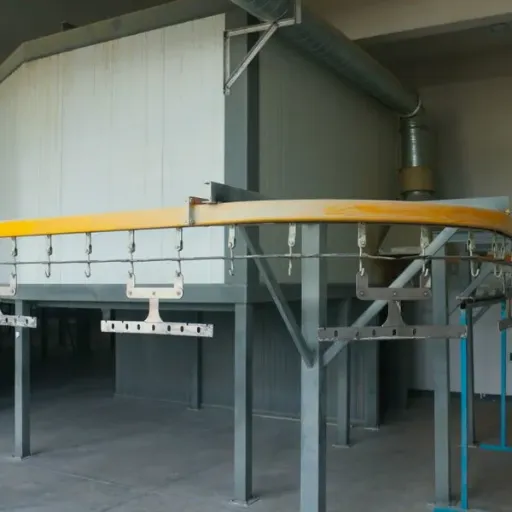 Read More

Contact Us
Recommended Products
-
 Industrial Custom Spray Coating Line for Hardware Anti‑Corrosion TreatmentNegotiableMOQ: 1 Set
 -
Industrial Electrophoresis Line for Metal Water Pump Workpieces ProcessingNegotiableMOQ: 1 Set
-
Custom E‑Coating Production Line for Water Pump Parts Surface FinishingNegotiableMOQ: 1 Set
-
China OEM Custom E-Coating Machine and Cathodic Electrophoresis Production LineNegotiableMOQ: 1 Set
-
Industrial Electrophoretic Coating Line With Custom Design for Metal WorkpiecesNegotiableMOQ: 1 Set
-
Intelligent Automated Electrophoretic Coating Line for Powder Coating Production EquipmentNegotiableMOQ: 1 Set
-
Full Automatic Custom Electrophoretic Coating Line for Industrial Metal ComponentsNegotiableMOQ: 1 Set
-
Heavy‑Duty Continuous Powder Coating Line for Big Cabinet Anti‑Corrosion FinishingNegotiableMOQ: 1 Set
-
Energy‑Saving Powder Coating Line for Large Industrial Cabinet Surface ProtectionNegotiableMOQ: 1 Set
-
Environmental Friendly Powder Coating Line With High Recovery for Large CabinetsNegotiableMOQ: 1 Set
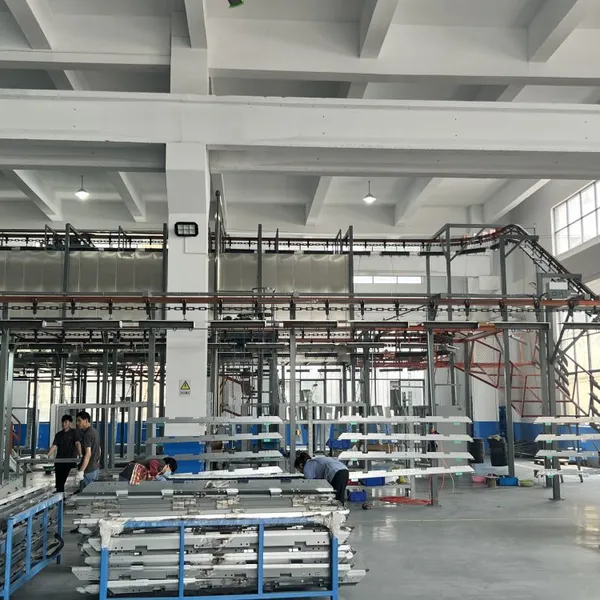
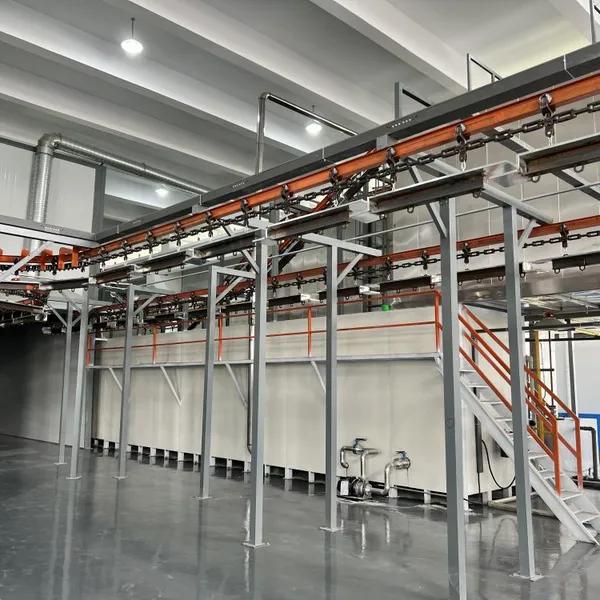
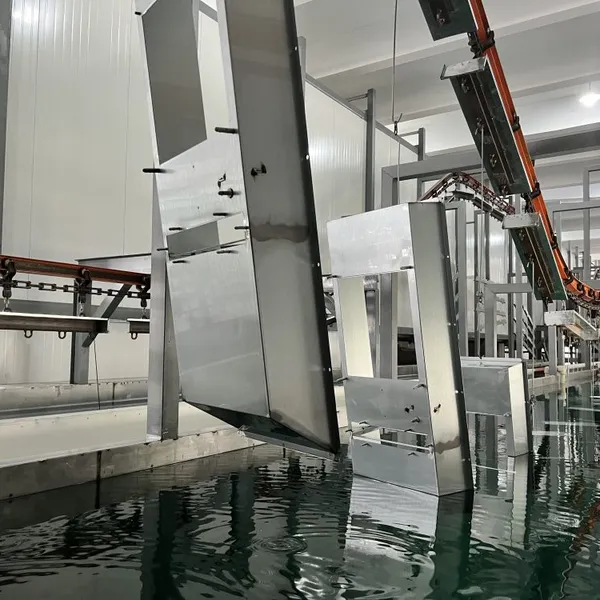
-
Large Manual Industrial Curing Oven for Metal Powder Coating MachineryNegotiableMOQ: 1 Set
-
Industrial Plastic Drying Oven With PLC Control and 304 Stainless Steel HopperNegotiableMOQ: 1 Set
-
High Efficiency Plastic Raw Material Dryer for Plastic ProcessingNegotiableMOQ: 1 Set
-
Compact E-Coating System for Small Metal Components in Automotive & Medical Device ProductionNegotiableMOQ: 1 Piece
-
Gantry Transport Type Electrophoretic Coating Line for Industrial WorkpiecesNegotiableMOQ: 1 Set
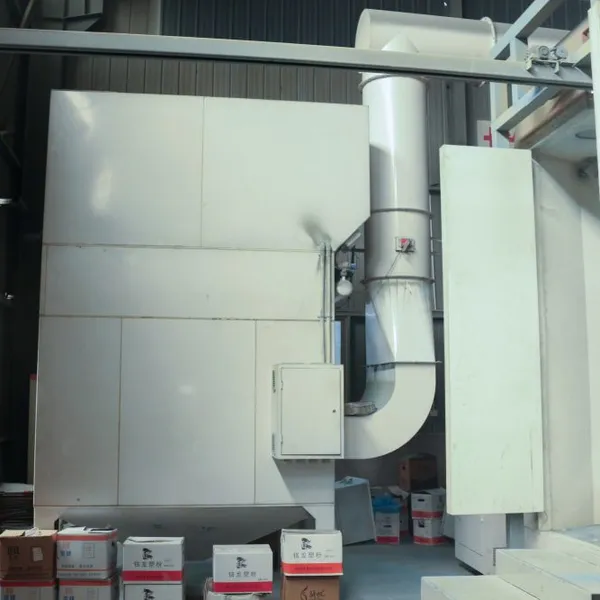
-
Custom Gantry Electrophoretic Coating Line for Automotive Component FinishingNegotiableMOQ: 1 Set
-
Large Workpiece Stainless Steel Manual Powder Spray Booth With Ventilation SystemNegotiableMOQ: 1 Set
-
Large Capacity Stainless Steel Manual Powder Spray Booth With Powder Recovery SystemNegotiableMOQ: 1 Set
-
Automatic Large Workpiece Powder Spray Booth for Metal FabricationNegotiableMOQ: 1 Set
-
Powder Spraying Room With Stainless Steel Frame and PLC ControlNegotiableMOQ: 1 Set