
 Business License

Powder Coating Best Practices: A Complete Production Guide
A single change in pretreatment chemistry saved one automotive parts supplier 340 hours of rework in a single quarter. The problem was not their spray guns, their powder, or their curing oven. It was a rinse stage that had drifted 2°C outside specification, leaving a microscopic residue that destroyed coating adhesion on every tenth workpiece.
If you manage a coating operation, you already know that powder coating best practices are not a checklist you complete once. They are a system of controlled variables that must work together across pretreatment, application, curing, and inspection. One weak link undermines everything downstream.
This guide breaks down the production practices that separate consistent, high-quality finishes from lines that struggle with rework, film thickness variation, and adhesion failures. You will learn how to prepare substrates, optimize electrostatic application, control curing profiles, design your line for throughput, and diagnose the most common defects. Whether you are commissioning a new automatic powder coating line or refining an existing process, these principles apply directly to your operation.
Powder Coating Best Practices for Substrate Preparation
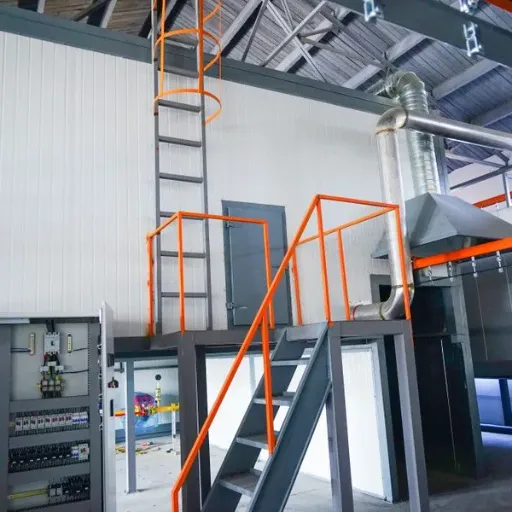
Pretreatment is the foundation of every durable powder coating finish. The best spray guns and the most precise curing oven cannot compensate for oil, rust, or insufficient conversion coating on the substrate surface. In practice, coating adhesion failures trace back to pretreatment more often than to any other stage.
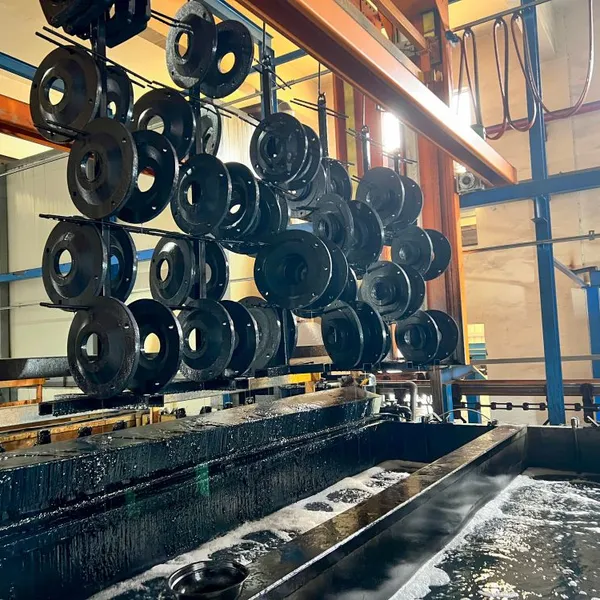
A complete pretreatment system for powder coating typically includes degreasing, rinsing, phosphating or passivation, a final rinse, and a dry-off stage. Each stage must match the contamination present on your workpieces. Stamped steel parts carrying stamping oil need stronger alkaline degreasing than aluminum extrusions with only light handling residue.
When Marcus took over a hardware coating line in Dongguan, his team was seeing peel failures on zinc-coated brackets at a rate of nearly 8%. The line had a three-stage washer with an alkaline degreaser and two rinses, but no phosphating stage. After adding a zinc phosphate conversion coating step and tightening rinse water conductivity to below 200 µS/cm, peel failures dropped to 0.4% within six weeks. The fix was not more powder or a different gun. It was preparing the surface so the coating could bond.
Key pretreatment best practices include:
Match the chemistry to the substrate. Steel, aluminum, and zinc-coated parts respond differently to alkaline cleaners and conversion coatings.
Control temperature and concentration. Degreaser and phosphate baths drift over production cycles. Monitor daily and replenish automatically where possible.
Maintain rinse quality. Carryover between stages contaminates subsequent baths. Use counterflow rinses and keep final rinse conductivity within specification.
Dry thoroughly before coating. Residual moisture causes bubbles, pinholes, and poor adhesion in the cured film.
Verify with simple tests. Water break tests, adhesion tape tests, and salt spray coupons confirm that your pretreatment stage is doing its job.
If you are evaluating a new coating line, our guide to surface pretreatment before coating explains how each stage affects final finish quality.
Optimize Your Powder Application Parameters
Electrostatic powder coating relies on controlled voltage, current, gun-to-part distance, airflow, and powder fluidization. Small deviations in any of these parameters produce visible variation in film thickness, orange peel, or Faraday cage effects in recessed areas.
The corona charging process creates an ionized field at the gun tip. Powder particles pick up a negative charge and are attracted to the grounded workpiece. If voltage is too high, back-ionization creates a charged cloud that repels powder from edges and causes surface defects. If voltage is too low, transfer efficiency drops and overspray increases.
Typical application parameters for manual and automatic guns include:
Voltage: 60–90 kV for corona guns, adjusted based on part geometry
Current: 20–60 µA, limited to reduce back-ionization
Gun-to-part distance: 150–250 mm for consistent pattern overlap
Powder flow rate: 100–400 g/min depending on gun type and part size
Pattern shape: Flattened for broad panels, concentrated for complex profiles
Li Wei, a production supervisor at an appliance panel plant, noticed that film thickness on the left side of every cabinet door was running 15 µm thinner than the right. The reciprocator stroke had drifted 40 mm off center over months of operation. After recalibrating the servo reciprocator and rebalancing gun triggering intervals, thickness uniformity improved across the entire panel. On large surfaces, even small mechanical drift shows up as measurable quality variation.
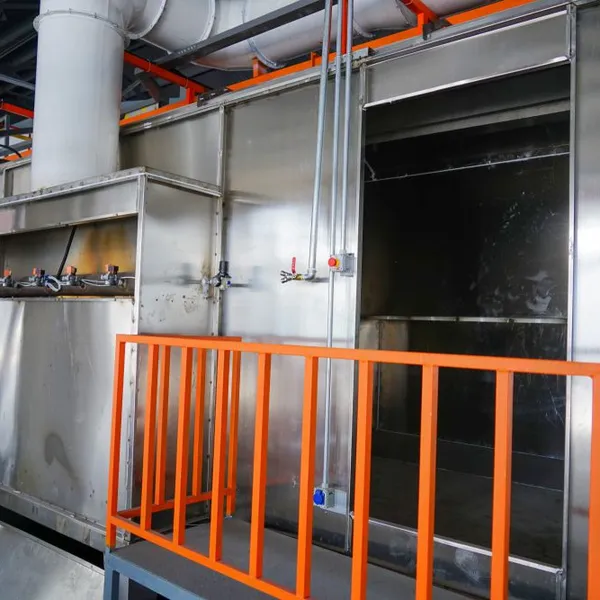
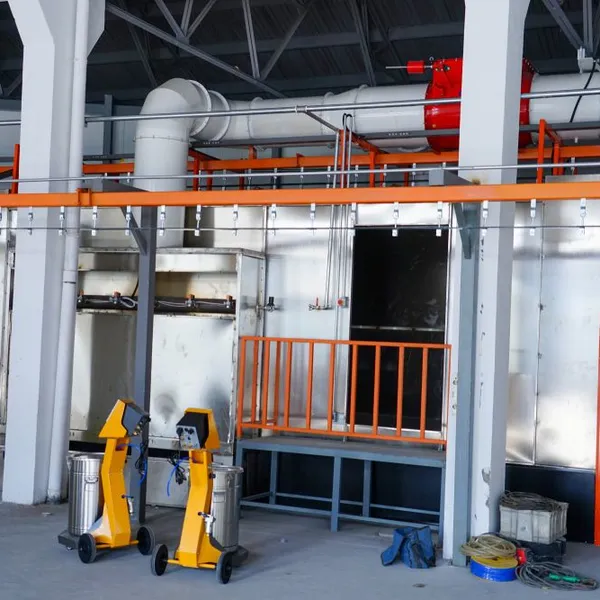
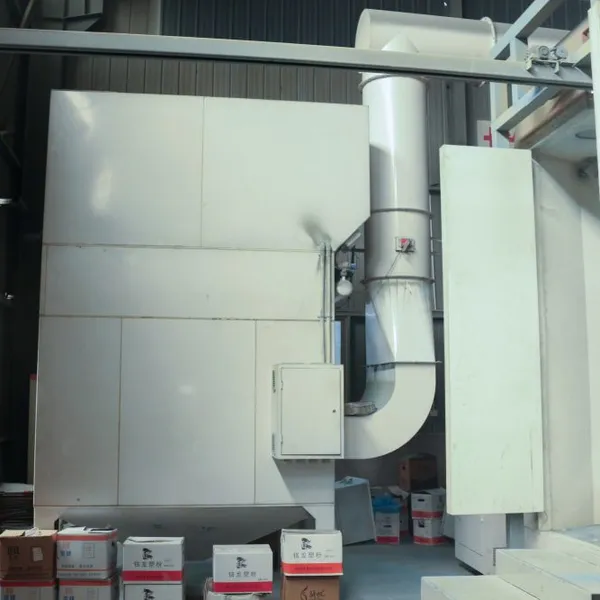
For automatic lines, a servo reciprocating machine with programmable stroke patterns helps maintain consistent gun positioning across shifts. Combined with a cyclone recovery spray booth, you can reduce powder waste by reclaiming up to 95% of overspray while keeping film thickness within tolerance.
Want to see how automated spray application improves consistency? Explore our automatic powder coating line configurations for automotive, appliance, and hardware applications.
Powder Coating Best Practices for Curing Control
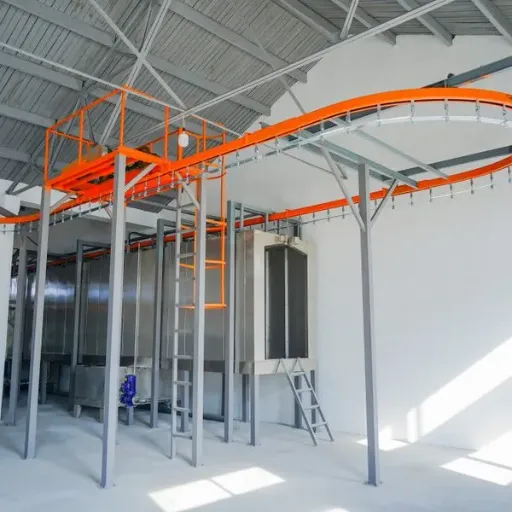
Curing is where powder particles melt, flow, and crosslink into a continuous protective film. Under-cure leaves a soft, underperforming finish with poor chemical resistance. Over-cure causes yellowing, reduced gloss, and brittle film behavior. The correct cure depends on both temperature and time at temperature, not just the oven setpoint.
Most polyester and epoxy-polyester hybrid powders require a metal temperature of 180–200°C for 10–15 minutes. The critical measurement is part temperature, not air temperature. Heavy castings take longer to reach target temperature than thin sheet metal panels passing through the same oven. Always verify with a temperature profiler that records actual workpiece surface temperature through the cure cycle.
Best practices for curing oven operation include:
Profile the workpiece, not just the oven. Use a data logger with thermocouples attached to representative parts.
Maintain uniform airflow. Hot spots and cold zones create color and gloss variation across the batch.
Preheat the oven before production. Allow 30 minutes for the thermal profile to stabilize.
Match energy source to local costs. Gas, electric, oil, and steam heating each have different operating cost profiles and ramp rates.
Clean oven interiors regularly. Powder overspray buildup affects airflow and can become a fire hazard.
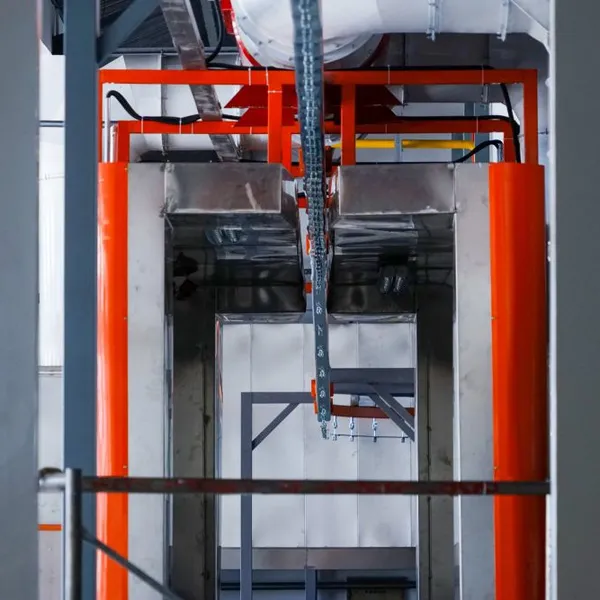
A tunnel-type curing oven with 304 stainless steel liner and precision temperature control within ±3°C gives you the thermal stability needed for consistent cure quality. For lines handling mixed part masses, bridge-type ovens with isolated zones can improve temperature uniformity.
Design Your Coating Line for Consistent Throughput
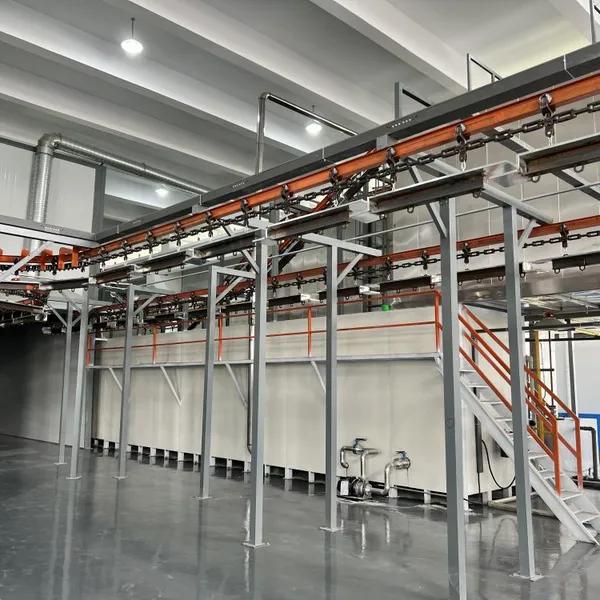
Even the best operators cannot overcome a poorly laid out powder coating line. Workpiece flow, conveyor speed, and stage timing must be designed as an integrated system. Bottlenecks in pretreatment or curing force upstream stages to stop and start, which degrades both quality and efficiency.
Line design starts with four inputs: workpiece dimensions and weight, required daily output, available factory space, and preferred heating source. From there, you calculate conveyor speed, oven dwell time, spray booth coverage, and pretreatment stage length. A common mistake is sizing the spray booth for peak speed but under-sizing the curing oven, which creates a permanent production constraint.
Conveyor speed directly determines dwell time in every stage. If your oven requires 12 minutes at cure temperature and the heated zone is 24 meters long, your conveyor must run at 2 meters per minute. Every other stage must be sized for that same pace. Changing conveyor speed to increase throughput without re-engineering the oven simply produces under-cured parts.
Our coating line design guide covers layout calculations for automatic powder coating production lines. For a turnkey approach, Deqing Leixin provides free factory layout drawings as part of the quotation process.
Planning a new line or upgrade? Request a free design drawing and our engineers will size each stage around your workpiece specifications and daily output target.
Maintain Equipment and Powder Quality
Powder coating is sensitive to contamination, moisture, and handling. Even premium powder will produce defects if it is stored in humid conditions, sifted improperly, or recirculated through a dirty recovery system. Preventive maintenance is what keeps a line producing Class A finishes month after month.
Powder storage and handling best practices:
Store powder below 25°C and below 60% relative humidity. Moisture causes caking, poor fluidization, and application defects.
Use first-in, first-out inventory rotation. Powder has a shelf life, typically 12 months under ideal conditions.
Condition powder before use. A sieving machine removes lumps and ensures consistent fluidization in the hopper.
Check fluidization daily. The powder bed should flow freely and uniformly when air is applied.
Equipment maintenance priorities:
Clean spray guns and hoses daily. Color changes require thorough purging to prevent cross-contamination.
Inspect recovery filters and cartridges. Clogged filters reduce airflow and recovery efficiency.
Lubricate conveyor chains on schedule. A chain auto-refueling system reduces manual maintenance and prevents unexpected stoppages.
Calibrate reciprocators monthly. Stroke height, speed, and trigger points drift with mechanical wear.
Test grounding resistance. Workpiece grounding should be below 1 MΩ to ensure effective electrostatic attraction.
A preventive maintenance log tied to production shifts catches small problems before they become batch rejections. The cost of scheduled maintenance is always lower than the cost of rework, scrap, and emergency downtime.
Troubleshoot Common Powder Coating Defects
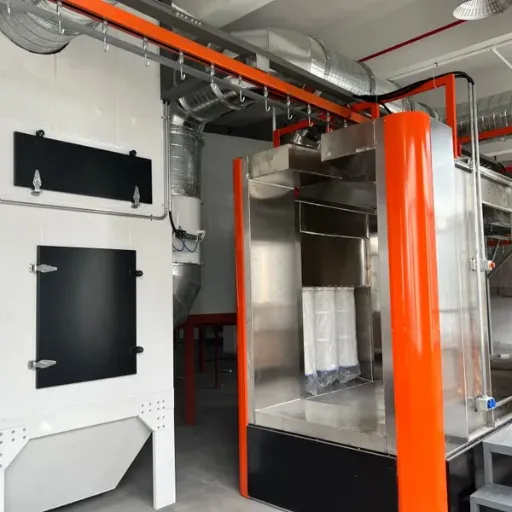
Defects in powder coating usually point to one of four root causes: pretreatment, application, curing, or material handling. Learning to read the defect is the fastest way to find the cause.
| Defect | Likely Causes | Corrective Action |
|---|---|---|
| Orange peel | Low film thickness, under-cure, high powder viscosity, or poor flow | Increase film build, verify cure profile, check powder batch |
| Pinholes | Moisture, contamination, or trapped solvents from pretreatment | Improve drying, check rinse quality, verify substrate cleanliness |
| Faraday cage effect | Excessive voltage or poor gun angle in recessed areas | Reduce voltage, adjust gun positioning, use tribo charging if available |
| Thin edges | High voltage causing back-ionization at corners | Lower kV, adjust gun distance, optimize pattern overlap |
| Color variation | Inconsistent cure temperature or mixed powder lots | Profile oven zones, enforce FIFO powder handling |
| Adhesion failure | Inadequate pretreatment, moisture, or under-cure | Audit pretreatment chemistry, verify dry-off, check part temperature |
Sarah, the plant manager at a steel furniture factory, spent three weeks chasing color inconsistency across white powder-coated chair frames. The oven temperature controller showed a stable 190°C. Profiling revealed a 14°C drop in the middle zone during peak production.
A blocked circulation fan was the culprit. After cleaning the fan and recalibrating the temperature controller, color uniformity returned to specification. The controller was not wrong. It was measuring air temperature in one location while the actual part experienced something different.
When defects persist, document the conditions under which they appear: powder lot number, line speed, oven profile, pretreatment readings, and ambient humidity. That data usually reveals the pattern faster than guesswork.
Build Quality Checks Into Every Shift
Quality control in powder coating is not only a final inspection task. The most effective operations monitor critical parameters at each stage and correct drift before it produces scrap.
A practical quality checklist includes:
Pretreatment verification: Water break test, pH, temperature, and concentration readings at shift start
Application checks: Film thickness measurements on first-off parts and at scheduled intervals
Cure confirmation: Temperature profile review and solvent rub or methyl ethyl ketone (MEK) test
Visual inspection: Gloss, color, and surface appearance under controlled lighting
Adhesion testing: Cross-hatch tape test on representative parts
Dimensional checks: Confirm coating does not interfere with assembly tolerances
Recording results by shift creates a trend history that helps identify when equipment needs maintenance or when operators need retraining. It also protects you during customer audits by demonstrating process control. For standardized test methods, refer to resources from the Powder Coating Institute and ASTM International.
Conclusion
Consistent powder coating quality comes from controlling the full process chain, not just one stage. Surface preparation determines adhesion. Application parameters control film thickness and coverage. Curing transforms powder into a durable finish.
Line design, maintenance, and quality checks hold everything together across production cycles. When these elements work as a system, rework drops and throughput stabilizes.
The powder coating best practices in this guide apply whether you operate a manual batch system or a fully automatic powder coating production line. Start by auditing your weakest stage, because that is where the next improvement will have the largest impact. Small adjustments to pretreatment temperature, gun voltage, or oven airflow often produce bigger quality gains than expensive equipment changes.
Ready to apply these practices to your production line? Contact our engineers with your workpiece dimensions, daily output target, and heating preference. We will prepare a preliminary layout and quotation tailored to your powder coating requirements.
Recently Posted
-
Conveyor Speed Calculation for Coating Lines: A Complete Guide
June 26, 2026Last March, a hardware manufacturer in Ningbo raised the chain speed on its powder coating line by 15% to clear a backlog. Three d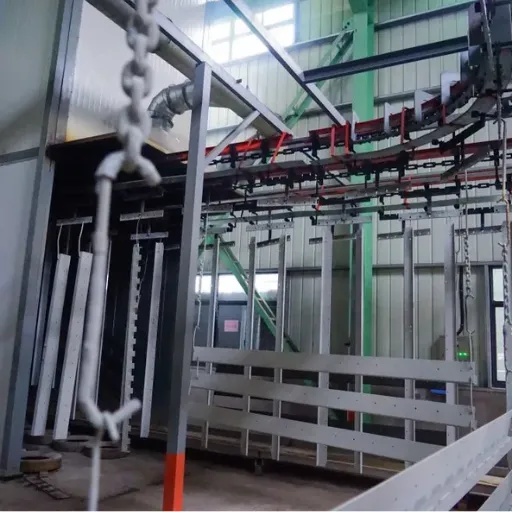 Read More
 -
Conveyor Line Design: A Complete Engineering Guide for Coating Lines
June 26, 2026Last autumn, a hardware manufacturer in Vietnam commissioned a new powder coating line. The pretreatment tunnel, cyclone-recovery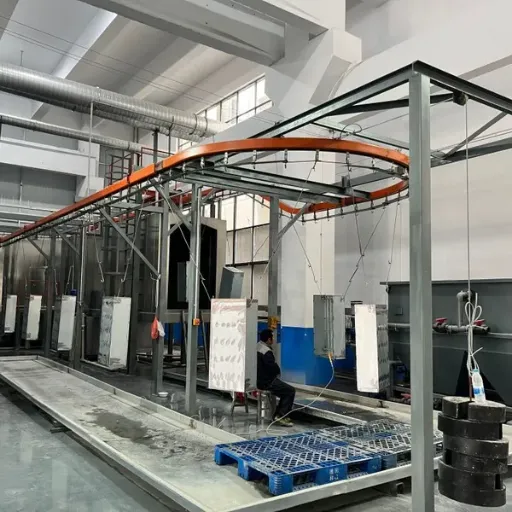 Read More
 -
Overhead Conveyor System: Engineering Guide for Coating Lines
June 26, 2026Last autumn, a hardware manufacturer in Ningbo faced a familiar problem. Their new powder coating line had to fit inside a buildin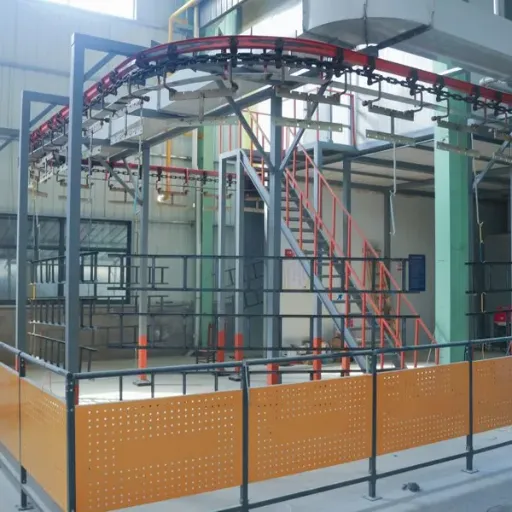 Read More
 -
Industrial Paint Booth: A Complete Engineering Guide for Manufacturers
June 26, 2026When Mike Chen expanded his metal furniture factory in Zhejiang Province last spring, he assumed the new spray area would solve hi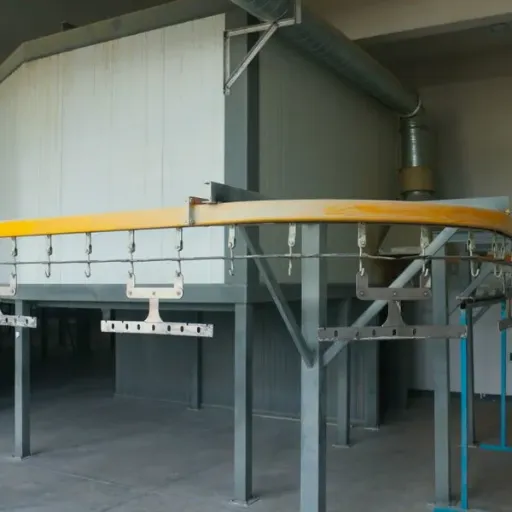 Read More

Contact Us
Recommended Products
-
 Industrial Custom Spray Coating Line for Hardware Anti‑Corrosion TreatmentNegotiableMOQ: 1 Set
 -
Industrial Electrophoresis Line for Metal Water Pump Workpieces ProcessingNegotiableMOQ: 1 Set
-
Custom E‑Coating Production Line for Water Pump Parts Surface FinishingNegotiableMOQ: 1 Set
-
China OEM Custom E-Coating Machine and Cathodic Electrophoresis Production LineNegotiableMOQ: 1 Set
-
Industrial Electrophoretic Coating Line With Custom Design for Metal WorkpiecesNegotiableMOQ: 1 Set
-
Intelligent Automated Electrophoretic Coating Line for Powder Coating Production EquipmentNegotiableMOQ: 1 Set
-
Full Automatic Custom Electrophoretic Coating Line for Industrial Metal ComponentsNegotiableMOQ: 1 Set
-
Heavy‑Duty Continuous Powder Coating Line for Big Cabinet Anti‑Corrosion FinishingNegotiableMOQ: 1 Set
-
Energy‑Saving Powder Coating Line for Large Industrial Cabinet Surface ProtectionNegotiableMOQ: 1 Set
-
Environmental Friendly Powder Coating Line With High Recovery for Large CabinetsNegotiableMOQ: 1 Set
-
Large Manual Industrial Curing Oven for Metal Powder Coating MachineryNegotiableMOQ: 1 Set
-
Industrial Plastic Drying Oven With PLC Control and 304 Stainless Steel HopperNegotiableMOQ: 1 Set
-
High Efficiency Plastic Raw Material Dryer for Plastic ProcessingNegotiableMOQ: 1 Set
-
Compact E-Coating System for Small Metal Components in Automotive & Medical Device ProductionNegotiableMOQ: 1 Piece
-
Gantry Transport Type Electrophoretic Coating Line for Industrial WorkpiecesNegotiableMOQ: 1 Set
-
Custom Gantry Electrophoretic Coating Line for Automotive Component FinishingNegotiableMOQ: 1 Set
-
Large Workpiece Stainless Steel Manual Powder Spray Booth With Ventilation SystemNegotiableMOQ: 1 Set
-
Large Capacity Stainless Steel Manual Powder Spray Booth With Powder Recovery SystemNegotiableMOQ: 1 Set
-
Automatic Large Workpiece Powder Spray Booth for Metal FabricationNegotiableMOQ: 1 Set
-
Powder Spraying Room With Stainless Steel Frame and PLC ControlNegotiableMOQ: 1 Set