
 Business License

Powder Coating Quality Issues: A Troubleshooting Guide for Manufacturers
When Lin Wei opened the first box from the morning shift, the powder-coated brackets looked fine. By midday, his inspectors had flagged 18% of the batch for orange peel, thin edges, and color mismatch. The line had run the same recipe for three months. Nothing had changed, yet everything looked different.
Lin's team checked the powder, the guns, and the oven. Each department blamed another. The real problem was a chain of small deviations, pretreatment chemistry drifting low, booth airflow uneven, and curing temperature lagging at the tunnel entrance. Alone, none of them were disasters. Together, they produced powder coating quality issues that could not be fixed with a quick touch-up.
If you manage a finishing operation, you have probably faced a similar morning. Powder coating quality issues usually show up as surface defects, adhesion failures, or inconsistent color, but their causes often trace back to pretreatment, application, or curing. This guide explains how to diagnose the most common powder coating defects, what process variables control them, and how the right equipment prevents them from recurring.
Need help identifying the root cause of your coating defects? Request a Free Line Design Drawing and our engineers will review your process layout and workpiece specifications.
What Causes Powder Coating Quality Issues?
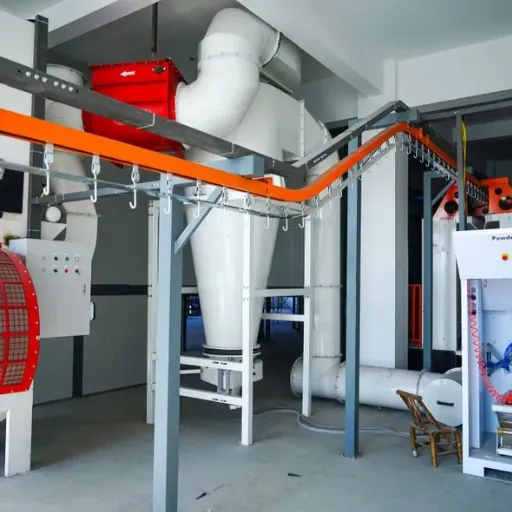
Powder coating is a robust finishing process, but it is also sensitive to variation. A complete line includes pretreatment, drying, electrostatic application, powder recovery, and curing. A defect at any one stage can travel downstream and appear as a quality issue in the final film.
The most common root causes fall into four categories:
Pretreatment failure: Oil, rust, or oxide residues left on the workpiece prevent powder from bonding properly.
Application error: Incorrect voltage, gun distance, or airflow causes uneven deposition, thin spots, or excessive build.
Curing problems: Under-cure leaves the film soft and weak; over-cure causes discoloration and brittleness.
Powder handling issues: Moisture, contamination, or expired powder changes how the material flows and cures.
Understanding which category applies to your defect is the first step in powder coating troubleshooting. Most quality problems can be traced to one of these four areas with a short, structured check.
Common Powder Coating Defects and How to Fix Them
Not every defect looks the same. Learning to read the surface of a coated part tells you where to look in the process.
Orange Peel
Orange peel is one of the most visible powder coating defects. The cured film has a bumpy, textured surface that resembles citrus skin. It scatters light and reduces gloss.
Common causes include under-cure, excessive film thickness, poor powder flow, or contaminated powder. If the oven temperature is too low or dwell time too short, the powder does not flow out into a smooth film before it cross-links. Over-application can also trap air and prevent leveling.
To fix orange peel powder coating issues, verify the curing schedule against the powder supplier's data sheet. Check oven temperature uniformity across the conveyor width. Reduce gun output or increase conveyor speed if film thickness exceeds the specified range. Store powder in a dry environment and use a sieving machine to break up clumps before application.
Poor Adhesion, Chipping, and Peeling
A coating that flakes off at edges or chips under light impact has failed to bond with the substrate. This is often misdiagnosed as a powder problem when it is actually a pretreatment problem.
Causes include insufficient degreasing, poor phosphating, inadequate rinsing, or corrosion left on the metal. Inadequate drying between pretreatment and coating can also trap moisture under the film. Aluminum parts with a natural oxide layer are especially prone to adhesion failures if the conversion coating is skipped or weakened.
The fix starts with the pretreatment stage. Test chemical concentrations daily. Inspect nozzles and filters for clogging. Confirm that the final rinse uses deionized water.
For steel parts exposed to outdoor environments, zinc phosphate provides better corrosion resistance and adhesion than iron phosphate. Learn how a configured surface pretreatment system supports coating adhesion for your substrate.
Thin Film and Edge Coverage Problems
Sharp edges, corners, and recessed areas are natural weak points. If the film is too thin, the coating offers little protection, and rust can start at those edges within months.
Causes include incorrect gun angle, low electrostatic voltage, poor grounding, or the Faraday cage effect. In recessed cavities, the electrostatic field lines concentrate on the closest surfaces and resist depositing powder deep inside. Operators sometimes compensate by over-spraying the outer surfaces, which makes the problem worse.
Start by checking workpiece grounding and gun voltage. Both should sit within the powder supplier's recommended range. Automatic reciprocators with programmable stroke patterns also help coat complex geometries. Some powders include edge coverage additives. If edge protection is critical, ask your supplier for a chemistry rated for that purpose.
Color Inconsistency and Metamerism
A powder-coated batch should match from part to part and from day to day. When colors shift, the cause may be powder batch variation, uneven film thickness, or curing conditions.
Metamerism occurs when two colors match under one light source but not another. It is common when powder from different lots is mixed or when reclaimed powder is blended with virgin powder in inconsistent ratios. Film thickness variation also changes color appearance because thicker films scatter light differently.
Fix color inconsistency by keeping reclaimed powder ratios stable and documenting lot numbers. Calibrate oven temperature zones, because over-bake can yellow whites and fade bright colors. Use a gloss meter and color spectrophotometer for objective measurement rather than relying on visual inspection alone.
Runs, Sags, and Thick Coats
Unlike liquid paint, powder coating rarely runs because it is applied dry. However, excessive film thickness, pre-heated workpieces, or low-melt-flow powders can cause sags, curtains, or drips during curing.
Causes include gun output set too high, conveyor speed too slow, or application of multiple coats without proper reclaim balance. Pre-heated parts from a previous process can cause powder to melt on contact and flow before electrostatic adhesion stabilizes.
To fix runs and sags, reduce gun current or increase line speed. Aim for a film thickness within the powder manufacturer's recommended range, typically 50 to 120 micrometers. Allow hot workpieces to cool before entering the spray booth.
Contamination, Craters, and Fish Eyes
Craters are small circular disruptions in the film. Fish eyes are similar defects where the coating pulls away from a contaminant. Both break the protective barrier and create cosmetic rejects.
Common contaminants include silicone from lubricants or mold release, oil mist from compressed air, dust in the spray booth, and residue from cleaning rags. Even tiny amounts of silicone can cause craters across an entire shift because the defect migrates through reclaimed powder.
The fix is preventive. Use silicone-free shop supplies. Maintain compressed air filtration. Clean booth filters and recovery systems on schedule. Isolate the coating area from grinding or welding operations that generate airborne oils and dust.
Process Variables That Affect Powder Coating Quality
Most powder coating quality issues are not random. They correlate with controllable process variables. Systematic tracking of these variables makes troubleshooting faster.
Pretreatment Chemistry and Timing
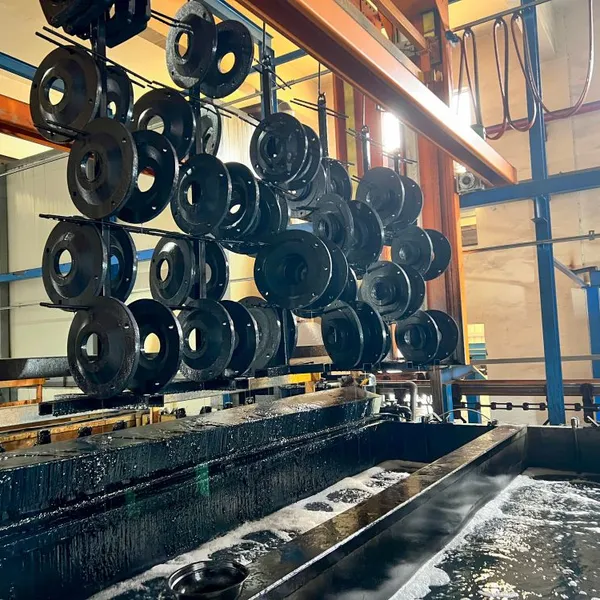
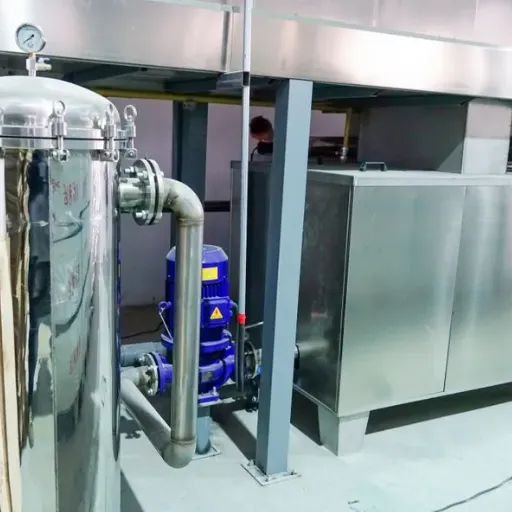
Pretreatment is the foundation of adhesion. A typical spray pretreatment line includes degreasing, rinsing, phosphating or passivation, and a final rinse. Each stage has a target temperature, concentration, and contact time.
When any of these drift, quality follows. Low degreaser concentration leaves oil on parts. High phosphate concentration can leave powdery residue. Insufficient rinsing carries chemicals into the next stage. Deionized water rinse conductivity should be monitored; high readings indicate contamination.
Regular titration, bath skimming, and nozzle inspection keep the pretreatment stage stable. For high-volume lines, automated chemical dosing reduces drift and labor.
Application Parameters
The spray booth is where most operators focus their attention, but voltage, current, airflow, and gun position must be treated as a system.
Voltage: Corona guns typically operate between 60 and 100 kV. Too low reduces wrap and deposition; too high can cause back-ionization and orange peel.
Gun-to-part distance: 150 to 250 mm is typical. Too close creates thick spots and Faraday cage problems; too far wastes powder.
Powder flow rate: High flow rates improve speed but can create turbulence and uneven films.
Air pressure and humidity: Compressed air should be clean and dry. Moisture in the air supply causes clumping and poor fluidization.
Automatic reciprocators with servo-controlled motion help maintain these parameters shift after shift.
Curing Time and Temperature
Curing is where the powder becomes a coating. Under-cured film is soft, has poor chemical resistance, and may fail adhesion tests. Over-cured film becomes brittle, discolored, and prone to cracking.
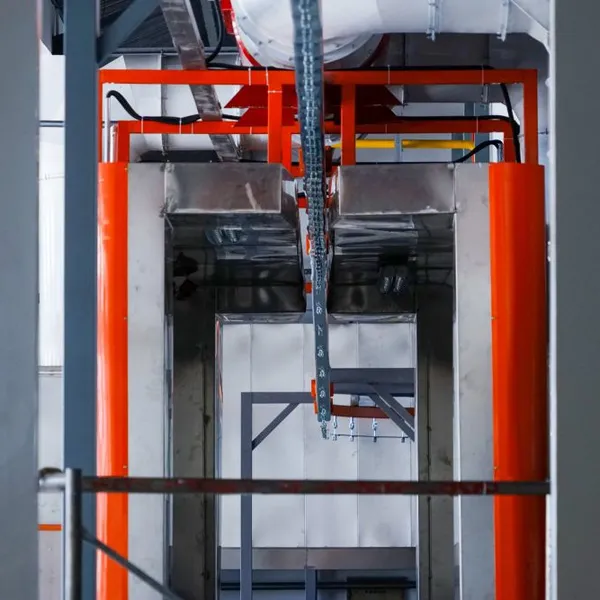
Oven performance matters as much as the setpoint. Temperature uniformity within ±3°C is a common specification for production lines. Heavy sections heat more slowly than thin sheet metal. Dwell time must account for the slowest-heating workpiece on the conveyor. Explore curing oven options with precise temperature control for consistent cure quality.
Use temperature data loggers attached to sample workpieces to verify actual part temperature, not just air temperature.
Powder Handling and Storage
Powder is sensitive to moisture, heat, and contamination. Storage above 25°C or in humid conditions causes caking and poor fluidization. Reclaimed powder should be blended with virgin powder at a consistent ratio, typically 50:50 or 70:30 depending on the application and supplier guidance.
Fines build up in recovered powder over time. Too many fines affect charging and flow. A sieving machine and controlled reclaim ratio keep the powder supply consistent.
Powder Coating Quality Control and Testing
Objective testing removes guesswork from quality control. A few standard tests can quantify whether your coating meets specification.
Film Thickness Measurement
Coating thickness gauges measure dry film thickness on ferrous and non-ferrous substrates. Readings should be taken at multiple points per workpiece, including flat areas, edges, and recesses.
For most industrial powder coatings, the target range is 50 to 120 micrometers. Automotive Class A surfaces may require tighter tolerances. Track thickness trends over time; drift often indicates gun wear, voltage drift, or conveyor speed changes.
Cross-Hatch Adhesion Test
The cross-hatch adhesion test scores how well the coating bonds to the substrate. A grid is cut through the film to the metal, tape is applied and removed, and the remaining coating is rated on a standardized scale.
Failure in this test almost always points to pretreatment or curing. It is a fast way to confirm whether a chipping problem is a surface preparation issue rather than a material issue.
Salt Spray Test
For corrosion-critical parts, the salt spray test measures how long a coated sample resists red rust or blistering in a controlled corrosive environment. ASTM B117 is the standard method for this test.
Results depend heavily on pretreatment and edge coverage. A well-prepared zinc-phosphated steel part with a quality powder topcoat can often exceed 1,000 hours. Parts with poor pretreatment may fail in a few hundred hours even if the surface looks acceptable. Reference the ASTM B117 salt-spray testing standard when specifying corrosion requirements with your coating supplier.
Gloss and Color Measurement
Gloss meters and color spectrophotometers provide objective data for appearance control. Set target values and tolerance bands for each product. Track measurements by shift to catch drift before it becomes a customer complaint.
How the Right Equipment Prevents Powder Coating Quality Issues
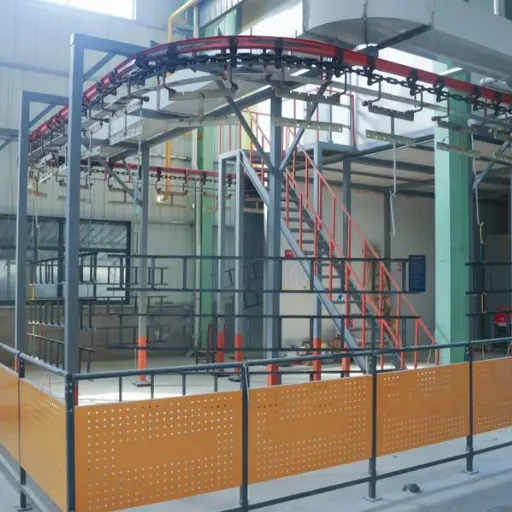
Process discipline matters, but equipment design determines how easy it is to maintain that discipline. A line built from mismatched components will fight its operators every day.
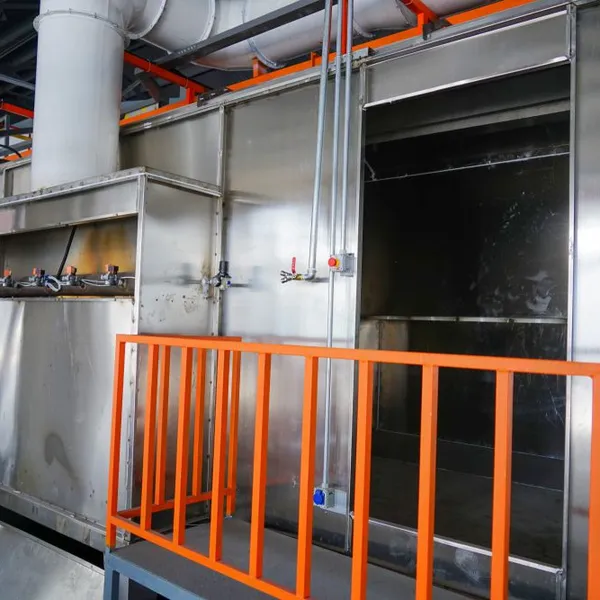
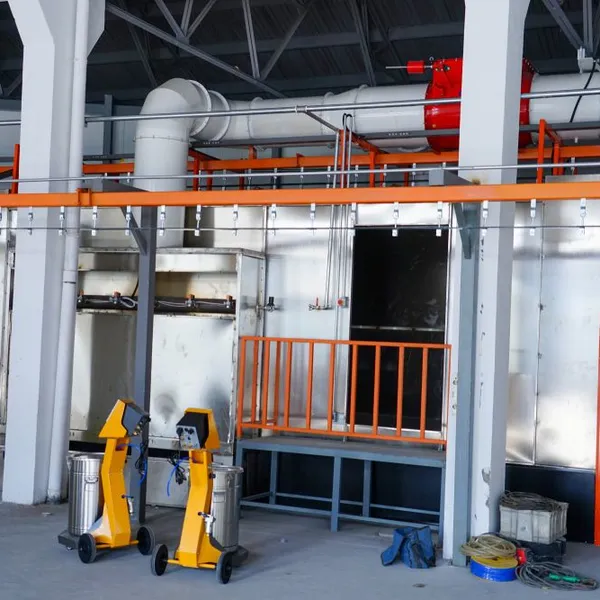
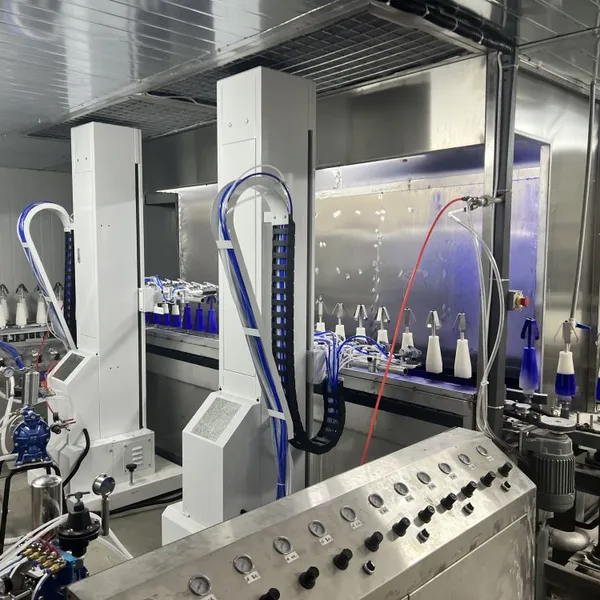
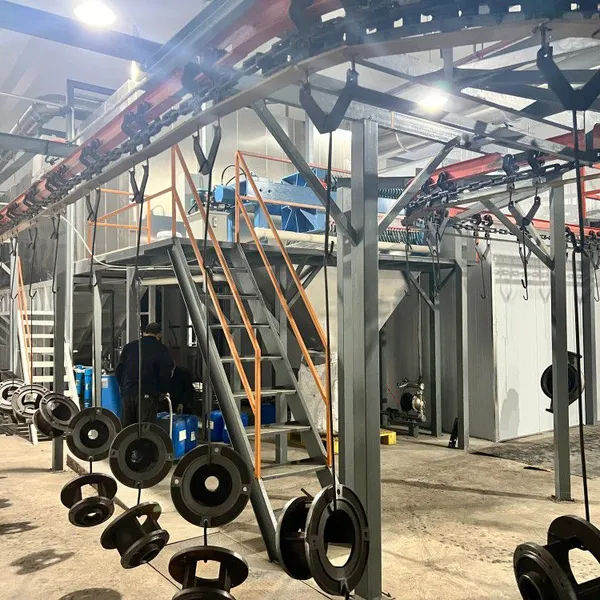
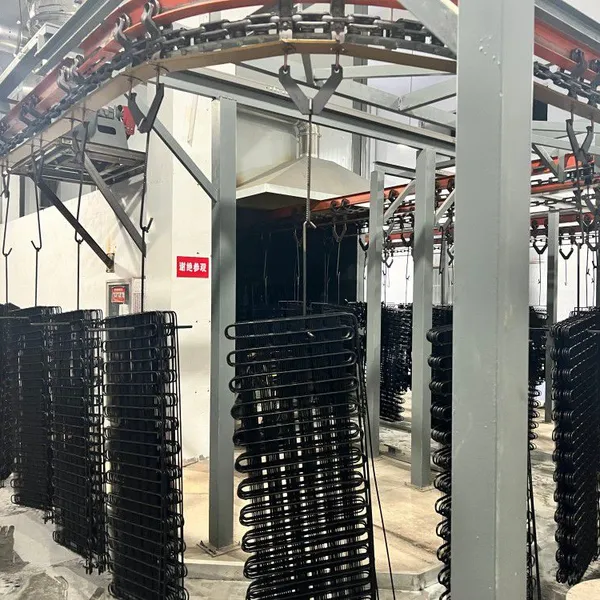
Integrated powder coating systems reduce quality variation by controlling the variables that cause defects. Stainless steel pretreatment tanks with reliable chemical circulation maintain consistent cleaning and conversion. Large cyclone double-stage recovery systems keep powder supply stable and reduce contamination. Servo reciprocators repeat the same spray pattern on every workpiece. Tunnel-type curing ovens with uniform temperature distribution prevent hot spots and cold zones.
Deqing Leixin designs turnkey powder coating systems around these principles. Our lines include 304 stainless steel pretreatment tanks, automatic powder spray booths with 24,000 m³/h extraction, and cyclone recovery systems. We also supply servo reciprocators with spraying heights up to 2,500 mm and curing ovens with thermal energy systems from 300,000 to 1,000,000 kcal. Each system is engineered to the customer's workpiece dimensions, output targets, and quality standards.
When Maria Santos, a quality manager at a hardware manufacturer in Brazil, upgraded from a manual batch setup to a turnkey line, her first-year results were clear. Rework fell from 16% to 5%. Orange peel complaints dropped by 80%. Cross-hatch adhesion failures on zinc-coated steel brackets went from weekly events to isolated incidents. The line gave her team process control they could measure.
Want to prevent powder coating quality issues before they start? Request a Free Line Design Drawing and our engineers will propose equipment matched to your quality targets.
When to Troubleshoot vs. When to Upgrade Your Line
Not every defect requires capital investment. Many powder coating quality issues can be solved with maintenance, training, and process documentation. However, some patterns indicate that the equipment itself is the limiting factor.
Consider troubleshooting first when:
The defect appears suddenly after a period of good quality.
One shift or one operator produces different results than others.
Maintenance logs show overdue filter, nozzle, or calibration work.
Powder lot or supplier changes coincide with the issue.
Consider upgrading the line when:
Defects are chronic and affect multiple product families.
Manual application cannot maintain the tolerance your market demands.
Recovery rates are low and powder waste is eroding margins.
Oven temperature uniformity cannot meet the powder supplier's cure window.
Production volume has outgrown the current line layout.
Ahmed Khan, a plant engineer at an aluminum extrusion company in Dubai, spent six months chasing color inconsistency. His manual booth could not maintain reclaim ratios, and his batch oven had temperature swings of more than 10°C. After upgrading to a continuous powder coating line with automatic reciprocators and a tunnel curing oven, color variation fell within tolerance. The improvement showed on the first production run. The issue was not his team; it was the capability ceiling of his equipment.
Conclusion
Powder coating quality issues are frustrating, but they are rarely mysterious. Most defects fall into recognizable categories with traceable causes. Orange peel, poor adhesion, thin films, color inconsistency, and contamination each point to specific process variables that can be measured and controlled.
Here are the key takeaways:
Powder coating defects usually originate in pretreatment, application, curing, or powder handling.
Orange peel, adhesion failures, and edge coverage problems have distinct causes and fixes.
Objective tests like film thickness measurement, cross-hatch adhesion, and salt spray testing remove guesswork from quality control.
Consistent powder coating quality control depends on tracking process variables and standardizing procedures.
The right integrated equipment makes process discipline easier to maintain and defend.
If your finishing operation is struggling with recurring defects, start with a structured diagnosis. Check pretreatment chemistry, verify application parameters, confirm cure profiles, and test the finished film. Once the root cause is clear, the right fix becomes obvious. It may be maintenance, training, or equipment.
Get a Turnkey Project Quotation for a powder coating line engineered around your quality standards. Submit your workpiece specifications and defect history, and our engineering team will recommend a system designed to prevent them.
Recently Posted
-
Conveyor Speed Calculation for Coating Lines: A Complete Guide
June 26, 2026Last March, a hardware manufacturer in Ningbo raised the chain speed on its powder coating line by 15% to clear a backlog. Three d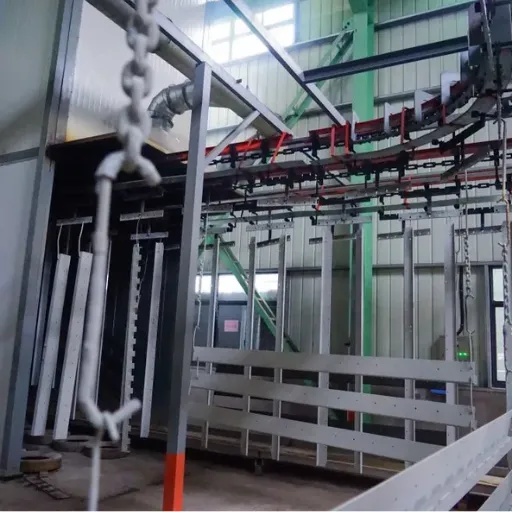 Read More
 -
Conveyor Line Design: A Complete Engineering Guide for Coating Lines
June 26, 2026Last autumn, a hardware manufacturer in Vietnam commissioned a new powder coating line. The pretreatment tunnel, cyclone-recovery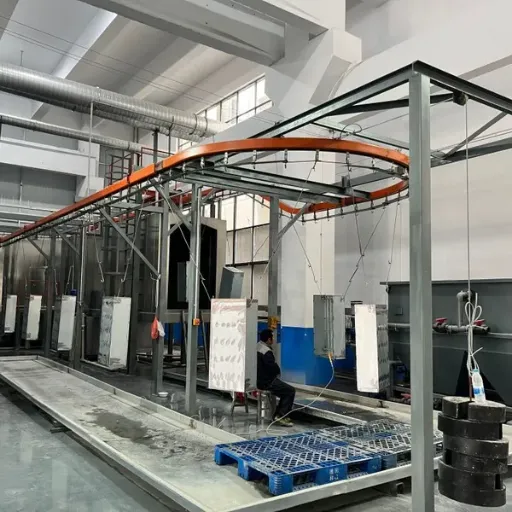 Read More
 -
Overhead Conveyor System: Engineering Guide for Coating Lines
June 26, 2026Last autumn, a hardware manufacturer in Ningbo faced a familiar problem. Their new powder coating line had to fit inside a buildin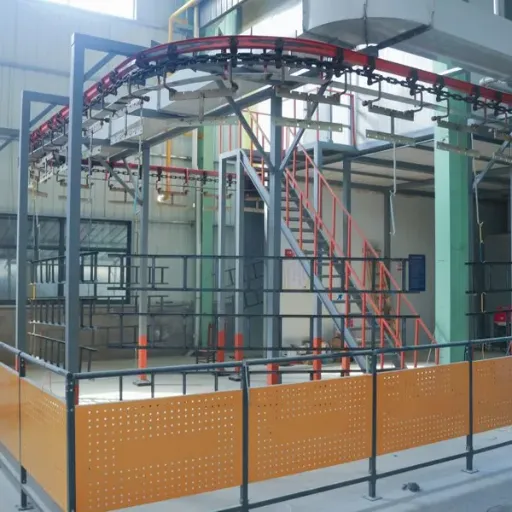 Read More
 -
Industrial Paint Booth: A Complete Engineering Guide for Manufacturers
June 26, 2026When Mike Chen expanded his metal furniture factory in Zhejiang Province last spring, he assumed the new spray area would solve hi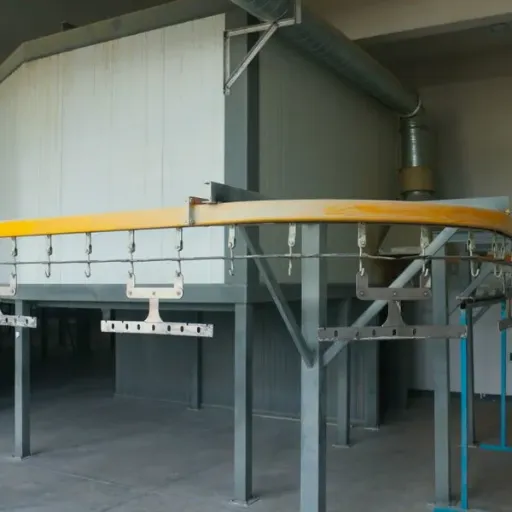 Read More

Contact Us
Recommended Products
-
 Industrial Custom Spray Coating Line for Hardware Anti‑Corrosion TreatmentNegotiableMOQ: 1 Set
 -
Industrial Electrophoresis Line for Metal Water Pump Workpieces ProcessingNegotiableMOQ: 1 Set
-
Custom E‑Coating Production Line for Water Pump Parts Surface FinishingNegotiableMOQ: 1 Set
-
China OEM Custom E-Coating Machine and Cathodic Electrophoresis Production LineNegotiableMOQ: 1 Set
-
Industrial Electrophoretic Coating Line With Custom Design for Metal WorkpiecesNegotiableMOQ: 1 Set
-
Intelligent Automated Electrophoretic Coating Line for Powder Coating Production EquipmentNegotiableMOQ: 1 Set
-
Full Automatic Custom Electrophoretic Coating Line for Industrial Metal ComponentsNegotiableMOQ: 1 Set
-
Heavy‑Duty Continuous Powder Coating Line for Big Cabinet Anti‑Corrosion FinishingNegotiableMOQ: 1 Set
-
Energy‑Saving Powder Coating Line for Large Industrial Cabinet Surface ProtectionNegotiableMOQ: 1 Set
-
Environmental Friendly Powder Coating Line With High Recovery for Large CabinetsNegotiableMOQ: 1 Set
-
Large Manual Industrial Curing Oven for Metal Powder Coating MachineryNegotiableMOQ: 1 Set
-
Industrial Plastic Drying Oven With PLC Control and 304 Stainless Steel HopperNegotiableMOQ: 1 Set
-
High Efficiency Plastic Raw Material Dryer for Plastic ProcessingNegotiableMOQ: 1 Set
-
Compact E-Coating System for Small Metal Components in Automotive & Medical Device ProductionNegotiableMOQ: 1 Piece
-
Gantry Transport Type Electrophoretic Coating Line for Industrial WorkpiecesNegotiableMOQ: 1 Set
-
Custom Gantry Electrophoretic Coating Line for Automotive Component FinishingNegotiableMOQ: 1 Set
-
Large Workpiece Stainless Steel Manual Powder Spray Booth With Ventilation SystemNegotiableMOQ: 1 Set
-
Large Capacity Stainless Steel Manual Powder Spray Booth With Powder Recovery SystemNegotiableMOQ: 1 Set
-
Automatic Large Workpiece Powder Spray Booth for Metal FabricationNegotiableMOQ: 1 Set
-
Powder Spraying Room With Stainless Steel Frame and PLC ControlNegotiableMOQ: 1 Set