
 Business License

Powder Coating Adhesion Problems: Causes, Tests, and Prevention
A quality manager at an appliance plant in Turkey watched the same defect appear on three consecutive batches of refrigerator panels. The plant ran a high-volume appliance coating line. The powder looked uniform, the oven held 200°C, and the film thickness met spec. Yet a simple tape test pulled flakes of coating away from the edges. The real problem had started six process stages earlier, in a degreasing tank that had drifted outside its concentration window.
Powder coating adhesion problems are expensive, frustrating, and almost always preventable. They show up as chipping, flaking, blistering, or a clean separation between film and substrate after impact or environmental exposure. For manufacturers running high-volume lines, the cost is not just scrap. It is delayed shipments, customer complaints, and the engineering hours spent chasing symptoms instead of root causes.
You already understand that powder coating depends on pretreatment, application, and curing working together. This guide focuses specifically on coating adhesion: why it fails, how to diagnose it, and what process controls keep it from failing in the first place. By the end, you will have a practical framework for eliminating powder coating adhesion failure from your production line.
Powder coating adhesion problems occur when the cured powder film fails to bond securely to the metal substrate. The result is chipping, flaking, blistering, or delamination during testing or in service. In most cases, the root cause is inadequate surface pretreatment, incorrect curing, or poor application grounding.
What this guide covers:
The visual and test-based signs of adhesion failure
Root causes across pretreatment, application, and curing
How surface pretreatment for coating creates the foundation for adhesion
Powder coating adhesion tests and how to interpret the results
A prevention checklist you can apply immediately
What Powder Coating Adhesion Problems Look Like on the Production Floor
Adhesion failure does not always announce itself immediately. Sometimes the coating looks perfect after cure, only to flake away weeks later in the field. Recognizing the early signs helps you catch problems before they leave the plant.
Common manifestations include:
Chipping or flaking at edges, holes, and bends: These high-stress areas reveal weak substrate bonds first.
Blistering after humidity or salt-spray exposure: Moisture penetrates the film-substrate interface where the bond is poor.
Peeling around weld zones: Residual weld scale, slag, or heat-affected oxide layers block adhesion.
Failure after impact testing: A coated panel cracks or delaminates when struck, exposing bare metal.
Clean film separation during tape testing: The coating detaches cleanly rather than tearing, indicating a bond failure rather than a cohesive film failure.
Each of these signals points to a breakdown in one or more process stages. The tape test is often the fastest diagnostic tool. If the coating tears internally and leaves a rough edge, the film itself may be brittle. If it separates cleanly at the substrate, the problem is almost certainly upstream.
Engineering Note: Adhesion failure is rarely a spray booth problem. It is usually a pretreatment or curing problem that the spray booth reveals.
Root Causes of Powder Coating Adhesion Failure
Powder coating adhesion problems fall into three process zones: pretreatment, application, and curing. Within each zone, small parameter drifts compound into visible defects.
Pretreatment Deficiencies
The majority of adhesion failures start here. Coating cannot bond reliably to oil, rust, mill scale, or poorly converted phosphate crystals.
Key pretreatment-related causes include:
Inadequate degreasing: Cold cleaner chemistry, low concentration, or insufficient dwell time leaves organic soils on the metal.
Poor rinsing: Residual alkaline cleaner or phosphate solution creates a weak interface layer.
Low phosphate coating weight: Iron or zinc phosphate crystals provide the micro-roughness and chemistry that lock the powder film in place. Insufficient coating weight means fewer anchor points.
Moisture carryover: Water trapped in recesses, seams, or hollow sections vaporizes during cure and disrupts the bond.
Incompatible conversion coating: Galvanized steel, aluminum, and certain alloys require specific pretreatment chemistries. A one-size-fits-all approach fails.
Application Problems
Even a perfectly prepared substrate can be undermined by poor application control.
Insufficient film thickness: Edges and corners may not receive enough powder to form a durable film.
Poor grounding: A weak electrostatic field reduces transfer efficiency and produces uneven coverage.
Contaminated powder or compressed air: Oil, moisture, or silicone in the air supply causes fisheyes and localized adhesion loss.
Incorrect gun settings: Excessive voltage can cause back-ionization and powder rejection; too little voltage produces thin, poorly adhered films.
Curing Errors
Cure is where the powder flows, wets the surface, and crosslinks into a durable film. Under-cure leaves the film soft and poorly bonded. Over-cure can degrade the polymer and reduce adhesion.
Under-cure: Low oven temperature, short dwell time, or overloaded conveyor reduces crosslink density.
Over-cure: Excessive heat or long dwell times can oxidize the substrate surface or degrade the powder resin.
Uneven temperature distribution: Hot spots and cold zones within the oven create inconsistent cure profiles across large workpieces.
The Role of Surface Pretreatment Before Powder Coating
Surface pretreatment before powder coating is the single most influential factor in adhesion performance. It does two things: it removes contamination, and it creates a surface that the powder can mechanically and chemically grip. For a deeper look at mechanical and chemical preparation methods, see our powder coating surface preparation guide.
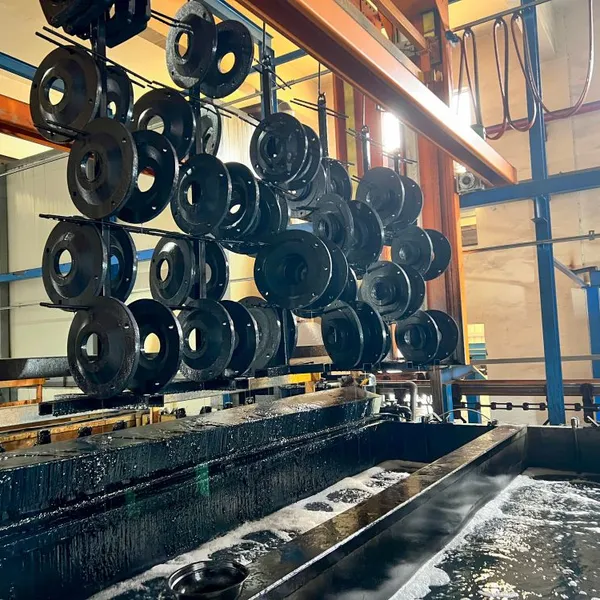
A well-designed pretreatment line moves workpieces through a sequence of stages tailored to the substrate and contamination. A typical steel pretreatment process includes:
Alkaline degrease: Removes oils, drawing compounds, and shop soils at 50°C to 70°C.
Rinse: Flushes away emulsified oils and cleaner residue.
Activation or conditioning: Prepares the surface for phosphate crystal formation.
Phosphating: Deposits iron or zinc phosphate crystals that interlock with the powder film.
Final rinse: Removes unreacted phosphate chemicals.
Drying: Removes moisture before powder application.
For aluminum, the chemistry differs. A typical sequence uses a non-etch or mild etch cleaner, a desmut step, and a chrome-free or chromate conversion coating. Each chemistry must be matched to the alloy, the coating specification, and the end-use environment.
Deqing Leixin builds surface pretreatment systems with 304 stainless steel tanks, automatic water blowing, and configurable stages for degreasing, rinsing, phosphating, and passivation. The right pretreatment configuration prevents the contamination and conversion-coating failures that drive powder coating adhesion problems.
When Faster Throughput Hides a Deeper Problem
When Lin, a coating engineer at a hardware manufacturer in Vietnam, was asked to increase line throughput by 15%, her team shortened dwell times across the pretreatment tunnel. Output rose for three weeks. Then customer returns began arriving. Powder was flaking off bracket edges after assembly.
Root-cause analysis showed phosphate coating weight had dropped below 1.5 g/m², well below the specification window. The shorter dwell time had not allowed enough crystal growth on high-carbon steel parts. Restoring the original dwell time and adding a conditioner stage brought coating weight back into range. Returns stopped, but the plant had already shipped 12,000 defective brackets. The lesson: adhesion cannot be rushed.
How Curing Conditions Affect Coating Adhesion
Cure is more than a temperature target. It is a time-temperature relationship that must match the powder supplier's recommended schedule. Most polyester and epoxy-polyester hybrid powders cure in the 180°C to 200°C range for 10 to 15 minutes at part temperature, not air temperature.
The part temperature matters because large workpieces heat more slowly than small ones. A tunnel oven set to 200°C might bring thin sheet metal to cure temperature in 8 minutes, while a thick casting needs 18 minutes. If the conveyor speed is set for the thinnest part, thick sections will be under-cured.
Under-cured films have low crosslink density. They are softer, less chemically resistant, and more prone to delamination. Over-cured films can become brittle and lose flexibility, which also hurts impact resistance.
A properly sized curing oven with even temperature distribution prevents both problems. Deqing Leixin's tunnel-type and bridge-type ovens use 304 stainless steel liners and thermal energy systems from 300,000 to 1,000,000 kcal, with temperature uniformity within ±3°C. That level of control is what keeps cure-induced adhesion failure off the production floor.
Want to see how the right thermal system protects coating adhesion? Explore our curing oven configurations for powder coating production lines.
Powder Coating Adhesion Tests: What the Numbers Mean
You cannot manage what you do not measure. Powder coating adhesion tests give objective data about whether your process is producing a reliable bond.
Cross-Hatch / Tape Test (ASTM D3359)
This is the most common shop-floor test. A technician scores the coating in a cross-hatch pattern, applies pressure-sensitive tape, and pulls it off quickly. The amount of coating removed is rated from 5B (no removal) to 0B (more than 65% removed).
A rating below 4B should trigger a process review. Check pretreatment chemistry, rinse quality, film thickness, and cure profile before adjusting the powder itself. The ASTM International standard provides the exact test method and rating criteria.
Pull-Off Adhesion Test (ASTM D4541)
This test measures the force required to pull a bonded dolly from the coated surface. It gives a quantitative result in megapascals (MPa) or pounds per square inch (psi). It is more rigorous than tape testing and is often specified for automotive, appliance, and structural applications.
Impact Resistance Test (ASTM D2794)
A weighted indenter strikes the coated panel, and the panel is then tape-tested. This evaluates adhesion under deformation. Brittle or poorly bonded films crack and delaminate; well-bonded films remain intact.
Salt-Spray and Humidity Testing (ASTM B117, ASTM D2247)
These tests expose coated panels to corrosive environments. Blistering or creep from a scribe line indicates poor adhesion and insufficient barrier protection. They are long-term tests, but they reveal adhesion weaknesses that short-term tests miss.
Wet Tape Testing
Some specifications require immersion in warm water before tape testing. This simulates humid service conditions and can expose hydrophilic contamination left by inadequate rinsing.
Engineering Note: Always test on production parts, not just flat test panels. Complex geometries, edges, and weld zones are where adhesion problems first appear.
A Systematic Approach to Preventing Powder Coating Adhesion Problems
Preventing powder coating adhesion problems requires discipline across the entire process. Use this checklist to audit your line:
Pretreatment controls:
Monitor cleaner concentration and temperature daily.
Verify phosphate coating weight weekly using a standardized method.
Test rinse water conductivity and pH at every shift change.
Inspect drying nozzles and oven pre-heat zones for moisture carryover.
Match conversion coating chemistry to substrate type.
Application controls:
Verify workpiece grounding resistance before each production run.
Calibrate gun voltage, current, and powder flow rates.
Keep compressed air dry and oil-free.
Maintain reclaim powder ratios within supplier recommendations.
Clean hooks and fixtures to prevent insulation buildup.
Curing controls:
Measure part temperature, not just oven air temperature.
Validate oven temperature uniformity with a profiler.
Adjust conveyor speed for the heaviest or thickest workpiece.
Follow the powder supplier's cure schedule precisely.
Document cure parameters for every batch.
Material controls:
Store powder in a cool, dry environment.
Verify substrate lot quality for oil, rust, or oxide variation.
Avoid mixed-metal loads unless the pretreatment line is designed for them.
Inspect incoming material for drawing compounds or corrosion inhibitors that may interfere with adhesion.
Following this checklist does more than reduce scrap. It creates a stable process that produces consistent coating adhesion shift after shift.
The Grounding Problem No One Checked
At a metal furniture plant in Poland, operators noticed intermittent adhesion failures on tubular frames. The pretreatment records looked fine. Film thickness was consistent. The cure profile was within spec.
A technician finally checked the grounding circuit and found paint buildup on the conveyor hooks had created electrical resistance. Some frames were receiving only a fraction of the intended electrostatic charge. After the team added a hook cleaning station and scheduled routine fixture maintenance, adhesion failures dropped from 8% to under 1% within two weeks. The issue had never been pretreatment or cure. It was a connection problem.
When Powder Coating Adhesion Problems Signal a Line Design Issue
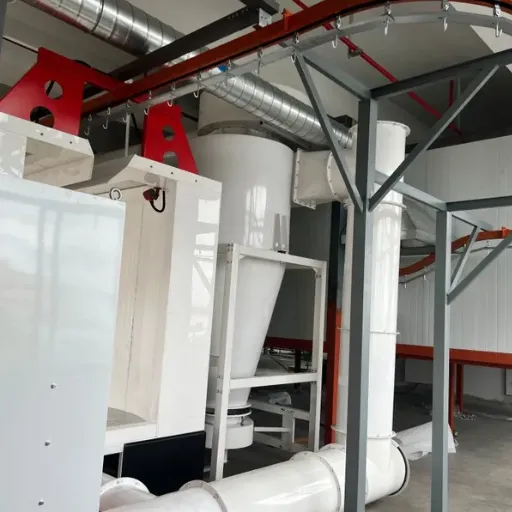
Sometimes adhesion problems are not operator errors or parameter drifts. They are symptoms of a line that was never designed for the workpieces now running through it.
Signs that adhesion failure is a design issue include:
Persistent defects that do not respond to parameter changes
Mixed-metal products that the pretreatment tunnel cannot handle
Workpieces with complex geometries that trap moisture or powder
Production volumes that exceed the pretreatment dwell time
Inadequate oven capacity for part mass or conveyor speed
In these cases, patching the process will only go so far. A powder coating line engineered around your specific substrates, throughput, and quality standards is the more reliable long-term solution. Our powder coating line layout guide explains how to align equipment selection with factory workflow.
Deqing Leixin designs turnkey coating systems with integrated pretreatment, automated spray application, and precision curing. Our engineering team evaluates workpiece dimensions, daily output targets, substrate types, and heating preferences before recommending equipment. We also provide free design drawings as part of our quotation process.
Ready to eliminate adhesion problems at the source? Request a free line design drawing and let our engineers review your workpiece specifications.
Conclusion
Powder coating adhesion problems are almost always process problems, not material mysteries. They trace back to contaminated substrates, poorly controlled pretreatment, inconsistent cure, or application parameters that do not match the workpiece. The good news is that each of these factors can be measured, controlled, and improved.
Start with surface pretreatment. Verify that degreasing, rinsing, phosphating, and drying are performing within specification. Then confirm that your application and curing stages support, rather than undermine, the bond created by pretreatment. Use standardized powder coating adhesion tests to turn subjective complaints into objective data.
If adhesion failures persist despite your best process controls, the issue may be line design. A coating system that matches your substrates, volumes, and quality requirements will always outperform a generic line forced to handle incompatible workpieces.
Take the next step: Contact our engineers with your workpiece dimensions, substrate type, and quality targets. We will help you identify the root cause of your adhesion problems and design a coating line that prevents them from returning.
Recently Posted
-
Conveyor Speed Calculation for Coating Lines: A Complete Guide
June 26, 2026Last March, a hardware manufacturer in Ningbo raised the chain speed on its powder coating line by 15% to clear a backlog. Three d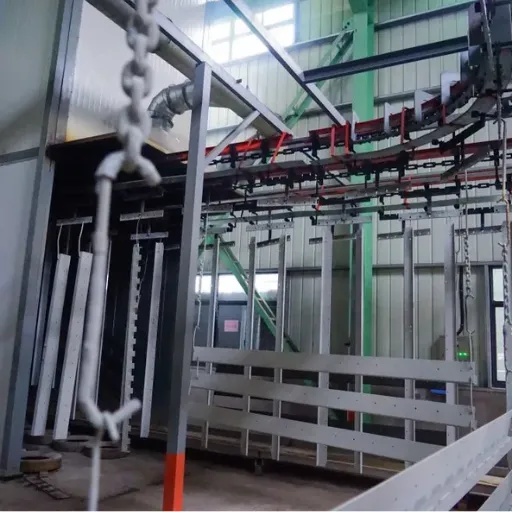 Read More
 -
Conveyor Line Design: A Complete Engineering Guide for Coating Lines
June 26, 2026Last autumn, a hardware manufacturer in Vietnam commissioned a new powder coating line. The pretreatment tunnel, cyclone-recovery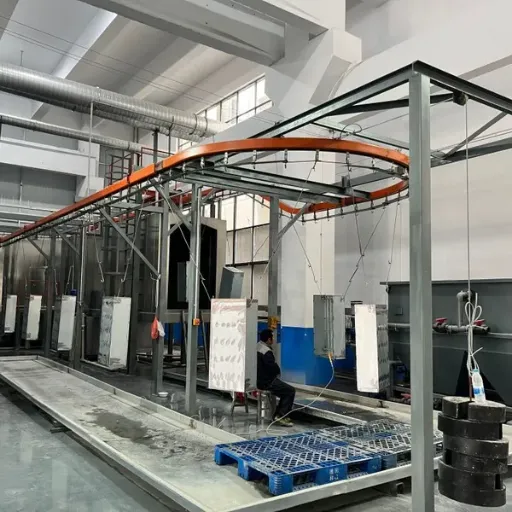 Read More
 -
Overhead Conveyor System: Engineering Guide for Coating Lines
June 26, 2026Last autumn, a hardware manufacturer in Ningbo faced a familiar problem. Their new powder coating line had to fit inside a buildin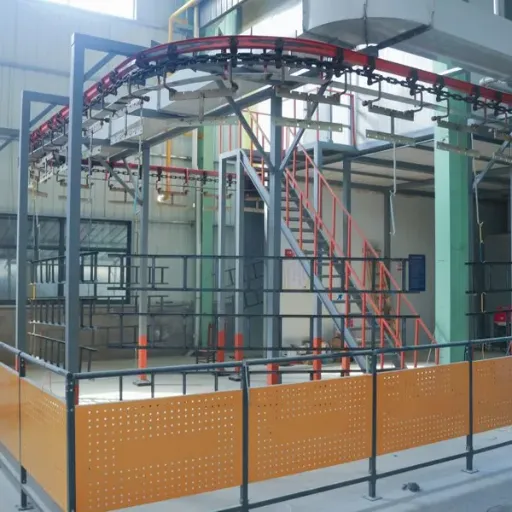 Read More
 -
Industrial Paint Booth: A Complete Engineering Guide for Manufacturers
June 26, 2026When Mike Chen expanded his metal furniture factory in Zhejiang Province last spring, he assumed the new spray area would solve hi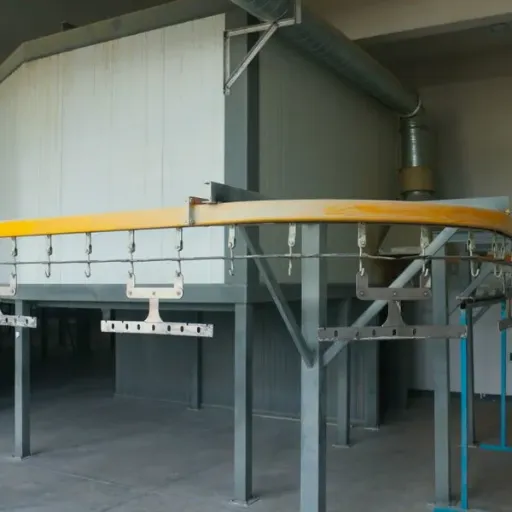 Read More

Contact Us
Recommended Products
-
 Industrial Custom Spray Coating Line for Hardware Anti‑Corrosion TreatmentNegotiableMOQ: 1 Set
 -
Industrial Electrophoresis Line for Metal Water Pump Workpieces ProcessingNegotiableMOQ: 1 Set
-
Custom E‑Coating Production Line for Water Pump Parts Surface FinishingNegotiableMOQ: 1 Set
-
China OEM Custom E-Coating Machine and Cathodic Electrophoresis Production LineNegotiableMOQ: 1 Set
-
Industrial Electrophoretic Coating Line With Custom Design for Metal WorkpiecesNegotiableMOQ: 1 Set
-
Intelligent Automated Electrophoretic Coating Line for Powder Coating Production EquipmentNegotiableMOQ: 1 Set
-
Full Automatic Custom Electrophoretic Coating Line for Industrial Metal ComponentsNegotiableMOQ: 1 Set
-
Heavy‑Duty Continuous Powder Coating Line for Big Cabinet Anti‑Corrosion FinishingNegotiableMOQ: 1 Set
-
Energy‑Saving Powder Coating Line for Large Industrial Cabinet Surface ProtectionNegotiableMOQ: 1 Set
-
Environmental Friendly Powder Coating Line With High Recovery for Large CabinetsNegotiableMOQ: 1 Set
-
Large Manual Industrial Curing Oven for Metal Powder Coating MachineryNegotiableMOQ: 1 Set
-
Industrial Plastic Drying Oven With PLC Control and 304 Stainless Steel HopperNegotiableMOQ: 1 Set
-
High Efficiency Plastic Raw Material Dryer for Plastic ProcessingNegotiableMOQ: 1 Set
-
Compact E-Coating System for Small Metal Components in Automotive & Medical Device ProductionNegotiableMOQ: 1 Piece
-
Gantry Transport Type Electrophoretic Coating Line for Industrial WorkpiecesNegotiableMOQ: 1 Set
-
Custom Gantry Electrophoretic Coating Line for Automotive Component FinishingNegotiableMOQ: 1 Set
-
Large Workpiece Stainless Steel Manual Powder Spray Booth With Ventilation SystemNegotiableMOQ: 1 Set
-
Large Capacity Stainless Steel Manual Powder Spray Booth With Powder Recovery SystemNegotiableMOQ: 1 Set
-
Automatic Large Workpiece Powder Spray Booth for Metal FabricationNegotiableMOQ: 1 Set
-
Powder Spraying Room With Stainless Steel Frame and PLC ControlNegotiableMOQ: 1 Set