
 Business License

Powder Coating Surface Preparation: The Foundation of Finish Durability
A powder coating line can have the most advanced reciprocators, the largest cyclone recovery system, and a curing oven held within ±3°C. None of it matters if the metal arriving at the spray booth is still carrying mill oil, weld scale, or a passive oxide skin. Powder coating surface preparation decides whether a finish survives three months outdoors or twelve years in service.
You already know that spray application and curing create the visible film. This guide shows how the substrate underneath controls everything else. We will cover mechanical and chemical metal surface preparation methods, surface cleanliness standards, and substrate-specific requirements. You will also learn the mistakes that send rework rates climbing and how to integrate surface preparation into a complete powder coating production line.
By the end, you will know how to specify, evaluate, and maintain a powder coating surface preparation process that gives every workpiece the best possible chance of passing adhesion, corrosion, and appearance tests.
Why Powder Coating Surface Preparation Determines Real-World Performance
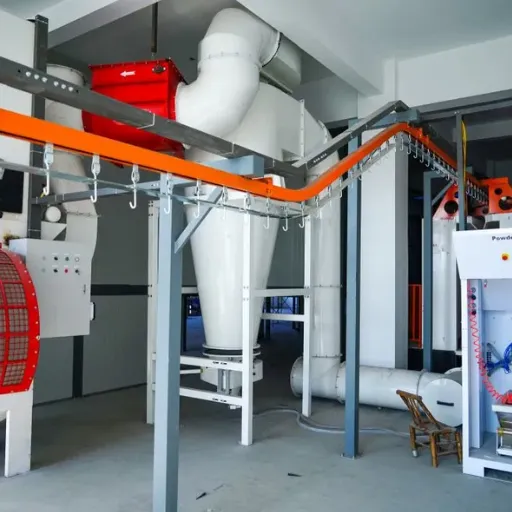
Powder coating builds a protective film through electrostatic charge and heat. The coating itself is tough, but it cannot bond to a contaminated substrate. Oil, rust, moisture, and loose oxides act as weak layers. They look harmless, yet they create a separation point between the metal and the cured powder.
Surface preparation solves this problem in two ways. First, it removes contaminants that block adhesion. Second, it creates a surface texture and chemistry that lock the coating in place.
Mechanical methods such as abrasive blasting produce microscopic peaks and valleys. Chemical methods such as phosphating deposit conversion crystals that interlock with the powder film. Together, these effects determine coating adhesion, edge coverage, and corrosion resistance.
Industry test methods confirm the relationship. ASTM D3359 measures tape adhesion, ASTM B117 exposes coated panels to salt fog, and ASTM D1653 evaluates water vapor transmission. The Powder Coating Institute also publishes technical resources on pretreatment and surface preparation best practices. In each case, the substrate condition has more influence on the result than small variations in powder chemistry or curing temperature.
A well-prepared surface can rescue an average coating. A poorly prepared surface will defeat the best one.
Engineering Note: Surface preparation is not a cost center. It is an insurance policy against rework, warranty claims, and lost customer confidence.
Mechanical Powder Coating Surface Preparation
Mechanical preparation changes the physical condition of the metal. It removes scale, smooths welds, and produces the anchor pattern that powder needs for mechanical bonding. The right method depends on the substrate, the contamination level, and the required finish quality.
Abrasive Blasting Before Powder Coating
Abrasive blasting before powder coating is the most effective way to prepare structural steel, castings, and heavy fabricated parts. Compressed air or centrifugal wheels throw abrasive media at the surface. The impact removes rust, mill scale, and old coatings while creating a uniform profile.
Common media include:
Steel grit and shot for aggressive cleaning and profiling
Aluminum oxide for controlled etching on steel and aluminum
Garnet for mixed substrates and lower dust generation
Glass bead for light cleaning without aggressive profiling
Plastic media for stripping delicate parts
Blasting produces a surface profile measured in microns or mils. A typical powder coating application requires a profile between 25 and 75 microns. Too smooth, and the coating has little to grip. Too rough, and the peaks may protrude through the film, causing rust spotting or thin coverage.
Blasting also introduces a cleanliness requirement. Residual abrasive dust must be removed before coating. A vacuum system followed by compressed-air blow-off is standard practice. Some operations add a final solvent wipe or deionized rinse to remove the finest particles.
Grinding, Sanding, and Wire Brushing
For small weld areas, localized repairs, or prototype work, hand and power tools are practical. Grinding removes weld spatter and sharp edges. Sanding with 80- to 120-grit paper scuffs smooth surfaces such as extruded aluminum or cold-rolled steel. Wire brushing removes loose rust and scale from hard-to-reach areas.
These methods have limitations. They do not produce a uniform profile across large panels. They are slow on high-volume lines. And they rely heavily on operator skill. For production coating, they are usually reserved for touch-up or for areas that cannot be reached by automatic blast cabinets.
Chemical Stripping and Etching
Some substrates arrive with old paint, powder, or conversion coatings that mechanical methods cannot remove cleanly. Chemical strippers dissolve these layers so the base metal can be re-prepared. Acid etching is also used on aluminum to remove the natural oxide layer and create a micro-roughened surface for improved adhesion.
Chemical stripping requires containment, ventilation, and waste treatment. It is not typically part of an inline powder coating surface preparation stage, but it is common in job shops and refurbishment operations.
Chemical Powder Coating Surface Preparation
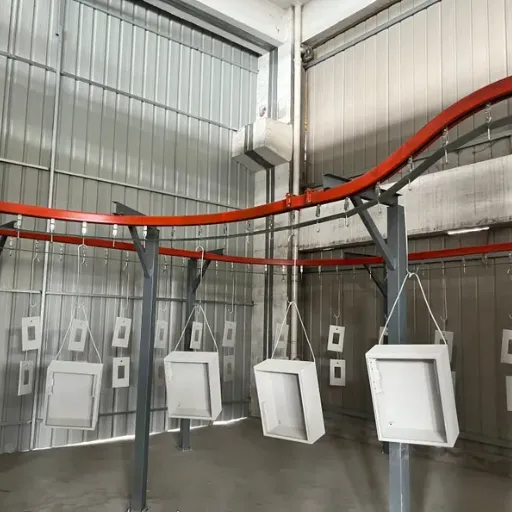
Chemical preparation removes organic soils and creates conversion layers that improve corrosion resistance and adhesion. This is the job of the pretreatment system for powder coating. Most production lines spend most of their surface preparation effort here.
Degreasing Metal for Powder Coating
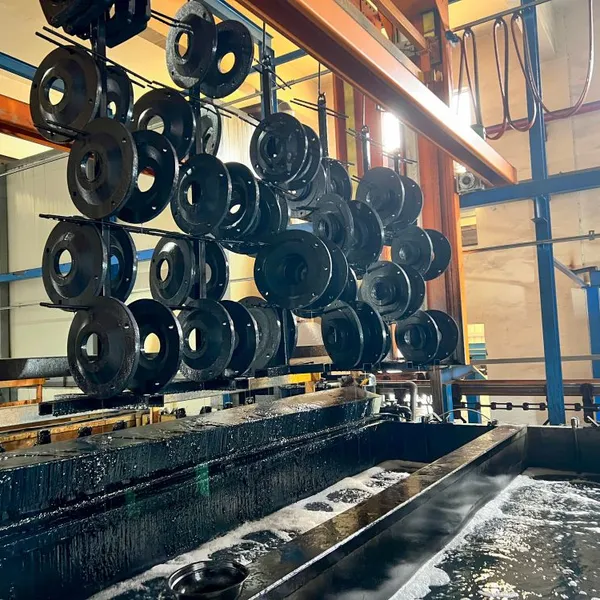
Degreasing metal for powder coating is the first chemical stage. It removes oils, greases, drawing compounds, fingerprints, and shop soils. Alkaline cleaners are applied by spray or immersion at 50°C to 70°C. The chemistry breaks surface tension, emulsifies oils, and suspends particulates so they can be flushed away.
For heavy oil loads, immersion cleaning outperforms spray. The longer contact time allows chemistry to penetrate stamped recesses and threaded features. Spray systems work well for lighter soils and complex shapes where nozzle impingement provides mechanical assistance.
Key parameters include:
Cleaner concentration by titration
Bath temperature and heating uniformity
Dwell or spray contact time
Oil loading and skimming frequency
Water hardness and quality
When oil accumulates in the degrease tank, it can redeposit onto workpieces. Regular skimming, overflow weirs, and periodic dump-and-refill cycles prevent this failure mode.
Rinsing and Water Quality Control
Residual cleaner must be completely removed before conversion coating. Most systems use a two-stage or three-stage cascade rinse. Fresh water enters the final rinse and overflows backward into earlier stages. This counterflow design conserves water while maintaining a cleanliness gradient.
Conductivity monitoring is the simplest way to verify rinse quality. If the final rinse water carries elevated conductivity, alkaline residues remain on the parts. Those residues neutralize phosphating chemistry and produce spotty, weak conversion coatings.
Phosphating and Conversion Coatings
Phosphating deposits a crystalline layer of iron, zinc, or manganese phosphate on steel. This layer provides three benefits:
Microscopic pores and crystals for mechanical interlocking with powder
A barrier that improves corrosion resistance
Reduced galvanic activity that drives under-film corrosion
Zinc phosphating is the most common choice for steel powder coating because it balances adhesion and corrosion protection. Iron phosphating is lower cost but offers less protection. Manganese phosphating is used for wear resistance rather than decorative finishing.
For aluminum, chrome-free conversion coatings based on zirconium or titanium have largely replaced hexavalent chromium processes. These chemistries prepare the aluminum oxide surface for powder adhesion while meeting stricter environmental regulations.
Critical controls at this stage include pH, free acid, total acid, accelerator level, temperature, and contact time. Out-of-spec baths produce coatings that are too heavy, too light, or powdery, all of which reduce adhesion.
Passivation and Final Rinse
A passivation or seal rinse stabilizes the conversion coating and removes loose crystals. Non-chrome sealers fill micro-voids in the phosphate layer and improve salt-spray performance. The final rinse must leave the surface free of water-breaks. Beading indicates residual oils or incomplete cleaning.
Drying Before Powder Application
Moisture is an enemy of powder adhesion. Before workpieces enter the spray booth, they must be thoroughly dried. Heated blow-off stations or short drying tunnels operating at 80°C to 120°C remove residual water. Automatic water blowing systems remove bulk water first, which reduces dryer load and energy consumption.
The drying stage is sometimes integrated into the curing oven section of the line, but a dedicated dryer gives tighter control.
Residual moisture turns to steam in the curing oven. That steam causes bubbles, pinholes, and adhesion failures that are expensive to correct after cure.
Evaluating Surface Cleanliness and Profile
Surface preparation is only valuable if you can verify it. Visual inspection is necessary but not sufficient. Three categories of testing give a more complete picture.
Visual Cleanliness
A properly prepared surface should be free of visible oil, grease, dust, rust, mill scale, and old coating. Water-break-free testing is a simple check: after the final rinse, water should sheet uniformly across the surface. Beading or isolated dry spots indicate contamination.
Surface Profile Measurement
For mechanically prepared surfaces, profile height is measured with replica tape, depth micrometers, or stylus instruments. Powder coating typically requires 25 to 75 microns. Automotive and marine applications may specify tighter ranges. Recording profile values before coating helps trace adhesion failures back to preparation.
Chemical Verification
Tape tests such as ASTM D3359 evaluate whether the coating remains attached after controlled peeling. Salt-spray testing per ASTM B117 measures corrosion resistance. For raw substrate verification, residual contamination tests can detect oils or acids left from cleaning stages. These tests confirm that surface preparation has done its job before the first powder particle is applied.
Matching Powder Coating Surface Preparation to the Substrate
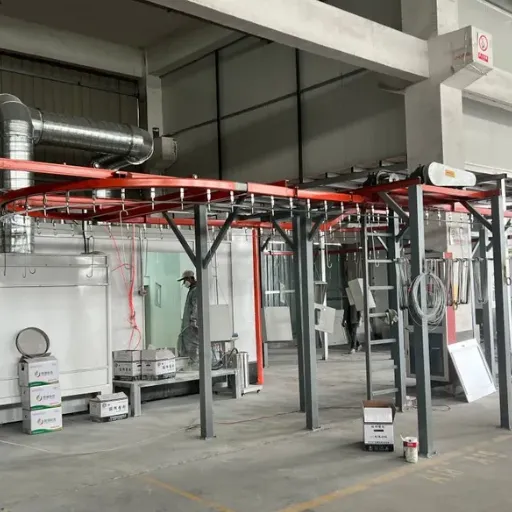
Different metals require different preparation strategies. Using the wrong method wastes money and creates defects.
Steel and Iron
Cold-rolled and hot-rolled steel usually arrive with mill scale and forming oils. For interior hardware and furniture, alkaline cleaning followed by iron phosphating is often adequate. For outdoor or automotive parts, abrasive blasting to Sa 2.5 followed by zinc phosphating provides much better corrosion resistance.
Aluminum and Aluminum Alloys
Aluminum forms a thin, hard oxide layer almost instantly after cleaning. This layer can block adhesion if it is too smooth or contaminated. Etching with alkaline cleaner or mild acid, followed by a chrome-free conversion coating, prepares the surface for powder. Abrasive blasting with fine media is also effective, but operators must avoid embedding ferrous particles that later rust.
Galvanized Steel
Galvanized zinc coatings protect steel but can outgas during powder curing, causing pinholes. Surface preparation for galvanized parts often includes a light phosphate or chromate conversion treatment and a lower-temperature cure profile. Over-aggressive blasting can remove the zinc layer and defeat the purpose of galvanizing.
Castings and Forgings
Cast iron and steel castings trap sand, scale, and oils in surface porosity. These substrates usually need aggressive blasting and extended degreasing. A sealer may be needed to fill surface pores before powder application.
Common Powder Coating Surface Preparation Mistakes
Even experienced coating operations make errors in surface preparation. The most costly ones are listed below.
Insufficient Degreasing
Oils from stamping, machining, and handling are easy to miss on shiny metal. They appear gone after a quick rinse, but they return as adhesion failures after curing. The first mini-story in this guide illustrates exactly that risk.
When Maria took over as quality manager at a Midwest appliance plant in March 2025, her team was fighting a 14% rework rate on refrigerator door panels. The panels looked perfect under normal lighting. Cross-hatch testing, however, showed coating lifting along the edges.
Maria traced the problem to the degreasing stage. The alkaline cleaner concentration had drifted low over months because titration was only performed weekly. Once she restored daily monitoring and added an ultrasonic immersion pre-clean for panels with heavy forming compound, rework dropped to 3% within six weeks.
The powder and curing parameters had never changed. Only the surface preparation did.
Inadequate Rinse After Conversion Coating
Loose phosphate crystals left on the surface create a weak powder-to-metal interface. A proper final rinse and blow-off stage removes these crystals before drying.
Wrong Profile for the Coating Thickness
A coating applied at 60 microns over a 100-micron profile will not cover the peaks. The result is rust spotting and premature corrosion. Profile should generally be one-third to one-half of the specified dry film thickness.
Mixing Substrates on the Same Preparation Line
Steel and aluminum often require different chemistries. Running both through a zinc-phosphate line designed for steel can leave aluminum poorly converted. Dedicated stages or compatible conversion chemistries are needed when mixed production is unavoidable.
Skipping Mechanical Prep on Rusty or Scaled Surfaces
Chemical cleaning alone cannot remove heavy rust or weld slag. Abrasive blasting or mechanical cleaning must precede chemical stages. Otherwise, rust continues to grow under the coating.
Integrating Surface Preparation Into a Powder Coating Production Line
A standalone preparation area may work for a job shop, but high-volume manufacturers need an integrated line. The surface preparation stage must match the upstream and downstream processes in throughput, workpiece handling, and quality control.
Conveyor Integration
Workpieces move from loading through pretreatment on an overhead conveyor, ground conveyor, or skid system. The conveyor speed is calculated from the required dwell time in each stage and the production target. For example, a 3-minute phosphating stage at 2 meters per minute requires 6 meters of tank length. Faster lines need longer tanks or multiple parallel stages.
Tank Sizing and Material
Tanks must be long enough, deep enough, and wide enough for the largest workpiece plus hanger swing. Deqing Leixin builds surface pretreatment systems with 304 stainless steel tanks because lesser materials corrode under alkaline and acidic chemistries. Corroded tanks shed particles that recontaminate cleaned parts.
Heating and Circulation
Cleaner and phosphating baths perform best at controlled temperatures. Steam coils, electric immersion heaters, or plate heat exchangers maintain bath temperature. Centrifugal pumps circulate chemistry to prevent stratification and ensure even coverage on all workpiece surfaces.
Water Conservation
Modern pretreatment systems use cascade rinses, reverse-osmosis make-up water, and closed-loop filtration to reduce water consumption. These features lower operating cost and simplify environmental compliance.
Quality Gates
Place inspection points after drying and before powder application. Operators should look for water-breaks, residual contamination, and uneven conversion coatings. Catching problems here prevents curing defective parts downstream.
If you are planning a new line, start with a free assessment of your surface preparation requirements. Request a free line design drawing and our engineers will size the preparation stages to your workpieces and output targets.
Surface Preparation Standards and Specifications
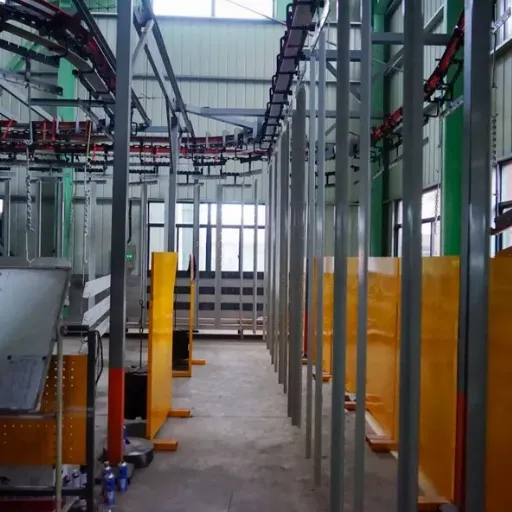
International standards help buyers and suppliers agree on what "clean" means. The most commonly referenced standards include:
ISO 8501-1: Visual assessment of surface cleanliness for steel, with Sa grades from Sa 1 to Sa 3
SSPC-SP 10 / NACE No. 2: Near-white blast cleaning, often specified for critical corrosion protection. NACE International provides standards for protective coatings.
ASTM D3359: Standard test method for measuring adhesion by tape test
ASTM B117: Standard practice for operating salt spray apparatus
ASTM D4417: Methods for field measurement of surface profile
When specifying a powder coating production line, reference the standards your customers or end markets require. Automotive Tier 1 suppliers often require zinc phosphating and salt-spray performance above 720 hours. Furniture manufacturers may accept iron phosphating with lower corrosion requirements. The preparation stage must be designed to the specification, not the other way around.
How Deqing Leixin Approaches Powder Coating Surface Preparation
Deqing Leixin Coating Equipment Co., Ltd. designs powder coating surface preparation stages as part of complete turnkey coating systems. Our engineering team evaluates the workpiece material, contamination type, daily output, and required finish standard before recommending a preparation sequence.
We build surface pretreatment systems with multi-stage washers, 304 stainless steel tanks, centrifugal pumps, automatic water blowing stations, and configurable heating systems. Spray or dip configurations are selected based on geometry and throughput. Steel, aluminum, and mixed-substrate lines each receive a chemistry-compatible design.
Beyond equipment, we provide factory layout drawings, installation, commissioning, operator training, and a one-year warranty on main parts. Every line is engineered to produce surfaces that are clean, converted, and dry before powder application begins.
A hardware manufacturer in Zhejiang learned the value of an integrated approach. The company had been hand-sanding steel brackets before sending them to a third-party coater. Lead times stretched to three weeks, and batch quality varied.
After Deqing Leixin installed an inline abrasive blasting cabinet followed by a five-stage spray pretreatment system, the manufacturer brought coating in-house. Surface preparation time dropped from two days per batch to 45 minutes per load. Salt-spray performance improved from 240 hours to over 720 hours.
The change paid for itself in fourteen months through reduced outsourcing and rework.
Conclusion
Powder coating surface preparation is the stage that separates decorative finishes from durable finishes. Mechanical methods remove scale and create anchor profiles. Chemical methods remove oils and build conversion layers. Verification methods confirm that the work is complete before powder is applied.
The key takeaways are clear:
Surface preparation controls adhesion, corrosion resistance, and long-term appearance.
Mechanical preparation such as abrasive blasting is essential for rusty, scaled, or heavily fabricated steel.
Chemical preparation including degreasing, phosphating, and sealing is essential for production powder coating.
Substrate type determines the right preparation sequence.
Verification through visual checks, profile measurement, and standardized tests prevents costly failures.
If you are evaluating a new powder coating production line or upgrading an existing one, begin with the surface preparation stage. A well-designed preparation process makes every downstream step more reliable.
Submit your workpiece specifications and our engineers will design a powder coating surface preparation stage matched to your substrate, contamination type, and quality requirements. We provide free drawings, turnkey installation, and the technical support you need to produce finishes that last.
Recently Posted
-
Conveyor Speed Calculation for Coating Lines: A Complete Guide
June 26, 2026Last March, a hardware manufacturer in Ningbo raised the chain speed on its powder coating line by 15% to clear a backlog. Three d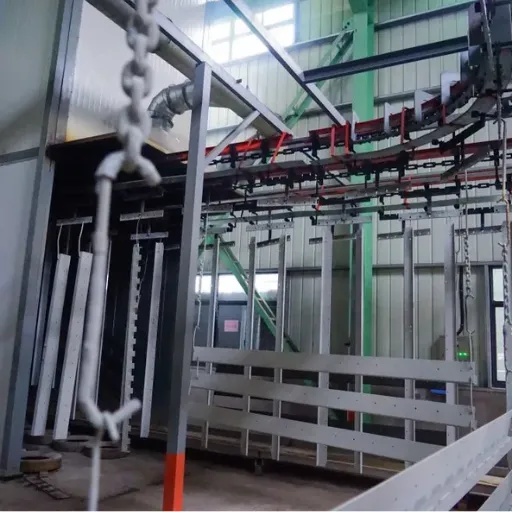 Read More
 -
Conveyor Line Design: A Complete Engineering Guide for Coating Lines
June 26, 2026Last autumn, a hardware manufacturer in Vietnam commissioned a new powder coating line. The pretreatment tunnel, cyclone-recovery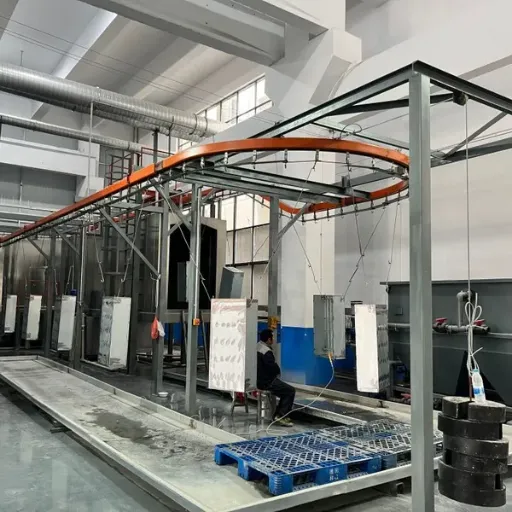 Read More
 -
Overhead Conveyor System: Engineering Guide for Coating Lines
June 26, 2026Last autumn, a hardware manufacturer in Ningbo faced a familiar problem. Their new powder coating line had to fit inside a buildin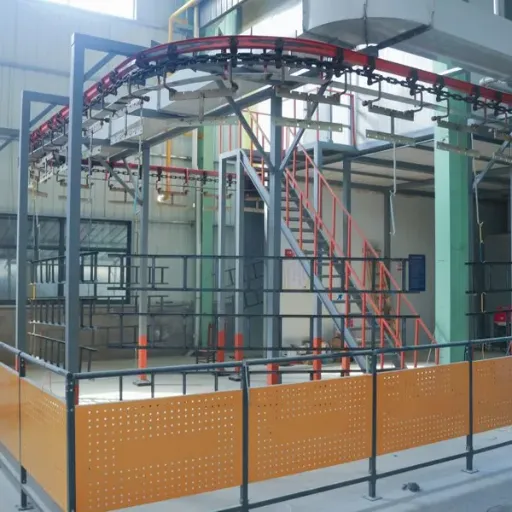 Read More
 -
Industrial Paint Booth: A Complete Engineering Guide for Manufacturers
June 26, 2026When Mike Chen expanded his metal furniture factory in Zhejiang Province last spring, he assumed the new spray area would solve hi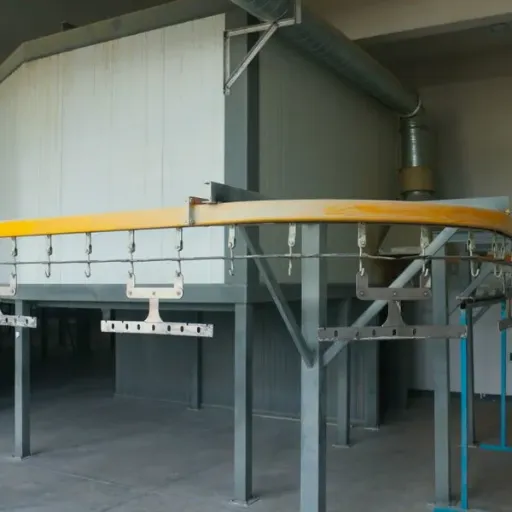 Read More

Contact Us
Recommended Products
-
 Industrial Custom Spray Coating Line for Hardware Anti‑Corrosion TreatmentNegotiableMOQ: 1 Set
 -
Industrial Electrophoresis Line for Metal Water Pump Workpieces ProcessingNegotiableMOQ: 1 Set
-
Custom E‑Coating Production Line for Water Pump Parts Surface FinishingNegotiableMOQ: 1 Set
-
China OEM Custom E-Coating Machine and Cathodic Electrophoresis Production LineNegotiableMOQ: 1 Set
-
Industrial Electrophoretic Coating Line With Custom Design for Metal WorkpiecesNegotiableMOQ: 1 Set
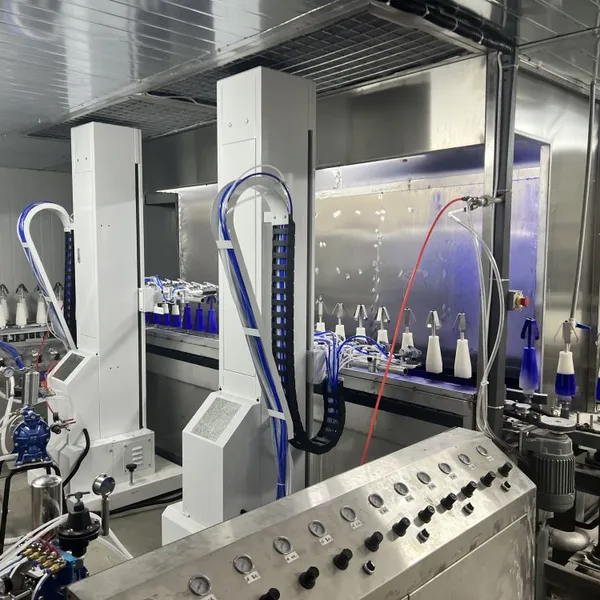
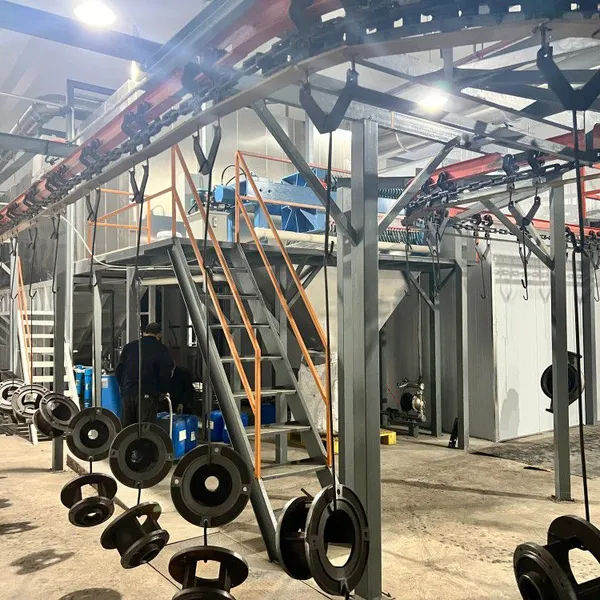
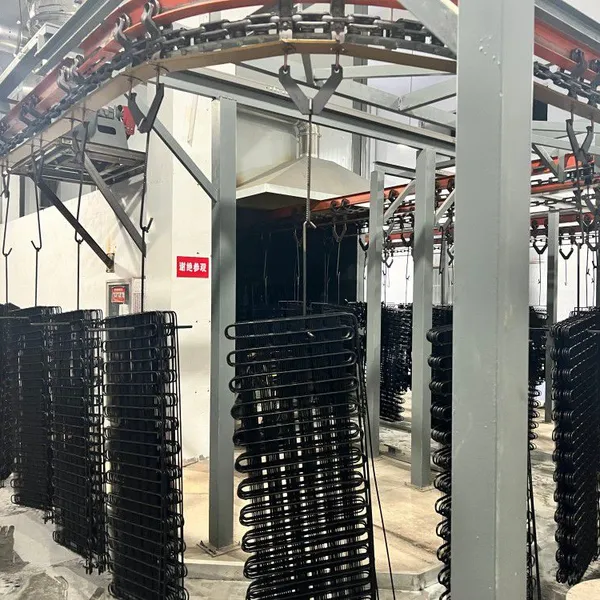
-
Intelligent Automated Electrophoretic Coating Line for Powder Coating Production EquipmentNegotiableMOQ: 1 Set
-
Full Automatic Custom Electrophoretic Coating Line for Industrial Metal ComponentsNegotiableMOQ: 1 Set
-
Heavy‑Duty Continuous Powder Coating Line for Big Cabinet Anti‑Corrosion FinishingNegotiableMOQ: 1 Set
-
Energy‑Saving Powder Coating Line for Large Industrial Cabinet Surface ProtectionNegotiableMOQ: 1 Set
-
Environmental Friendly Powder Coating Line With High Recovery for Large CabinetsNegotiableMOQ: 1 Set
-
Large Manual Industrial Curing Oven for Metal Powder Coating MachineryNegotiableMOQ: 1 Set
-
Industrial Plastic Drying Oven With PLC Control and 304 Stainless Steel HopperNegotiableMOQ: 1 Set
-
High Efficiency Plastic Raw Material Dryer for Plastic ProcessingNegotiableMOQ: 1 Set
-
Compact E-Coating System for Small Metal Components in Automotive & Medical Device ProductionNegotiableMOQ: 1 Piece
-
Gantry Transport Type Electrophoretic Coating Line for Industrial WorkpiecesNegotiableMOQ: 1 Set
-
Custom Gantry Electrophoretic Coating Line for Automotive Component FinishingNegotiableMOQ: 1 Set
-
Large Workpiece Stainless Steel Manual Powder Spray Booth With Ventilation SystemNegotiableMOQ: 1 Set
-
Large Capacity Stainless Steel Manual Powder Spray Booth With Powder Recovery SystemNegotiableMOQ: 1 Set
-
Automatic Large Workpiece Powder Spray Booth for Metal FabricationNegotiableMOQ: 1 Set
-
Powder Spraying Room With Stainless Steel Frame and PLC ControlNegotiableMOQ: 1 Set