
 Business License

Powder Coating Booth Design: A Complete Engineering Guide
When Marcus commissioned his first powder coating line in Shenzhen back in March 2024, he assumed the spray booth was basically a metal box with extraction fans. Six months later, he was staring at a sobering number: 34% of his powder purchase volume was disappearing into filters and landfill, not onto workpieces. The root cause wasn't operator error or poor powder quality. It was booth design.
If you are planning a new coating line or retrofitting an existing one, you already know that every stage matters. But the spray booth is where coating economics are won or lost. A well-engineered automatic powder spray booth can reclaim 95% of overspray and maintain film thickness within ±10 microns. A poorly conceived one bleeds material costs, creates rework, and complicates compliance.
In this guide, you will learn the engineering principles behind effective powder coating booth design. We will cover enclosure construction, airflow dynamics, recovery system selection, gun positioning, and integration with pretreatment and curing stages. By the end, you will have a clear framework for specifying or evaluating a booth that matches your production targets, workpiece geometry, and quality standards.
Want to see how booth design fits into a complete line? Explore our powder coating line layout guide for factory planning principles.
What Makes Powder Coating Booth Design Critical to Line Performance?
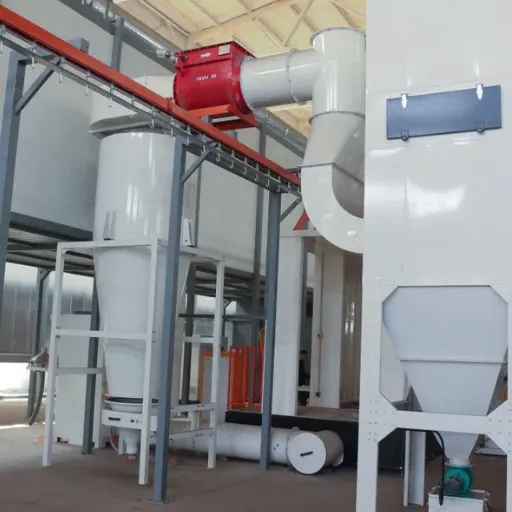
The spray booth is the operational heart of any powder coating system. It is where electrostatically charged particles meet grounded metal, where transfer efficiency is determined, and where overspray either returns to the process or becomes waste.
A common misconception is that booth design only affects containment. In reality, it governs multiple performance variables simultaneously:
Transfer efficiency: The ratio of powder adhering to the workpiece versus total powder sprayed
Film thickness uniformity: Consistent coating across flat surfaces, edges, and recesses
Material reclamation rate: How much overspray is recovered and reused
Color change speed: How quickly the booth can be purged between shades
Operator safety and environmental compliance: Proper extraction and filtration
Each of these factors interacts with the others. A booth optimized for maximum recovery may sacrifice color change speed if the powder pathway is overly complex. A booth sized for large elevator panels may struggle with small hardware pieces if the airflow pattern is too generalized. Understanding these trade-offs is the foundation of intelligent powder coating booth design.
The Hidden Cost of Poor Booth Engineering
Poor booth design rarely announces itself with a catastrophic failure. Instead, it erodes margins quietly. High powder consumption, inconsistent coverage, frequent filter changes, and extended color change downtime all trace back to decisions made at the specification stage.
For example, a booth with insufficient extraction velocity may allow powder to escape into the plant environment. That creates a housekeeping burden, a combustion risk, and potential regulatory exposure. Conversely, excessive airflow can disturb the electrostatic field around the workpiece, reducing wrap and forcing operators to apply more powder to achieve target thickness.
The message is straightforward: design the booth correctly once, and it pays dividends for years. Cut corners at the design stage, and you will pay continuously in operating costs.
Enclosure Materials and Construction Standards
The physical enclosure of a powder spray booth must do more than contain overspray. It must resist powder adhesion, withstand routine cleaning, support the extraction and recovery systems, and integrate cleanly with the conveying system that moves workpieces through the coating zone.
PP Chamber Construction vs. Steel Alternatives
Modern automatic powder spray booths typically use polypropylene (PP) panel construction for the spray zone. PP offers several advantages over painted steel or coated metal:
Non-stick surface: Powder does not adhere readily to PP, which simplifies cleaning and color changes
Chemical resistance: Resists degradation from cleaning solvents and powder chemistries
Lightweight: Reduces structural load and simplifies installation
Electrical insulation: Does not interfere with electrostatic fields the way conductive metal can
Steel booths, while durable, require special internal coatings or regular stripping to prevent powder buildup on surfaces. Over time, that buildup degrades airflow patterns and becomes a contamination source. For high-volume operations with frequent color changes, PP construction is generally the preferred engineering choice.
Sizing the Booth for Workpiece Dimensions and Gun Standoff
Booth dimensions must accommodate the largest workpiece in the production mix, plus adequate clearance for gun standoff distance and operator access. As a general rule, the distance from the spray gun nozzle to the workpiece surface should be maintained between 150 and 250 mm for optimal electrostatic deposition.
The booth must also allow for reciprocator stroke height. If your line handles elevator door panels up to 2,400 mm in height, the booth interior must accommodate a reciprocator programmed to cover that full range, plus safety margins. Deqing Leixin designs servo reciprocating machines with spraying heights up to 2,500 mm, so the booth envelope must be matched accordingly.
Key sizing parameters:
Workpiece maximum length, width, and height
Reciprocator stroke range and gun spacing
Conveyor height and chain path through the booth
Maintenance access corridors for filter and pump servicing
Future capacity margin (typically 15-20% above current peak)
Airflow Engineering: Containment, Extraction, and Safety
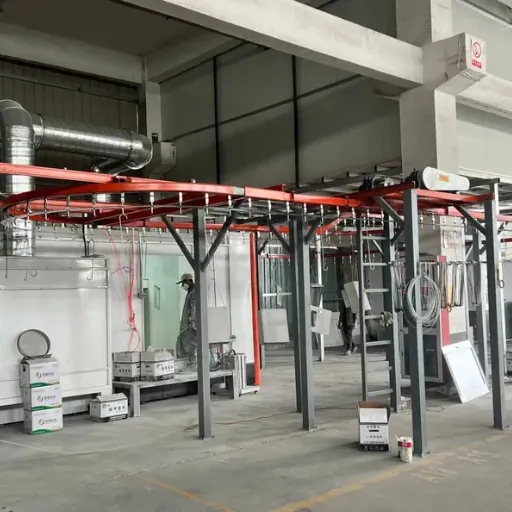
Airflow is arguably the most technically demanding aspect of powder coating booth design. The system must capture overspray efficiently without disturbing the delicate electrostatic deposition process.
Cross-Draft vs. Downdraft Configurations
Powder spray booths generally use one of two airflow patterns:
Cross-draft booths draw air horizontally across the spray zone, usually from a filtered inlet wall to an extraction wall opposite. They are simpler to construct and maintain, and they work well for a wide range of workpiece sizes. However, cross-draft patterns can create uneven powder distribution if airflow velocity varies across the booth width.
Downdraft booths pull air vertically from ceiling to floor. They offer excellent containment and uniform airflow, which can improve coating consistency on complex geometries. The trade-off is higher construction complexity and cost, plus the need for pit-mounted extraction or raised flooring.
For most industrial applications, cross-draft booths with properly engineered inlet and extraction plenums deliver the best balance of performance and cost. The critical specification is face velocity at the extraction filter surface, which typically targets 0.3 to 0.5 m/s for powder coating applications.
Filtration and Air Quality Compliance
Extracted air must pass through filtration before discharge or recirculation. A typical automatic powder spray booth uses a multi-stage filtration train:
Primary cyclone separator: Captures the majority of overspray powder through centrifugal force
Secondary cartridge filters: Capture fine particles that escape the cyclone
Final HEPA or equivalent stage: Ensures discharge air meets environmental standards
Extraction capacity must be sized to maintain negative pressure inside the booth and prevent powder migration into the factory. A large automatic powder spray booth may require extraction rates of 24,000 m³/h or higher, driven by fans in the 45 kW range. Undersizing the extraction system is one of the most common errors in powder coating booth design.
Engineering Note: Always verify that your booth extraction and filtration design comply with local environmental regulations. In many jurisdictions, discharge air monitoring and filter maintenance logs are mandatory.
Powder Recovery System Design: Maximizing Material Reclaim
The recovery system is where operating economics are determined. Without effective recovery, every gram of overspray is a direct material cost. With effective recovery, reclaimed powder can be blended with virgin material and reused at ratios of 50-70% or higher.
Cyclone Recovery Systems
Cyclone recovery is the dominant technology for high-volume automatic powder spray booths. Overspray-laden air enters a cyclone chamber tangentially, where centrifugal force separates powder particles from the air stream. Collected powder drops into a recovery hopper for sieving and reuse.
The efficiency of a cyclone system depends on several design variables:
Cyclone diameter and cone angle: Affects particle separation efficiency
Inlet velocity: Too low and separation is poor; too high and fine particles are re-entrained
Air-to-cloth ratio (in downstream cartridge stages): Determines filter life and pressure drop
Powder particle size distribution: Finer powders are harder to recover
Deqing Leixin configures large cyclone double-stage recovery systems with 24,000 m³/h extraction capacity for automatic powder coating lines. This configuration can achieve recovery rates up to 95%, dramatically reducing virgin powder consumption.
Cartridge Filtration and Final Stage Filters
Not all powder is recovered in the cyclone. Fine particles and dust load the downstream cartridge filters. Cartridge selection matters: pleated media with adequate surface area extends filter life and reduces pressure drop. Pulse-jet cleaning systems help maintain cartridge performance between changeouts.
The final filter stage protects the extraction fan and ensures environmental compliance. These filters require scheduled replacement based on pressure differential monitoring, not calendar time.
Maintenance tip: Track pressure drop across each filter stage. A sudden increase indicates a loaded filter or possible media failure. A sudden decrease may signal a leak or bypass in the filter housing.
Gun Integration and Reciprocator Positioning for Uniform Coverage
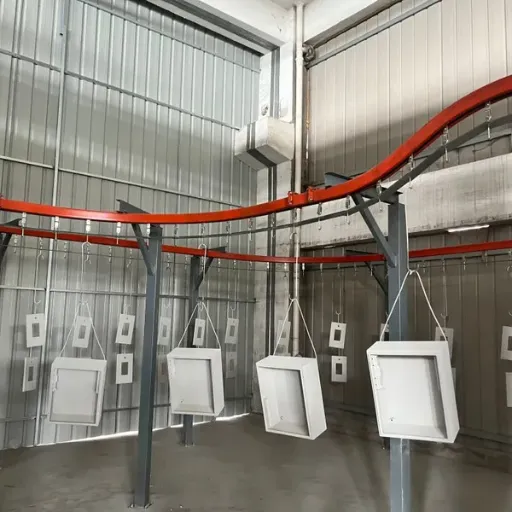
The booth must integrate seamlessly with the spray application equipment. In automatic systems, that means coordinating booth dimensions, airflow patterns, and access panels with the reciprocator stroke, gun count, and triggering logic.
Gun Density and Spacing
Automatic powder spray booths typically mount multiple guns on reciprocating bars or robotic arms. Gun spacing depends on workpiece width and the spray pattern cone angle of each gun. For flat panels, guns may be spaced 300-400 mm apart. For complex parts with deep recesses, closer spacing or supplemental manual stations may be required.
The booth design must include service access to gun holders, powder feed hoses, and electrostatic controls without requiring full disassembly of the spray zone. That seems obvious, but maintenance access is frequently compromised in compact booth layouts.
Reciprocator Clearance and Programming
The servo reciprocating machine requires vertical clearance for its full stroke plus deceleration zones at the top and bottom limits. The booth must also accommodate the cable carrier or hose bundle that follows the reciprocator carriage.
Programmable stroke patterns allow the system to vary gun positioning based on workpiece geometry. A well-designed booth provides line-of-sight from the PLC touch-screen Human-Machine Interface (HMI) to the spray zone, so operators can observe and adjust programs without leaving the control station.
Want to optimize gun positioning for your specific workpieces? Contact our engineers with your part dimensions and target film thickness, and we will configure a reciprocator specification matched to your application.
Common Powder Coating Booth Design Mistakes That Drain Profit
Even experienced coating engineers can fall into predictable design traps. Here are the most costly mistakes we encounter during factory audits and retrofit consultations:
1. Undersizing the extraction system
Low face velocity allows powder to escape the booth envelope, creating a housekeeping and safety problem. It also reduces recovery efficiency because powder never reaches the cyclone.
2. Ignoring color change requirements
A booth designed for a single-color, 24/7 operation looks very different from one that changes shade four times per shift. Color change speed depends on booth geometry, PP surface smoothness, and the simplicity of the powder path from spray zone to recovery hopper.
3. Inadequate lighting
Poor illumination in the spray zone makes it difficult for operators to verify coverage visually. LED lighting arrays should be positioned to illuminate the workpiece without creating glare or shadows that obscure thin spots.
4. Forgetting the floor
The booth floor sees constant powder accumulation. A sloped floor with integrated collection grooves simplifies cleaning. Flat floors with corners and seams trap powder and extend color change downtime.
5. Mismatch with upstream pretreatment
Workpieces entering the booth must be dry and properly grounded. If the surface pretreatment system includes an automatic water blowing stage that leaves residual moisture, the booth will experience grounding issues and inconsistent deposition. Design the line as an integrated system, not isolated stages.
When Sarah upgraded her appliance panel line in Hangzhou, her team focused almost entirely on the curing oven and conveying system. They reused an existing booth that was technically functional but originally sized for smaller hardware parts. Within three months, quality complaints rose 22% because the narrow booth forced operators to cluster guns too closely, creating uneven film thickness on 1,800 mm refrigerator panels. After widening the booth and adding a second reciprocator bar, her rework rate dropped below 4%.
Integrating the Spray Booth Into a Turnkey Coating Line
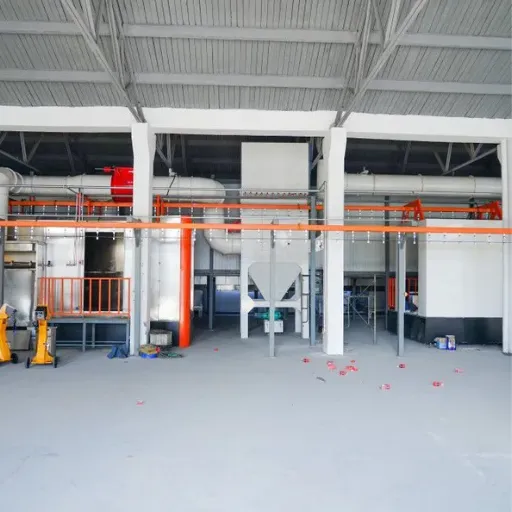
The best powder spray booth in the world cannot compensate for problems upstream or downstream. Effective powder coating booth design must account for its place in the complete production sequence.
Pretreatment-to-Booth Handoff
Workpieces exit the pretreatment dryer and enter the booth on the conveying system. The transition must maintain proper spacing to prevent collision while maximizing line density. Grounding continuity from the conveyor through the workpiece hanger is essential; any break in the ground path causes electrostatic inconsistency.
Booth-to-Oven Transition
After coating, workpieces travel to the curing oven. The distance between booth exit and oven entrance should be minimized to reduce contamination risk, but it must allow adequate time for any manual inspection or touch-up. Some lines include a dedicated inspection station with backlighting to spot thin areas before cure.
Control System Integration
Modern coating lines use a Programmable Logic Controller (PLC) to sequence pretreatment, conveying, spray application, and curing. The booth should be fully integrated into this control architecture, with recipe management that links spray parameters to specific workpiece programs. An integrated PLC control system with touch-screen HMI allows operators to monitor booth status, adjust gun settings, and diagnose faults from a central station.
Energy and Environmental Considerations
The extraction fan is one of the largest electrical loads on a coating line. Specifying an efficient fan with variable frequency drive (VFD) control can reduce energy consumption during low-load periods or color change pauses. Heat recovery from the curing oven can also pre-condition inlet air for the booth, reducing the thermal load on the plant HVAC system.
Sizing Your Booth for Production Throughput
Booth sizing is not just about workpiece dimensions. It must also match your production velocity.
Line Speed and Spray Time
The conveyor speed determines how long each workpiece spends in the spray zone. If the line runs at 2.5 m/min and the spray zone is 3 meters long, each workpiece receives 72 seconds of spray time. That may be adequate for simple flat panels but insufficient for complex automotive brackets with many edges and recesses.
Options for increasing spray time without reducing line speed include:
Extending the spray zone length with additional gun stations
Adding a second spray booth in series for two-pass coating
Using multiple reciprocator bars with staggered gun timing
Batch vs. Continuous Flow
Continuous-flow conveyorized systems dominate high-volume manufacturing, but batch booths remain viable for small-volume, high-mix operations. Batch booths require manual or semi-automatic gun operation and typically use cartridge recovery rather than cyclone systems. The design principles of airflow, containment, and safety apply regardless of automation level.
Conclusion
Powder coating booth design is where engineering precision directly translates to operating profit. The right enclosure construction, airflow engineering, recovery system, and gun integration can reduce powder waste by 90% or more while improving film thickness consistency and reducing rework.
As you evaluate options for your factory, keep these priorities in mind:
Size the booth for your largest workpiece plus future growth margin
Specify extraction and recovery systems sized for your powder volume and color change frequency
Integrate the booth with your conveying, pretreatment, and curing stages under unified PLC control
Design for maintainability: access panels, filter change paths, and cleaning-friendly surfaces
Verify compliance with local environmental and safety regulations before commissioning
The team at a Jiangsu-based elevator manufacturer followed these principles when they replaced an aging batch booth with a fully automatic powder spray booth integrated into a turnkey coating line. Their powder consumption dropped 41% in the first quarter. Operator exposure to airborne powder fell below detectable limits. And their film thickness variation tightened from ±25 microns to ±8 microns, eliminating customer complaints about visible thin spots on door panels.
That is what happens when powder coating booth design is treated as systems engineering, not just equipment procurement.
Ready to design a booth that matches your production targets? Request a free coating line design drawing from Deqing Leixin. Submit your workpiece dimensions, daily output target, and preferred heating source, and our engineering team will respond with a preliminary layout and equipment specification within three hours.
Recently Posted
-
Conveyor Speed Calculation for Coating Lines: A Complete Guide
June 26, 2026Last March, a hardware manufacturer in Ningbo raised the chain speed on its powder coating line by 15% to clear a backlog. Three d Read More
 -
Conveyor Line Design: A Complete Engineering Guide for Coating Lines
June 26, 2026Last autumn, a hardware manufacturer in Vietnam commissioned a new powder coating line. The pretreatment tunnel, cyclone-recovery Read More
 -
Overhead Conveyor System: Engineering Guide for Coating Lines
June 26, 2026Last autumn, a hardware manufacturer in Ningbo faced a familiar problem. Their new powder coating line had to fit inside a buildin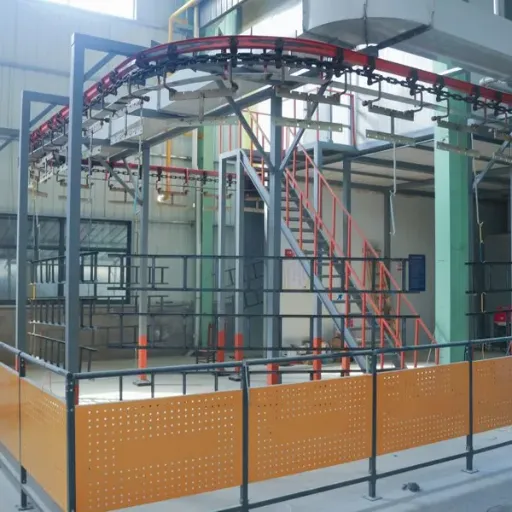 Read More
 -
Industrial Paint Booth: A Complete Engineering Guide for Manufacturers
June 26, 2026When Mike Chen expanded his metal furniture factory in Zhejiang Province last spring, he assumed the new spray area would solve hi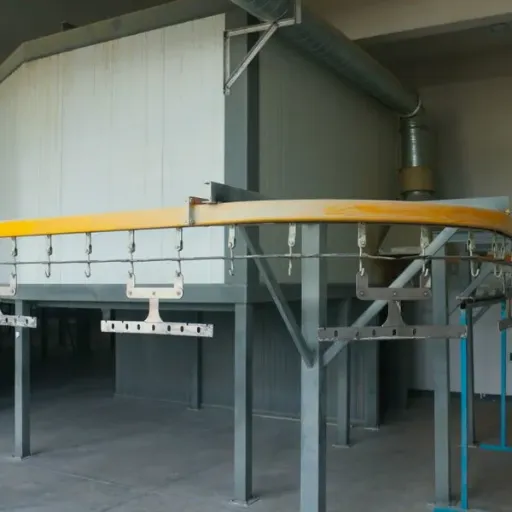 Read More

Contact Us
Recommended Products
-
 Industrial Custom Spray Coating Line for Hardware Anti‑Corrosion TreatmentNegotiableMOQ: 1 Set
 -
Industrial Electrophoresis Line for Metal Water Pump Workpieces ProcessingNegotiableMOQ: 1 Set
-
Custom E‑Coating Production Line for Water Pump Parts Surface FinishingNegotiableMOQ: 1 Set
-
China OEM Custom E-Coating Machine and Cathodic Electrophoresis Production LineNegotiableMOQ: 1 Set
-
Industrial Electrophoretic Coating Line With Custom Design for Metal WorkpiecesNegotiableMOQ: 1 Set
-
Intelligent Automated Electrophoretic Coating Line for Powder Coating Production EquipmentNegotiableMOQ: 1 Set
-
Full Automatic Custom Electrophoretic Coating Line for Industrial Metal ComponentsNegotiableMOQ: 1 Set
-
Heavy‑Duty Continuous Powder Coating Line for Big Cabinet Anti‑Corrosion FinishingNegotiableMOQ: 1 Set
-
Energy‑Saving Powder Coating Line for Large Industrial Cabinet Surface ProtectionNegotiableMOQ: 1 Set
-
Environmental Friendly Powder Coating Line With High Recovery for Large CabinetsNegotiableMOQ: 1 Set
-
Large Manual Industrial Curing Oven for Metal Powder Coating MachineryNegotiableMOQ: 1 Set
-
Industrial Plastic Drying Oven With PLC Control and 304 Stainless Steel HopperNegotiableMOQ: 1 Set
-
High Efficiency Plastic Raw Material Dryer for Plastic ProcessingNegotiableMOQ: 1 Set
-
Compact E-Coating System for Small Metal Components in Automotive & Medical Device ProductionNegotiableMOQ: 1 Piece
-
Gantry Transport Type Electrophoretic Coating Line for Industrial WorkpiecesNegotiableMOQ: 1 Set
-
Custom Gantry Electrophoretic Coating Line for Automotive Component FinishingNegotiableMOQ: 1 Set
-
Large Workpiece Stainless Steel Manual Powder Spray Booth With Ventilation SystemNegotiableMOQ: 1 Set
-
Large Capacity Stainless Steel Manual Powder Spray Booth With Powder Recovery SystemNegotiableMOQ: 1 Set
-
Automatic Large Workpiece Powder Spray Booth for Metal FabricationNegotiableMOQ: 1 Set
-
Powder Spraying Room With Stainless Steel Frame and PLC ControlNegotiableMOQ: 1 Set