
 Business License

Powder Coating Oven Temperature: A Complete Engineering Guide for Manufacturers
Chen Wei, a production supervisor at a hardware manufacturing plant in Zhejiang, noticed something troubling in March 2024. His line was producing consistent orange peel on stamped steel brackets, and the salt-spray test failures had climbed to 12%. After three weeks of troubleshooting spray guns, powder formulation, and grounding systems, he finally checked the curing oven temperature profile. The thermocouple readout showed a 15°C variance between the center and edges of the tunnel. Once his engineering team recalibrated the burners and adjusted the conveyor speed, the defect rate dropped below 2% within one production shift.
If you manage a coating operation, you already know that powder coating oven temperature is not a single number you set and forget. It is a thermal profile that must match your powder chemistry, workpiece mass, conveyor speed, and energy source. Get it right, and you achieve durable, Class A finishes with minimal rework. Get it wrong, and you waste powder, energy, and production time on defects that are entirely preventable.
In this guide, you will learn the standard temperature ranges for common powder types, how workpiece geometry affects cure requirements, the differences between batch and tunnel oven profiles, and how to diagnose temperature-related coating defects. Whether you are specifying a new line or optimizing an existing one, these principles will help you engineer a cure process that performs.
Want to see how a precision curing oven integrates with your full production line? Explore our turnkey powder coating system engineering.
What Is the Standard Powder Coating Oven Temperature?
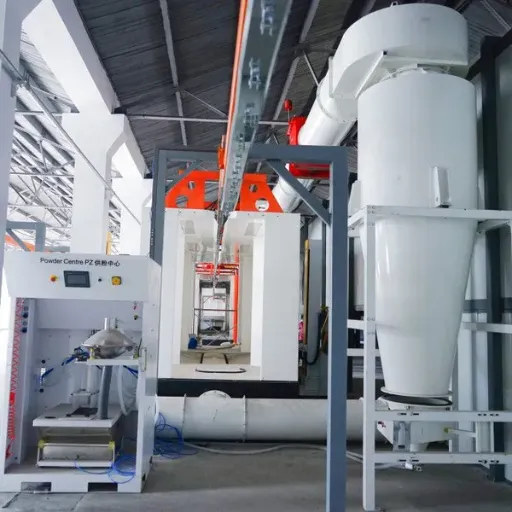
Most thermosetting powders cure in a range of 180°C to 200°C (356°F to 392°F) for a duration of 10 to 20 minutes, measured at the workpiece surface. However, "standard" is a dangerous assumption in production environments. Polyester powders, epoxy-polyester hybrids, epoxy powders, and polyurethane powders each carry manufacturer-specified cure windows that can vary by ±10°C.
The critical metric is not the air temperature reading on your oven controller. It is the peak metal temperature (PMT) achieved on the workpiece itself. A heavy cast-iron component and a thin sheet-metal panel in the same oven will reach PMT at different rates. For this reason, Deqing Leixin tunnel-type curing ovens are engineered with precision temperature control within ±3°C and configurable thermal zones to accommodate mixed workloads.
Typical Cure Windows by Powder Chemistry
Pure Polyester: 180°C to 190°C for 10 to 15 minutes
Epoxy-Polyester Hybrid: 180°C to 200°C for 15 to 20 minutes
Pure Epoxy: 180°C to 200°C for 15 to 20 minutes
Polyurethane: 170°C to 180°C for 15 to 20 minutes
High-Durability Fluoropolymer: 200°C to 230°C for 15 to 25 minutes
Always consult your powder supplier's technical data sheet. The values above are general guidelines, not substitutes for manufacturer specifications.
How Workpiece Geometry Affects Oven Temperature Requirements
Not every workpiece cures the same way, even under identical air temperatures. Thermal mass, surface area, and geometry all influence how quickly a part reaches the required PMT and how evenly the heat distributes.
Thermal Mass and Heat Soak Time
A 5 mm steel elevator panel absorbs and retains heat differently than a 1 mm appliance housing. Thicker sections act as heat sinks, delaying the time to reach cure temperature at the core. In continuous tunnel ovens, this means your conveyor speed must account for the slowest-heaviest workpiece in your product mix, or you must zone the oven to deliver staged heating.
Maria Santos, a coating engineer at an appliance manufacturing facility in Brazil, faced exactly this challenge in 2023. Her line coated both refrigerator door panels (1.2 mm steel) and compressor mounts (8 mm cast steel) on the same conveyor. The thin panels were reaching 200°C in 8 minutes, while the mounts needed 18 minutes. By switching to a two-zone tunnel oven with a lower-temperature preheat zone followed by a full-cure zone, she balanced throughput for both part types without overbaking the panels.
Complex Geometries and Edge Effects
Corners, edges, and recessed areas heat faster than flat surfaces due to higher surface-area-to-mass ratios. However, they also lose heat faster when exiting the oven. For complex automotive brackets or electric cabinet enclosures with deep bends, verify that the coolest point on the workpiece still reaches the minimum cure temperature for the full specified duration.
Batch Oven vs. Tunnel Oven: Temperature Profile Differences
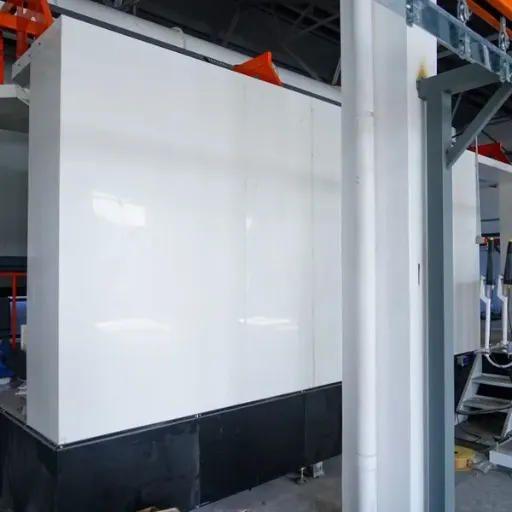
Your oven type fundamentally changes how you manage powder coating oven temperature. Each configuration offers distinct advantages for specific production models.
Batch Oven Temperature Management
Batch ovens bring a stationary load of workpieces to temperature, hold them at setpoint, then cool them before unloading. This approach works well for low-volume, high-mix operations, large or irregular workpieces, and prototype or repair work.
The temperature profile in a batch oven follows a ramp-soak-cool curve:
Ramp: The oven heats from ambient to target temperature. Large loads extend ramp time significantly.
Soak: The hold period at target temperature. This is your true cure time.
Cool: Natural or forced cooling before handling.
Because the workpieces are stationary, thermocouple placement is critical. Place sensors at the thickest section of the largest workpiece to ensure the entire load reaches PMT.
Tunnel Oven Temperature Management
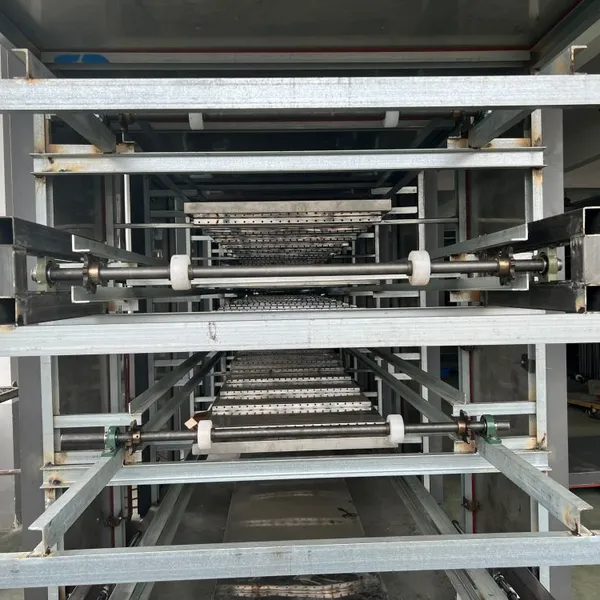
Tunnel ovens use continuous conveying to move workpieces through distinct heating zones. This design suits high-volume production with consistent part geometry. The temperature profile is a function of zone setpoints, conveyor speed, and workpiece spacing.
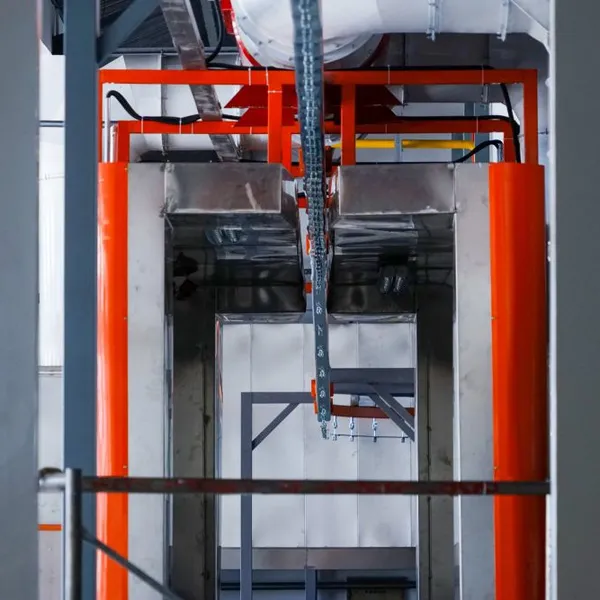
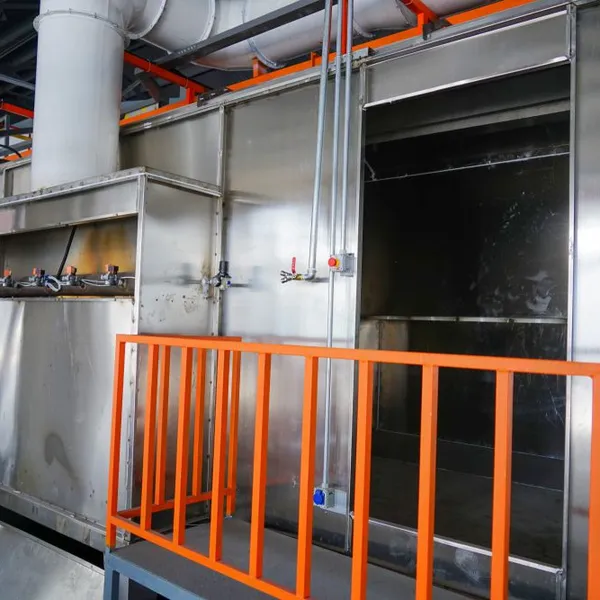
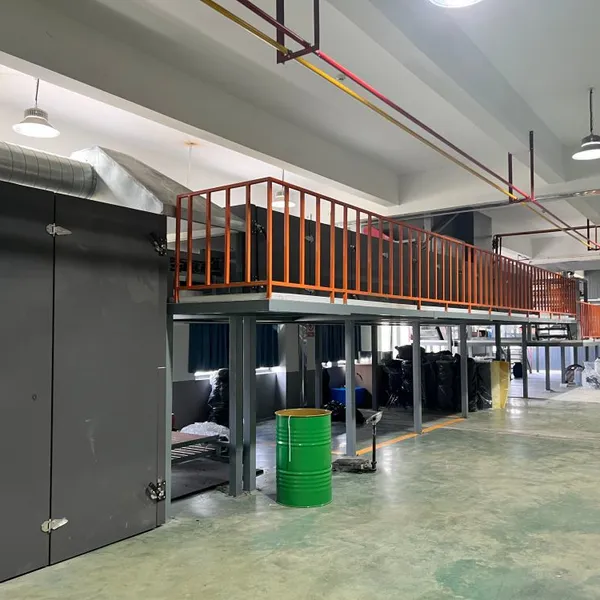
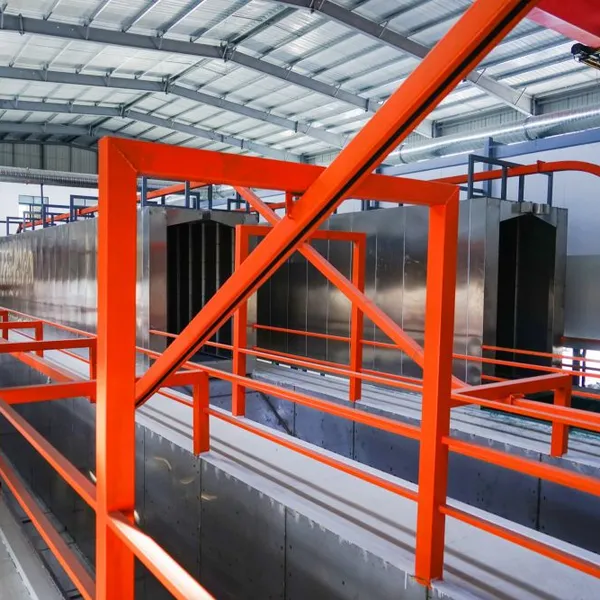
Advantages of tunnel ovens include consistent cure times, reduced handling between stages, and better energy efficiency for continuous production. Deqing Leixin tunnel-type curing ovens feature thermal capacities from 300,000 to 1,000,000 kcal with 304 stainless steel liners and options for gas, electric, oil, or steam heating. The bridge-type design isolates the curing zone to prevent contamination from pretreatment or spray stages.
Need help choosing between batch and tunnel configurations for your throughput? Request a free line design drawing tailored to your workpiece mix and daily output targets.
Energy Source Impact on Temperature Control and Operating Cost
The heating technology you choose affects not only your initial capital expense but also your long-term ability to maintain stable powder coating oven temperature at reasonable operating cost.
Gas-Fired Curing Ovens
Gas burners deliver rapid heat-up and high thermal output, making them ideal for large tunnel ovens and high-mass workpieces. Modern gas ovens achieve ±3°C uniformity when properly designed with forced convection. Operating costs depend heavily on local natural gas prices, but gas typically offers the lowest per-kilocalorie energy cost in most markets.
Electric Curing Ovens
Electric resistance heating provides the most precise temperature control and cleanest operation. Electric ovens are easier to install where gas infrastructure is unavailable and produce no combustion byproducts. However, electricity costs per unit of heat are generally higher than gas, making electric ovens more suitable for smaller batch operations or regions with low electricity rates.
Infrared and Hybrid Systems
Infrared (IR) curing uses radiant energy rather than convected hot air, directly heating the coating and substrate surface. IR can reduce cure time by 30% to 50% for suitable powders and geometries. Many high-throughput lines now combine IR preheat zones with convection finishing zones to accelerate cure without overheating temperature-sensitive substrates.
For a detailed comparison of energy options, see our guide on gas vs electric curing oven selection.
Common Temperature-Related Coating Defects and How to Fix Them
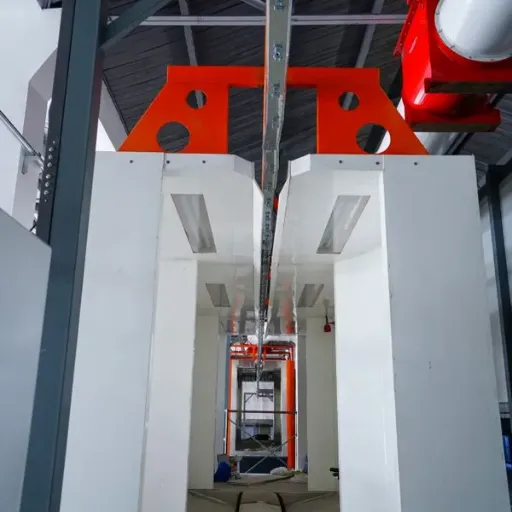
When powder coating oven temperature drifts outside specification, the defects are usually immediate and visually obvious. Understanding the root cause saves hours of misdirected troubleshooting.
Under-Cure (Low Temperature or Short Time)
Under-cured powder feels soft or mar-resistant. It fails mechanical adhesion tests, salt-spray corrosion tests, and solvent-rub evaluations. Common causes include:
Conveyor speed set too fast for the oven length and temperature
Thermocouple drift causing actual temperature below setpoint
Overloading the oven beyond its thermal capacity
Cold spots due to blocked convection ducts
Fix: Verify PMT with a data-logger probe attached to a production workpiece. Adjust conveyor speed or zone setpoints until the full cure window is achieved.
Over-Cure (Excessive Temperature or Time)
Over-cured powder becomes brittle, discolored, or loses gloss. In extreme cases, it degrades into a chalky surface. Causes include:
Oven temperature set too high for the powder chemistry
Conveyor stoppage or slowdown without temperature adjustment
Mixed workloads where small parts overbake while large parts cure
Fix: Confirm your powder's maximum recommended temperature. Implement dual-zone or multi-zone oven control for mixed product lines.
Color Variation and Gloss Loss
Even when overall cure is adequate, temperature non-uniformity across the oven chamber can produce visible color shift or gloss differential. This is especially problematic on large flat panels such as appliance doors or elevator car walls.
Fix: Map oven temperature with a nine-point or twelve-point thermocouple grid. Adjust burner alignment, fan speed, or baffle positions to achieve ±5°C chamber uniformity.
Designing Your Oven Temperature Profile for a New Line
If you are planning a new coating production line, the curing oven should be sized and specified during the layout phase, not treated as an afterthought. The oven dictates your maximum throughput, your energy infrastructure requirements, and your finished-goods quality.
Key Specification Parameters
Workpiece dimensions (L x W x H): Determines oven chamber size and conveyor clearance
Workpiece weight and material: Determines thermal load and heat-soak time
Powder chemistry and cure window: Determines target temperature and dwell time
Daily output target: Determines required conveyor speed and oven length
Available energy source: Determines burner or heating element selection
Factory floor space: Influences bridge-type vs. tunnel-type configuration
Deqing Leixin engineering teams perform thermal calculations during the design phase to ensure the specified oven meets the customer's exact cure profile requirements. This includes heat-loss calculations, air-velocity modeling, and conveyor-speed derivation from the required dwell time.
Planning a new line? Submit your workpiece specifications and our engineers will prepare a preliminary oven sizing and thermal profile recommendation within one business day.
Temperature Monitoring and Quality Assurance
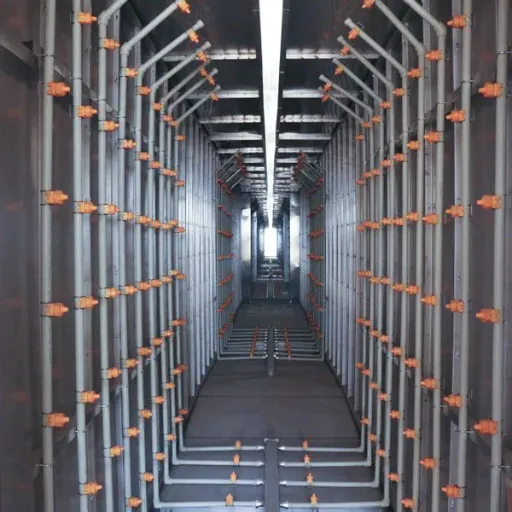
Consistent powder coating oven temperature requires more than a good thermostat. A robust quality system includes regular calibration, data logging, and defect correlation.
Thermocouple Calibration Schedule
Calibrate all oven thermocouples quarterly against a certified reference standard. Thermocouples in high-temperature environments drift over time, and a 10°C error is enough to cause cure defects in some powders.
Data Logging for PMT Verification
Attach magnetic or clip-on thermocouples to actual production workpieces and run them through the oven on a monthly basis. Record the temperature vs. time curve and compare it against the powder supplier's cure schedule. This practice catches drift before it produces scrap.
Defect Log Correlation
When orange peel, adhesion failures, or color shift appear, check the oven log for the affected production lot first. Correlate defect reports with temperature data to identify patterns.
Conclusion
Powder coating oven temperature is the single most critical parameter in your cure process, yet it is often oversimplified to a single setpoint on a controller. The reality is that achieving a durable, attractive finish requires matching your peak metal temperature and dwell time to your powder chemistry, workpiece geometry, and oven configuration.
Key takeaways to remember:
Reference your powder supplier's technical data sheet for the specific cure window; never assume 180°C to 200°C is universally correct
Measure peak metal temperature on actual workpieces, not just air temperature in the oven chamber
Size your oven thermal capacity for your heaviest workpiece and required throughput
Choose your heating source based on local energy costs, infrastructure, and precision requirements
Implement quarterly thermocouple calibration and monthly PMT data logging
Consider multi-zone tunnel ovens for mixed product lines to prevent overbake and underbake
A well-engineered curing stage transforms powder from a dry coating into a continuous, protective film that lasts for years. Whether you are commissioning a new line or troubleshooting an existing one, investing time in your temperature profile pays dividends in reduced scrap, lower energy consumption, and consistently superior finish quality.
Ready to engineer a curing solution that matches your exact production requirements? Get a turnkey project quotation from Deqing Leixin, including thermal profile analysis, oven sizing, and full line integration from pretreatment through final delivery.
Recently Posted
-
Conveyor Speed Calculation for Coating Lines: A Complete Guide
June 26, 2026Last March, a hardware manufacturer in Ningbo raised the chain speed on its powder coating line by 15% to clear a backlog. Three d Read More
 -
Conveyor Line Design: A Complete Engineering Guide for Coating Lines
June 26, 2026Last autumn, a hardware manufacturer in Vietnam commissioned a new powder coating line. The pretreatment tunnel, cyclone-recovery Read More
 -
Overhead Conveyor System: Engineering Guide for Coating Lines
June 26, 2026Last autumn, a hardware manufacturer in Ningbo faced a familiar problem. Their new powder coating line had to fit inside a buildin Read More
 -
Industrial Paint Booth: A Complete Engineering Guide for Manufacturers
June 26, 2026When Mike Chen expanded his metal furniture factory in Zhejiang Province last spring, he assumed the new spray area would solve hi Read More

Contact Us
Recommended Products
-
 Industrial Custom Spray Coating Line for Hardware Anti‑Corrosion TreatmentNegotiableMOQ: 1 Set
 -
Industrial Electrophoresis Line for Metal Water Pump Workpieces ProcessingNegotiableMOQ: 1 Set
-
Custom E‑Coating Production Line for Water Pump Parts Surface FinishingNegotiableMOQ: 1 Set
-
China OEM Custom E-Coating Machine and Cathodic Electrophoresis Production LineNegotiableMOQ: 1 Set
-
Industrial Electrophoretic Coating Line With Custom Design for Metal WorkpiecesNegotiableMOQ: 1 Set
-
Intelligent Automated Electrophoretic Coating Line for Powder Coating Production EquipmentNegotiableMOQ: 1 Set
-
Full Automatic Custom Electrophoretic Coating Line for Industrial Metal ComponentsNegotiableMOQ: 1 Set
-
Heavy‑Duty Continuous Powder Coating Line for Big Cabinet Anti‑Corrosion FinishingNegotiableMOQ: 1 Set
-
Energy‑Saving Powder Coating Line for Large Industrial Cabinet Surface ProtectionNegotiableMOQ: 1 Set
-
Environmental Friendly Powder Coating Line With High Recovery for Large CabinetsNegotiableMOQ: 1 Set
-
Large Manual Industrial Curing Oven for Metal Powder Coating MachineryNegotiableMOQ: 1 Set
-
Industrial Plastic Drying Oven With PLC Control and 304 Stainless Steel HopperNegotiableMOQ: 1 Set
-
High Efficiency Plastic Raw Material Dryer for Plastic ProcessingNegotiableMOQ: 1 Set
-
Compact E-Coating System for Small Metal Components in Automotive & Medical Device ProductionNegotiableMOQ: 1 Piece
-
Gantry Transport Type Electrophoretic Coating Line for Industrial WorkpiecesNegotiableMOQ: 1 Set
-
Custom Gantry Electrophoretic Coating Line for Automotive Component FinishingNegotiableMOQ: 1 Set
-
Large Workpiece Stainless Steel Manual Powder Spray Booth With Ventilation SystemNegotiableMOQ: 1 Set
-
Large Capacity Stainless Steel Manual Powder Spray Booth With Powder Recovery SystemNegotiableMOQ: 1 Set
-
Automatic Large Workpiece Powder Spray Booth for Metal FabricationNegotiableMOQ: 1 Set
-
Powder Spraying Room With Stainless Steel Frame and PLC ControlNegotiableMOQ: 1 Set