
 Business License

Pretreatment Chemicals for Powder Coating: A Complete Process Guide
A powder coating line can apply a flawless finish, but without the right chemical foundation, that finish will fail long before it should. Pretreatment chemicals for powder coating are the invisible layer of quality that separates coatings that last for years from coatings that chip, flake, or corrode within months.
If you manage a coating operation, you already know that adhesion and corrosion resistance are non-negotiable. This guide explains how pretreatment chemicals work, which chemistries match common metal substrates, and how to design a pretreatment stage that supports your powder coating quality targets. By the end, you will understand how to specify degreasers, phosphates, and passivation chemistries for steel, aluminum, and galvanized workpieces.
At Deqing Leixin, our engineering teams have commissioned pretreatment systems across automotive, appliance, hardware, and furniture lines. The recommendations below reflect what we have learned from those projects.
Engineering Note: Pretreatment is not a one-size-fits-all process. The right chemistry depends on your substrate, contamination type, and required salt-spray performance.
Why Pretreatment Chemistry Determines Powder Coating Durability
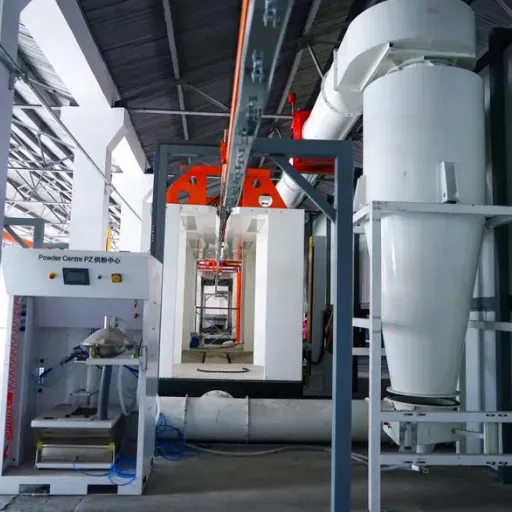
Powder coating relies on electrostatic attraction and thermal curing to form a hard, protective film. However, even the most advanced spray booth and curing oven cannot overcome a poorly prepared surface. Oil, mill scale, rust, and oxide layers block the coating from bonding at the molecular level.
Pretreatment chemicals clean the substrate and create a microscopically rough, chemically active surface. This surface gives the powder particles something to grip. It also forms a conversion coating that slows the migration of moisture and oxygen to the metal beneath.
The result is measurable. A properly pretreated steel panel can often exceed 1,000 hours in neutral salt-spray testing. An untreated or improperly cleaned panel may show red rust in fewer than 200 hours. That gap explains why pretreatment chemicals for powder coating are not an optional add-on. They are a quality control point that influences warranty claims, rework rates, and customer satisfaction.
Want to see how pretreatment integrates with a complete powder coating line? Explore our surface pretreatment system →
Common Pretreatment Chemicals for Powder Coating
Most powder coating pretreatment lines use a sequence of chemical stages. Each stage targets a specific type of contamination or prepares the surface for the next step.
Alkaline Degreasers
Alkaline degreasers remove oils, drawing compounds, lubricants, and shop dirt from metal surfaces. These cleaners typically operate at pH levels between 9 and 13. Spray and immersion versions are both common, depending on workpiece geometry and contamination load.
For heavy oil loads, such as stamped steel parts fresh from a press shop, an alkaline cleaner with surfactants and builders is essential. The temperature usually ranges from 50°C to 70°C. Higher temperatures accelerate cleaning but increase energy costs.
Key parameters to monitor include concentration, temperature, bath age, and oil loading. As the bath accumulates oil, cleaning efficiency drops. A skimming system or periodic dump-and-refill schedule keeps the chemistry effective.
Acid Pickling and Descalers
When steel arrives with rust or heavy mill scale, alkaline cleaning alone is not enough. Acid pickling uses dilute acids, such as hydrochloric or sulfuric acid, to dissolve oxide layers. This stage is common for raw steel, welded fabrications, and parts that have been stored outdoors.
Acid pickling must be followed by thorough rinsing. Residual acid can cause flash rusting and interfere with phosphate conversion coatings. In many lines, a neutralizing rinse or an alkaline neutralizer stage follows pickling to restore the correct surface chemistry.
Phosphate Coatings: Iron vs. Zinc
Phosphating is the most widely used conversion coating for powder coating. It creates a crystalline layer that improves adhesion and corrosion resistance. The two most common types are iron phosphate and zinc phosphate.
Iron phosphate is economical and easy to control. It produces a thin, amorphous coating that improves paint adhesion and provides moderate corrosion protection. Iron phosphating is suitable for indoor parts, low-corrosion environments, and applications where cost is a primary concern.
Zinc phosphate forms a heavier, more crystalline layer. It delivers superior corrosion resistance and is preferred for automotive parts, outdoor furniture, and appliances exposed to humid or salty environments. Zinc phosphate baths require tighter process control, including monitoring of total acid, free acid, accelerator, and temperature.
| Parameter | Iron Phosphate | Zinc Phosphate |
|---|---|---|
| Coating weight | 0.2–1.0 g/m² | 1.5–4.0 g/m² |
| Corrosion resistance | Moderate | High |
| Cost | Lower | Higher |
| Process control | Simple | Tight |
| Best for | Indoor, light-duty | Automotive, outdoor |
When Marcus, a production supervisor at a midwestern hardware plant, switched from iron to zinc phosphate for outdoor bracket production, his salt-spray test results jumped from 240 hours to over 800 hours. The change added roughly 8% to his chemical budget but cut rework by nearly half.
Passivation and Conversion Coatings
Aluminum and galvanized steel require different chemistry. A traditional phosphate bath can produce uneven or powdery coatings on aluminum. Instead, these substrates often use chromate, non-chrome passivation, or zirconium-based conversion coatings.
Chromate conversion coatings historically delivered excellent corrosion resistance, but environmental regulations have pushed many facilities toward trivalent chrome or chrome-free alternatives. Zirconium and titanium-based chemistries are now common in modern pretreatment systems. They provide good adhesion and moderate corrosion protection while supporting environmental compliance.
Matching Pretreatment Chemicals to Your Substrate
The metal you coat dictates the chemistry you should specify. Using the wrong sequence leads to poor adhesion, staining, or accelerated corrosion.
Steel Workpieces
Steel parts typically follow a sequence of alkaline clean, rinse, phosphate, rinse, and seal. For mild steel with light oil, iron phosphate is often sufficient. For high-corrosion applications or parts exposed to outdoor environments, zinc phosphate is the better choice.
Heavy weld scale may require an acid pickle stage before cleaning. After pickling, a fresh water rinse and sometimes a neutralizer stage prepare the surface for phosphating.
Aluminum Workpieces
Aluminum forms a natural oxide layer almost instantly after cleaning. This oxide layer must be conditioned or converted for powder coating to adhere properly. A typical aluminum pretreatment sequence includes alkaline clean, rinse, deoxidizer or etch, rinse, conversion coating, rinse, and seal.
When the team at Apex Window Frames upgraded their aluminum powder coating line, they moved from a simple alkaline rinse to a full zirconium conversion process. The change eliminated the blotchy finish they had been fighting and improved their cross-hatch adhesion rating from 2B to 5B on aluminum extrusions.
Galvanized Steel
Galvanized steel combines a zinc surface with a steel substrate, so the chemistry must protect both. A light alkaline clean followed by a specialized phosphate or conversion coating designed for zinc surfaces is typical. Standard iron phosphate can react unevenly with zinc, producing white powdery residues that interfere with coating adhesion.
Process Stages in a Chemical Pretreatment Line
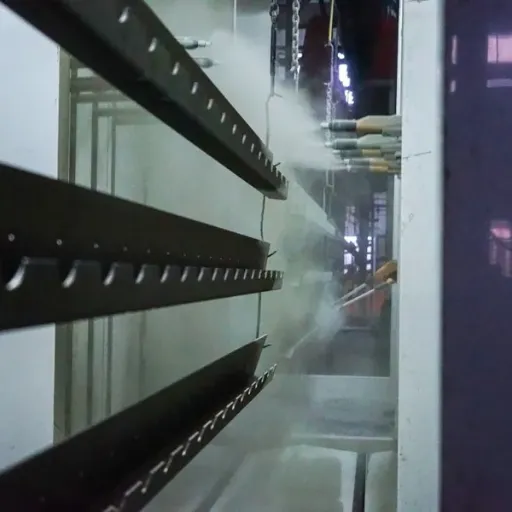
A complete surface pretreatment system moves workpieces through a controlled sequence. Each stage has a specific residence time, temperature, and chemistry concentration. Common stages include:
Pre-clean – Removes loose debris and heavy soil before the main cleaner.
Alkaline clean – Dissolves oils and organic contamination.
Rinse – Removes residual cleaner with fresh or counter-flow water.
Conditioner – Prepares the surface for phosphating, especially on steel.
Phosphate or conversion coating – Forms the active conversion layer.
Rinse – Stops the conversion reaction and removes unreacted chemicals.
Seal – Often a dilute chrome or non-chrome seal that closes pores in the coating.
DI water rinse or dry-off – Removes water spots and prepares the surface for coating.
The exact number of stages depends on substrate, quality requirements, and available floor space. A simple three-stage system might include clean, rinse, and phosphate. A high-performance automotive line can include seven or more stages with precise temperature and chemical control.
Need help sizing a pretreatment line for your workpieces? Request a free line design drawing →
Quality Control and Common Pretreatment Defects
Even the right pretreatment chemicals for powder coating will fail if process parameters drift. Consistent monitoring is essential.
Key Quality Checks
Coating weight: Measured in grams per square meter. Low coating weight reduces corrosion resistance. High coating weight can cause powder adhesion problems.
Crystal size and uniformity: Examined under a microscope. Large, uneven crystals indicate poor process control.
Water break test: A quick field check. A clean, properly treated surface holds an unbroken water film. If water beads up, oily residue remains.
Cross-hatch adhesion test: Confirms that the powder coating bonds well to the pretreated substrate.
Common Defects and Causes
| Defect | Likely Cause |
|---|---|
| Pinholes in cured film | Inadequate rinsing or residual cleaner |
| Poor adhesion | Insufficient phosphate coating or contamination |
| White powdery residue | Incorrect phosphate chemistry for substrate |
| Flash rusting | Acid carryover or delayed drying |
| Staining or blotches | Uneven conversion coating or water quality issues |
Regular titration, bath temperature checks, and spray nozzle inspections prevent most problems before they reach the coating booth.
Environmental Considerations and Chemical Maintenance
Pretreatment chemistry affects more than coating quality. It also influences wastewater treatment, chemical disposal costs, and environmental compliance.
Wastewater and Discharge
Phosphate baths, rinse waters, and cleaner solutions contain dissolved metals and organics. Most facilities route these streams through a wastewater treatment system that adjusts pH, precipitates heavy metals, and clarifies the water before discharge. The exact requirements depend on local regulations.
Chemical Maintenance Best Practices
Titrate each bath daily to maintain concentration and free-to-total-acid ratios.
Skim oil from cleaner baths to extend bath life.
Monitor rinse water conductivity to prevent chemical carryover.
Replace spray nozzles when flow patterns degrade.
Keep accurate logs of bath additions, dumps, and test results.
Chrome-free conversion coatings have reduced regulatory burden for many plants, but they often require tighter process control than older chromate systems. The trade-off is usually worthwhile for companies targeting automotive or export markets with strict environmental standards.
When to Customize Your Pretreatment Chemistry
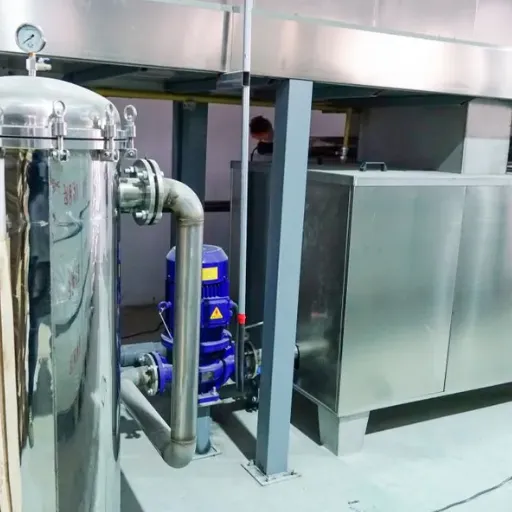
Standard pretreatment sequences handle many applications well, but some workpieces require customization. Consider a custom approach when:
Your parts are made from mixed metals, such as aluminum and steel assemblies.
You coat welded fabrications with heavy scale or slag.
Your end-use environment demands extended salt-spray or humidity resistance.
You process parts with complex geometries, such as deep-drawn sections or hollow tubes.
Local water quality is poor or highly variable.
In these cases, a pretreatment line with extra stages, specialized chemistries, or closed-loop rinsing may be justified. The additional capital cost is usually recovered through lower rework, fewer warranty claims, and reduced chemical waste.
At Deqing Leixin, we design surface pretreatment systems around each customer's substrate mix, contamination type, and quality targets. Whether you need a compact three-stage washer or a multi-zone phosphating line, the chemistry and mechanical design must work together.
Conclusion
Pretreatment chemicals for powder coating are the foundation of coating durability. The right combination of degreasers, phosphates, and conversion coatings turns a raw metal surface into one that accepts powder evenly and resists corrosion for years.
Key takeaways:
Alkaline degreasers remove oils and organic soils before conversion coating.
Iron phosphate is cost-effective for moderate corrosion protection; zinc phosphate delivers higher performance.
Aluminum and galvanized steel require specialized conversion coatings, not standard steel phosphate chemistries.
Process control, rinsing, and bath maintenance are as important as the chemicals themselves.
Custom pretreatment sequences pay for themselves when quality requirements are demanding.
When Elena, the quality manager at a steel furniture manufacturer, finally traced her field failures back to an underperforming iron phosphate stage, she upgraded to a full zinc phosphate system with a seal. Her warranty returns dropped by 60% within the first year. The lesson was simple: the coating is only as good as the surface beneath it.
Planning a new powder coating line or upgrading your pretreatment stage? Contact our engineers → with your workpiece specifications, substrate type, and corrosion requirements. We will prepare a custom pretreatment system design and full coating line layout at no charge.
Recently Posted
-
Conveyor Speed Calculation for Coating Lines: A Complete Guide
June 26, 2026Last March, a hardware manufacturer in Ningbo raised the chain speed on its powder coating line by 15% to clear a backlog. Three d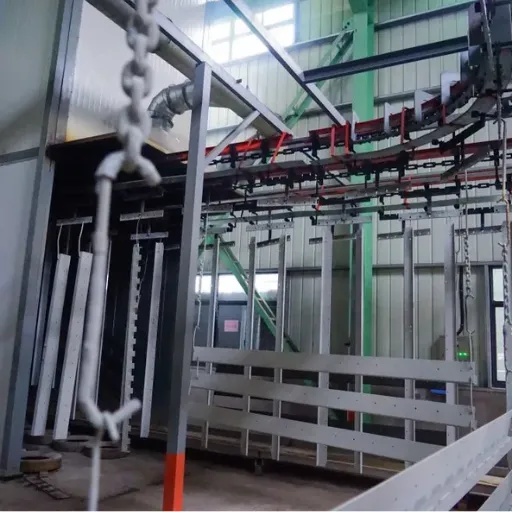 Read More
 -
Conveyor Line Design: A Complete Engineering Guide for Coating Lines
June 26, 2026Last autumn, a hardware manufacturer in Vietnam commissioned a new powder coating line. The pretreatment tunnel, cyclone-recovery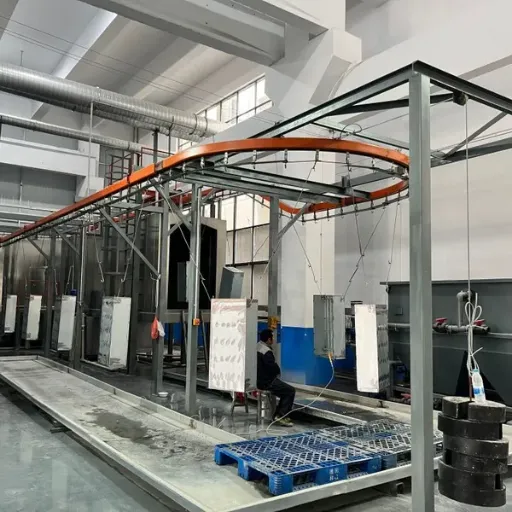 Read More
 -
Overhead Conveyor System: Engineering Guide for Coating Lines
June 26, 2026Last autumn, a hardware manufacturer in Ningbo faced a familiar problem. Their new powder coating line had to fit inside a buildin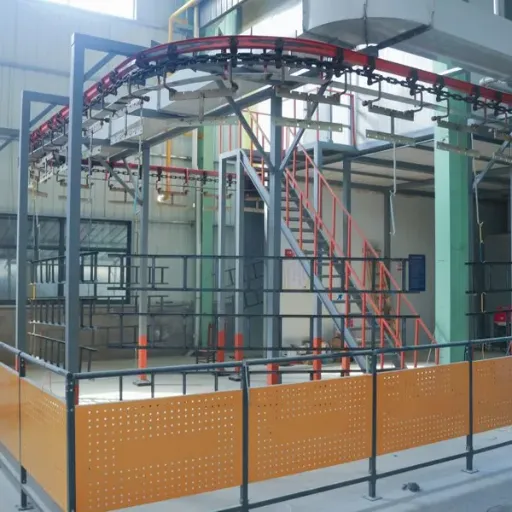 Read More
 -
Industrial Paint Booth: A Complete Engineering Guide for Manufacturers
June 26, 2026When Mike Chen expanded his metal furniture factory in Zhejiang Province last spring, he assumed the new spray area would solve hi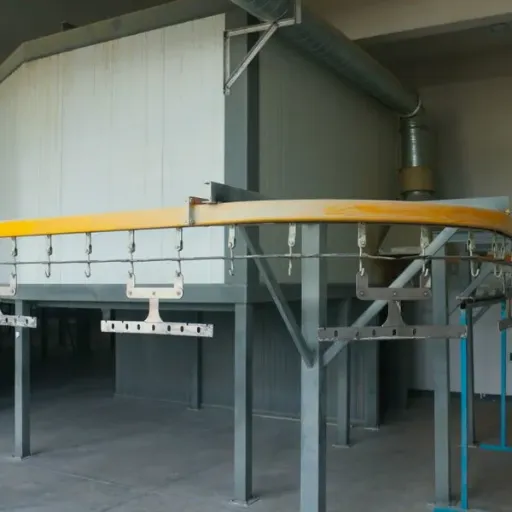 Read More

Contact Us
Recommended Products
-
 Industrial Custom Spray Coating Line for Hardware Anti‑Corrosion TreatmentNegotiableMOQ: 1 Set
 -
Industrial Electrophoresis Line for Metal Water Pump Workpieces ProcessingNegotiableMOQ: 1 Set
-
Custom E‑Coating Production Line for Water Pump Parts Surface FinishingNegotiableMOQ: 1 Set
-
China OEM Custom E-Coating Machine and Cathodic Electrophoresis Production LineNegotiableMOQ: 1 Set
-
Industrial Electrophoretic Coating Line With Custom Design for Metal WorkpiecesNegotiableMOQ: 1 Set
-
Intelligent Automated Electrophoretic Coating Line for Powder Coating Production EquipmentNegotiableMOQ: 1 Set
-
Full Automatic Custom Electrophoretic Coating Line for Industrial Metal ComponentsNegotiableMOQ: 1 Set
-
Heavy‑Duty Continuous Powder Coating Line for Big Cabinet Anti‑Corrosion FinishingNegotiableMOQ: 1 Set
-
Energy‑Saving Powder Coating Line for Large Industrial Cabinet Surface ProtectionNegotiableMOQ: 1 Set
-
Environmental Friendly Powder Coating Line With High Recovery for Large CabinetsNegotiableMOQ: 1 Set
-
Large Manual Industrial Curing Oven for Metal Powder Coating MachineryNegotiableMOQ: 1 Set
-
Industrial Plastic Drying Oven With PLC Control and 304 Stainless Steel HopperNegotiableMOQ: 1 Set
-
High Efficiency Plastic Raw Material Dryer for Plastic ProcessingNegotiableMOQ: 1 Set
-
Compact E-Coating System for Small Metal Components in Automotive & Medical Device ProductionNegotiableMOQ: 1 Piece
-
Gantry Transport Type Electrophoretic Coating Line for Industrial WorkpiecesNegotiableMOQ: 1 Set
-
Custom Gantry Electrophoretic Coating Line for Automotive Component FinishingNegotiableMOQ: 1 Set
-
Large Workpiece Stainless Steel Manual Powder Spray Booth With Ventilation SystemNegotiableMOQ: 1 Set
-
Large Capacity Stainless Steel Manual Powder Spray Booth With Powder Recovery SystemNegotiableMOQ: 1 Set
-
Automatic Large Workpiece Powder Spray Booth for Metal FabricationNegotiableMOQ: 1 Set
-
Powder Spraying Room With Stainless Steel Frame and PLC ControlNegotiableMOQ: 1 Set