
 Business License

Powder Coating Line Equipment: A Complete Engineering Guide for Manufacturers
Last year, a plant manager in Zhejiang invested $180,000 in a new spray booth and reciprocator. His team expected smooth Class A finishes on aluminum extrusions from day one. Instead, they watched film thickness swing by 40 μm between shifts, and adhesion failures climbed above 12%. The root cause wasn't the booth. His powder coating line equipment lacked a proper pretreatment stage and a synchronized conveying system.
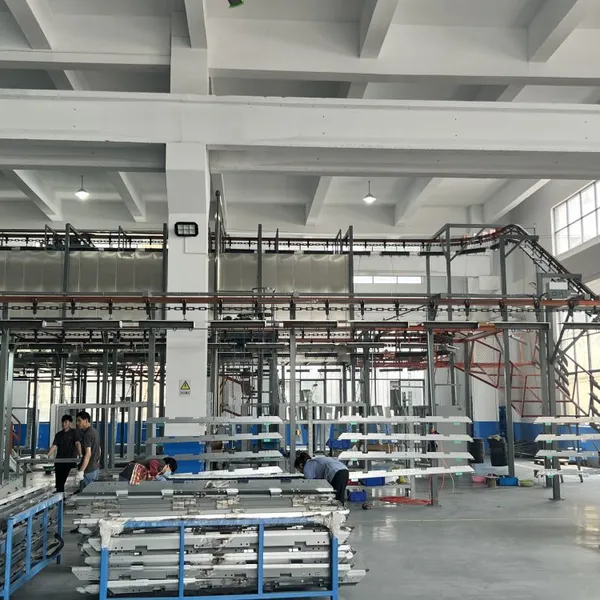
If you're evaluating a powder coating production line for your factory, you already know the spray booth matters. But the booth is just one station in an integrated system. Pretreatment, drying, application, recovery, curing, and material handling all affect the final finish, throughput, and operating cost. Each piece of powder coating line equipment must match your workpiece dimensions, daily output target, and local energy infrastructure.
In this guide, you'll learn how each major subsystem works, what specifications to compare, and how to avoid the buying mistakes that turn a promising investment into a source of rework and downtime. We'll also look at how turnkey engineering ties the components into a single, production-ready system.
Request a free line design drawing →
What Is Powder Coating Line Equipment?
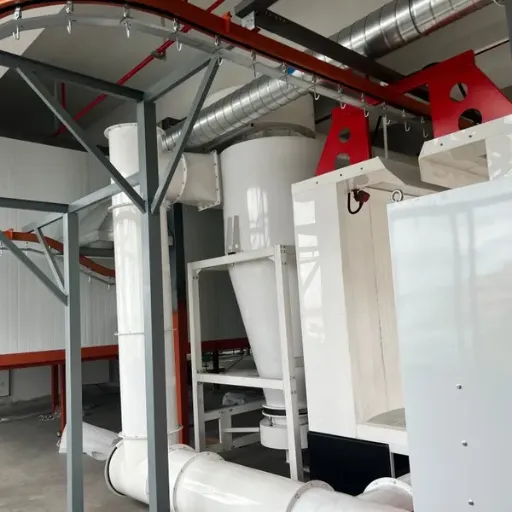
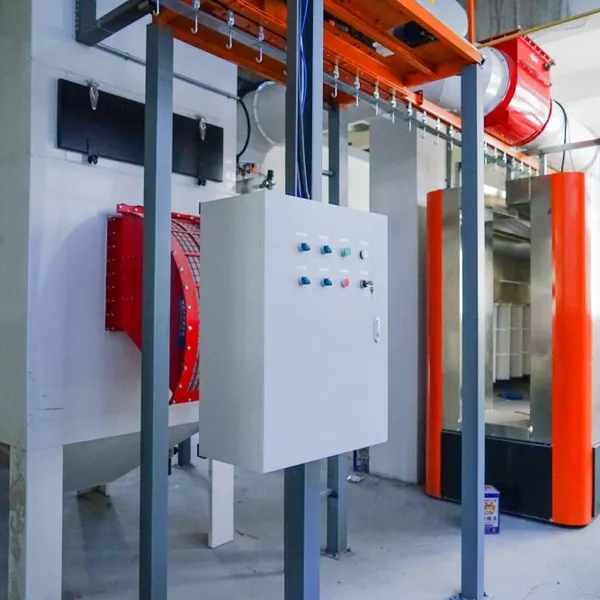
Powder coating line equipment applies dry powder paint to metal workpieces, then cures it into a hard, durable film. A complete automatic powder coating line moves parts through pretreatment, spray application, powder recovery, and curing in one continuous sequence. Powder coating has grown into a leading industrial finishing technology because it produces a hard, solvent-free finish with strong corrosion resistance.
The typical subsystems include:
Pretreatment system, cleans and chemically prepares the substrate
Powder spray booth, applies charged powder to grounded workpieces
Powder recovery unit, reclaims overspray for reuse
Curing oven, melts and cross-links the powder coating
Conveying system, transports workpieces at a controlled speed
Control system, coordinates line speed, gun triggering, and oven temperature
Each subsystem influences the others. A fast conveyor can starve the curing oven if dwell time drops below the powder manufacturer's specification. A weak pretreatment stage can undermine even the best electrostatic spray guns. That's why experienced buyers evaluate powder coating line equipment as an integrated production system, not a collection of standalone machines.
The Powder Coating Institute publishes useful guidelines on application and recovery.
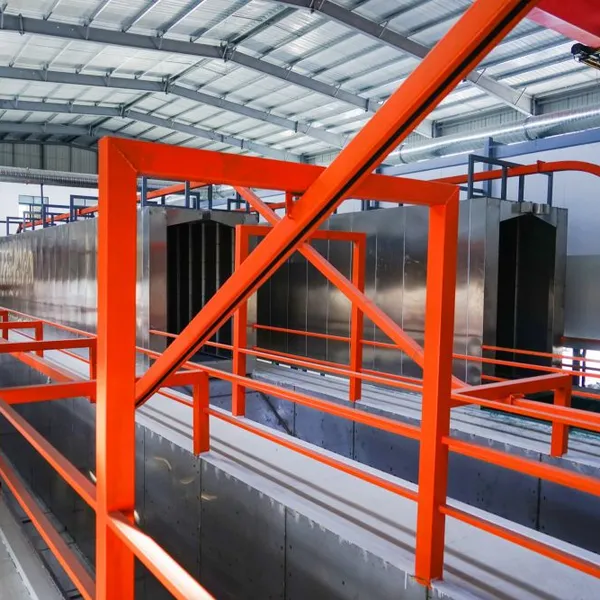
Pretreatment System: The Foundation of Coating Quality
Coating adhesion starts before the first powder particle leaves the gun. Oil, mill scale, rust, and stamping lubricants left on the surface create invisible barriers that cause pinholes, bubbling, and premature corrosion failure.
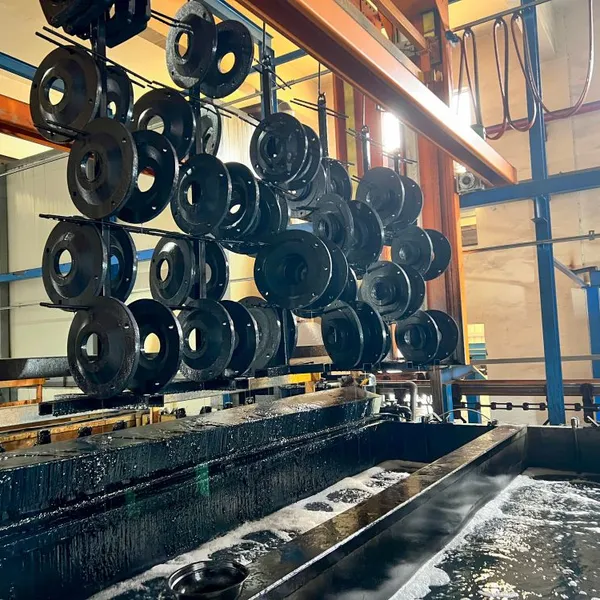
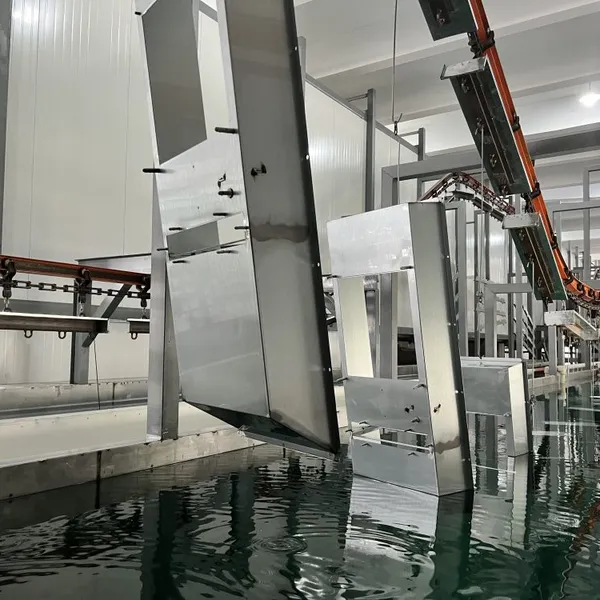
A standard pretreatment system for powder coating includes multiple stages:
Degreasing tank, removes oil and organic soils
Rinse station, washes away residual chemistry
Phosphating or conversion coating stage, creates a microcrystalline layer for paint bonding
Final rinse and demineralized water rinse
Automatic water blowing system, removes moisture before drying
At Deqing Leixin, our pretreatment lines use 304 stainless steel tanks and centrifugal pumps for chemical circulation. Tank dimensions, stage count, and chemistry type are engineered around two factors: the contamination on your parts and the corrosion resistance your market demands. Automotive chassis components tend to need zinc phosphating, while aluminum window frames may need a chrome-free conversion coating.
Engineering Note: Always verify the workpiece grounding path after pretreatment. Residual rinse water or poor conductivity will distort the electrostatic field and cause uneven powder deposition.
If you want a deeper look at surface preparation, see our surface pretreatment system.
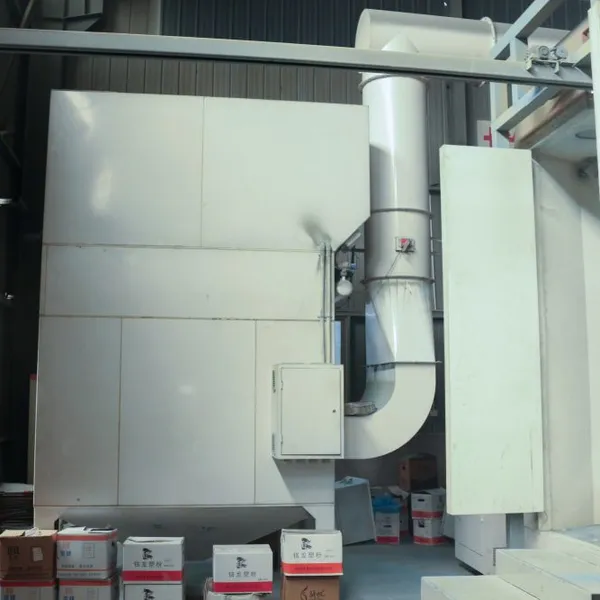
Powder Spray Booth and Recovery Equipment
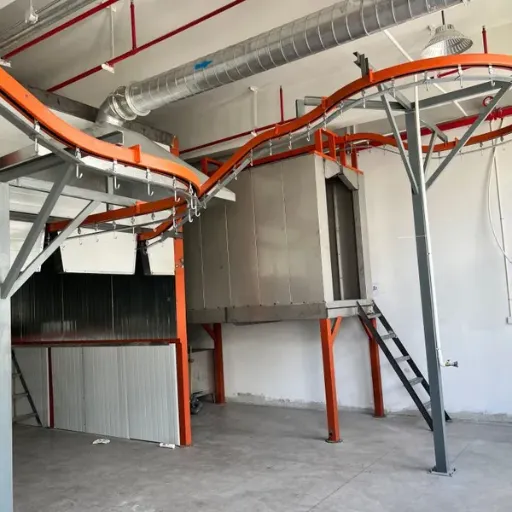
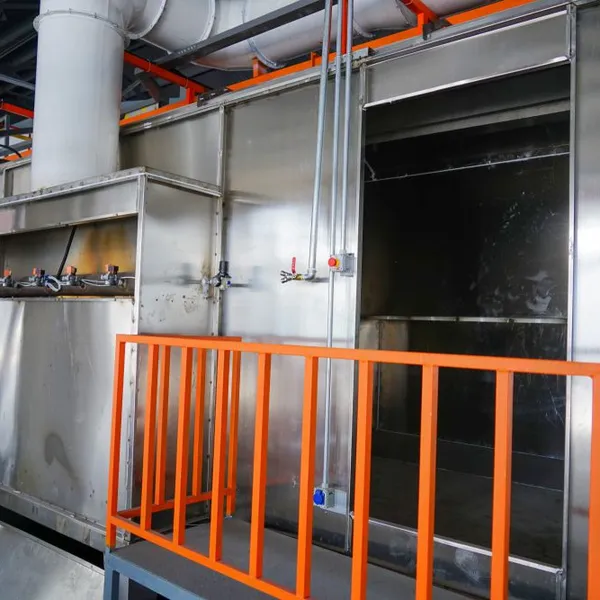
The spray booth is where powder particles receive an electrostatic charge and deposit onto the grounded workpiece. Corona charging and tribo charging are the two main methods. Corona guns apply voltage at the electrode tip, while tribo guns generate charge through friction inside a PTFE-lined barrel. Corona charging dominates general metal finishing because it works across a wide range of powder chemistries.
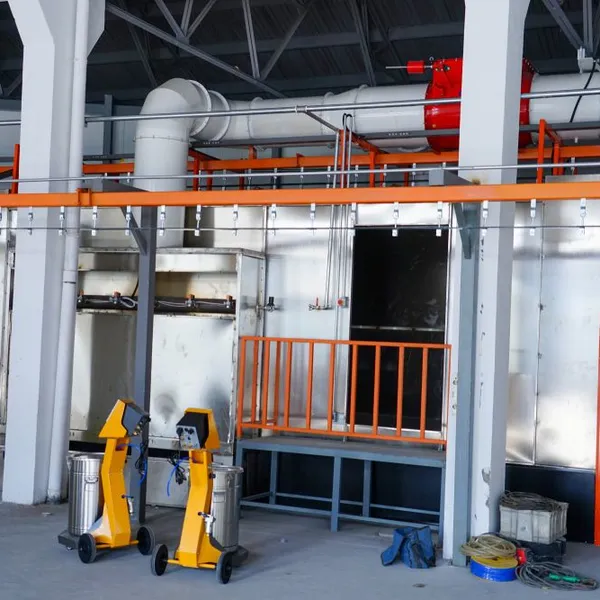
A modern automatic powder coating line pairs the booth with servo reciprocators. These move the guns vertically along the workpiece profile. Our reciprocators reach spraying heights up to 2,500 mm and can carry six guns per side. Programmable stroke patterns match gun travel to part geometry. This reduces Faraday cage effects in corners and recesses. Selecting the right spray booth for your powder coating line equipment means matching gun technology, recovery method, and booth size to your part geometry and daily volume.
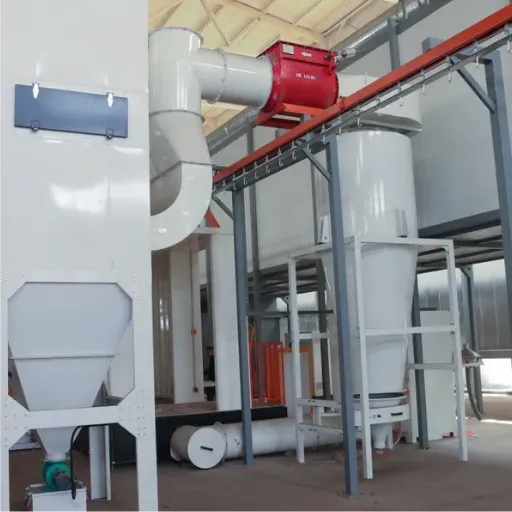
Powder recovery is where operating costs drop. Cyclone recovery systems separate reclaimable powder from the extraction air stream. A large cyclone double-stage recovery unit with 24,000 m³/h extraction can reclaim up to 95% of overspray powder. That reclaimed material blends with virgin powder at a controlled ratio and returns to the feed hopper.
A hardware manufacturer in Guangdong was consuming 8.5 tons of powder each month on manual spray operations. After installing an automatic powder coating line with cyclone recovery and servo reciprocators, powder usage fell to 6.2 tons per month. The 27% material savings covered the equipment upgrade within 14 months.
Curing Oven: Matching Thermal Energy to Your Process
After application, the powder-coated workpiece enters a curing oven where heat melts the powder and triggers cross-linking. Curing temperature and dwell time depend on the powder chemistry. Hybrid epoxy-polyester powders commonly cure at 180°C for 15–20 minutes. Some polyurethane systems need 200°C.
Two oven configurations dominate production lines:
Batch ovens, parts are loaded on racks and cured in a single chamber. These suit low-volume or large, irregular workpieces.
Tunnel ovens, a continuous conveyor moves parts through heated zones. These match high-volume automatic powder coating lines.
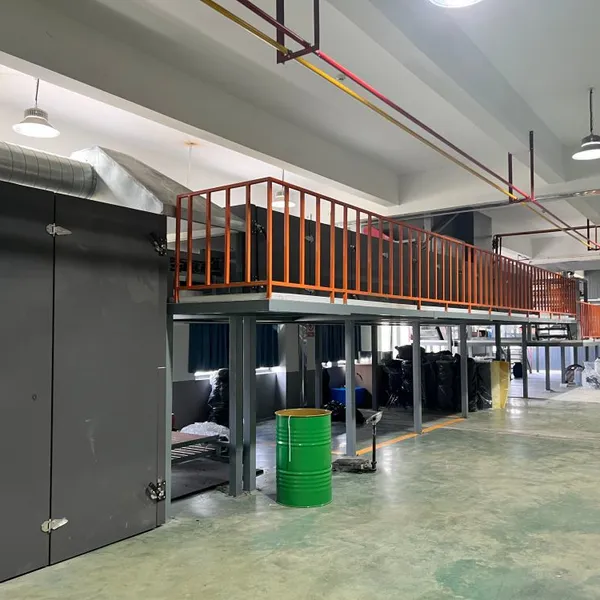
Heating source selection affects both capital cost and operating cost. Deqing Leixin builds bridge-type and tunnel-type curing ovens. Thermal capacities range from 300,000 to 1,000,000 kcal, with electric, oil, gas, or steam heating. In plants with natural gas infrastructure, gas-fired ovens tend to deliver the lowest energy cost per kilogram of cured parts. Electric ovens offer simpler installation and cleaner operation where emissions rules are strict. The curing oven is often the largest energy consumer in powder coating line equipment, so heating source selection deserves careful analysis.
Temperature uniformity matters. A 304 stainless steel liner and precision burner or element control keep the oven within ±3°C across the workpiece envelope. Hot spots cause over-cure and color shift, while cold spots leave powder under-cured and soft.
For a detailed energy comparison, read our curing oven overview.
Conveying and Control Systems
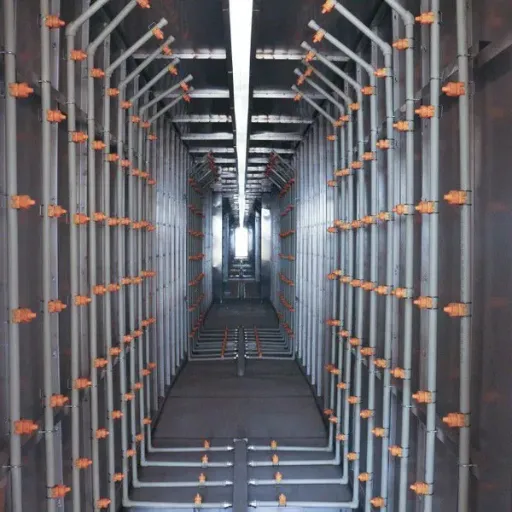
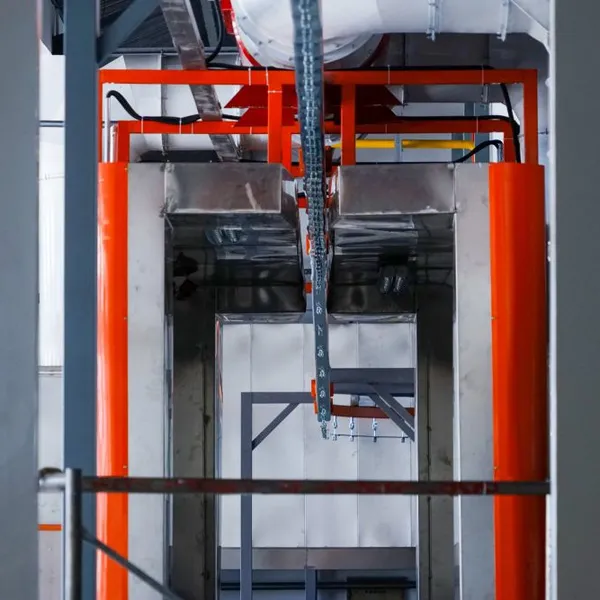
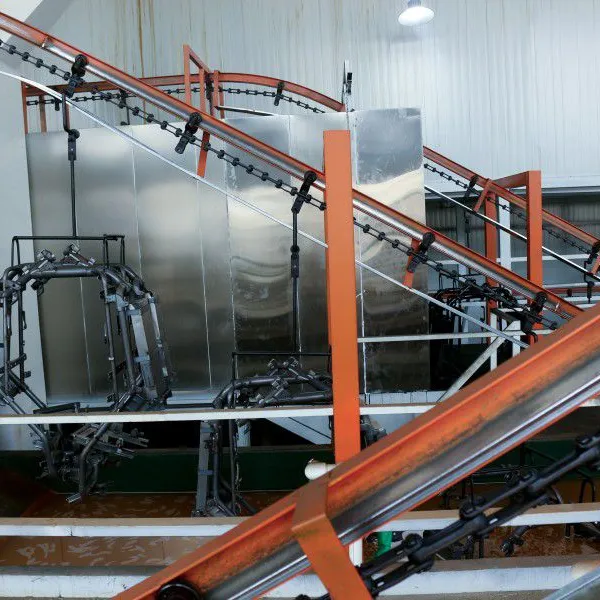
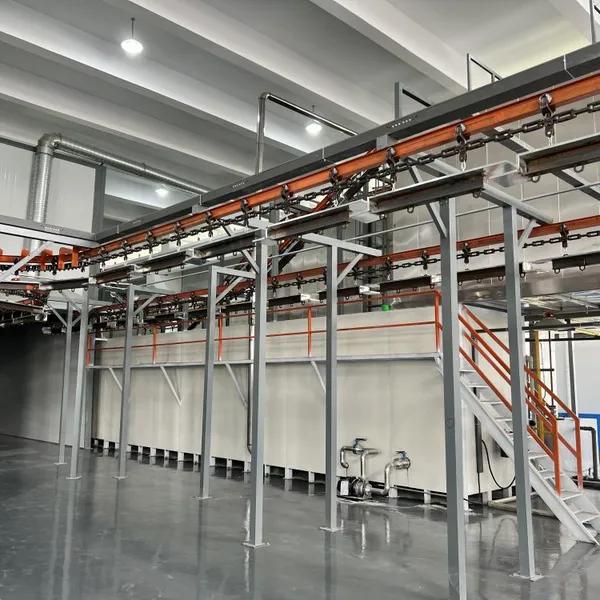
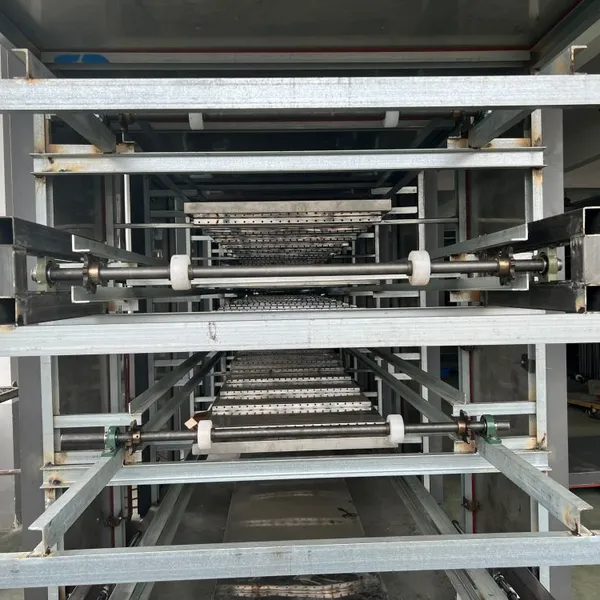
Workpieces don't move themselves. An overhead conveyor system carries parts through pretreatment, drying, spray application, and curing at a synchronized pace. The conveyor speed controls both line throughput and curing dwell time. If you increase speed to raise output, verify that oven length still gives enough minutes at temperature. Your conveying system must synchronize every station in the powder coating line equipment, from the first pretreatment rinse to the final cooling zone.
Common conveyor types include:
Overhead chain conveyor, economical for simple loops and fixed spacing
Power-and-free conveyor, allows buffering and variable spacing between stations
Skid conveyor, supports heavy or large panels at floor level
A Programmable Logic Controller (PLC) with a touch-screen Human-Machine Interface (HMI) manages the line. It controls sequencing, gun triggering, oven temperature, and safety interlocks. Optional remote monitoring and large-screen displays give supervisors real-time visibility into production status.
Engineering Note: Specify the control system in the same language your operators speak. A beautifully programmed PLC loses value if daily parameter changes require a translator.
You can learn more about material handling in our conveying system overview.
How to Select Powder Coating Line Equipment for Your Factory
Choosing the right powder coating line equipment starts with data, not catalogs. Before you request quotations, gather these inputs:
Workpiece dimensions: maximum length, width, height, and weight
Daily output target in pieces or square meters
Coating specification: film thickness, color range, gloss, and adhesion standard
Preferred heating source based on local energy cost and infrastructure
Factory floor dimensions, including ceiling height and column spacing
Environmental regulations governing emissions and wastewater
With this information, compare proposals against these criteria:
Process integration, Do pretreatment, spray, cure, and conveying share a unified control philosophy?
Recovery efficiency, What percentage of overspray powder can the system reclaim?
Energy consumption, What is the projected kcal or kWh per ton of cured parts?
Temperature uniformity, Can the oven hold ±3°C or better across the load?
Service footprint, Does the supplier provide installation, training, and spare parts support?
A low quotation can hide high lifetime costs. Cheap recovery filters increase powder waste. Poor oven insulation drives up fuel bills. Non-standard control hardware makes spare parts hard to source two years after commissioning.
Beyond the equipment itself, evaluate the supplier's project experience. Ask for references in your industry, visit a completed line if logistics allow, and review the spare parts list before signing. A supplier who can't explain how their PLC handles alarm conditions or how their oven burner responds to temperature drift may leave you with long commissioning delays. Strong after-sales support matters as much as the initial quotation.
Contact our engineers with your specifications →
Common Mistakes When Buying Powder Coating Line Equipment
Even experienced manufacturers make expensive errors. Here are the ones we see most often:
Sizing the oven for today, not tomorrow. A line that exactly matches current peak demand has no margin for seasonal spikes or new product launches. Target 20% throughput margin above your current peak when specifying conveyor speed and oven capacity.
Ignoring pretreatment chemistry. A customer once installed a high-end spray booth but continued hand-washing parts with a generic degreaser. Adhesion failures ran at 18% until the pretreatment system was upgraded to a five-stage washer with iron phosphating.
Specifying the wrong recovery type. Cyclone recovery works well for standard powders, but metallic or bonded powders may need cartridge filtration to protect finish quality. Match the recovery technology to your powder portfolio.
Underestimating installation time. Manufacturing lead time for a custom powder coating production line typically runs 45–90 days. On-site installation and commissioning add another 2–4 weeks. Plan production around that timeline rather than promising customers deliveries you can't meet.
Neglecting operator training. The best powder coating line equipment underperforms if operators can't set recipes, clean guns, or troubleshoot alarms. Make sure your supplier includes hands-on training before final handover.
Marcus, a production supervisor at a steel furniture plant, thought his old batch oven was sufficient. After switching to a tunnel-type gas-fired curing oven with ±3°C uniformity, his rework rate dropped from 9% to 2.5%. Energy cost per panel fell by 31%. The change paid for itself in 11 months.
Conclusion
Powder coating line equipment is more than a spray booth and a conveyor. A production-ready system integrates pretreatment, electrostatic application, powder recovery, curing, material handling, and intelligent control into one engineered workflow. Each subsystem affects finish quality, throughput, and total operating cost.
As you evaluate options, focus on integration rather than isolated specifications. Compare recovery efficiency, temperature uniformity, energy consumption, and after-sales support side by side. Deqing Leixin manufactures under ISO 9001:2015 standards and engineers each powder coating production line around the customer's workpiece, output target, and factory layout.
If you're planning a new line, start with a detailed layout and equipment specification. Deqing Leixin provides free design drawings and turnkey project engineering from concept through commissioning. Submit your workpiece dimensions, output target, and factory layout, and our engineers will respond with a tailored proposal.
Recently Posted
-
Conveyor Speed Calculation for Coating Lines: A Complete Guide
June 26, 2026Last March, a hardware manufacturer in Ningbo raised the chain speed on its powder coating line by 15% to clear a backlog. Three d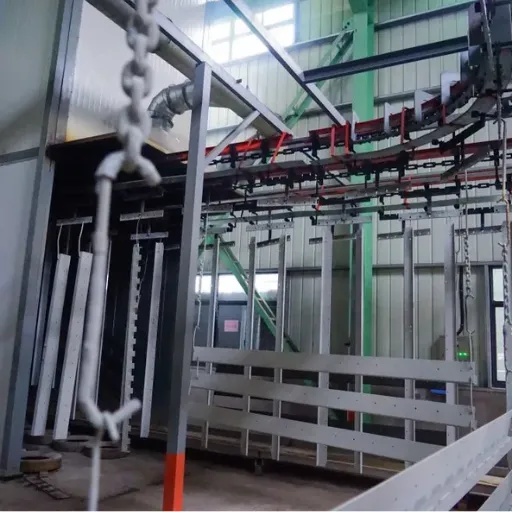 Read More
 -
Conveyor Line Design: A Complete Engineering Guide for Coating Lines
June 26, 2026Last autumn, a hardware manufacturer in Vietnam commissioned a new powder coating line. The pretreatment tunnel, cyclone-recovery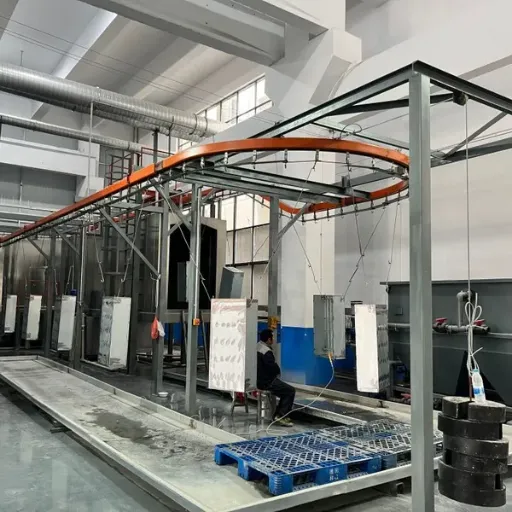 Read More
 -
Overhead Conveyor System: Engineering Guide for Coating Lines
June 26, 2026Last autumn, a hardware manufacturer in Ningbo faced a familiar problem. Their new powder coating line had to fit inside a buildin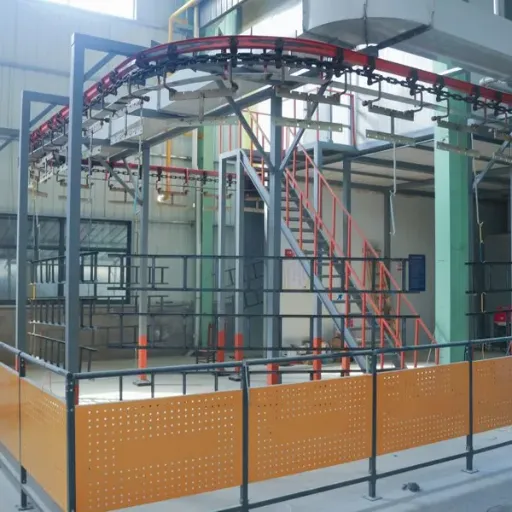 Read More
 -
Industrial Paint Booth: A Complete Engineering Guide for Manufacturers
June 26, 2026When Mike Chen expanded his metal furniture factory in Zhejiang Province last spring, he assumed the new spray area would solve hi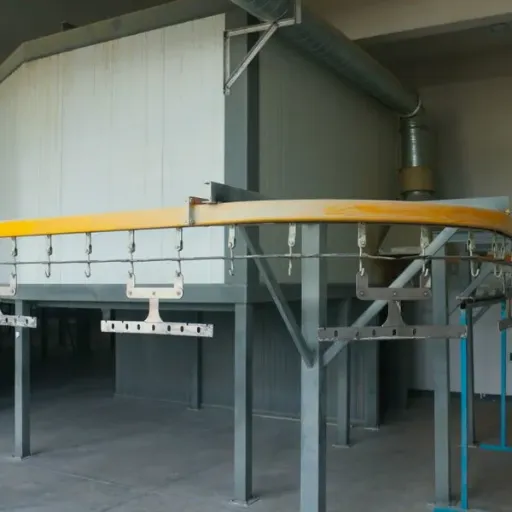 Read More

Contact Us
Recommended Products
-
 Industrial Custom Spray Coating Line for Hardware Anti‑Corrosion TreatmentNegotiableMOQ: 1 Set
 -
Industrial Electrophoresis Line for Metal Water Pump Workpieces ProcessingNegotiableMOQ: 1 Set
-
Custom E‑Coating Production Line for Water Pump Parts Surface FinishingNegotiableMOQ: 1 Set
-
China OEM Custom E-Coating Machine and Cathodic Electrophoresis Production LineNegotiableMOQ: 1 Set
-
Industrial Electrophoretic Coating Line With Custom Design for Metal WorkpiecesNegotiableMOQ: 1 Set
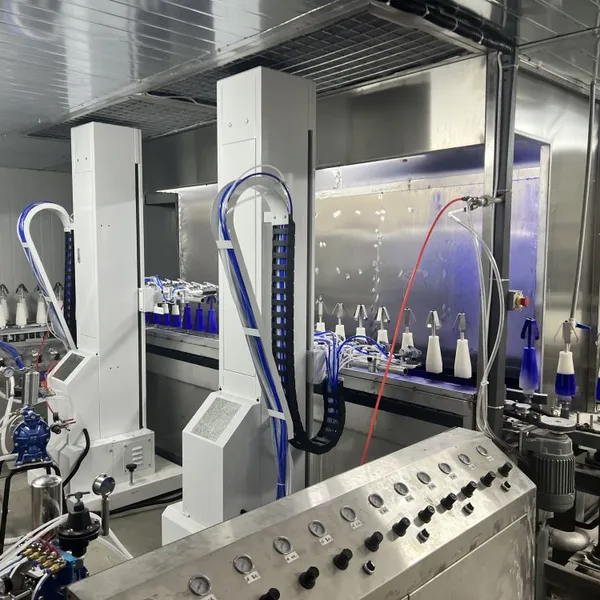
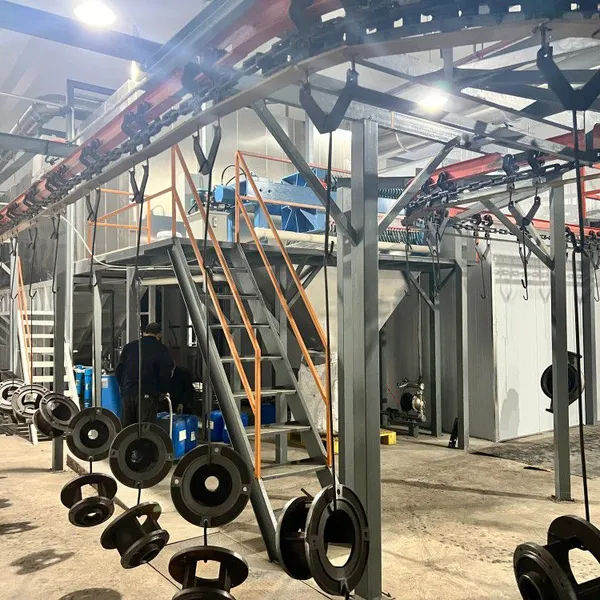
-
Intelligent Automated Electrophoretic Coating Line for Powder Coating Production EquipmentNegotiableMOQ: 1 Set
-
Full Automatic Custom Electrophoretic Coating Line for Industrial Metal ComponentsNegotiableMOQ: 1 Set
-
Heavy‑Duty Continuous Powder Coating Line for Big Cabinet Anti‑Corrosion FinishingNegotiableMOQ: 1 Set
-
Energy‑Saving Powder Coating Line for Large Industrial Cabinet Surface ProtectionNegotiableMOQ: 1 Set
-
Environmental Friendly Powder Coating Line With High Recovery for Large CabinetsNegotiableMOQ: 1 Set
-
Large Manual Industrial Curing Oven for Metal Powder Coating MachineryNegotiableMOQ: 1 Set
-
Industrial Plastic Drying Oven With PLC Control and 304 Stainless Steel HopperNegotiableMOQ: 1 Set
-
High Efficiency Plastic Raw Material Dryer for Plastic ProcessingNegotiableMOQ: 1 Set
-
Compact E-Coating System for Small Metal Components in Automotive & Medical Device ProductionNegotiableMOQ: 1 Piece
-
Gantry Transport Type Electrophoretic Coating Line for Industrial WorkpiecesNegotiableMOQ: 1 Set
-
Custom Gantry Electrophoretic Coating Line for Automotive Component FinishingNegotiableMOQ: 1 Set
-
Large Workpiece Stainless Steel Manual Powder Spray Booth With Ventilation SystemNegotiableMOQ: 1 Set
-
Large Capacity Stainless Steel Manual Powder Spray Booth With Powder Recovery SystemNegotiableMOQ: 1 Set
-
Automatic Large Workpiece Powder Spray Booth for Metal FabricationNegotiableMOQ: 1 Set
-
Powder Spraying Room With Stainless Steel Frame and PLC ControlNegotiableMOQ: 1 Set