
 Business License

Powder Coating System: A Complete Engineering Guide for Manufacturers
When Marcus took over the finishing department at a Midwestern metal fabrication plant, his team was rejecting nearly 12% of every batch that came off the manual spray line. Orange peel, thin corners, and inconsistent color matching were eating into margins. Within 18 months of switching to a fully integrated powder coating system, his rejection rate dropped below 2%, and his powder consumption fell by almost one-third.
That transformation did not happen because powder coating is magic. It happened because the right powder coating system matched the right workflow, the right pretreatment chemistry, and the right curing profile to the workpiece.
In this guide, you will learn what a powder coating system actually includes, how each stage affects finish quality, and how to specify a line that fits your production volume, workpiece geometry, and factory layout. Whether you are upgrading an existing line or planning a new coating production line from scratch, the decisions you make during design will determine your throughput, rework rate, and operating cost for the next decade.
What Is a Powder Coating System?
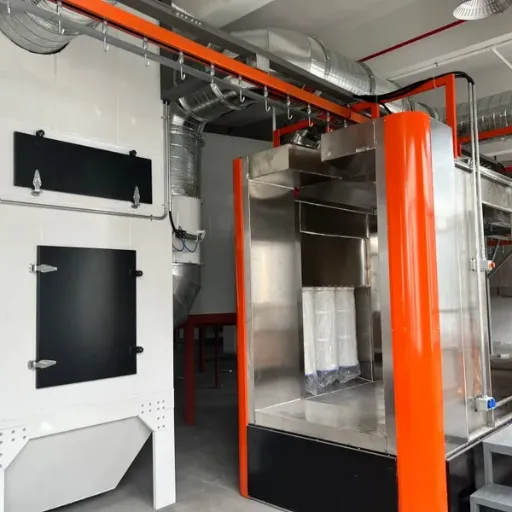
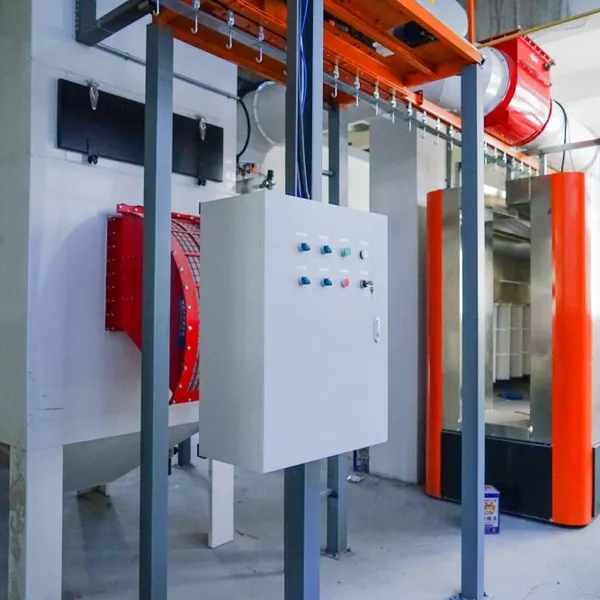
A powder coating system is an integrated production line that applies dry thermoplastic or thermoset powder to metal workpieces using electrostatic charge, then cures the coating into a continuous film in a heated oven. Unlike liquid painting, the powder contains no solvent. It is sprayed, attracted to the grounded workpiece, and then fused at temperatures typically between 160°C and 220°C.
A complete powder coating system includes four core stages:
Pretreatment, cleaning and chemically preparing the substrate for adhesion
Powder application, electrostatic spray or fluidized bed deposition
Powder recovery, reclaiming overspray for reuse
Curing, melting and cross-linking the powder film in a controlled oven
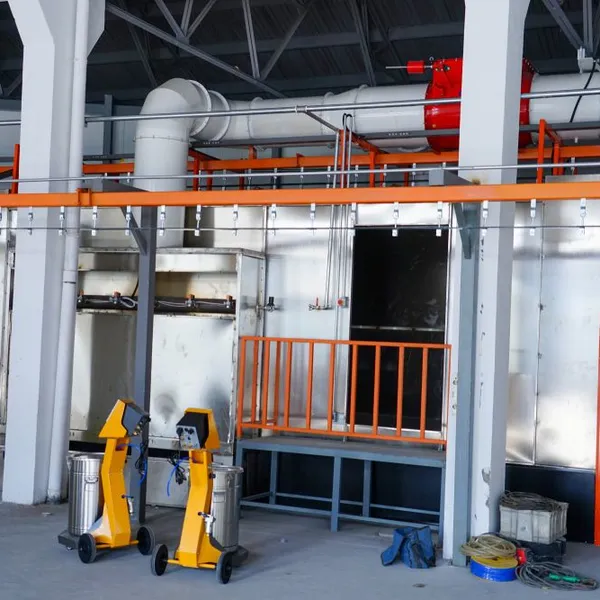
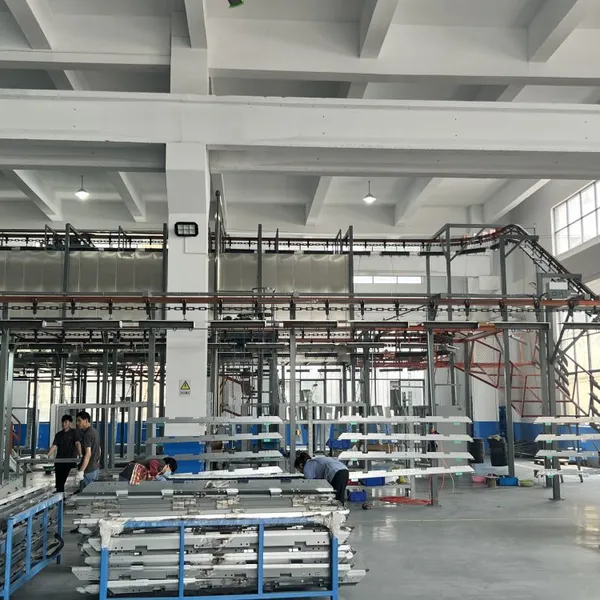
These stages are connected by a conveying system that moves workpieces through each zone at a consistent speed. In a well-designed automatic powder coating line, the conveyor, spray guns, reciprocators, and oven are synchronized so that every workpiece receives the same film thickness and cure schedule.
Engineering Note: The term "powder coating system" refers to the entire integrated line, not just the spray booth. Buying a high-end spray gun without addressing pretreatment or curing is like installing a precision engine on a chassis with misaligned wheels.
How a Powder Coating System Works
Understanding the sequence helps you diagnose quality problems and justify capital investment. Each stage builds on the previous one.
Stage 1: Pretreatment
Pretreatment is the foundation of coating adhesion. Oils, mill scale, rust, and fabrication residues must be removed before powder is applied. A typical spray pretreatment system includes degreasing, rinsing, phosphating or chromate conversion, and a final DI water rinse.
For steel workpieces, iron or zinc phosphating creates a microcrystalline surface that improves mechanical bonding. Aluminum extrusions usually receive a chromate-free conversion coating for corrosion resistance. The pretreatment stage must match the substrate, contamination type, and environmental regulations in your region.
Stage 2: Drying
After pretreatment, workpieces pass through a drying tunnel or ambient air-knife station. Moisture left on the surface will cause bubbles, pinholes, and adhesion failures in the cured film. Drying temperature and dwell time depend on workpiece mass and geometry.
Stage 3: Electrostatic Application
In the spray booth, electrostatic spray guns charge powder particles and direct them toward the grounded workpiece. Corona charging uses a high-voltage electrode at the gun tip. Tribo charging relies on friction between the powder and the gun barrel. Corona charging is more common in general industrial applications because it delivers consistent results across a wide range of powders.
Automatic reciprocators move spray guns in programmed vertical and horizontal strokes. A servo reciprocating machine can cover heights up to 2,500 mm with multiple guns per side, making it suitable for large panels, cabinets, and extruded profiles.
Stage 4: Powder Recovery
Not every powder particle lands on the workpiece. Modern booths capture overspray through cyclone recovery and cartridge filtration. A well-designed cyclone recovery system can reclaim up to 95% of overspray powder, returning clean material to the feed hopper. This directly reduces material cost and environmental waste.
Stage 5: Curing
The coated workpiece enters a tunnel-type or batch curing oven. Heat melts the powder, which then flows into a smooth film and cross-links into a durable coating. Cure schedules are defined by time and temperature. A typical epoxy-polyester hybrid powder might require 180°C for 15 minutes, measured at the workpiece surface, not the air temperature.
Infrared rapid curing can accelerate this stage for compatible geometries. Gas-fired, electric, oil, and steam heating options are available, depending on local energy cost and infrastructure.
Key Components of a Modern Powder Coating System
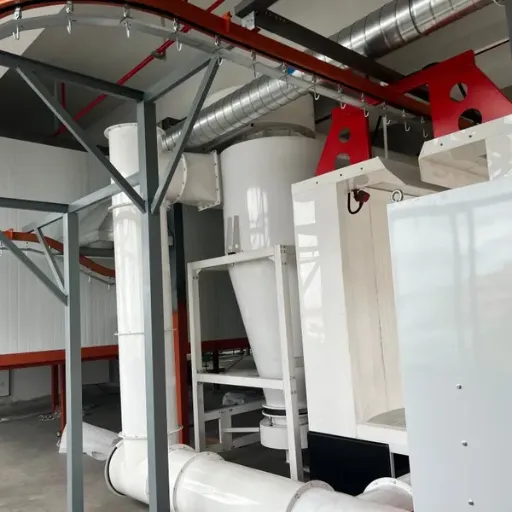
When you evaluate powder coating equipment, look past the catalog photos and focus on how the components work together. Here are the critical elements that determine line performance.
Spray Booth and Recovery System
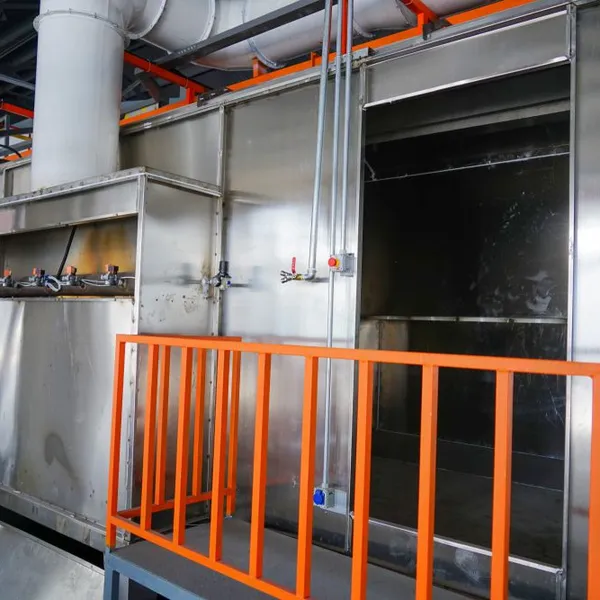
The spray booth defines your transfer efficiency and working environment. A properly sized booth maintains airflow that carries overspray away from the operator and into the recovery system. Large cyclone double-stage recovery systems with 24,000 m³/h extraction capacity are common in high-volume automatic powder coating lines.
PP chamber construction offers durability and easy cleaning. Cartridge filters provide final air filtration before exhaust. The combination of cyclone and cartridge recovery improves reclaim quality and reduces powder contamination.
Reciprocators and Spray Guns
Servo-driven reciprocators provide repeatable gun positioning. Programmable stroke patterns let you optimize coverage for flat panels, complex box sections, or mixed product runs. The number of guns, stroke height, and triggering intervals are adjusted through the PLC touch-screen interface.
Curing Oven
The curing oven is usually the largest energy consumer in the line. Tunnel-type ovens with 304 stainless steel liners and thermal capacities from 300,000 to 1,000,000 kcal are standard for production lines. Precision temperature control within ±3°C ensures consistent cure across the workpiece load.
Bridge-type curing ovens isolate the curing zone from the spray area, reducing contamination risk. Batch ovens work well for low-volume or oversized workpieces that cannot fit a continuous conveyor.
Conveying System
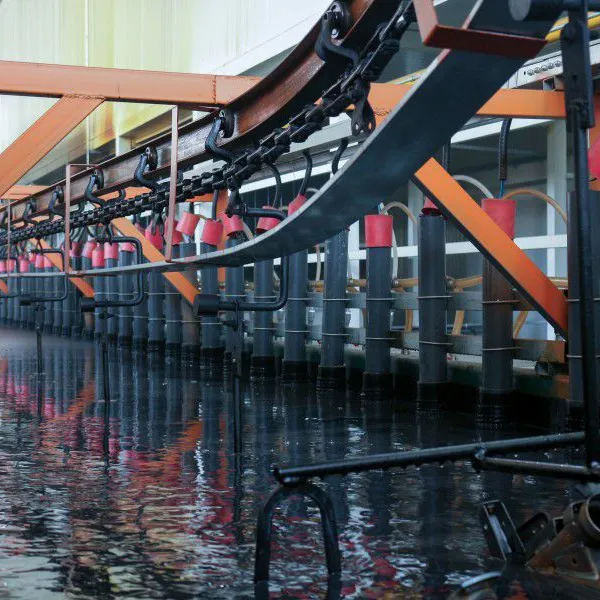
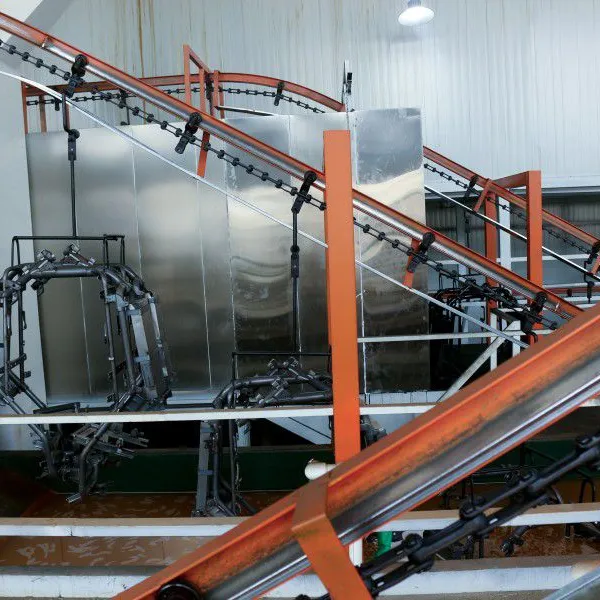
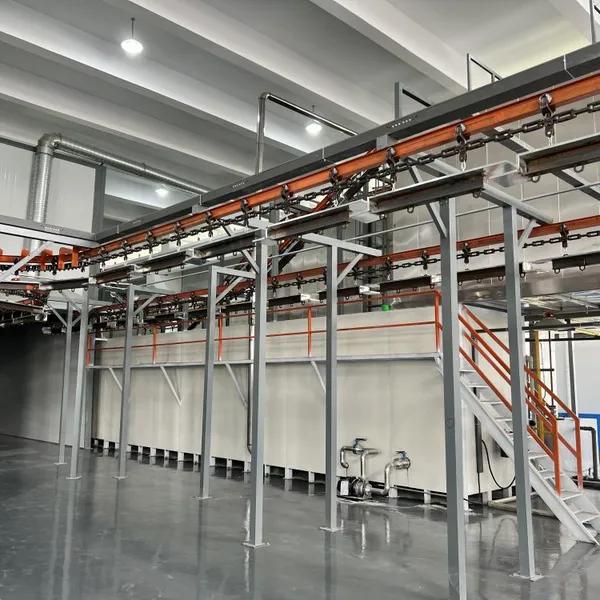
The conveyor synchronizes every stage. Overhead conveyor systems, power-and-free conveyors, and ground-mounted skid conveyors each suit different workpiece sizes and factory layouts. Conveyor speed determines dwell time in pretreatment, drying, spray, and curing zones. Changing speed without recalibrating the other stages will cause quality defects.
Control System
A Programmable Logic Controller (PLC) with Human-Machine Interface (HMI) touch-screen operation manages line sequencing, recipe storage, and fault alarms. Intelligent operation control reduces operator dependency and improves repeatability. Optional remote monitoring and large-screen displays give production managers real-time visibility.
Powder Coating System vs. Liquid Painting Line
Manufacturers often ask whether a powder coating system is better than a liquid painting line. The answer depends on your application, volume, and regulatory environment.
| Factor | Powder Coating System | Liquid Painting Line |
|---|---|---|
| Material waste | Up to 95% reclaimable overspray | Higher overspray loss, solvent loss |
| Environmental emissions | Near-zero VOCs | Requires ventilation and emission control |
| Film thickness | Typically 60–120 microns | Wider range, thinner films possible |
| Edge coverage | Excellent on sharp edges | Can run or sag on edges |
| Color changeover | Slower, requires booth cleaning | Faster in some configurations |
| Substrate suitability | Metal, some heat-tolerant materials | Metal, plastic, wood, composites |
| Energy use | High oven demand | Lower cure temperatures possible |
For high-volume metal parts with durability requirements, a powder coating system usually wins on total cost of ownership. For heat-sensitive substrates or finishes requiring thin, decorative films, liquid painting may be the better choice. Many manufacturers run both technologies in parallel for different product families.
Industries That Rely on Powder Coating Systems
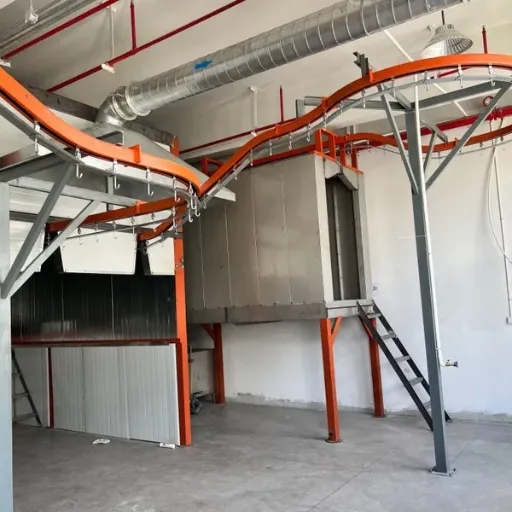
Powder coating systems serve a wide range of manufacturing sectors. The workpiece geometry and quality standard determine the line configuration.
Automotive Parts
Automotive wheel powder coating systems, brackets, chassis components, and trim pieces require consistent film thickness and salt-spray corrosion resistance. A complete powder coating system for automotive parts includes multi-stage pretreatment, automatic reciprocators, and precision curing ovens.
Home Appliances
Washing machine panels, refrigerator shells, and air conditioner housings need uniform color and durability for consumer-facing finishes. High-volume appliance lines often use wide spray booths with multiple reciprocators and large curing tunnels.
Aluminum Extrusions
Window and door frames, curtain wall profiles, and structural extrusions benefit from powder coating's weather resistance. These lines require wide conveyor spacing and spray patterns that cover long, hollow sections uniformly.
Steel Furniture and Hardware
Metal furniture frames, shelving, tools, locks, and hinges need abrasion resistance and aesthetic consistency. Compact automatic powder coating lines with cyclone recovery are common in this sector.
Elevators and Electric Cabinets
Large panels for elevator cars and electrical enclosures require wide spray coverage and tight film thickness tolerances. Conveyor design must accommodate oversized workpieces without sagging or collision.
Designing a Powder Coating System Around Your Workpiece
No two powder coating production lines should be identical. A line designed for small hardware brackets will fail miserably on 3-meter elevator panels. Before specifying equipment, document these inputs.
Workpiece Dimensions and Weight
Maximum length, width, height, and weight determine booth size, oven chamber dimensions, conveyor load rating, and hanger spacing. Overloading the conveyor causes vibration, poor grounding, and uneven coating.
Daily Output Target
Required parts per hour or shift defines line speed, oven length, and number of spray guns. Target at least 20% throughput margin above your current peak demand to accommodate seasonal spikes and future growth.
Coating Specification
Film thickness, gloss level, color range, and performance standards such as salt spray or cross-hatch adhesion dictate pretreatment chemistry, powder selection, and cure profile. Specifying the coating before designing the line prevents expensive retrofits.
Heating Preference
Electric, gas, oil, and steam heating each have different operating costs, installation requirements, and emissions profiles. In regions with low natural gas prices, a gas-fired curing oven often delivers the lowest cost per part. Where emissions are tightly regulated, electric or infrared curing may be preferable.
Factory Layout Constraints
Available floor space, ceiling height, column locations, and existing workflows shape line layout. A U-shaped layout may fit a cramped floor better than a straight-line configuration. Free design drawings and factory layout optimization are standard parts of a turnkey powder coating system quotation.
Engineering Note: Always model the line around your largest expected workpiece. A system sized only for current products will constrain your business before the warranty period ends.
Common Mistakes That Reduce Powder Coating System Performance
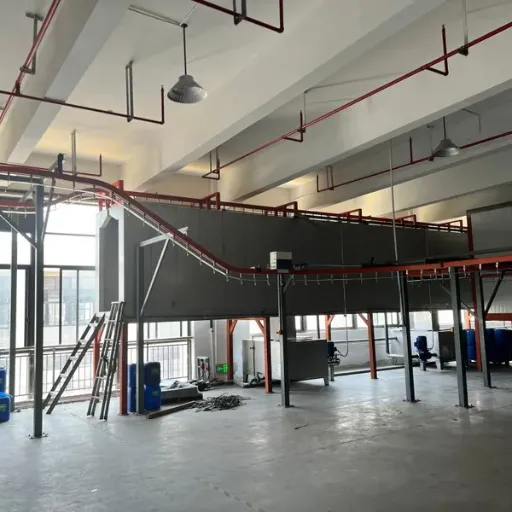
Even well-built powder coating equipment underperforms when installation, operation, or maintenance is neglected. Here are the failures we see most often in the field.
Inadequate Pretreatment
Skipping stages, using the wrong chemistry, or letting bath concentrations drift will cause adhesion failures that no spray gun or oven can fix. Pretreatment is not a place to cut costs.
Poor Grounding
Electrostatic attraction depends on a solid ground path through the conveyor, hangers, and workpiece. Rusty hooks, paint buildup, or isolated fixtures reduce transfer efficiency and cause uneven coverage. Grounding resistance should be below 1 MΩ before each spray cycle.
Incorrect Cure Profile
Under-cured powder is brittle and loses adhesion. Over-cured powder yellows, loses gloss, or becomes too hard. Always verify part temperature with a profiling datalogger, not just the oven setpoint.
Neglecting Recovery System Maintenance
Clogged filters, worn cartridge media, or contaminated reclaim powder reduce reclaim quality and increase waste. Scheduled filter replacement and powder sieving protect both finish quality and material cost.
Mismatched Line Speed
Changing conveyor speed to chase throughput without adjusting spray gun timing, oven temperature, or pretreatment dwell time creates cascading defects. A powder coating system is an integrated system, not a collection of independent machines.
What to Look for in a Powder Coating System Manufacturer
Choosing a supplier is as important as choosing the equipment itself. You need a partner who understands your process, not just a vendor who ships boxes.
Turnkey Project Capability
A true turnkey powder coating system supplier handles design, manufacturing, installation, commissioning, and operator training under one contract. This eliminates the blame-shifting that happens when pretreatment, spray, and oven equipment come from different vendors.
Custom Engineering Experience
Ask for examples of lines built for your industry and workpiece type. Customization around workpiece dimensions, daily output, heating preference, and factory layout is essential for long-term performance.
Technical Documentation and Training
You should receive complete layout drawings, electrical schematics, operation manuals, and maintenance schedules. Operator and maintenance training should be included in the project scope, not sold as an afterthought.
After-Sales Support
Look for a manufacturer with a clear response commitment, spare parts availability, and overseas technician support. A one-year warranty on main parts and lifelong maintenance support are reasonable expectations for industrial powder coating equipment.
Certifications and Quality Systems
ISO 9001:2015 certification indicates a structured quality management system. Export experience across automotive, appliance, hardware, elevator, and furniture industries demonstrates adaptability to international standards.
When Chen evaluated suppliers for a new appliance panel line in Guangdong, he prioritized manufacturers who offered free design drawings and on-site commissioning. The supplier who spent two days measuring his factory and reviewing his workpiece samples before quoting won the project. Two years later, his line is still running at 96% uptime.
Conclusion
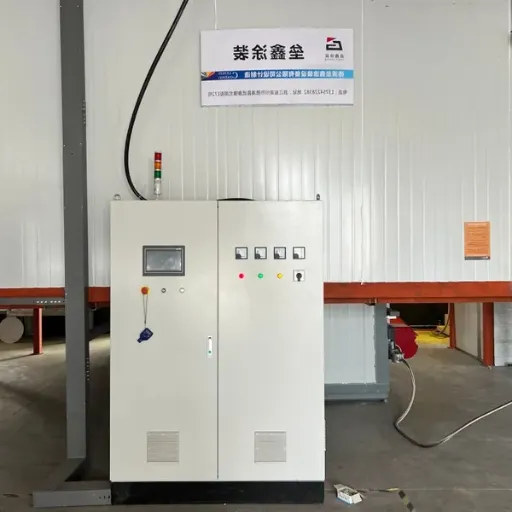
A powder coating system is one of the most capital-intensive investments a finishing operation will make. The return on that investment depends on how well the pretreatment, application, recovery, curing, and conveying stages are integrated around your specific workpieces and production targets.
Key takeaways:
A powder coating system is an integrated line, not just a spray booth.
Pretreatment determines adhesion; curing determines durability.
Automatic reciprocators, cyclone recovery, and PLC control improve consistency and reduce waste.
Line design must start with workpiece dimensions, output targets, and factory layout.
Turnkey project delivery reduces risk and simplifies commissioning.
If you are planning a new powder coating production line or upgrading an existing one, start with a clear specification of your workpieces, quality requirements, and daily volume. Then work with a manufacturer who can translate those inputs into a fully engineered, commissioned system.
Ready to move forward? Request a free coating line design drawing and our engineering team will prepare a layout proposal tailored to your workpiece specifications.
Recently Posted
-
Conveyor Speed Calculation for Coating Lines: A Complete Guide
June 26, 2026Last March, a hardware manufacturer in Ningbo raised the chain speed on its powder coating line by 15% to clear a backlog. Three d Read More
 -
Conveyor Line Design: A Complete Engineering Guide for Coating Lines
June 26, 2026Last autumn, a hardware manufacturer in Vietnam commissioned a new powder coating line. The pretreatment tunnel, cyclone-recovery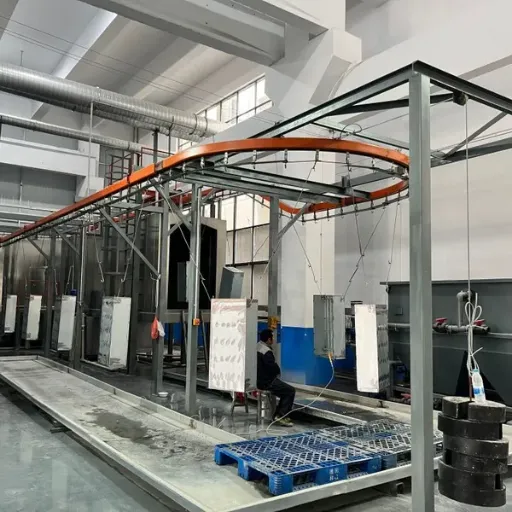 Read More
 -
Overhead Conveyor System: Engineering Guide for Coating Lines
June 26, 2026Last autumn, a hardware manufacturer in Ningbo faced a familiar problem. Their new powder coating line had to fit inside a buildin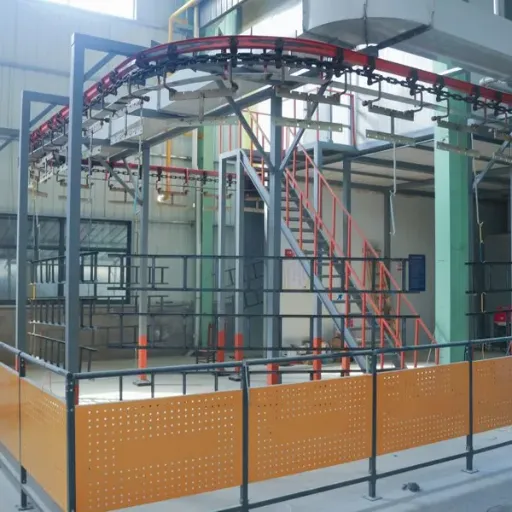 Read More
 -
Industrial Paint Booth: A Complete Engineering Guide for Manufacturers
June 26, 2026When Mike Chen expanded his metal furniture factory in Zhejiang Province last spring, he assumed the new spray area would solve hi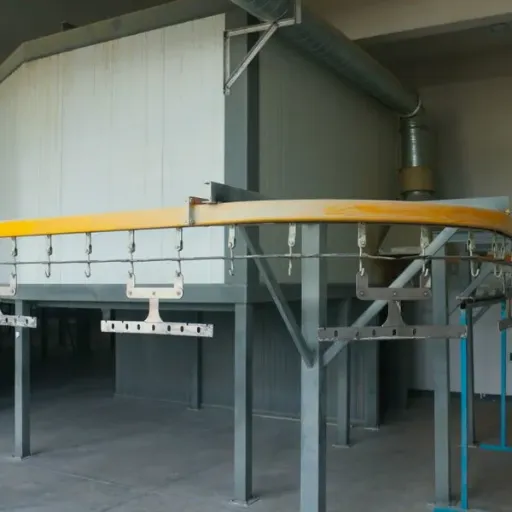 Read More

Contact Us
Recommended Products
-
 Industrial Custom Spray Coating Line for Hardware Anti‑Corrosion TreatmentNegotiableMOQ: 1 Set
 -
Industrial Electrophoresis Line for Metal Water Pump Workpieces ProcessingNegotiableMOQ: 1 Set
-
Custom E‑Coating Production Line for Water Pump Parts Surface FinishingNegotiableMOQ: 1 Set
-
China OEM Custom E-Coating Machine and Cathodic Electrophoresis Production LineNegotiableMOQ: 1 Set
-
Industrial Electrophoretic Coating Line With Custom Design for Metal WorkpiecesNegotiableMOQ: 1 Set
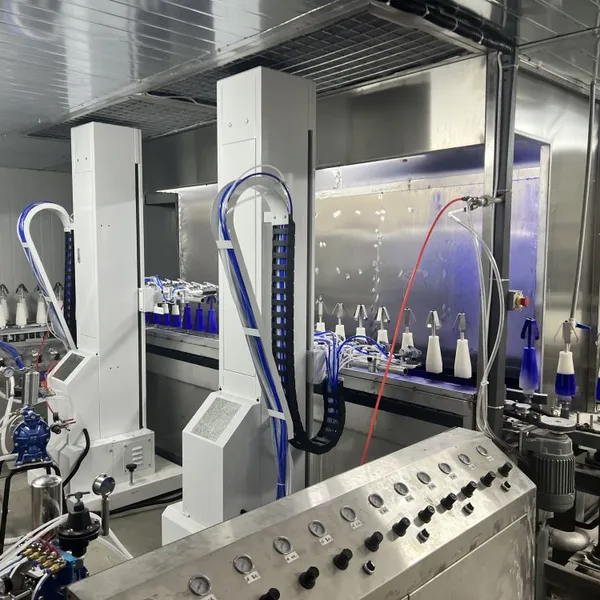
-
Intelligent Automated Electrophoretic Coating Line for Powder Coating Production EquipmentNegotiableMOQ: 1 Set
-
Full Automatic Custom Electrophoretic Coating Line for Industrial Metal ComponentsNegotiableMOQ: 1 Set
-
Heavy‑Duty Continuous Powder Coating Line for Big Cabinet Anti‑Corrosion FinishingNegotiableMOQ: 1 Set
-
Energy‑Saving Powder Coating Line for Large Industrial Cabinet Surface ProtectionNegotiableMOQ: 1 Set
-
Environmental Friendly Powder Coating Line With High Recovery for Large CabinetsNegotiableMOQ: 1 Set
-
Large Manual Industrial Curing Oven for Metal Powder Coating MachineryNegotiableMOQ: 1 Set
-
Industrial Plastic Drying Oven With PLC Control and 304 Stainless Steel HopperNegotiableMOQ: 1 Set
-
High Efficiency Plastic Raw Material Dryer for Plastic ProcessingNegotiableMOQ: 1 Set
-
Compact E-Coating System for Small Metal Components in Automotive & Medical Device ProductionNegotiableMOQ: 1 Piece
-
Gantry Transport Type Electrophoretic Coating Line for Industrial WorkpiecesNegotiableMOQ: 1 Set
-
Custom Gantry Electrophoretic Coating Line for Automotive Component FinishingNegotiableMOQ: 1 Set
-
Large Workpiece Stainless Steel Manual Powder Spray Booth With Ventilation SystemNegotiableMOQ: 1 Set
-
Large Capacity Stainless Steel Manual Powder Spray Booth With Powder Recovery SystemNegotiableMOQ: 1 Set
-
Automatic Large Workpiece Powder Spray Booth for Metal FabricationNegotiableMOQ: 1 Set
-
Powder Spraying Room With Stainless Steel Frame and PLC ControlNegotiableMOQ: 1 Set