
 Business License

Powder Coating Pretreatment Process: A Complete Engineering Guide
What if the real reason your powder coating fails has nothing to do with the spray booth, the curing oven, or even the powder itself? Industry data consistently points to the same root cause: inadequate or improperly executed surface pretreatment. Before a single gram of powder touches a workpiece, the condition of that metal surface has already determined whether the final coating will adhere, resist corrosion, and deliver the finish quality your customers expect.
You already know that powder coating delivers durable, attractive finishes when the process is right. In this guide, we will walk through the complete powder coating pretreatment process, from the chemistry of degreasing to the final drying stage. You will learn how each stage affects adhesion and corrosion resistance, how to choose between spray and dip configurations, and how to size a pretreatment system that matches your production line. Whether you are planning a new coating line or troubleshooting quality issues in an existing operation, this article gives you the engineering fundamentals you need.
Engineering Note: The Powder Coating Institute identifies pretreatment as the single most critical factor in coating performance. Even the most advanced electrostatic spray system cannot compensate for oils, oxides, or residual contamination on the substrate.
What Is the Powder Coating Pretreatment Process?
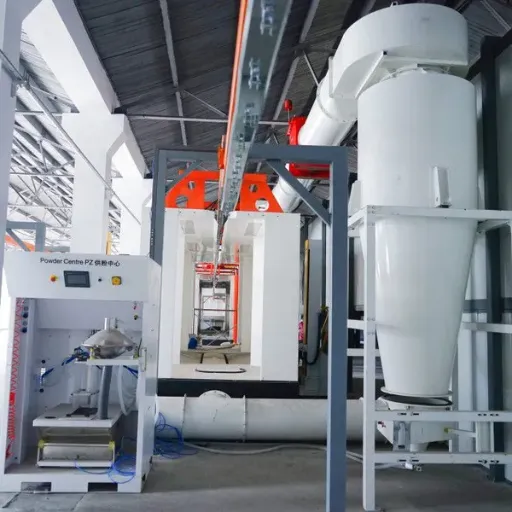
The powder coating pretreatment process is the series of chemical and mechanical steps that clean and condition a metal workpiece before electrostatic powder application and curing. Its purpose is simple but non-negotiable: remove contaminants that interfere with coating adhesion, and create a surface chemistry that promotes bonding between the substrate and the powder layer.
A typical pretreatment line for steel or aluminum includes multiple stages arranged in sequence. The workpiece enters the first stage carrying cutting oils, mill scale, fingerprints, and shop dust. It exits the final stage with a chemically active, uniformly clean surface ready for coating. Skip a stage, shorten a dwell time, or let chemical concentrations drift, and the coating quality suffers.
Deqing Leixin designs surface pretreatment systems as integrated modules within complete powder coating production lines. Each system is configured to the workpiece material, contamination type, and quality standards of the target industry. For manufacturers entering the coating business, understanding this process is the first step toward specifying equipment that actually meets specification.
Why Pretreatment Determines Coating Quality
Pretreatment is not a formality. It is the foundation on which every subsequent process step rests. Oil residues create interfacial barriers that prevent the powder from wetting the surface during cure. Rust and mill scale produce physical defects that telegraph through the coating. On aluminum, a native oxide layer can interfere with chemical bonding unless it is properly conditioned.
When Marcus took over quality management at a Midwest hardware manufacturer in early 2024, his team was battling a 12% rework rate on powder-coated brackets. The spray guns were new, the curing oven held ±3°C, and the powder supplier had verified the chemistry. Marcus traced the issue to the pretreatment tunnel, where the degreasing solution had not been changed in six months and the rinse tanks were recycling water contaminated with drag-out. After rebuilding the chemical maintenance schedule and adding a fresh-water halo rinse, rework dropped to 3% within 90 days. The spray booth had never been the problem.
The takeaway is straightforward. Coating adhesion, salt-spray resistance, and film appearance all depend on what happens before the powder cloud forms. A well-designed pretreatment stage often determines final coating adhesion more than the spray booth itself.
The Cost of Skipping Pretreatment
Some operations attempt to reduce capital expense by omitting pretreatment or replacing it with a simple solvent wipe. The short-term savings rarely survive first contact with warranty claims and field failures. Poor adhesion leads to chipping in handling and shipping. Corrosion creep undercutting the coating creates red rust that customers notice within months. Rework consumes labor, oven capacity, and powder material that could have been applied correctly the first time.
Investing in the right pretreatment system for powder coating pays back through first-pass yield, reduced warranty exposure, and the ability to meet automotive, appliance, or architectural quality specifications without second-guessing every batch.
The Stages of a Powder Coating Pretreatment Process
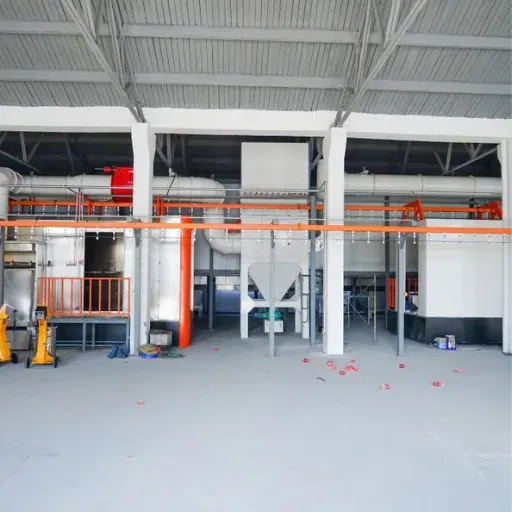
Most industrial powder coating pretreatment processes follow a logical progression: clean, rinse, condition, seal, and dry. The exact number of stages and the chemistry in each tank depend on the substrate, the contamination load, and the performance standard the coating must meet.
Stage 1: Degreasing
Degreasing removes organic soils, including stamping lubricants, machining coolants, drawing compounds, and handling oils. This is almost always the first stage because oils block every subsequent chemical reaction. If oil remains on the surface, phosphating will be spotty and adhesion will fail.
Alkaline cleaners are the standard choice for steel and aluminum. The chemistry is typically a blend of caustic, silicate, phosphate, and surfactant components adjusted for the substrate. Temperature matters: most alkaline cleaners operate between 50°C and 70°C. Dwell time ranges from 60 to 120 seconds in spray systems and 2 to 5 minutes in immersion dip systems.
For heavy oil loads, such as automotive stampings or machined hardware, a two-stage degrease may be necessary. The first stage removes the bulk of the oil; the second stage completes the cleaning. Deqing Leixin configures pretreatment washing machines with 304 stainless steel tanks and centrifugal pumps precisely to handle these aggressive chemistries over a long service life.
Stage 2: Rinsing
After degreasing, a water rinse removes residual alkaline chemistry and the emulsified soils it lifted from the surface. Spray rinses use fresh or counter-flow water directed at the workpiece from multiple angles. Dip rinses submerge the part and rely on dilution and agitation.
A single rinse is often insufficient for high-quality coating. Two-stage cascading rinses are common: the workpiece passes through a slightly contaminated reclaim rinse first, then a cleaner final rinse. This arrangement reduces water consumption while maintaining cleanliness. Conductivity monitoring helps operators know when the rinse is carrying too much chemical residue.
Stage 3: Surface Conditioning and Phosphating
Phosphating creates a crystalline conversion coating on steel or zinc that improves coating adhesion and corrosion resistance. Iron phosphate and zinc phosphate are the two most common systems for powder coating applications.
Iron phosphating is simpler, lower cost, and adequate for indoor applications with moderate durability requirements. It produces a thin, amorphous coating that improves adhesion and provides some corrosion resistance.
Zinc phosphating forms a heavier crystalline layer and is preferred for automotive parts, outdoor furniture, and any application requiring extended salt-spray performance. It requires more tanks, tighter process control, and higher operating cost, but the durability payoff is substantial.
For aluminum workpieces, chromate or non-chrome conversion coatings replace phosphating. Environmental regulations have pushed most operations toward trivalent chromium or titanium-based chemistries that perform well without hexavalent chromium.
Temperature, pH, total acid, and accelerator concentration must be monitored and adjusted. A well-run phosphating stage produces a uniform gray or iridescent coating with no bare spots or powdery residue.
Stage 4: Passivation and Final Rinse
A passivation rinse seals the phosphate crystal structure and removes soluble salts that could cause blistering or corrosion later. This stage may use a dilute chromic acid, a non-chrome sealer, or a deionized water rinse depending on the specification.
Deionized (DI) water is critical for the final rinse in high-quality operations. Tap water contains dissolved minerals that can leave water spots and interfere with coating cure. A DI rinse ensures the surface is chemically clean when it enters the drying stage.
Stage 5: Drying
The last pretreatment stage removes moisture from the workpiece surface and any crevices that could trap water. A typical drying tunnel operates at 100°C to 150°C with controlled airflow. Over-drying can dehydrate the phosphate coating and reduce its activity; under-drying leaves moisture that causes bubbles and pinholes in the powder film.
Drying time depends on workpiece mass, geometry, and the heat capacity of the curing oven or drying tunnel. Heavy castings require longer dwell times than thin sheet metal panels. Deqing Leixin engineers drying tunnels as part of integrated lines so that conveyor speed, tunnel length, and temperature profile are matched to the upstream pretreatment stages.
Spray Pretreatment vs Dip Pretreatment: Which Is Right for You?
Manufacturers choose between spray pretreatment and dip pretreatment based on workpiece geometry, throughput, floor space, and capital budget.
Spray Pretreatment Systems
In spray systems, workpieces travel through a tunnel on an overhead conveyor while nozzles pump chemical solutions from below and from the sides. Spray pretreatment works well for:
Sheet metal panels and flat-to-moderately-complex parts
High-volume continuous production
Operations with limited floor space
Applications requiring rapid processing and lower chemical inventory
The downside is that spray nozzles can miss interior cavities, blind holes, and tightly clustered workpieces. Complex automotive brackets or tubular furniture frames may not receive complete coverage in a spray tunnel.
Dip Pretreatment Systems
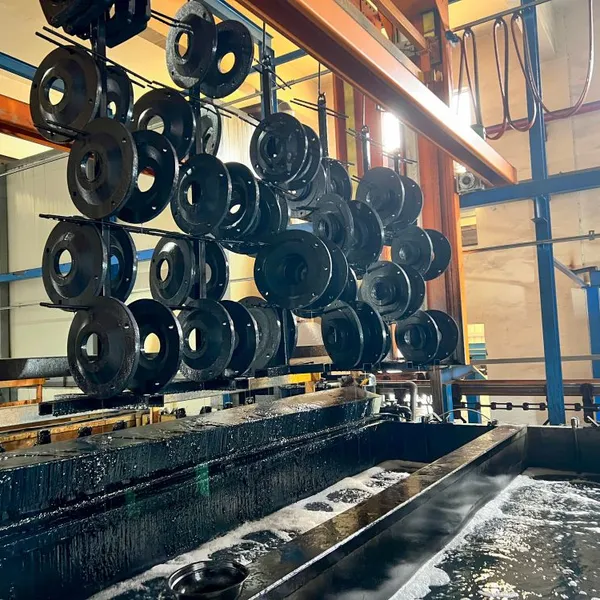
Dip systems immerse workpieces in individual tanks, often using a transporter or hoist to move parts from stage to stage. Dip pretreatment is preferred for:
Complex geometries with internal passages or recesses
Heavy workpieces that drain poorly in spray tunnels
High-performance applications requiring extended chemical reaction time
Operations where complete coverage is mandatory
Dip systems require more floor space, larger chemical volumes, and longer cycle times. They also demand careful racking design to prevent solution pooling and ensure drainage between tanks.
Many automatic pretreatment lines combine spray and dip stages in a hybrid configuration. For example, a line might spray-degrease and rinse, then dip-phosphate, then spray-passivate and dry. This approach balances throughput with the need to reach every surface.
Common Pretreatment Defects and How to Prevent Them
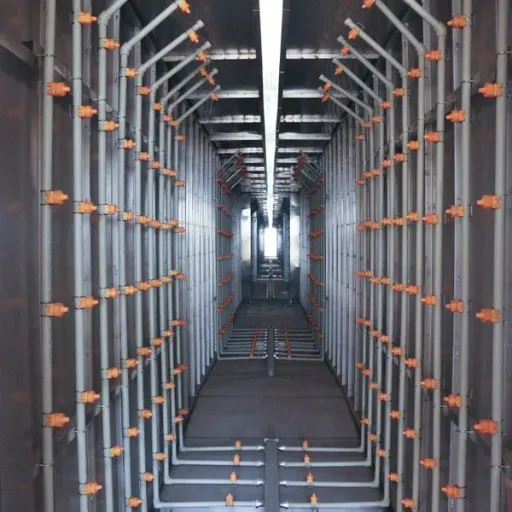
Even a properly designed pretreatment line will produce defects if operating parameters drift. Recognizing the symptoms early prevents them from becoming systemic coating failures.
Poor Adhesion or Filiform Corrosion
If powder coating peels in sheets or shows filament-like corrosion tracks under the film, the root cause is usually inadequate degreasing or incomplete phosphating. Check cleaner concentration, temperature, and spray pressure. Verify that the phosphate bath total acid and accelerator levels are within specification.
Water Breaks and Spotty Phosphate
A water break test reveals whether the surface is fully clean. If water beads up rather than sheeting evenly, oil or silicone contamination remains. Identify the source, upgrade the degreasing chemistry if necessary, and inspect upstream handling processes for contaminants.
White Rust and Blistering
On zinc-coated steel, white rust indicates that passivation was insufficient or the workpiece sat wet too long before drying. Increase passivator concentration, verify DI water quality, and confirm that the drying tunnel reaches all surfaces.
When the team at Acme Cabinet Systems noticed blistering along the edges of their electric enclosures, they initially blamed the powder supplier. A pretreatment audit told a different story. The final rinse tank was operating at twice the recommended conductivity because the DI resin bed had not been regenerated in months. Once the resin was serviced and the rinse water quality restored, the blisters disappeared. The fix cost less than $500. The lesson was worth far more.
Sizing and Designing Your Pretreatment Line
A pretreatment system must be sized to match the rest of the coating line. If the pretreatment tunnel is too short or the chemical tanks too small, the line becomes a bottleneck. If it is oversized, capital and operating costs rise without proportional benefit.
Key Design Parameters
Workpiece dimensions: Length, width, height, and weight determine tank size, conveyor load rating, and nozzle spacing. Large elevator panels need wider tunnels than small hardware brackets.
Daily output target: Required pieces per hour or per shift sets conveyor speed, which in turn determines dwell time in each stage. Each chemical reaction needs minimum time; you cannot simply speed up the conveyor to meet quota.
Contamination load: Heavily oiled stampings need more aggressive cleaning and possibly a two-stage degrease. Clean aluminum extrusions may need only a light alkaline clean and conversion coating.
Quality specification: Automotive and appliance finishes typically demand zinc phosphating or high-quality conversion coatings. Indoor furniture or general hardware may accept iron phosphate.
Energy and water availability: Heating tanks and drying tunnels consume significant thermal energy. Water consumption for rinses must be balanced against discharge permits and treatment costs.
Deqing Leixin provides free design drawings as part of the turnkey quotation process. Submitting your workpiece specifications, daily output target, and available factory dimensions allows the engineering team to configure a pretreatment line that integrates cleanly with the upstream fabrication area and the downstream powder spray system.
Ready to specify your pretreatment system? Contact our engineers with your workpiece details and output targets for a free line design proposal.
Pretreatment Maintenance Best Practices
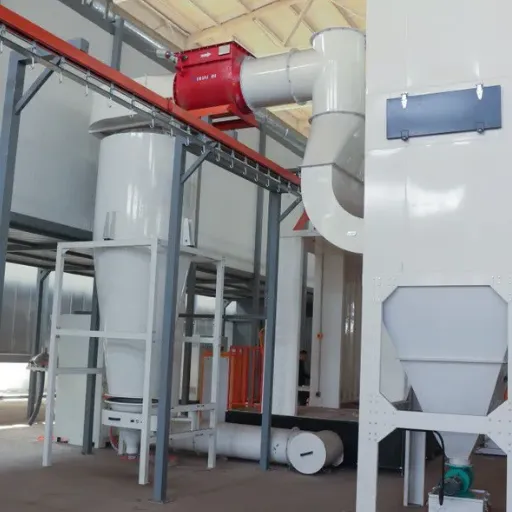
A pretreatment line is only as good as its maintenance discipline. Chemical baths deplete, filters clog, nozzles scale up, and conveyor chains accumulate sludge. Establishing a routine prevents slow degradation that is hard to notice until coating quality fails.
Daily Checks
Verify chemical concentrations and bath temperatures
Inspect spray nozzles for clogging or misalignment
Monitor rinse water conductivity
Check conveyor chain lubrication and hanger condition
Weekly Tasks
Titrate phosphating baths for total acid, free acid, and accelerator
Clean filters and strainers
Inspect tank heating coils or heat exchangers for scale
Review drying tunnel temperature uniformity
Monthly Reviews
Analyze sludge buildup in phosphating tanks
Verify calibration of pH meters, conductivity probes, and thermocouples
Inspect stainless steel tank condition and weld integrity
Review water and chemical consumption trends for anomalies
Consistent maintenance extends the life of 304 stainless steel pretreatment tanks, keeps energy consumption predictable, and protects the coating quality your customers depend on.
Conclusion: Pretreatment Is Where Coating Quality Begins
The powder coating pretreatment process is not an optional prelude to the real work. It is the stage where coating success is decided. From the first alkaline degreasing bath through the final dry-off tunnel, each step removes a barrier that would otherwise compromise adhesion, appearance, or corrosion resistance.
Here are the key takeaways:
Degreasing must remove all organic soil before any chemical conditioning can work.
Rinsing, especially with deionized water in the final stage, prevents chemical carryover and water spotting.
Phosphating or conversion coating creates the microstructure that locks the powder film to the metal.
Drying must be complete but not excessive, with temperature and time matched to workpiece geometry.
Spray, dip, or hybrid configurations should be selected based on part complexity and throughput requirements.
If you are evaluating a new powder coating line, start the conversation with pretreatment. The right configuration will save more money in first-pass yield and warranty avoidance than any downstream upgrade.
Tell us about your workpiece dimensions, daily output target, and substrate materials. Our engineering team will prepare a preliminary layout showing how the pretreatment, spray, curing, and conveying stages work together as a single integrated system. Deqing Leixin delivers turnkey coating production lines with one-year warranty on main parts and lifelong maintenance support, so your line performs at specification from the first production run.
Recently Posted
-
Conveyor Speed Calculation for Coating Lines: A Complete Guide
June 26, 2026Last March, a hardware manufacturer in Ningbo raised the chain speed on its powder coating line by 15% to clear a backlog. Three d Read More
 -
Conveyor Line Design: A Complete Engineering Guide for Coating Lines
June 26, 2026Last autumn, a hardware manufacturer in Vietnam commissioned a new powder coating line. The pretreatment tunnel, cyclone-recovery Read More
 -
Overhead Conveyor System: Engineering Guide for Coating Lines
June 26, 2026Last autumn, a hardware manufacturer in Ningbo faced a familiar problem. Their new powder coating line had to fit inside a buildin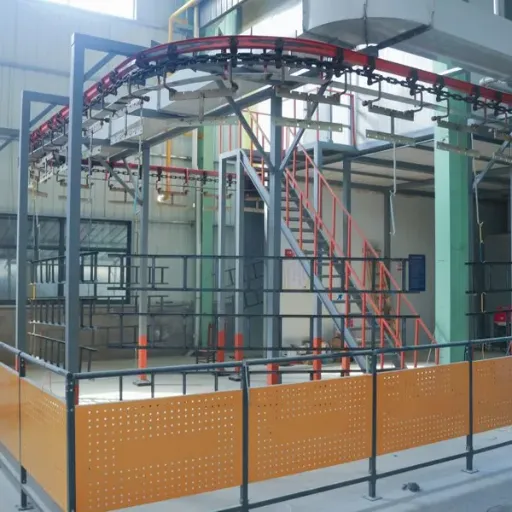 Read More
 -
Industrial Paint Booth: A Complete Engineering Guide for Manufacturers
June 26, 2026When Mike Chen expanded his metal furniture factory in Zhejiang Province last spring, he assumed the new spray area would solve hi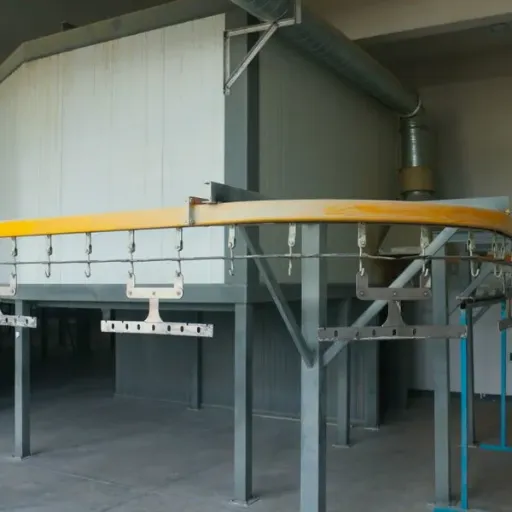 Read More

Contact Us
Recommended Products
-
 Industrial Custom Spray Coating Line for Hardware Anti‑Corrosion TreatmentNegotiableMOQ: 1 Set
 -
Industrial Electrophoresis Line for Metal Water Pump Workpieces ProcessingNegotiableMOQ: 1 Set
-
Custom E‑Coating Production Line for Water Pump Parts Surface FinishingNegotiableMOQ: 1 Set
-
China OEM Custom E-Coating Machine and Cathodic Electrophoresis Production LineNegotiableMOQ: 1 Set
-
Industrial Electrophoretic Coating Line With Custom Design for Metal WorkpiecesNegotiableMOQ: 1 Set
-
Intelligent Automated Electrophoretic Coating Line for Powder Coating Production EquipmentNegotiableMOQ: 1 Set
-
Full Automatic Custom Electrophoretic Coating Line for Industrial Metal ComponentsNegotiableMOQ: 1 Set
-
Heavy‑Duty Continuous Powder Coating Line for Big Cabinet Anti‑Corrosion FinishingNegotiableMOQ: 1 Set
-
Energy‑Saving Powder Coating Line for Large Industrial Cabinet Surface ProtectionNegotiableMOQ: 1 Set
-
Environmental Friendly Powder Coating Line With High Recovery for Large CabinetsNegotiableMOQ: 1 Set
-
Large Manual Industrial Curing Oven for Metal Powder Coating MachineryNegotiableMOQ: 1 Set
-
Industrial Plastic Drying Oven With PLC Control and 304 Stainless Steel HopperNegotiableMOQ: 1 Set
-
High Efficiency Plastic Raw Material Dryer for Plastic ProcessingNegotiableMOQ: 1 Set
-
Compact E-Coating System for Small Metal Components in Automotive & Medical Device ProductionNegotiableMOQ: 1 Piece
-
Gantry Transport Type Electrophoretic Coating Line for Industrial WorkpiecesNegotiableMOQ: 1 Set
-
Custom Gantry Electrophoretic Coating Line for Automotive Component FinishingNegotiableMOQ: 1 Set
-
Large Workpiece Stainless Steel Manual Powder Spray Booth With Ventilation SystemNegotiableMOQ: 1 Set
-
Large Capacity Stainless Steel Manual Powder Spray Booth With Powder Recovery SystemNegotiableMOQ: 1 Set
-
Automatic Large Workpiece Powder Spray Booth for Metal FabricationNegotiableMOQ: 1 Set
-
Powder Spraying Room With Stainless Steel Frame and PLC ControlNegotiableMOQ: 1 Set